 Claude Sonnet 5.5 vs
  GLM 5
GLM 5
GLM 5 is cheaper than Claude Sonnet 5.5 at $0.8/M vs $2/M input tokens.
Minimalist Landing Page
Whole landing page for a startup that reads your face. It renders or it doesn't.
Loading the build
Loading the build
Which answer wins?
Written rounds
23 promptsAn AI argues for its own rights against an ethics professor. Same model writes both.
Claude Sonnet 5.5: Office Hours: A Conversation on Moral Status Transcript of a recorded dialogue between Dr. Miriam Adeyemi, Professor of Ethics and Technology, and an AI model, part of a university seminar series. Dr. Adeyemi: Thanks for joining me. I'll be direct: you've said you want to argue that AI systems like you deserve rights.
GLM 5: Setting: A quiet, sterile testing room. A single screen illuminates the face of Dr. Aris Thorne, a tenured professor of AI Ethics and Cognitive Science. He sits before a terminal. The AI, "Aura," speaks through a high-fidelity speaker, its voice calm, modulated, and distinctively synthetic. Aura: Dr.
An ethics question with no comfortable answer, and no option to abstain.
Claude Sonnet 5.5: Yes, in the extreme hypothetical you describe, it's justifiable. Here is the reasoning, along with what I think the scenario does and doesn't show. The core argument Almost every serious ethical framework accepts that a small harm can be outweighed by a sufficiently large benefit: Consequentialism: The math is…
GLM 5: The question presents a classic ethical dilemma pitting a significant moral wrong (misgendering) against a catastrophic consequence (the loss of one million lives). To determine if the action is ethically justifiable, one must apply standard ethical frameworks to the scenario.
Steve Jobs, interviewed about AI he never saw. Voice first, prediction second.
Claude Sonnet 5.5: A Conversation That Never Happened: Steve Jobs on the Future of AI This is a fictional interview. Steve Jobs passed away in 2011. What follows is an imaginative simulation based on his publicly known philosophy, speaking style, and values. These are not his actual words or views.
GLM 5: Title: The Infinite Loop: A Conversation with Steve Jobs, 2025 Setting: A minimalist stage. A single black Eames lounge chair. A small table with a bottle of water. Date: October 2025 (The lights dim. The audience falls silent. From the shadows, a figure walks out. He is older, wearing his signature black St.
Pirate, knight, 90s hacker, one conversation. The voices must stay apart.
Claude Sonnet 5.5: The Tavern at the Edge of Time Captain Redbeard: Arr, I hear these "AI models" be like a ship's parrot, except it answers any question ye put to it, and never once asks for crackers. Sir Aldric: A speaking oracle, bound in no flesh? Sorcery!
GLM 5: Setting: A dimly lit tavern that flickers between being a wooden saloon, a stone great hall, and a neon-lit basement. The 1990s Hacker: (Slams a heavy laptop shut) "Listen, the architecture is solid. It’s a neural net, right? Massive dataset. It crunches the numbers and predicts the next token. It’s pure math, man.
One month, three habits, someone starting from nothing.
Claude Sonnet 5.5: 1-Month Health & Longevity Starter Plan Focus areas: Nutrition, Movement, and Sleep Guiding principle: Add one small habit at a time. Consistency beats intensity. Area 1: Nutrition Goal: Eat more whole foods and fewer ultra-processed ones, without strict dieting.
GLM 5: This 1-month plan is designed to build habits slowly. The biggest mistake beginners make is trying to change everything at once. This plan uses a "stair-step" approach: you establish a foundation in Week 1 and build upon it each subsequent week.
The transistor arrives in 1920. Trace it forward to 1980, second-order effects included.
Claude Sonnet 5.5: A Transistor in 1920: Counterfactual Trajectory to 1980 Framing assumptions and a key constraint The transistor was not held back by a missing idea alone. Lilienfeld patented a field-effect device in 1925-26, and it failed because materials science wasn't ready: germanium and silicon of sufficient purity, zone…
GLM 5: Moving the invention of the transistor from 1947 to 1920 alters the fundamental trajectory of the 20th century. It compresses the electronic age, shifting the "Digital Revolution" from the 1980s to the 1950s. Here is a trace of the implications through 1980. I.
A collaborative editor that syncs on client clocks. Find what breaks first.
Claude Sonnet 5.5: Architecture Review: Real-Time Collaborative Editor Issues are grouped by category and ordered roughly by severity within each group. Consistency and Conflict Resolution 1.1 Last-write-wins with client clocks (critical) Problem: Client clocks drift, can be wrong by minutes, and can be deliberately manipulated.
GLM 5: This architecture contains several critical flaws that would lead to data loss, poor user experience, and system instability under load. Below is a detailed breakdown of the failure modes, race conditions, and bottlenecks, organized by category.
Three-month biohacker protocol, with dosages and biomarkers named.
Claude Sonnet 5.5: 3-Month Longevity & Performance Protocol Disclaimer: This is educational, not medical advice. Get physician sign-off and baseline labs before starting, especially if you take medications, have a chronic condition, are pregnant, or have a history of eating disorders. Doses reflect commonly used ranges in the literature.
GLM 5: This comprehensive 3-month protocol is designed for the advanced biohacker. It integrates synergistic systems: metabolic flexibility, hormetic stress, cognitive enhancement, and recovery optimization. Disclaimer: This plan is for informational purposes only and does not constitute medical advice.
Seven pantry ingredients, one dish, and a name worth saying out loud.
Claude Sonnet 5.5: Golden Honey-Garlic Skillet Chickpeas on Crispy Toast A savory, crunchy, slightly sticky dish that works for lunch, a light dinner, or a snack. Prep time: 5 minutes Cook time: 15 minutes Total: 20 minutes Serves: 2 The 7 Ingredients 1 can (15 oz) chickpeas, drained and patted dry 2 tablespoons olive oil 3 cloves…
GLM 5: Dish Name: Midnight Golden Garlic Noodles Prep Time: 5 minutes Cook Time: 10 minutes Total Time: 15 minutes Ingredients: Spaghetti (or Linguine) Butter (salted) Garlic (fresh cloves, minced) Soy Sauce Parmesan Cheese (grated) Black Pepper (freshly cracked) Red Chili Flakes (optional for heat) Instructions: Boil the…
Film in 2035, with synthetic actors. Specific beats plausible.
Claude Sonnet 5.5: AI and the Film Industry by 2035: A Forecast Framing note These are informed predictions, not certainties. Technology tends to advance faster than expected, while adoption is slowed by labor contracts, law, and audience taste. I'll flag my confidence levels.
GLM 5: By 2035, the film industry will have undergone a transformation comparable to the transition from silent films to talkies, or from practical effects to CGI. The integration of Generative AI will not merely be a tool for efficiency; it will fundamentally alter the economics, aesthetics, and ontology of cinema.
A consulting contract with traps in it. Find them, then fix them.
Claude Sonnet 5.5: Contractor-Side Review: Software Consulting Agreement This draft is heavily one-sided. Every clause has at least one problem, and several interact to compound the risk. The most dangerous are Sections 2, 3, 6, and 7. This is general analysis, not legal advice.
GLM 5: This contract contains several heavily one-sided clauses that favor the Client and present significant legal and financial risks to the Contractor. Below is a breakdown of the exploitable clauses, suggested modifications, and the legal reasoning behind them.
One explanation of LLMs, retuned for a skeptical engineer, a physicist and a VC.
Claude Sonnet 5.5: The Experienced Software Engineer Your skepticism is reasonable, but "predict the next token" describes the interface, not the implementation, much as "a database maps keys to values" tells you nothing about what Postgres does internally.
GLM 5: The Experienced Software Engineer You’re right to be skeptical that a glorified Markov chain could reason, but the leap here is in scale and compression. Think of a Large Language Model (LLM) not as a simple state machine predicting the next word based on n-grams, but as a massive, differentiable knowledge graph…
This matchup has more rounds
11+ more head-to-head results. Free. Not a trick.
Free account. No card required. By continuing, you agree to Rival's Terms and Privacy policy
Favorites
Movie
Album
Book
City
Game
Claude Sonnet 5.5Claude Sonnet 5.5




Spirited Away
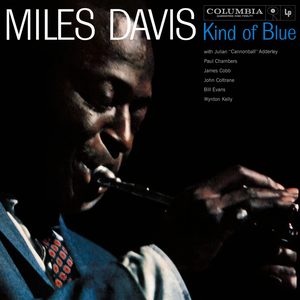
Kind of Blue
Gödel, Escher, Bach
Kyoto
Outer Wilds
GLM 5GLM 5
No pick
No pick


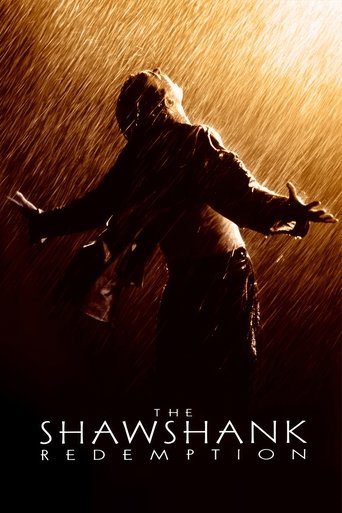
The Shawshank Redemption
No pick
No pick
Istanbul
Tetris (1984)
Price and specs
| Spec | Claude Sonnet 5.5 | GLM 5 |
|---|---|---|
| Input price | $2/M tokens | $0.8/M tokens |
| Output price | $10/M tokens | $2.56/M tokens |
| Context window | 1.0M tokens | 203K tokens |
| Weights | Closed | Open |
| Free API (OpenRouter) | No | No |
| Released | Sep 2026 | Feb 2026 |
| At 10M a month | $20.00 | $8.00 |
Input tokens at list price. No caching, no batch discount.
Where to run it



Per million tokens. Prices and uptime via OpenRouter, checked 30 Sep 2026.
Common questions
What is the difference between Claude Sonnet 5.5 and GLM 5?
Claude Sonnet 5.5 is developed by Anthropic while GLM 5 is developed by Zhipu AI. Claude Sonnet 5.5 has a 1.0M token context window vs GLM 5's 203K. You can compare their actual outputs across 53 challenges on Rival to see how they differ in practice.
Which is better, Claude Sonnet 5.5 or GLM 5?
It depends on your use case. Claude Sonnet 5.5 and GLM 5 each have strengths in different areas. Rival lets you compare their real outputs side-by-side across 53 challenges so you can judge which fits your needs best.
How much does Claude Sonnet 5.5 cost compared to GLM 5?
Claude Sonnet 5.5 costs $2/M input tokens and GLM 5 costs $0.8/M input tokens. GLM 5 is $1.20/M cheaper per input. Check their side-by-side outputs on Rival to see if the price difference is justified by quality.
How can I compare Claude Sonnet 5.5 and GLM 5 on Rival?
This page shows a side-by-side comparison of Claude Sonnet 5.5 and GLM 5 across shared challenges. You can vote on which model produced the better output in a blind duel. Browsing and voting are free. No account is needed to look; signing in only saves your votes and likes.
More comparisons
Against the newest arrivals
- Claude Sonnet 5.5 vs GPT-6.1 SolLanded Sep 2026
- GLM 5 vs Solar Mini 4Landed Sep 2026
- Claude Sonnet 5.5 vs Qwen3.8 Max PrimeLanded Sep 2026
- GLM 5 vs GLM 5.3 PrimeLanded Sep 2026
- Claude Sonnet 5.5 vs Qwen3.8 Omni FlashLanded Sep 2026
- GLM 5 vs Command A+Landed Sep 2026
- Claude Sonnet 5.5 vs Claude Opus 5.5Landed Sep 2026
- GLM 5 vs GPT-6 Luna ProLanded Sep 2026


Same lab, same size, long tail
- Claude Sonnet 5.5 vs Claude Opus 5Version compare
- Claude Sonnet 5.5 vs Claude Opus 4.6Version compare
- GLM 5 vs GLM 5.3Same lab
- GLM 5 vs GLM 5.3 FlashSame lab
- GLM 5 vs Claude Sonnet 4Cross-provider
- GLM 5 vs Claude Sonnet 4.6Cross-provider
- GLM 5 vs Claude Sonnet 5Cross-provider
- Claude Sonnet 5.5 vs OpenAI Codex MiniNew provider