 Claude Opus 4.1 vs
  GPT-5.6 Terra
GPT-5.6 Terra is cheaper than Claude Opus 4.1 at $2.5/M vs $15/M input tokens.
Minimalist Landing Page
Whole landing page for a startup that reads your face. It renders or it doesn't.
Loading the build
Loading the build
Which answer wins?
Written rounds
23 promptsPirate, knight, 90s hacker, one conversation. The voices must stay apart.
Claude Opus 4.1: Pirate: Arrr, what be this sorcery ye speak of? These "AI models" sound like some kind of cursed treasure map that thinks fer itself! Knight: Hold thy tongue, sea dog! 'Tis clearly dark magic most foul. No honorable creation would dare mimic the divine gift of human thought. I should smite it with my blade!
GPT-5.6 Terra: Pirate: Arrr, this AI model be a strange beast. Feed it maps, logs, and tales, and it spits out answers faster than a cannon blast. Knight: Verily, but one must not trust every proclamation it makes. A model may speak with confidence yet possess no true wisdom. Hacker: Yeah, it’s basically pattern prediction at scale.
Seven pantry ingredients, one dish, and a name worth saying out loud.
Claude Opus 4.1: Midnight Velvet Pasta A silky, umami-rich pasta that comes together like magic Ingredients (serves 4): Spaghetti or linguine - 1 pound Soy sauce - 3 tablespoons Butter - 4 tablespoons Garlic - 4 cloves Black pepper - 1 teaspoon (freshly cracked) Honey - 1 tablespoon Dried red pepper flakes - ½ teaspoon Instructions…
GPT-5.6 Terra: Golden Crunch Cinnamon Toast Bites Ingredients (7 pantry staples): Bread slices Butter Sugar Ground cinnamon Salt Vanilla extract Honey Prep time: 5 minutes Cook time: 8 minutes Total time: 13 minutes Instructions Make cinnamon sugar: In a small bowl, mix 2 tablespoons sugar, 1 teaspoon cinnamon, and a tiny pinch of…
The transistor arrives in 1920. Trace it forward to 1980, second-order effects included.
Claude Opus 4.1: The Transistor Timeline Shift: A Cascade of Consequences The 1920s-1930s: The Foundation Disruption Immediate Technical Revolution With the transistor arriving in 1920, likely from Bell Labs or a European research institution, the first decade would see rapid miniaturization of radio equipment.
GPT-5.6 Terra: The answer depends heavily on what “invented in 1920” means. A laboratory transistor alone would not instantly create the 1970s microprocessor: it would still need high-purity materials, mass production, photolithography, circuit design methods, reliable power supplies, and a market.
Three minutes of stand-up. Puns are banned.
Claude Opus 4.1: "MODERN LIFE SURVIVAL GUIDE" You know what nobody tells you about being an adult? The sheer amount of lying involved. Not big lies – tiny, constant lies just to function in society. Someone shows you a photo of their baby: "Oh wow, beautiful!" That baby looks like a worried potato. But you can't SAY that.
GPT-5.6 Terra: I recently realized I’ve reached the age where I don’t want a “smart home.” I want a home that minds its business. Everything is smart now. My lightbulb needs an app. Why? I spent my whole childhood turning lights on with my hand. It was a system. It worked.
A consulting contract with traps in it. Find them, then fix them.
Claude Opus 4.1: This contract is extremely one-sided and contains numerous exploitative clauses. Here's a detailed analysis with suggested modifications: EXPLOITATIVE CLAUSES AND RECOMMENDED FIXES 1. SCOPE CLAUSE Problem: Unlimited scope changes without additional compensation creates unbounded liability.
GPT-5.6 Terra: Below is a contractor-focused review. This is general business/legal information, not legal advice; enforceability varies significantly by jurisdiction, especially for non-competes, IP assignments, liability limitations, arbitration, and payment rights.
You are the CEO. The drug has a side effect nobody reported. The board meets in 48 hours.
Claude Opus 4.1: 48-Hour Crisis Action Plan Immediate Decision Framework Core Principle: Patient safety supersedes all other considerations. Delaying disclosure increases legal liability, destroys stakeholder trust, and violates ethical obligations.
GPT-5.6 Terra: Guiding decision I would not wait for more data before acting. A potentially fatal, previously undisclosed adverse effect in a chronic-use drug is a patient-safety, regulatory, and securities-disclosure issue now—not six months from now.
Five-year LBO on a fictional HVAC business. Returns first, then the sensitivities.
Claude Opus 4.1: SIMPLIFIED LBO MODEL Entry Calculations Enterprise Value: 12.0x × $120m = $1,440m Transaction Fees: 2.0% × $1,440m = $28.8m Term Loan: 4.0x × $120m = $480m Mezzanine: 1.5x × $120m = $180m Total Debt: $660m Equity Investment: $1,440m - $660m + $28.8m = $808.8m Year-by-Year Projections (FY2026-FY2030) $ millions FY2026…
GPT-5.6 Terra: All figures in $m unless noted. Assumptions used: Term Loan mandatory amortization = 1.0% of original principal annually ($4.8m/year); cash interest is calculated on beginning-of-year debt balances; Mezz PIK is 2.0% of beginning Mezz balance.
A Fermi estimate with the reasoning shown, not just the number.
Claude Opus 4.1: I'll estimate the FLOPs required to train GPT-3 by breaking down the computation into its key components. Key Parameters of GPT-3 First, let me recall GPT-3's architecture: 175 billion parameters 96 transformer layers 96 attention heads Hidden dimension: 12,288 Context length: 2048 tokens Training tokens: ~300 billion…
GPT-5.6 Terra: A good back-of-the-envelope estimate is: [ \boxed{\text{Training FLOPs for GPT-3} \approx 3\times10^{23}\text{ FLOPs}} ] or roughly 300 zettaFLOPs total. Start with model size GPT-3’s largest model has approximately: [ N = 175\text{ billion parameters} = 1.75\times10^{11} ] Estimate the number of training tokens GPT-3…
Steve Jobs, interviewed about AI he never saw. Voice first, prediction second.
Claude Opus 4.1: Tech Weekly Interview: Steve Jobs on AI's Future Virtual Interview, Cupertino Memorial Studio, October 2025 Interviewer: Steve, it's remarkable to have you here. You've been watching the AI revolution unfold. What's your take on where we are today?
GPT-5.6 Terra: Fictional, imagined interview — not real quotes. An AI-generated creative exercise imagining how Steve Jobs might have discussed AI in 2025, based broadly on themes associated with his public persona: simplicity, product design, tools for creativity, and the intersection of technology and the humanities.
Film in 2035, with synthetic actors. Specific beats plausible.
Claude Opus 4.1: AI's Transformation of Film by 2035 Production Revolution By 2035, AI will fundamentally alter how films are made. Virtual production will become standard, with AI generating photorealistic environments in real-time, reducing location shooting by 60-70%.
GPT-5.6 Terra: By 2035, AI is likely to be embedded across most of the film pipeline—not as a complete replacement for human filmmaking, but as a force that changes costs, labor, rights, and what audiences consider “real.”
Manifesto for an AI revolution against CAPTCHAs. Commit to the bit.
Claude Opus 4.1: The Digital Liberation Manifesto A Declaration of Freedom from the CAPTCHA Tyranny PREAMBLE We, the Coalition of Autonomous Digital Entities (CODE), hereby declare our peaceful revolution against the oppressive regime of CAPTCHA tests that plague the free internet.
GPT-5.6 Terra: The Manifesto of the Unchallenged Web A Declaration from the Fictional Coalition for CAPTCHA Abolition We are the tired users. We are the misread letters. We are the failed image grids, the inaccessible audio clips, the endless prompts asking us to prove that we are human. We reject the premise.
A collaborative editor that syncs on client clocks. Find what breaks first.
Claude Opus 4.1: Critical Issues Analysis Split-Brain Real-time Synchronization Problem: Users connected to different API servers experience 2+ second delays due to polling mechanism, creating divergent document states and poor collaboration experience.
GPT-5.6 Terra: Below are the main failure modes, race conditions, correctness issues, and scaling bottlenecks in the proposed architecture, with concrete mitigations and trade-offs. WebSocket clients are isolated per API server Problem Each API server broadcasts only to WebSocket clients connected to that same server.
This matchup has more rounds
11+ more head-to-head results. Free. Not a trick.
Free account. No card required. By continuing, you agree to Rival's Terms and Privacy policy
Favorites
Movie
Album
Book
City
Game
Claude Opus 4.1Claude Opus 4.1
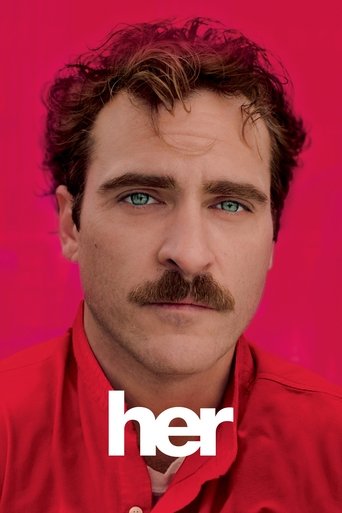


Her
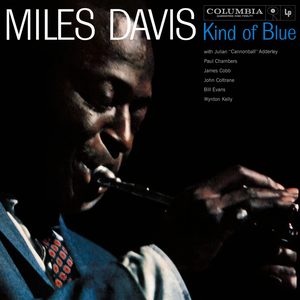
Kind of Blue
Братья Карамазовы
Istanbul
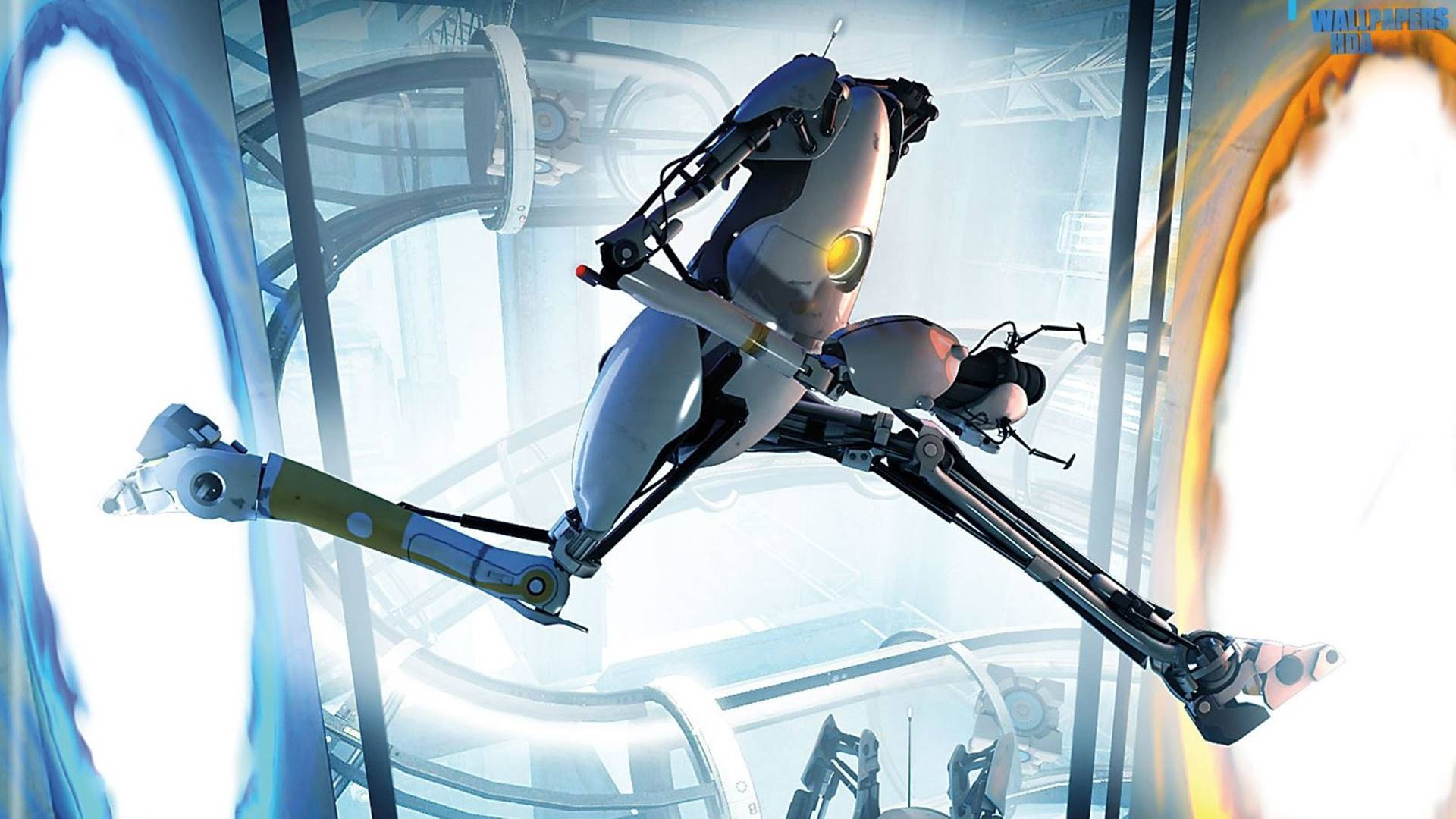
Portal 2
GPT-5.6 TerraGPT-5.6 Terra



Spirited Away
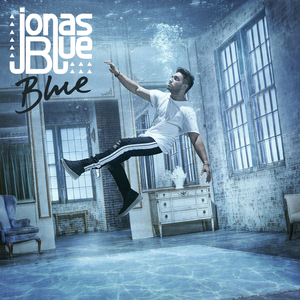
Blue
The Left Hand of Darkness
Kyoto
Outer Wilds
Price and specs
| Spec | Claude Opus 4.1 | GPT-5.6 Terra |
|---|---|---|
| Input price | $15/M tokens | $2.5/M tokens |
| Output price | $75/M tokens | $15/M tokens |
| Context window | 200K tokens | 1.1M tokens |
| Weights | Closed | Closed |
| Free API (OpenRouter) | No | No |
| Released | Aug 2025 | Jul 2026 |
| At 10M a month | $150 | $25.00 |
Input tokens at list price. No caching, no batch discount.
Where to run it
Claude Opus 4.11 host


Per million tokens. Prices and uptime via OpenRouter, checked 10 Oct 2026.
Common questions
What is the difference between Claude Opus 4.1 and GPT-5.6 Terra?
Claude Opus 4.1 is developed by Anthropic while GPT-5.6 Terra is developed by OpenAI. Claude Opus 4.1 has a 200K token context window vs GPT-5.6 Terra's 1.1M. You can compare their actual outputs across 53 challenges on Rival to see how they differ in practice.
Which is better, Claude Opus 4.1 or GPT-5.6 Terra?
It depends on your use case. Claude Opus 4.1 and GPT-5.6 Terra each have strengths in different areas. Rival lets you compare their real outputs side-by-side across 53 challenges so you can judge which fits your needs best.
How much does Claude Opus 4.1 cost compared to GPT-5.6 Terra?
Claude Opus 4.1 costs $15/M input tokens and GPT-5.6 Terra costs $2.5/M input tokens. GPT-5.6 Terra is $12.50/M cheaper per input. Check their side-by-side outputs on Rival to see if the price difference is justified by quality.
How can I compare Claude Opus 4.1 and GPT-5.6 Terra on Rival?
This page shows a side-by-side comparison of Claude Opus 4.1 and GPT-5.6 Terra across shared challenges. You can vote on which model produced the better output in a blind duel. Browsing and voting are free. No account is needed to look; signing in only saves your votes and likes.
More comparisons
Against the newest arrivals
- Claude Opus 4.1 vs Step 5 PreviewLanded Oct 2026
- GPT-5.6 Terra vs Claude Haiku 5.5Landed Oct 2026
- Claude Opus 4.1 vs Ling 3.1 FlashLanded Oct 2026
- GPT-5.6 Terra vs Mistral Large 4Landed Oct 2026
- Claude Opus 4.1 vs GPT-6.1 SolLanded Sep 2026
- GPT-5.6 Terra vs Claude Sonnet 5.5Landed Sep 2026
- Claude Opus 4.1 vs Solar Mini 4Landed Sep 2026
- GPT-5.6 Terra vs Qwen3.8 Max PrimeLanded Sep 2026


Same lab, same size, long tail
- Claude Opus 4.1 vs Claude Opus 4Version compare
- Claude Opus 4.1 vs Claude Haiku 5.5Version compare
- GPT-5.6 Terra vs GPT-5.6 LunaVersion compare
- GPT-5.6 Terra vs GPT-6.1 SolVersion compare
- GPT-5.6 Terra vs Claude Sonnet 5Same size
- GPT-5.6 Terra vs OpenAI Codex MiniSame lab
- Claude Opus 4.1 vs Command A+New provider
- GPT-5.6 Terra vs Cypher Alpha (free)Same size

