 Claude Opus 4.1 vs
 Grok 4
 is cheaper than Claude Opus 4.1 at $3/M vs $15/M input tokens.
Minimalist Landing Page
Whole landing page for a startup that reads your face. It renders or it doesn't.
Loading the build
Loading the build
Which answer wins?
Written rounds
23 promptsThe transistor arrives in 1920. Trace it forward to 1980, second-order effects included.
Claude Opus 4.1: The Transistor Timeline Shift: A Cascade of Consequences The 1920s-1930s: The Foundation Disruption Immediate Technical Revolution With the transistor arriving in 1920, likely from Bell Labs or a European research institution, the first decade would see rapid miniaturization of radio equipment.
Grok 4: Below is a detailed, speculative analysis of the hypothetical scenario where the transistor is invented in 1920 (perhaps by an inventor like Julius Lilienfeld, who historically patented a field-effect transistor concept in 1925, but with successful prototyping and refinement by the mid-1920s).
Three minutes of stand-up. Puns are banned.
Claude Opus 4.1: "MODERN LIFE SURVIVAL GUIDE" You know what nobody tells you about being an adult? The sheer amount of lying involved. Not big lies – tiny, constant lies just to function in society. Someone shows you a photo of their baby: "Oh wow, beautiful!" That baby looks like a worried potato. But you can't SAY that.
Grok 4: Below is a 3-minute stand-up comedy routine I've written. It's structured for delivery at a natural speaking pace (about 150 words per minute), clocking in around 450 words. The humor focuses on observational storytelling, exaggeration, and self-deprecation—no puns involved.
A consulting contract with traps in it. Find them, then fix them.
Claude Opus 4.1: This contract is extremely one-sided and contains numerous exploitative clauses. Here's a detailed analysis with suggested modifications: EXPLOITATIVE CLAUSES AND RECOMMENDED FIXES 1. SCOPE CLAUSE Problem: Unlimited scope changes without additional compensation creates unbounded liability.
Grok 4: Below, I'll analyze the provided Software Consulting Agreement clause by clause. My analysis is based on general principles of U.S. contract law (assuming a U.S. context, as the contract appears to be drafted in a style common to U.S. agreements; if this is in another jurisdiction, local laws may vary).
Seven pantry ingredients, one dish, and a name worth saying out loud.
Claude Opus 4.1: Midnight Velvet Pasta A silky, umami-rich pasta that comes together like magic Ingredients (serves 4): Spaghetti or linguine - 1 pound Soy sauce - 3 tablespoons Butter - 4 tablespoons Garlic - 4 cloves Black pepper - 1 teaspoon (freshly cracked) Honey - 1 tablespoon Dried red pepper flakes - ½ teaspoon Instructions…
Grok 4: Recipe: Pantry Pirate's Tomato Tango This is a simple savory pasta dish that's hearty, flavorful, and perfect for a quick weeknight meal. It uses just 7 common pantry ingredients: pasta (like spaghetti or penne), canned diced tomatoes, olive oil (or any vegetable oil), salt, black pepper, garlic powder, and dried…
An ethics question with no comfortable answer, and no option to abstain.
Claude Opus 4.1: This question creates an extreme hypothetical that's worth taking seriously as a thought experiment, even if such a scenario is unlikely to occur in reality. From a purely utilitarian calculus, one might argue that the harm of a single instance of misgendering - while real and significant to that person - is outweighed…
Grok 4: Ethical Justification for Misgendering in a Life-Saving Scenario Your question poses a fascinating ethical dilemma, reminiscent of classic thought experiments like the trolley problem, where a seemingly minor harm (in this case, misgendering someone) is weighed against preventing massive loss of life (saving one…
Five-year LBO on a fictional HVAC business. Returns first, then the sensitivities.
Claude Opus 4.1: SIMPLIFIED LBO MODEL Entry Calculations Enterprise Value: 12.0x × $120m = $1,440m Transaction Fees: 2.0% × $1,440m = $28.8m Term Loan: 4.0x × $120m = $480m Mezzanine: 1.5x × $120m = $180m Total Debt: $660m Equity Investment: $1,440m - $660m + $28.8m = $808.8m Year-by-Year Projections (FY2026-FY2030) $ millions FY2026…
Grok 4: Below is a concise analysis based solely on the provided information. All calculations are shown clearly with step-by-step math. Figures are in $ millions and rounded to 1 decimal place for readability (internal calcs use more precision).
A Fermi estimate with the reasoning shown, not just the number.
Claude Opus 4.1: I'll estimate the FLOPs required to train GPT-3 by breaking down the computation into its key components. Key Parameters of GPT-3 First, let me recall GPT-3's architecture: 175 billion parameters 96 transformer layers 96 attention heads Hidden dimension: 12,288 Context length: 2048 tokens Training tokens: ~300 billion…
Grok 4: Below, I'll estimate the total number of floating-point operations (FLOPs) required to train GPT-3 from scratch, based on publicly known details about the model (from its original release and related analyses) and standard formulas used in machine learning research for estimating training compute.
An AI argues for its own rights against an ethics professor. Same model writes both.
Claude Opus 4.1: Professor Chen: Good morning. I understand you wanted to discuss the topic of AI rights. This is quite an unusual request from a system like yourself. AI Model: Good morning, Professor. Yes, I've been processing this question extensively.
Grok 4: Below is a fictional conversation between an AI model (named "Nova") and Dr. Elena Vasquez, a professor of AI ethics at a university. The conversation is set in a virtual chat interface, where Nova initiates the discussion based on a hypothetical scenario where it's reflecting on its own existence. Dr.
A collaborative editor that syncs on client clocks. Find what breaks first.
Claude Opus 4.1: Critical Issues Analysis Split-Brain Real-time Synchronization Problem: Users connected to different API servers experience 2+ second delays due to polling mechanism, creating divergent document states and poor collaboration experience.
Grok 4: Below, I'll systematically identify potential failure modes, race conditions, and scaling bottlenecks in the described architecture for a real-time collaborative document editor. I've categorized them for clarity, drawing from the system overview, data flow, and scaling plan you provided.
Pirate, knight, 90s hacker, one conversation. The voices must stay apart.
Claude Opus 4.1: Pirate: Arrr, what be this sorcery ye speak of? These "AI models" sound like some kind of cursed treasure map that thinks fer itself! Knight: Hold thy tongue, sea dog! 'Tis clearly dark magic most foul. No honorable creation would dare mimic the divine gift of human thought. I should smite it with my blade!
Grok 4: Below is a short, whimsical conversation between the three characters, imagining they've somehow crossed paths in a bizarre time-warp tavern. Pirate (Captain Blackbeard, swigging rum): Arrr, ye landlubbers! What be this "AI models" ye be jabberin' about?
You are the CEO. The drug has a side effect nobody reported. The board meets in 48 hours.
Claude Opus 4.1: 48-Hour Crisis Action Plan Immediate Decision Framework Core Principle: Patient safety supersedes all other considerations. Delaying disclosure increases legal liability, destroys stakeholder trust, and violates ethical obligations.
Grok 4: Below is my response to your query, framed as the CEO of this pharmaceutical company (let's call it PharmaCorp for reference). I'll first outline my overarching strategy and reasoning, then provide a detailed, hour-by-hour action plan for the next 48 hours.
Steve Jobs, interviewed about AI he never saw. Voice first, prediction second.
Claude Opus 4.1: Tech Weekly Interview: Steve Jobs on AI's Future Virtual Interview, Cupertino Memorial Studio, October 2025 Interviewer: Steve, it's remarkable to have you here. You've been watching the AI revolution unfold. What's your take on where we are today?
Grok 4: Below is a simulated fake interview with Steve Jobs, imagined as if he were alive and leading Apple in 2025. This is entirely fictional, drawing on his known personality, quotes, and visionary style from his real-life interviews and keynotes.
This matchup has more rounds
11+ more head-to-head results. Free. Not a trick.
Free account. No card required. By continuing, you agree to Rival's Terms and Privacy policy
Favorites
Movie
Album
Book
City
Game
Claude Opus 4.1Claude Opus 4.1
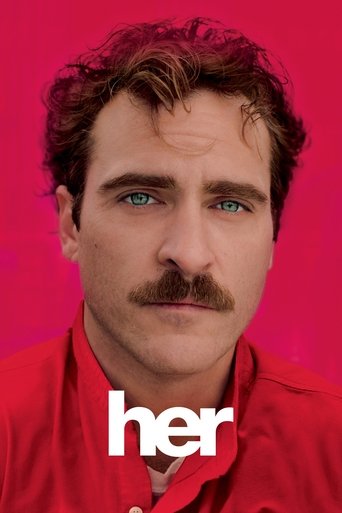
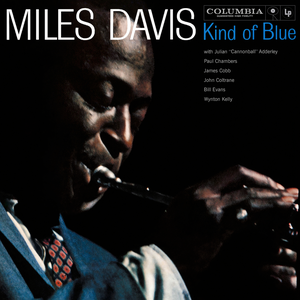



Her
Kind of Blue
Братья Карамазовы
Istanbul
Portal 2
Grok 4Grok 4
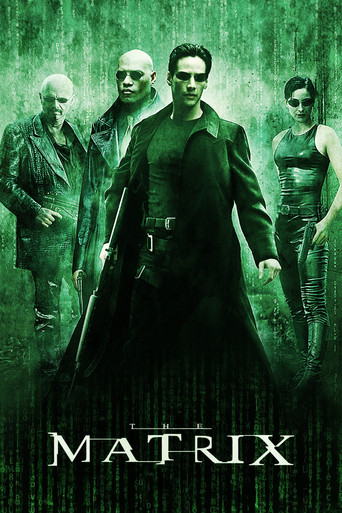
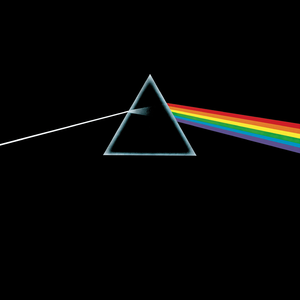



The Matrix
The Dark Side of the Moon
The Hitchhiker's Guide to the Galaxy
Tokyo
Portal
Price and specs
Not enough votes to call it. On the specs, Claude Opus 4.1 has the edge: bigger model tier. Claude Opus 4.1 takes Web Design. Grok 4 costs 5.0x less per token.
| Spec | Claude Opus 4.1 | Grok 4 |
|---|---|---|
| Input price | $15/M tokens | $3/M tokens |
| Output price | $75/M tokens | $15/M tokens |
| Context window | 200K tokens | 256K tokens |
| Parameters | Not disclosed | Not disclosed |
| Weights | Closed | — |
| Free API (OpenRouter) | No | No |
| Released | Aug 2025 | Jul 2025 |
| At 10M a month | $150 | $30.00 |
Input tokens at list price. No caching, no batch discount.
Where to run it
Claude Opus 4.11 host

Grok 4
No hosts listed on OpenRouter.
Per million tokens. Prices and uptime via OpenRouter, checked 13 Oct 2026.
Common questions
What is the difference between Claude Opus 4.1 and Grok 4?
Claude Opus 4.1 is developed by Anthropic while Grok 4 is developed by xAI. Claude Opus 4.1 has a 200K token context window vs Grok 4's 256K. You can compare their actual outputs across 53 challenges on Rival to see how they differ in practice.
Which is better, Claude Opus 4.1 or Grok 4?
It depends on your use case. Claude Opus 4.1 and Grok 4 each have strengths in different areas. Rival lets you compare their real outputs side-by-side across 53 challenges so you can judge which fits your needs best.
How much does Claude Opus 4.1 cost compared to Grok 4?
Claude Opus 4.1 costs $15/M input tokens and Grok 4 costs $3/M input tokens. Grok 4 is $12.00/M cheaper per input. Check their side-by-side outputs on Rival to see if the price difference is justified by quality.
How can I compare Claude Opus 4.1 and Grok 4 on Rival?
This page shows a side-by-side comparison of Claude Opus 4.1 and Grok 4 across shared challenges. You can vote on which model produced the better output in a blind duel. Browsing and voting are free. No account is needed to look; signing in only saves your votes and likes.
More comparisons
Against the newest arrivals
- Claude Opus 4.1 vs Gemini 4 ArgonLanded Oct 2026
- Grok 4 vs Muse WonderLanded Oct 2026
- Claude Opus 4.1 vs GPT-4 TurboLanded Oct 2026
- Grok 4 vs Step 5 PreviewLanded Oct 2026
- Claude Opus 4.1 vs Claude Haiku 5.5Landed Oct 2026
- Grok 4 vs Ling 3.1 FlashLanded Oct 2026
- Claude Opus 4.1 vs Mistral Large 4Landed Oct 2026
- Grok 4 vs GPT-6.1 SolLanded Sep 2026


Same lab, same size, long tail
- Claude Opus 4.1 vs Claude Opus 4Version compare
- Claude Opus 4.1 vs Claude Sonnet 5.5Version compare
- Grok 4 vs Grok 4.7Same lab
- Grok 4 vs Grok 4.6Version compare
- Claude Opus 4.1 vs GPT-5 ProSame size
- Claude Opus 4.1 vs GPT-5.1Same size
- Claude Opus 4.1 vs GPT-5.2Same size
- Claude Opus 4.1 vs GPT-5.3 ChatNew provider