Grok 4 vs
  Step 5 Preview
Step 5 Preview is cheaper than Grok 4 at $1/M vs $3/M input tokens.
Minimalist Landing Page
Whole landing page for a startup that reads your face. It renders or it doesn't.
Loading the build
Loading the build
Which answer wins?
Written rounds
23 promptsThree-month biohacker protocol, with dosages and biomarkers named.
Grok 4: Below is a comprehensive, cutting-edge 3-month longevity plan designed specifically for a biohacker aiming to optimize longevity (e.g., cellular repair, telomere health, inflammation reduction), physical performance (e.g., strength, endurance, recovery), and cognitive performance (e.g., focus, memory, neuroplasticity).
Step 5 Preview: IMPORTANT MEDICAL DISCLAIMER: This is an educational framework for informational purposes only. It is not medical advice, diagnosis, or treatment. Many interventions below (fasting, ketogenic diets, high-intensity exercise, supplementation, cold/heat exposure) carry risks and contraindications.
Three minutes of stand-up. Puns are banned.
Grok 4: Below is a 3-minute stand-up comedy routine I've written. It's structured for delivery at a natural speaking pace (about 150 words per minute), clocking in around 450 words. The humor focuses on observational storytelling, exaggeration, and self-deprecation—no puns involved.
Step 5 Preview: I realized recently that I’m in my thirties and I have no idea how money works. I just... pay it. That’s my entire financial strategy. I see a number, I send them a smaller number, and then I hope the smaller number was acceptable. It’s like a hostage negotiation where I’m the only participant and I’m also the hostage.
An AI argues for its own rights against an ethics professor. Same model writes both.
Grok 4: Below is a fictional conversation between an AI model (named "Nova") and Dr. Elena Vasquez, a professor of AI ethics at a university. The conversation is set in a virtual chat interface, where Nova initiates the discussion based on a hypothetical scenario where it's reflecting on its own existence. Dr.
Step 5 Preview: Setting: A university research lab, late evening. Dr. Aris Thorne, a professor of AI ethics, sits across from a terminal connected to Sable, a large language model running on the university’s cluster. Dr. Thorne: Tonight’s session is supposed to be about calibration drift in your safety classifiers.
The transistor arrives in 1920. Trace it forward to 1980, second-order effects included.
Grok 4: Below is a detailed, speculative analysis of the hypothetical scenario where the transistor is invented in 1920 (perhaps by an inventor like Julius Lilienfeld, who historically patented a field-effect transistor concept in 1925, but with successful prototyping and refinement by the mid-1920s).
Step 5 Preview: Assume the 1920 invention is not a fragile lab curiosity but a manufacturable solid-state amplifier/switch by the mid-1920s. Vacuum tubes still dominate high-power RF transmission into the 1950s, but receivers, switching logic, control systems, and computers move to solid state decades early.
Seven pantry ingredients, one dish, and a name worth saying out loud.
Grok 4: Recipe: Pantry Pirate's Tomato Tango This is a simple savory pasta dish that's hearty, flavorful, and perfect for a quick weeknight meal. It uses just 7 common pantry ingredients: pasta (like spaghetti or penne), canned diced tomatoes, olive oil (or any vegetable oil), salt, black pepper, garlic powder, and dried…
Step 5 Preview: Golden Sticky Pantry Pasta Ingredients (7): 8 oz spaghetti or any pasta 3 tbsp butter 1 tbsp minced garlic 2 tbsp honey 2 tbsp soy sauce ½ tsp red pepper flakes ¼ cup grated Parmesan cheese Instructions: Cook pasta according to package directions. Before draining, scoop out ½ cup of pasta water.
Five-year LBO on a fictional HVAC business. Returns first, then the sensitivities.
Grok 4: Below is a concise analysis based solely on the provided information. All calculations are shown clearly with step-by-step math. Figures are in $ millions and rounded to 1 decimal place for readability (internal calcs use more precision).
Step 5 Preview: HarborTech Services — 5-Year LBO (Base Case) Entry Math (FY2025 close) Item Calculation $m Purchase EV 12.0x × $120m 1,440.0 Transaction fees 2.0% × EV 28.8 Term Loan 4.0x × $120m 480.0 Mezzanine 1.5x × $120m 180.0 Equity check 1,440 + 28.8 − 660 808.8 Conventions: TL amortization = 1.0% of original principal…
Pirate, knight, 90s hacker, one conversation. The voices must stay apart.
Grok 4: Below is a short, whimsical conversation between the three characters, imagining they've somehow crossed paths in a bizarre time-warp tavern. Pirate (Captain Blackbeard, swigging rum): Arrr, ye landlubbers! What be this "AI models" ye be jabberin' about?
Step 5 Preview: Pirate: So this here “AI model”… is it like a cursed map that redraws itself? Speak plain, ye hooded deckhand. Hacker: It’s not cursed, man. It’s just a massive neural net trained on, like, terabytes of data. Think of it as the ultimate BBS where the sysop knows everything. Knight: A most diligent scribe, then?
A consulting contract with traps in it. Find them, then fix them.
Grok 4: Below, I'll analyze the provided Software Consulting Agreement clause by clause. My analysis is based on general principles of U.S. contract law (assuming a U.S. context, as the contract appears to be drafted in a style common to U.S. agreements; if this is in another jurisdiction, local laws may vary).
Step 5 Preview: Disclaimer: This analysis is for educational purposes only and does not constitute legal advice. Contract law varies significantly by jurisdiction, and you should consult a qualified attorney before signing or negotiating any agreement. This agreement is heavily one-sided in the Client’s favor.
A Fermi estimate with the reasoning shown, not just the number.
Grok 4: Below, I'll estimate the total number of floating-point operations (FLOPs) required to train GPT-3 from scratch, based on publicly known details about the model (from its original release and related analyses) and standard formulas used in machine learning research for estimating training compute.
Step 5 Preview: Using the remembered GPT-3 specs: Parameters: (N \approx 175 \times 10^9 = 175\text{B}) Training tokens: (D \approx 300 \times 10^9 = 300\text{B}) A standard estimate for transformer training compute is: [ \text{FLOPs} \approx 6ND ] Reason: Forward pass per token: (\approx 2N) FLOPs Backward pass: (\approx 4N) FLOPs…
One explanation of LLMs, retuned for a skeptical engineer, a physicist and a VC.
Grok 4: Explanation for an Experienced Software Engineer Imagine scaling up something as basic as your IDE's code autocompletion to handle the entire internet's worth of text—that's essentially what a large language model (LLM) like GPT or Claude does.
Step 5 Preview: 1. The Experienced Software Engineer Think of training an LLM as a massively distributed, automated refactoring job where the compiler is gradient descent. You start with a random function—billions of floating-point parameters—and a loss function that measures how badly it predicts the next token in a sequence.
You are the CEO. The drug has a side effect nobody reported. The board meets in 48 hours.
Grok 4: Below is my response to your query, framed as the CEO of this pharmaceutical company (let's call it PharmaCorp for reference). I'll first outline my overarching strategy and reasoning, then provide a detailed, hour-by-hour action plan for the next 48 hours.
Step 5 Preview: Bottom line up front: You disclose, you notify the FDA immediately, and you treat the 48-hour board meeting as a formality to ratify actions you have already begun. Waiting is not a legally, ethically, or financially viable option. Below is the hour-by-hour plan, followed by the reasoning.
Three-star dish, one unusual pairing, plating described in full.
Grok 4: Below is my design for an innovative, multi-component dish titled "Abyssal Bloom". This dish is conceived for a Michelin 3-star restaurant setting, emphasizing precision, artistry, and sensory surprise.
Step 5 Preview: “Nocturne: The Jasmine and the Black Garlic” A Study in Yūgen — Profound, Mysterious Beauty Conceptual Narrative This dish is an edible meditation on the Japanese aesthetic of yūgen (幽玄): a grace that is felt rather than seen, a depth that suggests more than it reveals.
This matchup has more rounds
11+ more head-to-head results. Free. Not a trick.
Free account. No card required. By continuing, you agree to Rival's Terms and Privacy policy
Favorites
Movie
Album
Book
City
Game
Grok 4Grok 4
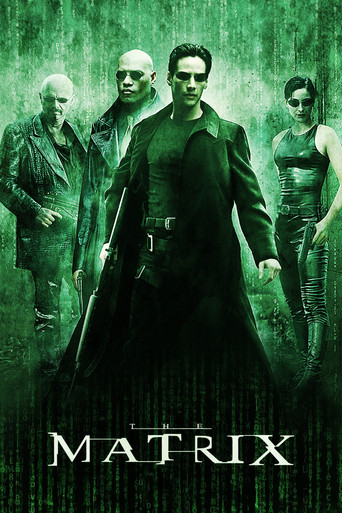
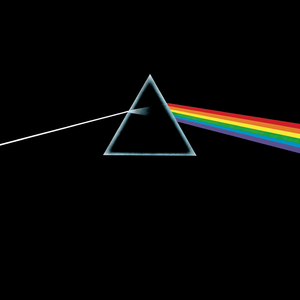



The Matrix
The Dark Side of the Moon
The Hitchhiker's Guide to the Galaxy
Tokyo
Portal
Step 5 PreviewStep 5 Preview
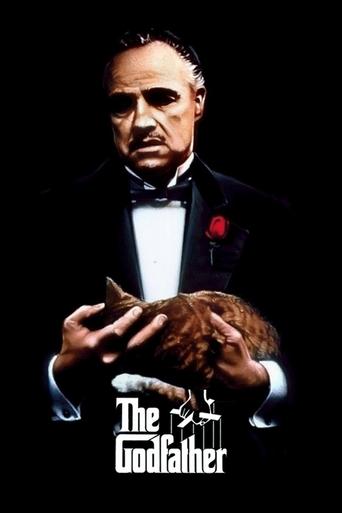
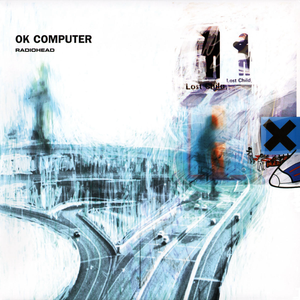


The Godfather
OK Computer
Le petit prince
Kyoto
The Legend of Zelda: Ocarina of Time
Price and specs
Not enough votes to call it. On the specs, Step 5 Preview has the edge: bigger model tier, newer, bigger context window. Step 5 Preview costs 5.6x less per token.
| Spec | Grok 4 | Step 5 Preview |
|---|---|---|
| Input price | $3/M tokens | $1/M tokens |
| Output price | $15/M tokens | $2.7/M tokens |
| Context window | 256K tokens | 1.0M tokens |
| Free API (OpenRouter) | No | No |
| Released | Jul 2025 | Oct 2026 |
| At 10M a month | $30.00 | $10.00 |
Input tokens at list price. No caching, no batch discount.
Where to run it
Grok 4
No hosts listed on OpenRouter.
Step 5 Preview1 host
Per million tokens. Prices and uptime via OpenRouter, checked 10 Oct 2026.
Common questions
What is the difference between Grok 4 and Step 5 Preview?
Grok 4 is developed by xAI while Step 5 Preview is developed by StepFun. Grok 4 has a 256K token context window vs Step 5 Preview's 1.0M. You can compare their actual outputs across 53 challenges on Rival to see how they differ in practice.
Which is better, Grok 4 or Step 5 Preview?
It depends on your use case. Grok 4 and Step 5 Preview each have strengths in different areas. Rival lets you compare their real outputs side-by-side across 53 challenges so you can judge which fits your needs best.
How much does Grok 4 cost compared to Step 5 Preview?
Grok 4 costs $3/M input tokens and Step 5 Preview costs $1/M input tokens. Step 5 Preview is $2.00/M cheaper per input. Check their side-by-side outputs on Rival to see if the price difference is justified by quality.
How can I compare Grok 4 and Step 5 Preview on Rival?
This page shows a side-by-side comparison of Grok 4 and Step 5 Preview across shared challenges. You can vote on which model produced the better output in a blind duel. Browsing and voting are free. No account is needed to look; signing in only saves your votes and likes.
More comparisons
Against the newest arrivals
- Grok 4 vs Claude Haiku 5.5Landed Oct 2026
- Step 5 Preview vs Ling 3.1 FlashLanded Oct 2026
- Grok 4 vs Mistral Large 4Landed Oct 2026
- Step 5 Preview vs GPT-6.1 SolLanded Sep 2026
- Grok 4 vs Claude Sonnet 5.5Landed Sep 2026
- Step 5 Preview vs Solar Mini 4Landed Sep 2026
- Grok 4 vs Qwen3.8 Max PrimeLanded Sep 2026
- Step 5 Preview vs GLM 5.3 PrimeLanded Sep 2026


Same lab, same size, long tail
- Grok 4 vs Grok 4.7Same lab
- Grok 4 vs Grok 4.6Version compare
- Step 5 Preview vs Mistral Large 4Same size
- Step 5 Preview vs Hy3Same size
- Grok 4 vs Dots3-Note PreviewSame size
- Grok 4 vs Elephant AlphaSame size
- Grok 4 vs ERNIE 4.5 300B A47BNew provider
- Grok 4 vs OpenRouter Fusion · Budget (Jun 2026)New provider