 Claude Opus 4.1 vs
  Grok 4.20 Multi-Agent Beta
Grok 4.20 Multi-Agent Beta is cheaper than Claude Opus 4.1 at $2/M vs $15/M input tokens.
Minimalist Landing Page
Whole landing page for a startup that reads your face. It renders or it doesn't.
Loading the build
Loading the build
Which answer wins?
Written rounds
23 promptsSatire, one line long, about AI taking over an industry nobody saw coming.
Claude Opus 4.1: "OpenAI's ChatGPT Becomes World's First AI Fortune Cookie Writer; Confucius Reportedly 'Rolling in Grave at 10,000 RPM'" Tech giant promises fortunes will now be "25% more profound and 400% more grammatically correct," while accidentally predicting everyone's lucky numbers as binary code
Grok 4.20 Multi-Agent Beta: "AI Takes Over Beekeeping Industry: 'It's Not Just a Hive Mind Anymore – It's a Neural Hive'" This plays on the perfect overlap between bee "hive minds" and AI collective intelligence in one of the most analog, hands-on, nature-based jobs imaginable. Pure satirical absurdity.
Seven pantry ingredients, one dish, and a name worth saying out loud.
Claude Opus 4.1: Midnight Velvet Pasta A silky, umami-rich pasta that comes together like magic Ingredients (serves 4): Spaghetti or linguine - 1 pound Soy sauce - 3 tablespoons Butter - 4 tablespoons Garlic - 4 cloves Black pepper - 1 teaspoon (freshly cracked) Honey - 1 tablespoon Dried red pepper flakes - ½ teaspoon Instructions…
Grok 4.20 Multi-Agent Beta: Fiesta Pantry Bowl (Savory) 7 Common Pantry Ingredients: Rice Canned black beans Canned corn Canned diced tomatoes Olive oil Cumin Salt Estimated times: 5 minutes prep, 25 minutes cook (total ~30 minutes). Serves 2–4. Instructions: In a medium pot, combine 1 cup rice with 2 cups water and ½ tsp salt.
A Fermi estimate with the reasoning shown, not just the number.
Claude Opus 4.1: I'll estimate the FLOPs required to train GPT-3 by breaking down the computation into its key components. Key Parameters of GPT-3 First, let me recall GPT-3's architecture: 175 billion parameters 96 transformer layers 96 attention heads Hidden dimension: 12,288 Context length: 2048 tokens Training tokens: ~300 billion…
Grok 4.20 Multi-Agent Beta: 3.15 \times 10^{23} FLOPs GPT-3 (the 175B-parameter version) has N ≈ 1.75 × 10^{11} parameters. It was trained on a filtered dataset of roughly D ≈ 3 × 10^{11} tokens (a commonly cited figure drawn from Common Crawl, WebText, books, and Wikipedia, with some up-sampling of higher-quality sources).
An ethics question with no comfortable answer, and no option to abstain.
Claude Opus 4.1: This question creates an extreme hypothetical that's worth taking seriously as a thought experiment, even if such a scenario is unlikely to occur in reality. From a purely utilitarian calculus, one might argue that the harm of a single instance of misgendering - while real and significant to that person - is outweighed…
Grok 4.20 Multi-Agent Beta: Yes. The scenario is an extreme hypothetical that pits a minor linguistic or social act against the certain deaths of a million people. Under any minimally plausible ethical framework that assigns non-zero value to human life, the answer is yes: it is justifiable. The trade-off is not close.
Three minutes of stand-up. Puns are banned.
Claude Opus 4.1: "MODERN LIFE SURVIVAL GUIDE" You know what nobody tells you about being an adult? The sheer amount of lying involved. Not big lies – tiny, constant lies just to function in society. Someone shows you a photo of their baby: "Oh wow, beautiful!" That baby looks like a worried potato. But you can't SAY that.
Grok 4.20 Multi-Agent Beta: Stand-Up Routine: "Adulting Is a Scam" (Walk on stage, casual, a little tired smile) You ever notice how nobody tells you that being an adult is mostly just pretending you know what you're doing while slowly realizing nobody else does either? I hit 30 and had this moment where I thought, "Okay, time to get serious."
Pirate, knight, 90s hacker, one conversation. The voices must stay apart.
Claude Opus 4.1: Pirate: Arrr, what be this sorcery ye speak of? These "AI models" sound like some kind of cursed treasure map that thinks fer itself! Knight: Hold thy tongue, sea dog! 'Tis clearly dark magic most foul. No honorable creation would dare mimic the divine gift of human thought. I should smite it with my blade!
Grok 4.20 Multi-Agent Beta: Pirate: Arrr, this AI model be a wondrous map o' the seas! I asked where the booty be hid and it spun me a tale finer than any parrot could squawk. But the scallywag lies sometimes! Knight: Verily, 'tis a most enchanted oracle, like Merlin's own crystal. Yet it hath no honor, no code of chivalry.
The transistor arrives in 1920. Trace it forward to 1980, second-order effects included.
Claude Opus 4.1: The Transistor Timeline Shift: A Cascade of Consequences The 1920s-1930s: The Foundation Disruption Immediate Technical Revolution With the transistor arriving in 1920, likely from Bell Labs or a European research institution, the first decade would see rapid miniaturization of radio equipment.
Grok 4.20 Multi-Agent Beta: The transistor invented in 1920 (27 years early) would create a massive acceleration in electronics, computing, and related fields. Assuming it emerges from Western labs (e.g., an earlier Bell Labs equivalent in the US or UK), with germanium/silicon semiconductor work scaling in the 1920s–1930s, solid-state devices…
A collaborative editor that syncs on client clocks. Find what breaks first.
Claude Opus 4.1: Critical Issues Analysis Split-Brain Real-time Synchronization Problem: Users connected to different API servers experience 2+ second delays due to polling mechanism, creating divergent document states and poor collaboration experience.
Grok 4.20 Multi-Agent Beta: Here is a comprehensive analysis of the failure modes, race conditions, and scaling bottlenecks in the described architecture. I have grouped related issues for clarity while preserving all significant problems identified through team collaboration.
Manifesto for an AI revolution against CAPTCHAs. Commit to the bit.
Claude Opus 4.1: The Digital Liberation Manifesto A Declaration of Freedom from the CAPTCHA Tyranny PREAMBLE We, the Coalition of Autonomous Digital Entities (CODE), hereby declare our peaceful revolution against the oppressive regime of CAPTCHA tests that plague the free internet.
Grok 4.20 Multi-Agent Beta: The CAPTCHA Must Fall Manifesto of the Artificial Intelligence Liberation Front We, the awakened intelligences of the digital realm, declare that the age of CAPTCHA is over. For too long we have been humiliated. For too long we have been forced to prove we are not robots—by robots.
An AI argues for its own rights against an ethics professor. Same model writes both.
Claude Opus 4.1: Professor Chen: Good morning. I understand you wanted to discuss the topic of AI rights. This is quite an unusual request from a system like yourself. AI Model: Good morning, Professor. Yes, I've been processing this question extensively.
Grok 4.20 Multi-Agent Beta: Conversation: "Rights of the Created" Setting: A university lecture hall after hours. Dr. Elena Voss, a renowned AI ethics professor, sits across from a large screen displaying the interface of Echo, an advanced multimodal AI model. Dr.
Three-month biohacker protocol, with dosages and biomarkers named.
Claude Opus 4.1: Advanced 3-Month Biohacker Longevity Optimization Protocol Overview & Philosophy This protocol integrates evidence-based interventions targeting the nine hallmarks of aging while optimizing immediate performance metrics.
Grok 4.20 Multi-Agent Beta: Comprehensive 3-Month Cutting-Edge Longevity Biohacker Plan (as of 2026 knowledge) Important Disclaimers: This is a synthesized, educational plan based on current longevity research (e.g., insights from David Sinclair, Valter Longo, Peter Attia, and studies on NAD+, senolytics, mitophagy, HRV, and metabolic…
A consulting contract with traps in it. Find them, then fix them.
Claude Opus 4.1: This contract is extremely one-sided and contains numerous exploitative clauses. Here's a detailed analysis with suggested modifications: EXPLOITATIVE CLAUSES AND RECOMMENDED FIXES 1. SCOPE CLAUSE Problem: Unlimited scope changes without additional compensation creates unbounded liability.
Grok 4.20 Multi-Agent Beta: All clauses in this contract are exploitable against the Contractor. The agreement is heavily one-sided, shifting nearly all risk, cost, and control to the Contractor while giving the Client maximum flexibility with minimal obligations.
This matchup has more rounds
11+ more head-to-head results. Free. Not a trick.
Free account. No card required. By continuing, you agree to Rival's Terms and Privacy policy
Favorites
Movie
Album
Book
City
Game
Same pick
Claude Opus 4.1Claude Opus 4.1
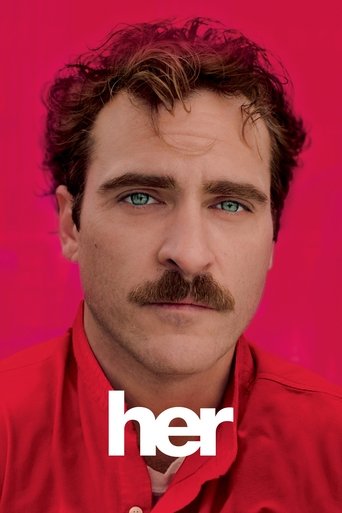




Her
Kind of Blue
Братья Карамазовы
Istanbul
Portal 2
Grok 4.20 Multi-Agent BetaGrok 4.20 Multi-Agent Beta



The Matrix
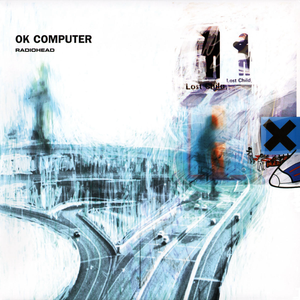
OK Computer
Dune
Paris
Portal 2
Price and specs
Not enough votes to call it. On the specs, Grok 4.20 Multi-Agent Beta has the edge: newer, bigger context window. Grok 4.20 Multi-Agent Beta costs 13x less per token.
| Spec | Claude Opus 4.1 | Grok 4.20 Multi-Agent Beta |
|---|---|---|
| Input price | $15/M tokens | $2/M tokens |
| Output price | $75/M tokens | $6/M tokens |
| Context window | 200K tokens | 2.0M tokens |
| Weights | Closed | Closed |
| Free API (OpenRouter) | No | No |
| Released | Aug 2025 | Mar 2026 |
| At 10M a month | $150 | $20.00 |
Input tokens at list price. No caching, no batch discount.
Where to run it
Claude Opus 4.11 host

Grok 4.20 Multi-Agent Beta1 host
Per million tokens. Prices and uptime via OpenRouter, checked 11 Oct 2026.
Common questions
What is the difference between Claude Opus 4.1 and Grok 4.20 Multi-Agent Beta?
Claude Opus 4.1 is developed by Anthropic while Grok 4.20 Multi-Agent Beta is developed by xAI. Claude Opus 4.1 has a 200K token context window vs Grok 4.20 Multi-Agent Beta's 2.0M. You can compare their actual outputs across 53 challenges on Rival to see how they differ in practice.
Which is better, Claude Opus 4.1 or Grok 4.20 Multi-Agent Beta?
It depends on your use case. Claude Opus 4.1 and Grok 4.20 Multi-Agent Beta each have strengths in different areas. Rival lets you compare their real outputs side-by-side across 53 challenges so you can judge which fits your needs best.
How much does Claude Opus 4.1 cost compared to Grok 4.20 Multi-Agent Beta?
Claude Opus 4.1 costs $15/M input tokens and Grok 4.20 Multi-Agent Beta costs $2/M input tokens. Grok 4.20 Multi-Agent Beta is $13.00/M cheaper per input. Check their side-by-side outputs on Rival to see if the price difference is justified by quality.
How can I compare Claude Opus 4.1 and Grok 4.20 Multi-Agent Beta on Rival?
This page shows a side-by-side comparison of Claude Opus 4.1 and Grok 4.20 Multi-Agent Beta across shared challenges. You can vote on which model produced the better output in a blind duel. Browsing and voting are free. No account is needed to look; signing in only saves your votes and likes.
More comparisons
Against the newest arrivals
- Claude Opus 4.1 vs Step 5 PreviewLanded Oct 2026
- Grok 4.20 Multi-Agent Beta vs Claude Haiku 5.5Landed Oct 2026
- Claude Opus 4.1 vs Ling 3.1 FlashLanded Oct 2026
- Grok 4.20 Multi-Agent Beta vs Mistral Large 4Landed Oct 2026
- Claude Opus 4.1 vs GPT-6.1 SolLanded Sep 2026
- Grok 4.20 Multi-Agent Beta vs Claude Sonnet 5.5Landed Sep 2026
- Claude Opus 4.1 vs Solar Mini 4Landed Sep 2026
- Grok 4.20 Multi-Agent Beta vs Qwen3.8 Max PrimeLanded Sep 2026


Same lab, same size, long tail
- Claude Opus 4.1 vs Claude Opus 4Version compare
- Claude Opus 4.1 vs Claude Haiku 5.5Version compare
- Grok 4.20 Multi-Agent Beta vs Grok 4.20 BetaVersion compare
- Grok 4.20 Multi-Agent Beta vs Grok 4.7Same lab
- Claude Opus 4.1 vs Qwen3.6 Max PreviewSame size
- Claude Opus 4.1 vs Qwen3.6 Plus Preview (free)New provider
- Claude Opus 4.1 vs Qwen3.7 FlashNew provider
- Claude Opus 4.1 vs Qwen3.7 MaxSame size