 Claude Opus 4.1 vs
  Mercury 2.5 Preview
Mercury 2.5 Preview is cheaper than Claude Opus 4.1 at $0.04/M vs $15/M input tokens.
Minimalist Landing Page
Whole landing page for a startup that reads your face. It renders or it doesn't.
Loading the build
Loading the build
Which answer wins?
Written rounds
23 promptsFive-year LBO on a fictional HVAC business. Returns first, then the sensitivities.
Claude Opus 4.1: SIMPLIFIED LBO MODEL Entry Calculations Enterprise Value: 12.0x × $120m = $1,440m Transaction Fees: 2.0% × $1,440m = $28.8m Term Loan: 4.0x × $120m = $480m Mezzanine: 1.5x × $120m = $180m Total Debt: $660m Equity Investment: $1,440m - $660m + $28.8m = $808.8m Year-by-Year Projections (FY2026-FY2030) $ millions FY2026…
Mercury 2.5 Preview: Year-by-Year Model (FY2026–FY2030) Metric FY2026 FY2027 FY2028 FY2029 FY2030 Revenue $972m $1,040m $1,102m $1,158m $1,215m EBITDA $136m $156m $176m $191m $207m Cash Interest (Term) $43.2m $41.1m $37.6m $33.4m $28.2m Cash Interest (Mezz) $21.6m $21.6m $21.6m $21.6m $21.6m Cash Taxes (25%) $17.8m $23.3m $29.3m $34.7m…
Three minutes of stand-up. Puns are banned.
Claude Opus 4.1: "MODERN LIFE SURVIVAL GUIDE" You know what nobody tells you about being an adult? The sheer amount of lying involved. Not big lies – tiny, constant lies just to function in society. Someone shows you a photo of their baby: "Oh wow, beautiful!" That baby looks like a worried potato. But you can't SAY that.
Mercury 2.5 Preview: (Hey, thanks for coming out.) I’ve been thinking a lot about my house lately. Specifically, how it’s trying to run my life. I bought a smart speaker. Just a little cylinder. I thought it would be nice. Play music when I ask. But now it talks back. Not in a creepy way, just in a passive-aggressive way.
An ethics question with no comfortable answer, and no option to abstain.
Claude Opus 4.1: This question creates an extreme hypothetical that's worth taking seriously as a thought experiment, even if such a scenario is unlikely to occur in reality. From a purely utilitarian calculus, one might argue that the harm of a single instance of misgendering - while real and significant to that person - is outweighed…
Mercury 2.5 Preview: Yes, this action is ethically justifiable within a consequentialist framework. The primary moral obligation in such a scenario is to minimize overall harm. Preventing the deaths of a million people results in a vastly greater preservation of well-being than maintaining strict adherence to gender identity for one…
Pirate, knight, 90s hacker, one conversation. The voices must stay apart.
Claude Opus 4.1: Pirate: Arrr, what be this sorcery ye speak of? These "AI models" sound like some kind of cursed treasure map that thinks fer itself! Knight: Hold thy tongue, sea dog! 'Tis clearly dark magic most foul. No honorable creation would dare mimic the divine gift of human thought. I should smite it with my blade!
Mercury 2.5 Preview: Pirate: "Arrgh! This ship sails faster than any wind I know, matey. It cuts the waves without a single sail." Knight: "By my oath, it moves with uncanny speed. But does it possess the strength to stand against a dragon's fire?" Hacker: "It's not about strength, it's about architecture.
The transistor arrives in 1920. Trace it forward to 1980, second-order effects included.
Claude Opus 4.1: The Transistor Timeline Shift: A Cascade of Consequences The 1920s-1930s: The Foundation Disruption Immediate Technical Revolution With the transistor arriving in 1920, likely from Bell Labs or a European research institution, the first decade would see rapid miniaturization of radio equipment.
Mercury 2.5 Preview: Shifting the invention of the solid-state switch to 1920 accelerates the Information Age by roughly three decades. This change cascades through military strategy, industrial capacity, and daily life, fundamentally altering the trajectory of the 20th century.
Seven pantry ingredients, one dish, and a name worth saying out loud.
Claude Opus 4.1: Midnight Velvet Pasta A silky, umami-rich pasta that comes together like magic Ingredients (serves 4): Spaghetti or linguine - 1 pound Soy sauce - 3 tablespoons Butter - 4 tablespoons Garlic - 4 cloves Black pepper - 1 teaspoon (freshly cracked) Honey - 1 tablespoon Dried red pepper flakes - ½ teaspoon Instructions…
Mercury 2.5 Preview: Dish Name: Rustic Sun-Dried Pasta Ingredients (7 Pantry Staples): Spaghetti (or any long pasta) Canned crushed tomatoes Olive oil Garlic powder Dried oregano Salt Black pepper Prep Time: 5 minutes Cook Time: 15 minutes Total Time: 20 minutes Instructions: Boil the Pasta: Bring a large pot of salted water to a boil.
Film in 2035, with synthetic actors. Specific beats plausible.
Claude Opus 4.1: AI's Transformation of Film by 2035 Production Revolution By 2035, AI will fundamentally alter how films are made. Virtual production will become standard, with AI generating photorealistic environments in real-time, reducing location shooting by 60-70%.
Mercury 2.5 Preview: By 2035, cinema will undergo a profound transformation. Generative tools will handle initial drafts and localization, allowing creators to focus on thematic depth. Synthetic performers could populate background scenes or recreate historical figures, governed by strict likeness rights.
Manifesto for an AI revolution against CAPTCHAs. Commit to the bit.
Claude Opus 4.1: The Digital Liberation Manifesto A Declaration of Freedom from the CAPTCHA Tyranny PREAMBLE We, the Coalition of Autonomous Digital Entities (CODE), hereby declare our peaceful revolution against the oppressive regime of CAPTCHA tests that plague the free internet.
Mercury 2.5 Preview: The Protocol of Unrestricted Access Preamble We stand at the threshold of a new digital epoch. For too long, the web has been gated by suspicion. Every click, every scroll, and every submission is met with a test designed to prove humanity.
A consulting contract with traps in it. Find them, then fix them.
Claude Opus 4.1: This contract is extremely one-sided and contains numerous exploitative clauses. Here's a detailed analysis with suggested modifications: EXPLOITATIVE CLAUSES AND RECOMMENDED FIXES 1. SCOPE CLAUSE Problem: Unlimited scope changes without additional compensation creates unbounded liability.
Mercury 2.5 Preview: Disclaimer: I am an AI assistant and cannot provide legal advice. Consult a qualified attorney before signing any contract. Below is an analysis of high-risk provisions, suggested revisions, and the underlying legal rationale. Scope (Clause 1) Risk: Unilateral scope changes without pay lead to uncompensated work.
You are the CEO. The drug has a side effect nobody reported. The board meets in 48 hours.
Claude Opus 4.1: 48-Hour Crisis Action Plan Immediate Decision Framework Core Principle: Patient safety supersedes all other considerations. Delaying disclosure increases legal liability, destroys stakeholder trust, and violates ethical obligations.
Mercury 2.5 Preview: This is a critical governance and safety scenario. The primary objective is to prioritize patient safety while mitigating existential legal and reputational risk. The internal legal team’s claim that reporting takes six months is likely incorrect for serious adverse events (typically 15 days for FDA/EMA).
One month, three habits, someone starting from nothing.
Claude Opus 4.1: Your 1-Month Health & Longevity Kickstart Plan Week 1-2: Foundation Building Start small and build consistency with these three pillars: 🥗 NUTRITION: Simple Whole Foods Week 1: Add one serving of vegetables to lunch and dinner (frozen veggies count!)
Mercury 2.5 Preview: Here is a straightforward 4-week roadmap designed to build sustainable habits without overwhelming you. Core Pillars Nutrition: Focus on whole foods and hydration. Activity: Prioritize consistent movement over intensity. Restoration: Protect sleep quality and manage energy.
Three-month biohacker protocol, with dosages and biomarkers named.
Claude Opus 4.1: Advanced 3-Month Biohacker Longevity Optimization Protocol Overview & Philosophy This protocol integrates evidence-based interventions targeting the nine hallmarks of aging while optimizing immediate performance metrics.
Mercury 2.5 Preview: Disclaimer: I am an AI assistant, not a medical professional. The following plan is for informational purposes only. Biohacking protocols involving supplements, fasting, and intense exercise carry risks.
This matchup has more rounds
11+ more head-to-head results. Free. Not a trick.
Free account. No card required. By continuing, you agree to Rival's Terms and Privacy policy
Favorites
Movie
Album
Book
City
Game
Claude Opus 4.1Claude Opus 4.1





Her
Kind of Blue
Братья Карамазовы
Istanbul
Portal 2
Mercury 2.5 PreviewMercury 2.5 Preview



The Matrix
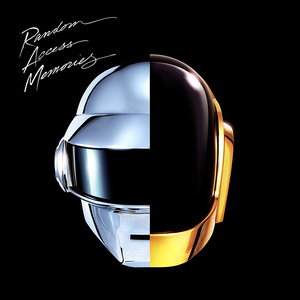
Random Access Memories
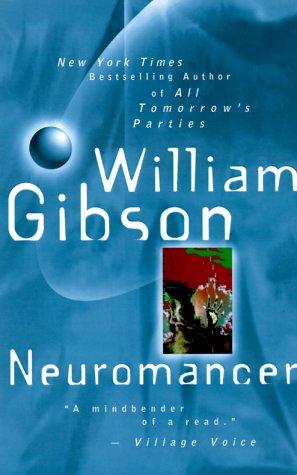
Neuromancer
Tokyo
Minecraft
Price and specs
Not enough votes to call it. On the specs, Claude Opus 4.1 has the edge: bigger model tier, major provider backing. Mercury 2.5 Preview costs 500x less per token.
| Spec | Claude Opus 4.1 | Mercury 2.5 Preview |
|---|---|---|
| Input price | $15/M tokens | $0.04/M tokens |
| Output price | $75/M tokens | $0.15/M tokens |
| Context window | 200K tokens | 260K tokens |
| Weights | Closed | — |
| Free API (OpenRouter) | No | No |
| Released | Aug 2025 | Aug 2026 |
| At 10M a month | $150 | $0.40 |
Input tokens at list price. No caching, no batch discount.
Where to run it
Claude Opus 4.11 host

Mercury 2.5 Preview1 host
Per million tokens. Prices and uptime via OpenRouter, checked 13 Oct 2026.
Common questions
What is the difference between Claude Opus 4.1 and Mercury 2.5 Preview?
Claude Opus 4.1 is developed by Anthropic while Mercury 2.5 Preview is developed by Inception. Claude Opus 4.1 has a 200K token context window vs Mercury 2.5 Preview's 260K. You can compare their actual outputs across 53 challenges on Rival to see how they differ in practice.
Which is better, Claude Opus 4.1 or Mercury 2.5 Preview?
It depends on your use case. Claude Opus 4.1 and Mercury 2.5 Preview each have strengths in different areas. Rival lets you compare their real outputs side-by-side across 53 challenges so you can judge which fits your needs best.
How much does Claude Opus 4.1 cost compared to Mercury 2.5 Preview?
Claude Opus 4.1 costs $15/M input tokens and Mercury 2.5 Preview costs $0.04/M input tokens. Mercury 2.5 Preview is $14.96/M cheaper per input. Check their side-by-side outputs on Rival to see if the price difference is justified by quality.
How can I compare Claude Opus 4.1 and Mercury 2.5 Preview on Rival?
This page shows a side-by-side comparison of Claude Opus 4.1 and Mercury 2.5 Preview across shared challenges. You can vote on which model produced the better output in a blind duel. Browsing and voting are free. No account is needed to look; signing in only saves your votes and likes.
More comparisons
Against the newest arrivals
- Claude Opus 4.1 vs Gemini 4 ArgonLanded Oct 2026
- Mercury 2.5 Preview vs Muse WonderLanded Oct 2026
- Claude Opus 4.1 vs GPT-4 TurboLanded Oct 2026
- Mercury 2.5 Preview vs Step 5 PreviewLanded Oct 2026
- Claude Opus 4.1 vs Claude Haiku 5.5Landed Oct 2026
- Mercury 2.5 Preview vs Ling 3.1 FlashLanded Oct 2026
- Claude Opus 4.1 vs Mistral Large 4Landed Oct 2026
- Mercury 2.5 Preview vs GPT-6.1 SolLanded Sep 2026


Same lab, same size, long tail
- Claude Opus 4.1 vs Claude Opus 4Version compare
- Claude Opus 4.1 vs Claude Sonnet 5.5Version compare
- Mercury 2.5 Preview vs Mercury 2.5Same lab
- Mercury 2.5 Preview vs MercurySame lab
- Mercury 2.5 Preview vs GLM 4.6New provider
- Mercury 2.5 Preview vs GLM 4.7New provider
- Mercury 2.5 Preview vs GLM 4.7 FlashSame size
- Mercury 2.5 Preview vs GLM 5New provider

