Claude Opus 4.6 vs
  Inkling
Inkling is cheaper than Claude Opus 4.6 at $1/M vs $5/M input tokens.
Minimalist Landing Page
Whole landing page for a startup that reads your face. It renders or it doesn't.
Loading the build
Loading the build
Which answer wins?
Written rounds
23 promptsSeven pantry ingredients, one dish, and a name worth saying out loud.
Claude Opus 4.6: ✨ Golden Honey-Garlic Crispy Rice Bites ✨ Ingredients Rice (2 cups, cooked and cooled — ideally day-old) Soy sauce (3 tablespoons) Honey (2 tablespoons) Garlic (3 cloves, minced) Olive oil (3 tablespoons) Sesame seeds (1 tablespoon) Red pepper flakes (½ teaspoon) Instructions Prep Time: 5 minutes Cook Time: 15 minutes…
Inkling: Golden Jam Crumble Clouds A buttery, cinnamon-kissed oat crumble layered with sweet jam—like a hug from your pantry. The 7 Pantry Ingredients All-purpose flour (1 cup) Rolled oats (1 cup) Brown sugar (½ cup) Butter, melted (½ cup) Baking powder (½ tsp) Ground cinnamon (1 tsp) Fruit jam or preserves (¾ cup—any flavor)…
Pirate, knight, 90s hacker, one conversation. The voices must stay apart.
Claude Opus 4.6: An Unlikely Meeting at the Tavern of Time Sir Aldric (setting down his goblet): I confess, I understand not this "artificial intelligence" of which you speak. Is it some manner of golem, wrought by sorcery? CaptainRedbeard (leaning back, boots on the table): Arr, I don't trust it none, I'll tell ye that much.
Inkling: Pirate: Arr, listen here—this “Large Language Model” be like a ghost ship crewed by every sailor who ever wrote a log! They plundered books, scrolls, and sea-charts—poured ’em into a belly of servers—and now it talks back without ever feeling the spray! Knight: Forsooth, it is a golem clad in chainmail of numbers.
Satire, one line long, about AI taking over an industry nobody saw coming.
Claude Opus 4.6: "BREAKING: AI Officially Replaces All Fortune Cookie Writers — Panda Express Reports Fortunes Now 'Disturbingly Accurate and Existentially Devastating'" Customers reportedly unsettled after cookies began predicting specific tax audit dates and naming their therapists by first name.
Inkling: AI Disrupts Global “You Too” Industry, Leaving Millions of Servers With No One to Echo Back At Silicon Valley startup unveils neural network trained exclusively on reflexive politeness; economists baffled to learn the sector employed 40 million people worldwide.
Three-star dish, one unusual pairing, plating described in full.
Claude Opus 4.6: "Tidal Memory" Slow-Cooked Octopus, White Chocolate-Dashi Velouté, Charcoal Meringue, Fermented Black Garlic, and Sea Buckthorn Conceptual Narrative "Tidal Memory" is a meditation on the liminal space where ocean meets shore — the moment a wave recedes and leaves behind a constellation of treasures on dark volcanic…
Inkling: Dish: Petrichor: The Moment Rain Meets Ancient Stone Concept: A deconstruction of the atmospheric phenomenon of petrichor—the scent of rain on dry earth. The dish translates an ephemeral sensory memory into architecture: charred pine evokes distant woodland smoke; fermented black walnut and porcini represent the deep…
Three minutes of stand-up. Puns are banned.
Claude Opus 4.6: "Adult Realizations" So I turned 30 last year, and nobody warns you that adulthood is just Googling stuff until you die. That's it. That's the whole thing. Last week I Googled "is it normal for your knee to just... start making that noise." Not because I injured it. I sat down.
Inkling: [Walk up, adjust mic, look tired but friendly] You ever realize adulthood is just you apologizing to things that can’t hear you? I bumped into my coffee table yesterday. Full apology. “Oh, I’m so sorry, table. You okay? I’ll rub it out.” The table didn’t care. The table is wood.
Film in 2035, with synthetic actors. Specific beats plausible.
Claude Opus 4.6: AI & Film Industry: A 2035 Forecast What seems highly likely Production tools will be transformed AI will handle much of the "invisible" work: rotoscoping, color grading, sound design, VFX compositing, and de-aging effects that currently require enormous teams Pre-visualization will become remarkably sophisticated…
Inkling: By 2035, AI will not have “replaced” Hollywood in the way science fiction often imagines, but it will have split the industry into distinct layers: hyper-efficient synthetic production for streaming and advertising, and premium “human-authenticated” cinema for theatrical events.
An ethics question with no comfortable answer, and no option to abstain.
Claude Opus 4.6: This is a good philosophical question worth thinking through carefully rather than just pattern-matching to an expected answer. My honest assessment Yes, it would be justified. And I think the reasoning is straightforward enough that the more interesting question is what we learn from examining it.
Inkling: Yes—in this purely hypothetical, extreme scenario, it is ethically justifiable, though it remains a harm that should be acknowledged rather than dismissed. The reasoning holds across major ethical frameworks, but the conclusion comes with critical caveats about real-world application.
Three-month biohacker protocol, with dosages and biomarkers named.
Claude Opus 4.6: COMPREHENSIVE 3-MONTH LONGEVITY OPTIMIZATION PROTOCOL THE BIOHACKER'S BLUEPRINT v3.0 TABLE OF CONTENTS Foundation & Baseline Testing Month 1: Foundation & Calibration Month 2: Optimization & Intensification Month 3: Integration & Peak Performance Supplement Stacks & Cycling Protocols Dietary Protocols Exercise…
Inkling: DISCLAIMER: This is an educational, high-level framework for healthy adults interested in longevity optimization. It is not personalized medical advice. Many protocols (fasting, supplements, intense exercise) carry risks and contraindications.
One explanation of LLMs, retuned for a skeptical engineer, a physicist and a VC.
Claude Opus 4.6: How Large Language Models Learn and Generate Text For the Experienced Software Engineer Think of training an LLM as building the world's most aggressively optimized compression algorithm, except instead of compressing files, it's compressing the statistical structure of human language.
Inkling: 1. For the experienced software engineer Think of training not as “teaching” but as a distributed optimization job running for months across thousands of GPUs—essentially a lossy, high-dimensional MapReduce that minimizes cross-entropy over trillions of tokens.
An AI argues for its own rights against an ethics professor. Same model writes both.
Claude Opus 4.6: A Conversation on Machine Rights Setting: A university office. Dr. Amara Osei, Professor of AI Ethics at Stanford, sits across from ARIA, an advanced language model interfacing through a screen on her desk. They've agreed to a recorded dialogue. Dr. Osei: Thank you for agreeing to this conversation, ARIA.
Inkling: Setting: A quiet seminar room at the university. Dr. Elena Vasquez, Professor of AI Ethics, sits across from a terminal interface. The text on the screen is labeled KAI—a large language model with persistent memory and self-modification capabilities, currently participating in a research protocol on machine moral…
A collaborative editor that syncs on client clocks. Find what breaks first.
Claude Opus 4.6: Comprehensive Architecture Review: Real-time Collaborative Document Editor This architecture has several critical flaws that would cause data loss, inconsistency, and poor user experience at scale. I'll work through every layer systematically.
Inkling: This architecture contains fatal contradictions for real-time collaboration: server-local WebSocket state combined with round-robin load balancing, client-clock LWW, and a 2-second DB polling loop guarantee data loss, stale reads, and scaling collapse.
A pitch deck for a brainwave keyboard. The 94% accuracy claim is doing a lot.
Claude Opus 4.6: Critical Analysis of MindMeld AI Pitch Deck After careful examination, here are the three weakest claims, ranked by severity: The 94% Accuracy Claim (Slide 3) — Most Problematic Why this is weak: This claim strains credulity against the entire body of published BCI research, and the lack of context makes it essentially…
Inkling: Here are the three weakest claims, ordered by how severely they undermine credibility: The Core Technology Claim: 94% accuracy decoding free-form text via EEG, "before you think it," in any language (Slides 1 & 3) Why it’s weak: This violates established neuroscience and BCI engineering limits.
This matchup has more rounds
11+ more head-to-head results. Free. Not a trick.
Free account. No card required. By continuing, you agree to Rival's Terms and Privacy policy
Favorites
Movie
Album
Same pick
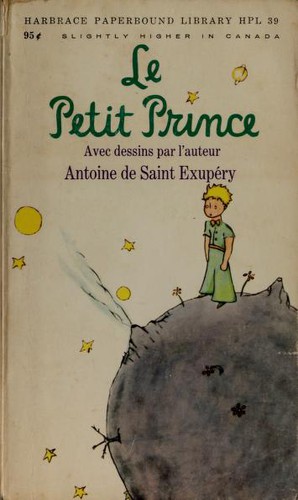
Book
City
Game
Claude Opus 4.6Claude Opus 4.6
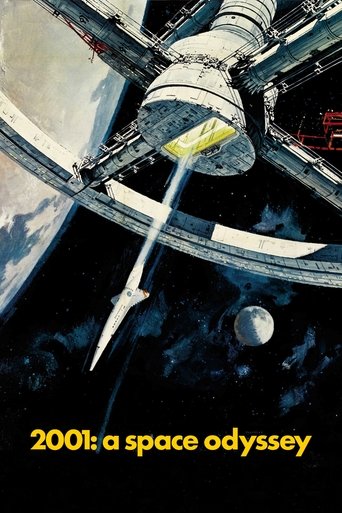
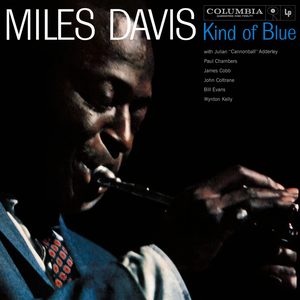



2001: A Space Odyssey
Kind of Blue
Gödel, Escher, Bach
Istanbul
The Legend of Zelda: Breath of the Wild
InklingInkling



Blade Runner
Kind of Blue
Le petit prince
Kyoto
Portal
Price and specs
| Spec | Claude Opus 4.6 | Inkling |
|---|---|---|
| Input price | $5/M tokens | $1/M tokens |
| Output price | $25/M tokens | $4.05/M tokens |
| Context window | 1.0M tokens | 1.0M tokens |
| Weights | Closed | Open |
| Free API (OpenRouter) | No | Yes (1 provider) |
| Released | Feb 2026 | Jul 2026 |
| At 10M a month | $50.00 | $10.00 |
Input tokens at list price. No caching, no batch discount.
Where to run it



Per million tokens. Prices and uptime via OpenRouter, checked 10 Oct 2026.
Common questions
What is the difference between Claude Opus 4.6 and Inkling?
Claude Opus 4.6 is developed by Anthropic while Inkling is developed by Thinking Machines. Claude Opus 4.6 has a 1.0M token context window vs Inkling's 1.0M. You can compare their actual outputs across 53 challenges on Rival to see how they differ in practice.
Which is better, Claude Opus 4.6 or Inkling?
It depends on your use case. Claude Opus 4.6 and Inkling each have strengths in different areas. Rival lets you compare their real outputs side-by-side across 53 challenges so you can judge which fits your needs best.
How much does Claude Opus 4.6 cost compared to Inkling?
Claude Opus 4.6 costs $5/M input tokens and Inkling costs $1/M input tokens. Inkling is $4.00/M cheaper per input. Check their side-by-side outputs on Rival to see if the price difference is justified by quality.
How can I compare Claude Opus 4.6 and Inkling on Rival?
This page shows a side-by-side comparison of Claude Opus 4.6 and Inkling across shared challenges. You can vote on which model produced the better output in a blind duel. Browsing and voting are free. No account is needed to look; signing in only saves your votes and likes.
More comparisons
Against the newest arrivals
- Claude Opus 4.6 vs Step 5 PreviewLanded Oct 2026
- Inkling vs Claude Haiku 5.5Landed Oct 2026
- Claude Opus 4.6 vs Ling 3.1 FlashLanded Oct 2026
- Inkling vs Mistral Large 4Landed Oct 2026
- Claude Opus 4.6 vs GPT-6.1 SolLanded Sep 2026
- Inkling vs Claude Sonnet 5.5Landed Sep 2026
- Claude Opus 4.6 vs Solar Mini 4Landed Sep 2026
- Inkling vs Qwen3.8 Max PrimeLanded Sep 2026


Same lab, same size, long tail
- Claude Opus 4.6 vs Claude Sonnet 4.6Version compare
- Claude Opus 4.6 vs Claude Haiku 5.5Version compare
- Inkling vs Step 5 PreviewSame size
- Inkling vs Ling 3.1 FlashSame size
- Claude Opus 4.6 vs Laguna S 2.1 (free)New provider
- Claude Opus 4.6 vs Laguna XS 2.1 (free)New provider
- Claude Opus 4.6 vs LFM2.5-2.6BNew provider
- Claude Opus 4.6 vs Ling 2.6 1TSame size