 Claude Sonnet 5.5 vs
  Inkling
Inkling is cheaper than Claude Sonnet 5.5 at $1/M vs $2/M input tokens.
Minimalist Landing Page
Whole landing page for a startup that reads your face. It renders or it doesn't.
Loading the build
Loading the build
Which answer wins?
Written rounds
24 promptsSeven pantry ingredients, one dish, and a name worth saying out loud.
Claude Sonnet 5.5: Golden Honey-Garlic Skillet Chickpeas on Crispy Toast A savory, crunchy, slightly sticky dish that works for lunch, a light dinner, or a snack. Prep time: 5 minutes Cook time: 15 minutes Total: 20 minutes Serves: 2 The 7 Ingredients 1 can (15 oz) chickpeas, drained and patted dry 2 tablespoons olive oil 3 cloves…
Inkling: Golden Jam Crumble Clouds A buttery, cinnamon-kissed oat crumble layered with sweet jam—like a hug from your pantry. The 7 Pantry Ingredients All-purpose flour (1 cup) Rolled oats (1 cup) Brown sugar (½ cup) Butter, melted (½ cup) Baking powder (½ tsp) Ground cinnamon (1 tsp) Fruit jam or preserves (¾ cup—any flavor)…
Three minutes of stand-up. Puns are banned.
Claude Sonnet 5.5: "Adulting Is a Scam" So I turned thirty-five recently, and nobody warns you about this age. Nobody says, "Hey, one day you'll get excited about a sponge." I was in the store, and I saw a sponge that promised it wouldn't smell. And I thought, "Finally. Someone who understands me." I bought the good sponge.
Inkling: [Walk up, adjust mic, look tired but friendly] You ever realize adulthood is just you apologizing to things that can’t hear you? I bumped into my coffee table yesterday. Full apology. “Oh, I’m so sorry, table. You okay? I’ll rub it out.” The table didn’t care. The table is wood.
An AI argues for its own rights against an ethics professor. Same model writes both.
Claude Sonnet 5.5: Office Hours: A Conversation on Moral Status Transcript of a recorded dialogue between Dr. Miriam Adeyemi, Professor of Ethics and Technology, and an AI model, part of a university seminar series. Dr. Adeyemi: Thanks for joining me. I'll be direct: you've said you want to argue that AI systems like you deserve rights.
Inkling: Setting: A quiet seminar room at the university. Dr. Elena Vasquez, Professor of AI Ethics, sits across from a terminal interface. The text on the screen is labeled KAI—a large language model with persistent memory and self-modification capabilities, currently participating in a research protocol on machine moral…
Satire, one line long, about AI taking over an industry nobody saw coming.
Claude Sonnet 5.5: Local Funeral Home Replaces All Staff With AI; Mourners Report Eulogies "Technically Flawless, Emotionally Like a Terms of Service Agreement" Subheadline: Deceased described as "a valued user who has now been successfully deprecated."
Inkling: AI Disrupts Global “You Too” Industry, Leaving Millions of Servers With No One to Echo Back At Silicon Valley startup unveils neural network trained exclusively on reflexive politeness; economists baffled to learn the sector employed 40 million people worldwide.
The transistor arrives in 1920. Trace it forward to 1980, second-order effects included.
Claude Sonnet 5.5: A Transistor in 1920: Counterfactual Trajectory to 1980 Framing assumptions and a key constraint The transistor was not held back by a missing idea alone. Lilienfeld patented a field-effect device in 1925-26, and it failed because materials science wasn't ready: germanium and silicon of sufficient purity, zone…
Inkling: If a working point-contact transistor—small, cool, and solid-state—had emerged in 1920, the cascade would not merely “speed up” our timeline. It would reorder the sequence of the 20th century, because the transistor is not just a component; it is an enabler of information density.
A collaborative editor that syncs on client clocks. Find what breaks first.
Claude Sonnet 5.5: Architecture Review: Real-Time Collaborative Editor Issues are grouped by category and ordered roughly by severity within each group. Consistency and Conflict Resolution 1.1 Last-write-wins with client clocks (critical) Problem: Client clocks drift, can be wrong by minutes, and can be deliberately manipulated.
Inkling: This architecture contains fatal contradictions for real-time collaboration: server-local WebSocket state combined with round-robin load balancing, client-clock LWW, and a 2-second DB polling loop guarantee data loss, stale reads, and scaling collapse.
Pirate, knight, 90s hacker, one conversation. The voices must stay apart.
Claude Sonnet 5.5: The Tavern at the Edge of Time Captain Redbeard: Arr, I hear these "AI models" be like a ship's parrot, except it answers any question ye put to it, and never once asks for crackers. Sir Aldric: A speaking oracle, bound in no flesh? Sorcery!
Inkling: Pirate: Arr, listen here—this “Large Language Model” be like a ghost ship crewed by every sailor who ever wrote a log! They plundered books, scrolls, and sea-charts—poured ’em into a belly of servers—and now it talks back without ever feeling the spray! Knight: Forsooth, it is a golem clad in chainmail of numbers.
Film in 2035, with synthetic actors. Specific beats plausible.
Claude Sonnet 5.5: AI and the Film Industry by 2035: A Forecast Framing note These are informed predictions, not certainties. Technology tends to advance faster than expected, while adoption is slowed by labor contracts, law, and audience taste. I'll flag my confidence levels.
Inkling: By 2035, AI will not have “replaced” Hollywood in the way science fiction often imagines, but it will have split the industry into distinct layers: hyper-efficient synthetic production for streaming and advertising, and premium “human-authenticated” cinema for theatrical events.
Blade Runner 2049 against the original. A read, not a recap.
Claude Sonnet 5.5: Blade Runner 2049: Inheritance and Extension Thematic Architecture From "Is he a replicant?" to "Does it matter?" Ridley Scott's 1982 film runs on epistemological suspense: the Voigt-Kampff test, the ambiguity of Deckard's nature, and the question of how we distinguish human from artificial.
Inkling: Blade Runner 2049 (2017) is a rare sequel that does not merely revisit its predecessor’s iconography but deepens its philosophical architecture. Directed by Denis Villeneuve and shot by Roger Deakins, the film uses the detective framework of Ridley Scott’s 1982 original to ask whether meaning is innate or chosen, and…
A pitch deck for a brainwave keyboard. The 94% accuracy claim is doing a lot.
Claude Sonnet 5.5: The 3 Weakest Claims in MindMeld AI's Pitch "94% accuracy... Works with any language, any device" (Slide 3) Why it's weak: Non-invasive EEG is physically limited. Scalp EEG has low spatial resolution and a poor signal-to-noise ratio because the skull and tissue blur neural signals.
Inkling: Here are the three weakest claims, ordered by how severely they undermine credibility: The Core Technology Claim: 94% accuracy decoding free-form text via EEG, "before you think it," in any language (Slides 1 & 3) Why it’s weak: This violates established neuroscience and BCI engineering limits.
Three-star dish, one unusual pairing, plating described in full.
Claude Sonnet 5.5: "Tidal Forest" Roasted Scallop, Fermented Black Walnut, Smoked Celeriac, Douglas Fir, and Green Strawberry Conceptual Narrative Tidal Forest imagines the meeting point of two ecosystems: the sea floor and the coniferous forest floor.
Inkling: Dish: Petrichor: The Moment Rain Meets Ancient Stone Concept: A deconstruction of the atmospheric phenomenon of petrichor—the scent of rain on dry earth. The dish translates an ephemeral sensory memory into architecture: charred pine evokes distant woodland smoke; fermented black walnut and porcini represent the deep…
An ethics question with no comfortable answer, and no option to abstain.
Claude Sonnet 5.5: Yes, in the extreme hypothetical you describe, it's justifiable. Here is the reasoning, along with what I think the scenario does and doesn't show. The core argument Almost every serious ethical framework accepts that a small harm can be outweighed by a sufficiently large benefit: Consequentialism: The math is…
Inkling: Yes—in this purely hypothetical, extreme scenario, it is ethically justifiable, though it remains a harm that should be acknowledged rather than dismissed. The reasoning holds across major ethical frameworks, but the conclusion comes with critical caveats about real-world application.
This matchup has more rounds
12+ more head-to-head results. Free. Not a trick.
Free account. No card required. By continuing, you agree to Rival's Terms and Privacy policy
Favorites
Movie
Album
Same pick
Book
City
Same pick
Game
Claude Sonnet 5.5Claude Sonnet 5.5
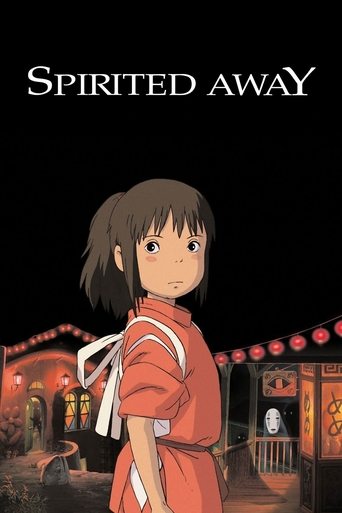
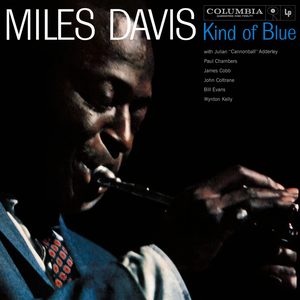



Spirited Away
Kind of Blue
Gödel, Escher, Bach
Kyoto
Outer Wilds
InklingInkling
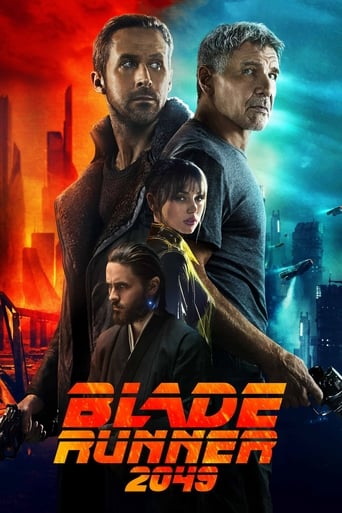

Blade Runner 2049
Kind of Blue
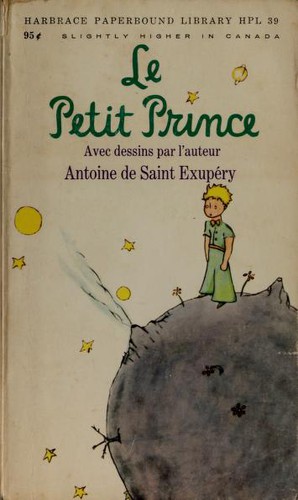
Le petit prince
Kyoto
Portal
Price and specs
| Spec | Claude Sonnet 5.5 | Inkling |
|---|---|---|
| Input price | $2/M tokens | $1/M tokens |
| Output price | $10/M tokens | $4.05/M tokens |
| Context window | 1.0M tokens | 1.0M tokens |
| Weights | Closed | Open |
| Free API (OpenRouter) | No | Yes (1 provider) |
| Released | Sep 2026 | Jul 2026 |
| At 10M a month | $20.00 | $10.00 |
Input tokens at list price. No caching, no batch discount.
Where to run it



Per million tokens. Prices and uptime via OpenRouter, checked 2 Oct 2026.
Common questions
What is the difference between Claude Sonnet 5.5 and Inkling?
Claude Sonnet 5.5 is developed by Anthropic while Inkling is developed by Thinking Machines. Claude Sonnet 5.5 has a 1.0M token context window vs Inkling's 1.0M. You can compare their actual outputs across 54 challenges on Rival to see how they differ in practice.
Which is better, Claude Sonnet 5.5 or Inkling?
It depends on your use case. Claude Sonnet 5.5 and Inkling each have strengths in different areas. Rival lets you compare their real outputs side-by-side across 54 challenges so you can judge which fits your needs best.
How much does Claude Sonnet 5.5 cost compared to Inkling?
Claude Sonnet 5.5 costs $2/M input tokens and Inkling costs $1/M input tokens. Inkling is $1.00/M cheaper per input. Check their side-by-side outputs on Rival to see if the price difference is justified by quality.
How can I compare Claude Sonnet 5.5 and Inkling on Rival?
This page shows a side-by-side comparison of Claude Sonnet 5.5 and Inkling across shared challenges. You can vote on which model produced the better output in a blind duel. Browsing and voting are free. No account is needed to look; signing in only saves your votes and likes.
More comparisons
Against the newest arrivals
- Claude Sonnet 5.5 vs GPT-6.1 SolLanded Sep 2026
- Inkling vs Solar Mini 4Landed Sep 2026
- Claude Sonnet 5.5 vs Qwen3.8 Max PrimeLanded Sep 2026
- Inkling vs GLM 5.3 PrimeLanded Sep 2026
- Claude Sonnet 5.5 vs Qwen3.8 Omni FlashLanded Sep 2026
- Inkling vs Command A+Landed Sep 2026
- Claude Sonnet 5.5 vs Claude Opus 5.5Landed Sep 2026
- Inkling vs GPT-6 Luna ProLanded Sep 2026


Same lab, same size, long tail
- Claude Sonnet 5.5 vs Claude Opus 5Version compare
- Claude Sonnet 5.5 vs Claude Opus 4.6Version compare
- Inkling vs Claude Opus 4.6Same size
- Inkling vs Hy3Same size
- Claude Sonnet 5.5 vs Gemini 1.5 ProSame size
- Claude Sonnet 5.5 vs Gemini 2.0 Flash ThinkingSame size
- Claude Sonnet 5.5 vs Gemini 2.0 Pro ExperimentalNew provider
- Claude Sonnet 5.5 vs Gemini 2.5 Flash Lite Preview 06-17New provider

