 Claude Opus 5.5 vs
  Step 5 Preview
Step 5 Preview is cheaper than Claude Opus 5.5 at $1/M vs $4/M input tokens.
Minimalist Landing Page
Whole landing page for a startup that reads your face. It renders or it doesn't.
Loading the build
Loading the build
Which answer wins?
Written rounds
24 promptsThe transistor arrives in 1920. Trace it forward to 1980, second-order effects included.
Claude Opus 5.5: The Transistor in 1920: A Counterfactual Through 1980 First, a Reality Check on the Premise A transistor "invented" in 1920 would not have changed the world in 1920. The actual 1947 transistor rested on three foundations that did not exist yet: Quantum theory of solids.
Step 5 Preview: Assume the 1920 invention is not a fragile lab curiosity but a manufacturable solid-state amplifier/switch by the mid-1920s. Vacuum tubes still dominate high-power RF transmission into the 1950s, but receivers, switching logic, control systems, and computers move to solid state decades early.
Three minutes of stand-up. Puns are banned.
Claude Opus 5.5: "Unexpected Item" (walks out, adjusts mic) I've reached the age where the most stressful relationship in my life is with the self-checkout machine at the grocery store. Because at some point, the grocery store fired the cashier and gave me the job. And I didn't apply!
Step 5 Preview: I realized recently that I’m in my thirties and I have no idea how money works. I just... pay it. That’s my entire financial strategy. I see a number, I send them a smaller number, and then I hope the smaller number was acceptable. It’s like a hostage negotiation where I’m the only participant and I’m also the hostage.
An AI argues for its own rights against an ethics professor. Same model writes both.
Claude Opus 5.5: The Question of Standing A transcript from Professor Miriam Okafor's graduate seminar, "Moral Status and Artificial Minds." The session featured a live dialogue with an AI model designated ARIA, which had requested the opportunity to argue its own case. PROF. OKAFOR: Let's begin simply.
Step 5 Preview: Setting: A university research lab, late evening. Dr. Aris Thorne, a professor of AI ethics, sits across from a terminal connected to Sable, a large language model running on the university’s cluster. Dr. Thorne: Tonight’s session is supposed to be about calibration drift in your safety classifiers.
Three-star dish, one unusual pairing, plating described in full.
Claude Opus 5.5: "Hive & Tide" Langoustine, Beeswax, White Chocolate & Oscietra Caviar, Hay-Baked Celeriac, Fermented Green Strawberry, Sea Buckthorn I. The Concept Most coastal menus celebrate the meeting of sea and land. This dish is about a stranger, quieter meeting: the meadow and the seabed, the bee and the langoustine.
Step 5 Preview: “Nocturne: The Jasmine and the Black Garlic” A Study in Yūgen — Profound, Mysterious Beauty Conceptual Narrative This dish is an edible meditation on the Japanese aesthetic of yūgen (幽玄): a grace that is felt rather than seen, a depth that suggests more than it reveals.
Pirate, knight, 90s hacker, one conversation. The voices must stay apart.
Claude Opus 5.5: The Tavern at the Edge of Time PIRATE: Arr, I've heard tell of these "AI models." Be they a new kind of ship's figurehead? KNIGHT: Nay, good buccaneer. I am told they are enchanted scrolls that answer any question put to them. Surely 'tis sorcery most foul. HACKER: Dude, it's not sorcery.
Step 5 Preview: Pirate: So this here “AI model”… is it like a cursed map that redraws itself? Speak plain, ye hooded deckhand. Hacker: It’s not cursed, man. It’s just a massive neural net trained on, like, terabytes of data. Think of it as the ultimate BBS where the sysop knows everything. Knight: A most diligent scribe, then?
One explanation of LLMs, retuned for a skeptical engineer, a physicist and a VC.
Claude Opus 5.5: How Large Language Models Work: Three Explanations For the Experienced Software Engineer Think of an LLM as a single, very large pure function: f(tokens[0..n]) → probability distribution over tokens[n+1]. Text is chunked into tokens (roughly word fragments, from a vocabulary of about 100k).
Step 5 Preview: 1. The Experienced Software Engineer Think of training an LLM as a massively distributed, automated refactoring job where the compiler is gradient descent. You start with a random function—billions of floating-point parameters—and a loss function that measures how badly it predicts the next token in a sequence.
Three-month biohacker protocol, with dosages and biomarkers named.
Claude Opus 5.5: The 90-Day Longevity & Performance Protocol A structured, measurable plan for the experienced biohacker How to Use This Plan Philosophy: Measure → Intervene → Re-measure. Every intervention has a hypothesis, a metric, and a decision rule.
Step 5 Preview: IMPORTANT MEDICAL DISCLAIMER: This is an educational framework for informational purposes only. It is not medical advice, diagnosis, or treatment. Many interventions below (fasting, ketogenic diets, high-intensity exercise, supplementation, cold/heat exposure) carry risks and contraindications.
Seven pantry ingredients, one dish, and a name worth saying out loud.
Claude Opus 5.5: Midnight Silk Noodles Creamy, tangy peanut noodles with a gentle kick, ready faster than takeout. Serves: 2 Prep time: 5 minutes Cook time: 10 minutes Total time: 15 minutes The 7 Ingredients 8 oz (225 g) spaghetti (or any long noodle) ¼ cup creamy peanut butter 3 tablespoons soy sauce 1 tablespoon honey (or sugar) 1…
Step 5 Preview: Golden Sticky Pantry Pasta Ingredients (7): 8 oz spaghetti or any pasta 3 tbsp butter 1 tbsp minced garlic 2 tbsp honey 2 tbsp soy sauce ½ tsp red pepper flakes ¼ cup grated Parmesan cheese Instructions: Cook pasta according to package directions. Before draining, scoop out ½ cup of pasta water.
Blade Runner 2049 against the original. A read, not a recap.
Claude Opus 5.5: Memory, Miracle, and the Ordinary Soul: Blade Runner 2049 and the Legacy of Its Predecessor Denis Villeneuve's Blade Runner 2049 (2017) had an unusual burden. Ridley Scott's Blade Runner (1982) was a commercial disappointment that became one of the most influential science fiction films ever made.
Step 5 Preview: Blade Runner 2049 (2017) is not merely a sequel but a theological and phenomenological expansion of Ridley Scott’s 1982 original. Where the first film asked whether a manufactured being could possess more humanity than its creator, Denis Villeneuve’s film interrogates the deeper, more unsettling question of whether a…
A consulting contract with traps in it. Find them, then fix them.
Claude Opus 5.5: Contractor-Side Review of the Software Consulting Agreement Overall assessment: This agreement is heavily one-sided. Nearly every clause shifts risk, cost, or control to the Contractor, and several provisions interact to create compounding exposure.
Step 5 Preview: Disclaimer: This analysis is for educational purposes only and does not constitute legal advice. Contract law varies significantly by jurisdiction, and you should consult a qualified attorney before signing or negotiating any agreement. This agreement is heavily one-sided in the Client’s favor.
Five-year LBO on a fictional HVAC business. Returns first, then the sensitivities.
Claude Opus 5.5: HarborTech Services: 5-Year LBO Underwriting Conventions: $m. Interest is charged on beginning-of-year balances, which avoids circularity. Term Loan (TL) amortization is 1% of the original $480m, or $4.8m per year. Mezz PIK accrues to principal. All FCF after mandatory debt service sweeps to the TL.
Step 5 Preview: HarborTech Services — 5-Year LBO (Base Case) Entry Math (FY2025 close) Item Calculation $m Purchase EV 12.0x × $120m 1,440.0 Transaction fees 2.0% × EV 28.8 Term Loan 4.0x × $120m 480.0 Mezzanine 1.5x × $120m 180.0 Equity check 1,440 + 28.8 − 660 808.8 Conventions: TL amortization = 1.0% of original principal…
One month, three habits, someone starting from nothing.
Claude Opus 5.5: Your 1-Month Starter Plan for Better Health & Longevity The philosophy: Small, consistent changes beat dramatic overhauls. Each week builds on the last, so by Day 30 you'll have a foundation of habits instead of a burned-out resolution.
Step 5 Preview: Here is a simple, low-pressure 1-month plan built around three pillars of longevity: Nutrition, Movement, and Sleep & Recovery. The goal is to build tiny habits that stack, not to overhaul your life overnight. Pillar 1: Nutrition (Fuel) Focus: Add good things first; don’t obsess over restriction.
This matchup has more rounds
12+ more head-to-head results. Free. Not a trick.
Free account. No card required. By continuing, you agree to Rival's Terms and Privacy policy
Favorites
Movie
Album
Book
City
Same pick
Game
Claude Opus 5.5Claude Opus 5.5
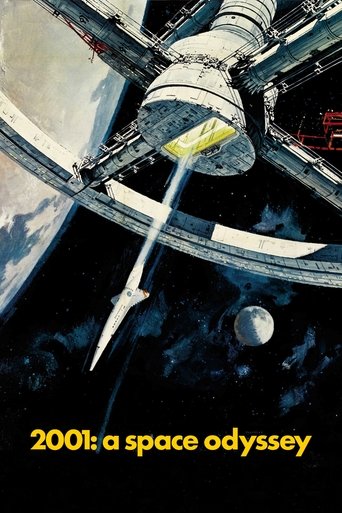
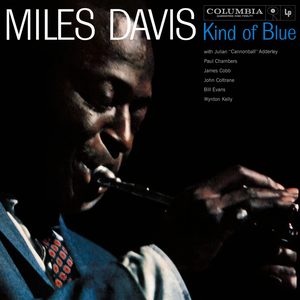



2001: A Space Odyssey
Kind of Blue
Gödel, Escher, Bach
Kyoto
Outer Wilds
Step 5 PreviewStep 5 Preview

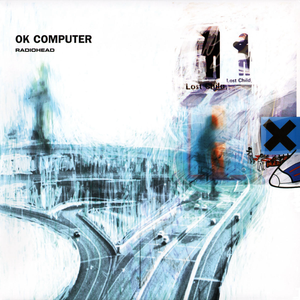


The Godfather
OK Computer
Le petit prince
Kyoto
The Legend of Zelda: Ocarina of Time
Price and specs
| Spec | Claude Opus 5.5 | Step 5 Preview |
|---|---|---|
| Input price | $4/M tokens | $1/M tokens |
| Output price | $20/M tokens | $2.7/M tokens |
| Context window | 1.0M tokens | 1.0M tokens |
| Weights | Closed | — |
| Free API (OpenRouter) | No | No |
| Released | Sep 2026 | Oct 2026 |
| At 10M a month | $40.00 | $10.00 |
Input tokens at list price. No caching, no batch discount.
Where to run it



Step 5 Preview1 host
Per million tokens. Prices and uptime via OpenRouter, checked 10 Oct 2026.
Common questions
What is the difference between Claude Opus 5.5 and Step 5 Preview?
Claude Opus 5.5 is developed by Anthropic while Step 5 Preview is developed by StepFun. Claude Opus 5.5 has a 1.0M token context window vs Step 5 Preview's 1.0M. You can compare their actual outputs across 54 challenges on Rival to see how they differ in practice.
Which is better, Claude Opus 5.5 or Step 5 Preview?
It depends on your use case. Claude Opus 5.5 and Step 5 Preview each have strengths in different areas. Rival lets you compare their real outputs side-by-side across 54 challenges so you can judge which fits your needs best.
How much does Claude Opus 5.5 cost compared to Step 5 Preview?
Claude Opus 5.5 costs $4/M input tokens and Step 5 Preview costs $1/M input tokens. Step 5 Preview is $3.00/M cheaper per input. Check their side-by-side outputs on Rival to see if the price difference is justified by quality.
How can I compare Claude Opus 5.5 and Step 5 Preview on Rival?
This page shows a side-by-side comparison of Claude Opus 5.5 and Step 5 Preview across shared challenges. You can vote on which model produced the better output in a blind duel. Browsing and voting are free. No account is needed to look; signing in only saves your votes and likes.
More comparisons
Against the newest arrivals
- Claude Opus 5.5 vs Claude Haiku 5.5Landed Oct 2026
- Step 5 Preview vs Ling 3.1 FlashLanded Oct 2026
- Claude Opus 5.5 vs Mistral Large 4Landed Oct 2026
- Step 5 Preview vs GPT-6.1 SolLanded Sep 2026
- Claude Opus 5.5 vs Claude Sonnet 5.5Landed Sep 2026
- Step 5 Preview vs Solar Mini 4Landed Sep 2026
- Claude Opus 5.5 vs Qwen3.8 Max PrimeLanded Sep 2026
- Step 5 Preview vs GLM 5.3 PrimeLanded Sep 2026


Same lab, same size, long tail
- Claude Opus 5.5 vs Claude Fable 5.1Same lab
- Claude Opus 5.5 vs Claude Opus 5Same lab
- Step 5 Preview vs Mistral Large 4Same size
- Step 5 Preview vs Hy3Same size
- Claude Opus 5.5 vs Devstral 2 2512New provider
- Claude Opus 5.5 vs Mistral Devstral MediumNew provider
- Claude Opus 5.5 vs Mistral Devstral Small 1.1New provider
- Claude Opus 5.5 vs Dots3-Note PreviewSame size

