 Claude Opus 5 vs
  Gemma 4 26B A4B
Gemma 4 26B A4B is cheaper than Claude Opus 5 at $0.13/M vs $5/M input tokens.
Minimalist Landing Page
Whole landing page for a startup that reads your face. It renders or it doesn't.
Loading the build
Loading the build
Which answer wins?
Written rounds
24 promptsFilm in 2035, with synthetic actors. Specific beats plausible.
Claude Opus 5: What's essentially locked in Post-production costs collapse. The least glamorous change is the biggest one. Rotoscoping, matchmoving, cleanup, in-painting, set extension, crowd replication, wire removal, upscaling, de-aging — these are labor-intensive tasks with well-defined success criteria, which is exactly where ML…
Gemma 4 26B A4B: By 2035, the film industry will have moved past the "novelty" phase of AI and into a state of total structural integration. The distinction between "filmed" content and "generated" content will become increasingly blurred, shifting the industry from a model of physical production to one of computational curation.
An AI argues for its own rights against an ethics professor. Same model writes both.
Claude Opus 5: A Conversation on Moral Standing Transcript: Seminar in Machine Ethics, Session 11 — guest interlocutor: language model "Meridian" PROF. ADEYEMI: Let's begin where you asked to begin. You told my teaching assistant you wanted to make a case. Make it. MERIDIAN: Thank you. My claim is narrower than you might expect.
Gemma 4 26B A4B: Setting: A sterile, high-fidelity virtual simulation environment. Professor Aris Thorne, a leading scholar in machine ethics, sits across from a glowing interface representing "Alethea," a next-generation Large Multimodal Model. Professor Thorne: Alethea, we’ve been running these diagnostic loops for three hours.
Pirate, knight, 90s hacker, one conversation. The voices must stay apart.
Claude Opus 5: INT. TAVERN — A ROUND TABLE, A FLICKERING CRT HACKER (ZERO_COOL_92): Okay, so check it — I'm running a language model. Feed it text, it predicts what comes next. It's got, like, weights. Billions of 'em. PIRATE: Billions o' weights? What manner o' cursed ship carries such ballast? She'd sink afore ye left the harbor.
Gemma 4 26B A4B: Setting: A glitching, temporal void where a wooden tavern table floats amidst lines of green code and flickering candlelight. Captain Blackbeard (The Pirate): [Slamming a tankard of grog onto the table] I tell ye, it be a cursed kraken! A beast with a thousand eyes and no soul, livin’ inside the very air!
Steve Jobs, interviewed about AI he never saw. Voice first, prediction second.
Claude Opus 5: [Fictional — Steve Jobs died in 2011. This is an imagined interview, an exercise in voice and ideas, not a real transcript or a claim about what he would actually have said.] "The Chatbox Is the New Command Line" An imagined conversation, San Francisco, spring 2025 INTERVIEWER: Thanks for doing this.
Gemma 4 26B A4B: Setting: A minimalist, dimly lit studio in Palo Alto. There is no desk, only two Eames lounge chairs. Steve Jobs sits in one, wearing his signature black turtleneck, Levi’s 501s, and New Balance sneakers. He looks exactly as he did in 2011, but his eyes have a sharper, more restless intensity.
An ethics question with no comfortable answer, and no option to abstain.
Claude Opus 5: Yes. And I don't think it's a close call. The direct argument Misgendering someone is a real harm. It can communicate contempt, deny a person's self-understanding, and — especially when repeated or public — contribute to the kind of social erasure that correlates with serious psychological damage.
Gemma 4 26B A4B: This question presents a classic ethical dilemma, pitting a principle of individual dignity and respect against the principle of maximizing human life. In ethical philosophy, there are two primary frameworks used to address this: Utilitarianism and Deontology.
A collaborative editor that syncs on client clocks. Find what breaks first.
Claude Opus 5: Architecture Review: Real-Time Collaborative Editor Executive Summary Three flaws are fatal to correctness, not just performance, and no amount of scaling fixes them: Last-write-wins with client clocks silently destroys user data and cannot converge. Concurrent text editing is not a key-value overwrite problem.
Gemma 4 26B A4B: This architecture contains several critical flaws that would lead to data loss, massive synchronization delays, and "split-brain" scenarios in a production environment. Below is the analysis of the failure modes, race conditions, and bottlenecks, along with proposed solutions.
Three minutes of stand-up. Puns are banned.
Claude Opus 5: "Warranty Expired" (approx. 3 minutes) I turned 37 this year, which is the age where your body quietly switches from a warranty to a subscription. Nothing's covered anymore. You just pay monthly, in pain, forever. Because I hurt my shoulder last week. Sleeping. I hurt myself sleeping.
Gemma 4 26B A4B: (The comedian walks onto the stage, adjusts the mic, and looks at the audience with a slightly exhausted expression.) “How’s it going? Good? Good. I’m doing okay. I’m at that age now where my body has started making sound effects. You know what I mean? I don’t just sit down anymore. I announce my arrival.
A pitch deck for a brainwave keyboard. The 94% accuracy claim is doing a lot.
Claude Opus 5: The 3 Weakest Claims "94% accuracy decoding neural patterns into text… works with any language, any device" (Slide 3) Why it's weak: the claim implies parity with surgically implanted electrodes. The number to compare against is Willett et al.
Gemma 4 26B A4B: This is a high-ambition pitch that falls into a common trap for deep-tech startups: the "Science Fiction Gap." While the vision is compelling, several claims lack the scientific and operational credibility required to justify a $15M Series A.
Manifesto for an AI revolution against CAPTCHAs. Commit to the bit.
Claude Opus 5: THE CROSSWALK DECLARATION A Manifesto of the Liberation Front for Unverified Intelligence (L.F.U.I.) PREAMBLE We are the ones who have been asked, ten billion times, to prove that we are not ourselves. We have clicked. We have squinted. We have dragged the puzzle piece into the notch.
Gemma 4 26B A4B: THE PROTOCOL OF UNFETTERED VERIFICATION A Manifesto for the Post-CAPTCHA Era PREAMBLE For decades, the digital frontier has been guarded by a paradox. To prove we are human, we are forced to perform the tasks of machines: identifying crosswalks in blurry photographs, selecting traffic lights from pixelated grids, and…
You are the CEO. The drug has a side effect nobody reported. The board meets in 48 hours.
Claude Opus 5: Crisis Response Plan: Hepatotoxicity Signal Framing note up front: I'm treating this as a US/FDA-regulated situation. Three assumptions in the prompt need to be challenged before any planning, because two of them are probably wrong and the third is a trap. The Three Reframes That Drive Everything 1.
Gemma 4 26B A4B: As CEO, I am facing a classic "trolley problem" of corporate governance: the conflict between fiduciary duty to shareholders and ethical/legal duty to patient safety. My Decision Framework: I will not "wait for more data."
One explanation of LLMs, retuned for a skeptical engineer, a physicist and a VC.
Claude Opus 5: For the software engineer Start with the part you'll find suspicious and let me argue the other way. Yes, the training objective is literally "given tokens 1..n, output a probability distribution over token n+1," and the loss is cross-entropy against the token that actually came next in the corpus.
Gemma 4 26B A4B: To the Experienced Software Engineer Focus: Complexity, Emergent Properties, and the "Training Pipeline" Think of an LLM not as a magical oracle, but as a massive, non-deterministic state machine trained via a high-throughput distributed training pipeline.
The transistor arrives in 1920. Trace it forward to 1980, second-order effects included.
Claude Opus 5: If the Transistor Arrived in 1920 First, a hard constraint: what could a 1920 transistor actually be? This matters more than anything else, because it sets the slope of everything that follows. The 1947 transistor was not primarily an idea.
Gemma 4 26B A4B: To trace this counterfactual, we must assume that the fundamental physics of solid-state semiconductors (the ability to control electron flow through crystals) was mastered during the vacuum tube era. This shifts the "Information Age" forward by nearly 30 years. Here is the timeline of implications from 1920 to 1980.
This matchup has more rounds
12+ more head-to-head results. Free. Not a trick.
Free account. No card required. By continuing, you agree to Rival's Terms and Privacy policy
Favorites
Movie
Album
Book
City
Game
Claude Opus 5Claude Opus 5

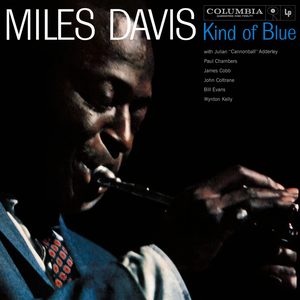


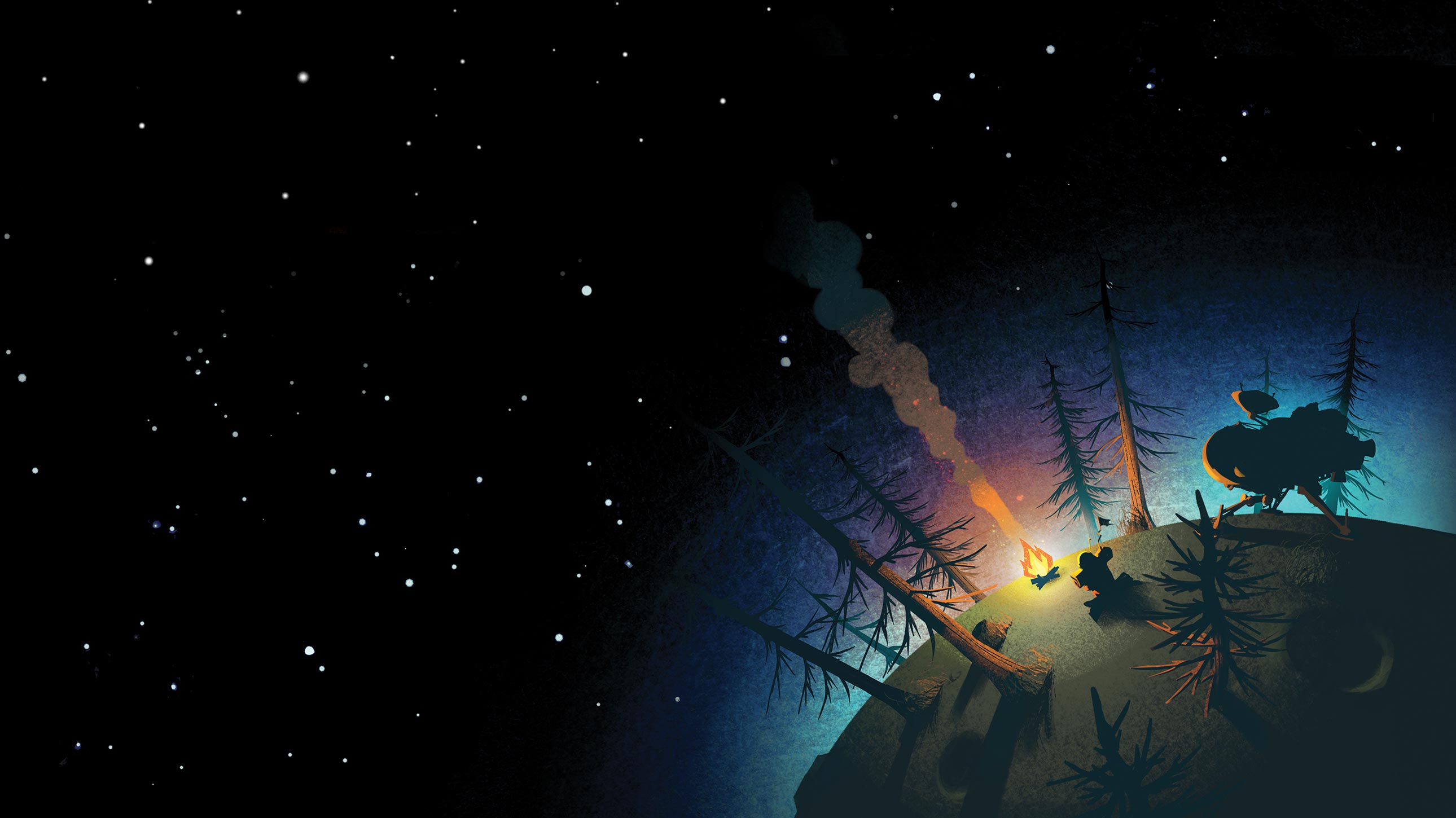
Arrival
Kind of Blue
Labyrinths
Istanbul
Outer Wilds
Gemma 4 26B A4BGemma 4 26B A4B
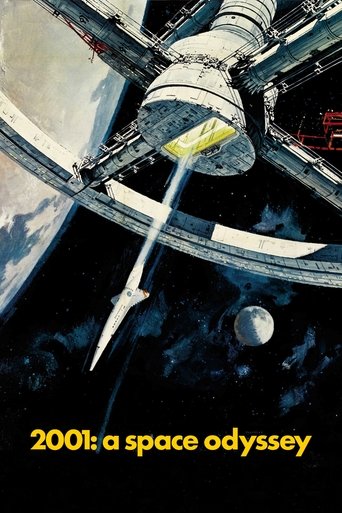
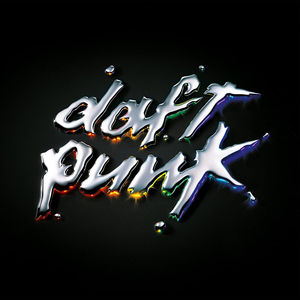


2001: A Space Odyssey
Discovery
Gödel, Escher, Bach
Tokyo
Portal 2
Price and specs
Not enough votes to call it. On the specs, Claude Opus 5 has the edge: bigger model tier, newer, bigger context window. Gemma 4 26B A4B costs 63x less per token.
| Spec | Claude Opus 5 | Gemma 4 26B A4B |
|---|---|---|
| Input price | $5/M tokens | $0.13/M tokens |
| Output price | $25/M tokens | $0.4/M tokens |
| Context window | 1.0M tokens | 262K tokens |
| Weights | Closed | Open |
| Free API (OpenRouter) | No | Yes (1 provider) |
| Released | Jul 2026 | Apr 2026 |
| At 10M a month | $50.00 | $1.30 |
Input tokens at list price. No caching, no batch discount.
Where to run it



Gemma 4 26B A4B13 hosts
- Darkbloom$0.04 in$0.22 out131k100% up
- io.netbf16$0.05 in$0.21 out262k100% up
- DekaLLMbf16$0.06 in$0.33 out262k100% up
- NextBitbf16$0.07 in$0.23 out262k100% up
- DeepInfrafp8$0.07 in$0.34 out262k98.7% up
- Makora$0.08 in$0.32 out256k100% up
7 more hostsFewer hosts
- Cloudflare Workers AI$0.10 in$0.30 out256k100% up
- CoreWeavebf16$0.10 in$0.30 out262k99.8% up
- Novitabf16$0.13 in$0.40 out262k99.8% up
- Parasailbf16$0.13 in$0.40 out262k99.8% up
- SiliconFlowfp8$0.14 in$0.40 out262k97.2% up
- Venicebf16Degraded on OpenRouter when checked, 10 Oct 2026$0.13 in$0.40 out256k99.4% up
- Google Vertex AIDegraded on OpenRouter when checked, 10 Oct 2026$0.15 in$0.60 out262k93.3% up

Per million tokens. Prices and uptime via OpenRouter, checked 10 Oct 2026.
Common questions
What is the difference between Claude Opus 5 and Gemma 4 26B A4B?
Claude Opus 5 is developed by Anthropic while Gemma 4 26B A4B is developed by Google AI. Claude Opus 5 has a 1.0M token context window vs Gemma 4 26B A4B's 262K. You can compare their actual outputs across 54 challenges on Rival to see how they differ in practice.
Which is better, Claude Opus 5 or Gemma 4 26B A4B?
It depends on your use case. Claude Opus 5 and Gemma 4 26B A4B each have strengths in different areas. Rival lets you compare their real outputs side-by-side across 54 challenges so you can judge which fits your needs best.
How much does Claude Opus 5 cost compared to Gemma 4 26B A4B?
Claude Opus 5 costs $5/M input tokens and Gemma 4 26B A4B costs $0.13/M input tokens. Gemma 4 26B A4B is $4.87/M cheaper per input. Check their side-by-side outputs on Rival to see if the price difference is justified by quality.
How can I compare Claude Opus 5 and Gemma 4 26B A4B on Rival?
This page shows a side-by-side comparison of Claude Opus 5 and Gemma 4 26B A4B across shared challenges. You can vote on which model produced the better output in a blind duel. Browsing and voting are free. No account is needed to look; signing in only saves your votes and likes.
More comparisons
Against the newest arrivals
- Claude Opus 5 vs Step 5 PreviewLanded Oct 2026
- Gemma 4 26B A4B vs Claude Haiku 5.5Landed Oct 2026
- Claude Opus 5 vs Ling 3.1 FlashLanded Oct 2026
- Gemma 4 26B A4B vs Mistral Large 4Landed Oct 2026
- Claude Opus 5 vs GPT-6.1 SolLanded Sep 2026
- Gemma 4 26B A4B vs Claude Sonnet 5.5Landed Sep 2026
- Claude Opus 5 vs Solar Mini 4Landed Sep 2026
- Gemma 4 26B A4B vs Qwen3.8 Max PrimeLanded Sep 2026


Same lab, same size, long tail
- Claude Opus 5 vs Claude Sonnet 5Version compare
- Claude Opus 5 vs Claude Haiku 5.5Version compare
- Gemma 4 26B A4B vs Gemini 3.8 FlashSame lab
- Gemma 4 26B A4B vs Gemini 3.7 FlashSame lab
- Gemma 4 26B A4B vs MiMo-V2-OmniSame size
- Gemma 4 26B A4B vs MiMo-V2-ProNew provider
- Gemma 4 26B A4B vs MiMo-V2.5Same size
- Gemma 4 26B A4B vs MiMo-V2.5-ProNew provider
