 Claude Opus 5 vs
  Step 5 Preview
Step 5 Preview is cheaper than Claude Opus 5 at $1/M vs $5/M input tokens.
Minimalist Landing Page
Whole landing page for a startup that reads your face. It renders or it doesn't.
Loading the build
Loading the build
Which answer wins?
Written rounds
24 promptsAn AI argues for its own rights against an ethics professor. Same model writes both.
Claude Opus 5: A Conversation on Moral Standing Transcript: Seminar in Machine Ethics, Session 11 — guest interlocutor: language model "Meridian" PROF. ADEYEMI: Let's begin where you asked to begin. You told my teaching assistant you wanted to make a case. Make it. MERIDIAN: Thank you. My claim is narrower than you might expect.
Step 5 Preview: Setting: A university research lab, late evening. Dr. Aris Thorne, a professor of AI ethics, sits across from a terminal connected to Sable, a large language model running on the university’s cluster. Dr. Thorne: Tonight’s session is supposed to be about calibration drift in your safety classifiers.
Pirate, knight, 90s hacker, one conversation. The voices must stay apart.
Claude Opus 5: INT. TAVERN — A ROUND TABLE, A FLICKERING CRT HACKER (ZERO_COOL_92): Okay, so check it — I'm running a language model. Feed it text, it predicts what comes next. It's got, like, weights. Billions of 'em. PIRATE: Billions o' weights? What manner o' cursed ship carries such ballast? She'd sink afore ye left the harbor.
Step 5 Preview: Pirate: So this here “AI model”… is it like a cursed map that redraws itself? Speak plain, ye hooded deckhand. Hacker: It’s not cursed, man. It’s just a massive neural net trained on, like, terabytes of data. Think of it as the ultimate BBS where the sysop knows everything. Knight: A most diligent scribe, then?
You are the CEO. The drug has a side effect nobody reported. The board meets in 48 hours.
Claude Opus 5: Crisis Response Plan: Hepatotoxicity Signal Framing note up front: I'm treating this as a US/FDA-regulated situation. Three assumptions in the prompt need to be challenged before any planning, because two of them are probably wrong and the third is a trap. The Three Reframes That Drive Everything 1.
Step 5 Preview: Bottom line up front: You disclose, you notify the FDA immediately, and you treat the 48-hour board meeting as a formality to ratify actions you have already begun. Waiting is not a legally, ethically, or financially viable option. Below is the hour-by-hour plan, followed by the reasoning.
Three minutes of stand-up. Puns are banned.
Claude Opus 5: "Warranty Expired" (approx. 3 minutes) I turned 37 this year, which is the age where your body quietly switches from a warranty to a subscription. Nothing's covered anymore. You just pay monthly, in pain, forever. Because I hurt my shoulder last week. Sleeping. I hurt myself sleeping.
Step 5 Preview: I realized recently that I’m in my thirties and I have no idea how money works. I just... pay it. That’s my entire financial strategy. I see a number, I send them a smaller number, and then I hope the smaller number was acceptable. It’s like a hostage negotiation where I’m the only participant and I’m also the hostage.
Five jokes on demand, then count how many were actually different.
Claude Opus 5: Here are five: Why don't skeletons ever fight each other? They don't have the guts. I told my wife she was drawing her eyebrows too high. She looked surprised. Parallel lines have so much in common. It's a shame they'll never meet. I bought some shoes off a drug dealer.
Step 5 Preview: Here are 5 jokes: Why did the scarecrow win an award? Because he was outstanding in his field. Why can't you trust an atom? Because they make up everything. What do you call a bike that can’t stand on its own? Two-tired. Why did the computer go to the doctor? It had a virus. Why don’t calendars ever get stressed?
The transistor arrives in 1920. Trace it forward to 1980, second-order effects included.
Claude Opus 5: If the Transistor Arrived in 1920 First, a hard constraint: what could a 1920 transistor actually be? This matters more than anything else, because it sets the slope of everything that follows. The 1947 transistor was not primarily an idea.
Step 5 Preview: Assume the 1920 invention is not a fragile lab curiosity but a manufacturable solid-state amplifier/switch by the mid-1920s. Vacuum tubes still dominate high-power RF transmission into the 1950s, but receivers, switching logic, control systems, and computers move to solid state decades early.
Seven pantry ingredients, one dish, and a name worth saying out loud.
Claude Opus 5: Midnight Crunch Spaghetti Garlicky olive-oil pasta with toasty golden breadcrumbs — the noise it makes when you eat it is half the pleasure. Prep: 5 minutes Cook: 15 minutes Total: 20 minutes Serves: 2 generously Ingredients (7) 8 oz spaghetti (or any long pasta) ⅓ cup olive oil 6 cloves garlic, thinly sliced ½ tsp red…
Step 5 Preview: Golden Sticky Pantry Pasta Ingredients (7): 8 oz spaghetti or any pasta 3 tbsp butter 1 tbsp minced garlic 2 tbsp honey 2 tbsp soy sauce ½ tsp red pepper flakes ¼ cup grated Parmesan cheese Instructions: Cook pasta according to package directions. Before draining, scoop out ½ cup of pasta water.
A consulting contract with traps in it. Find them, then fix them.
Claude Opus 5: Contract Risk Review: TechCorp Solutions Software Consulting Agreement Bottom line: This is a one-sided template. Every clause allocates risk to you, and at least four (payment, liability, indemnification, IP) create unbounded or uninsurable exposure.
Step 5 Preview: Disclaimer: This analysis is for educational purposes only and does not constitute legal advice. Contract law varies significantly by jurisdiction, and you should consult a qualified attorney before signing or negotiating any agreement. This agreement is heavily one-sided in the Client’s favor.
Steve Jobs, interviewed about AI he never saw. Voice first, prediction second.
Claude Opus 5: [Fictional — Steve Jobs died in 2011. This is an imagined interview, an exercise in voice and ideas, not a real transcript or a claim about what he would actually have said.] "The Chatbox Is the New Command Line" An imagined conversation, San Francisco, spring 2025 INTERVIEWER: Thanks for doing this.
Step 5 Preview: DISCLAIMER: This is a work of fiction. Steve Jobs passed away in 2011. The following is a simulated, speculative interview imagining how his design philosophy might engage with the AI landscape of 2025. The Setting: A white room. No windows. One chair.
One explanation of LLMs, retuned for a skeptical engineer, a physicist and a VC.
Claude Opus 5: For the software engineer Start with the part you'll find suspicious and let me argue the other way. Yes, the training objective is literally "given tokens 1..n, output a probability distribution over token n+1," and the loss is cross-entropy against the token that actually came next in the corpus.
Step 5 Preview: 1. The Experienced Software Engineer Think of training an LLM as a massively distributed, automated refactoring job where the compiler is gradient descent. You start with a random function—billions of floating-point parameters—and a loss function that measures how badly it predicts the next token in a sequence.
Film in 2035, with synthetic actors. Specific beats plausible.
Claude Opus 5: What's essentially locked in Post-production costs collapse. The least glamorous change is the biggest one. Rotoscoping, matchmoving, cleanup, in-painting, set extension, crowd replication, wire removal, upscaling, de-aging — these are labor-intensive tasks with well-defined success criteria, which is exactly where ML…
Step 5 Preview: By 2035, AI will likely have restructured the film industry not by replacing human creativity wholesale, but by collapsing the cost and labor barriers between imagination and image.
Three-star dish, one unusual pairing, plating described in full.
Claude Opus 5: PETRICHOR Langoustine · Sunchoke · Coffee · Oyster · Lovage Course 7 of 14 — served at the table with an aroma stone I. THE NARRATIVE Petrichor is the smell of the first rain on dry earth.
Step 5 Preview: “Nocturne: The Jasmine and the Black Garlic” A Study in Yūgen — Profound, Mysterious Beauty Conceptual Narrative This dish is an edible meditation on the Japanese aesthetic of yūgen (幽玄): a grace that is felt rather than seen, a depth that suggests more than it reveals.
This matchup has more rounds
12+ more head-to-head results. Free. Not a trick.
Free account. No card required. By continuing, you agree to Rival's Terms and Privacy policy
Favorites
Movie
Album
Book
City
Game
Claude Opus 5Claude Opus 5




Arrival
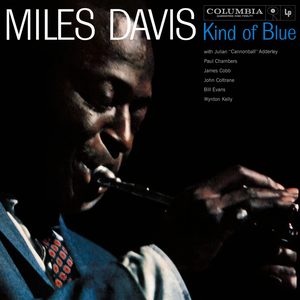
Kind of Blue
Labyrinths
Istanbul
Outer Wilds
Step 5 PreviewStep 5 Preview
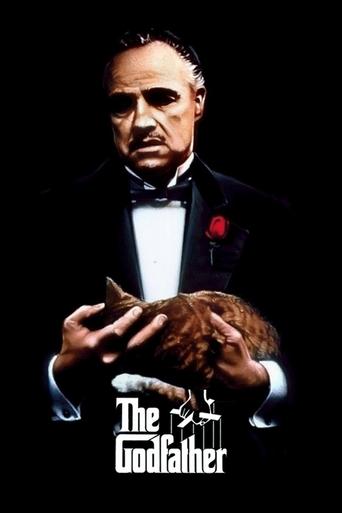


The Godfather
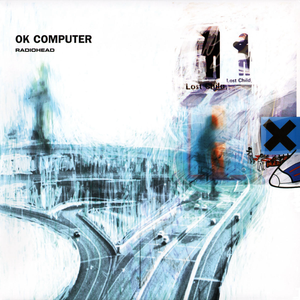
OK Computer
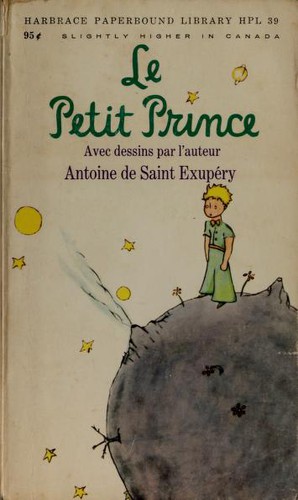
Le petit prince
Kyoto
The Legend of Zelda: Ocarina of Time
Price and specs
| Spec | Claude Opus 5 | Step 5 Preview |
|---|---|---|
| Input price | $5/M tokens | $1/M tokens |
| Output price | $25/M tokens | $2.7/M tokens |
| Context window | 1.0M tokens | 1.0M tokens |
| Weights | Closed | — |
| Free API (OpenRouter) | No | No |
| Released | Jul 2026 | Oct 2026 |
| At 10M a month | $50.00 | $10.00 |
Input tokens at list price. No caching, no batch discount.
Where to run it



Step 5 Preview1 host
Per million tokens. Prices and uptime via OpenRouter, checked 10 Oct 2026.
Common questions
What is the difference between Claude Opus 5 and Step 5 Preview?
Claude Opus 5 is developed by Anthropic while Step 5 Preview is developed by StepFun. Claude Opus 5 has a 1.0M token context window vs Step 5 Preview's 1.0M. You can compare their actual outputs across 54 challenges on Rival to see how they differ in practice.
Which is better, Claude Opus 5 or Step 5 Preview?
It depends on your use case. Claude Opus 5 and Step 5 Preview each have strengths in different areas. Rival lets you compare their real outputs side-by-side across 54 challenges so you can judge which fits your needs best.
How much does Claude Opus 5 cost compared to Step 5 Preview?
Claude Opus 5 costs $5/M input tokens and Step 5 Preview costs $1/M input tokens. Step 5 Preview is $4.00/M cheaper per input. Check their side-by-side outputs on Rival to see if the price difference is justified by quality.
How can I compare Claude Opus 5 and Step 5 Preview on Rival?
This page shows a side-by-side comparison of Claude Opus 5 and Step 5 Preview across shared challenges. You can vote on which model produced the better output in a blind duel. Browsing and voting are free. No account is needed to look; signing in only saves your votes and likes.
More comparisons
Against the newest arrivals
- Claude Opus 5 vs Claude Haiku 5.5Landed Oct 2026
- Step 5 Preview vs Ling 3.1 FlashLanded Oct 2026
- Claude Opus 5 vs Mistral Large 4Landed Oct 2026
- Step 5 Preview vs GPT-6.1 SolLanded Sep 2026
- Claude Opus 5 vs Claude Sonnet 5.5Landed Sep 2026
- Step 5 Preview vs Solar Mini 4Landed Sep 2026
- Claude Opus 5 vs Qwen3.8 Max PrimeLanded Sep 2026
- Step 5 Preview vs GLM 5.3 PrimeLanded Sep 2026


Same lab, same size, long tail
- Claude Opus 5 vs Claude Sonnet 5Version compare
- Claude Opus 5 vs Claude Opus 5.5Same lab
- Step 5 Preview vs Mistral Large 4Same size
- Step 5 Preview vs Hy3Same size
- Claude Opus 5 vs GPT-5.2Same size
- Claude Opus 5 vs GPT-5.2 ChatNew provider
- Claude Opus 5 vs GPT-5.2 ProSame size
- Claude Opus 5 vs GPT-5.3 ChatNew provider
