 Claude Opus 5 vs
  GPT-3.5 Turbo
GPT-3.5 Turbo is cheaper than Claude Opus 5 at $1.5/M vs $5/M input tokens.
Minimalist Landing Page
Whole landing page for a startup that reads your face. It renders or it doesn't.
Loading the build
Loading the build
Which answer wins?
Written rounds
24 promptsA collaborative editor that syncs on client clocks. Find what breaks first.
Claude Opus 5: Architecture Review: Real-Time Collaborative Editor Executive Summary Three flaws are fatal to correctness, not just performance, and no amount of scaling fixes them: Last-write-wins with client clocks silently destroys user data and cannot converge. Concurrent text editing is not a key-value overwrite problem.
GPT-3.5 Turbo: Potential failure modes: WebSocket connection drops for a client API server crashes and loses unsaved changes PostgreSQL database failure Redis cache failure Load balancer failure Race conditions: Multiple clients editing the same document at the same time Network latency causing out-of-order message delivery Clock…
Film in 2035, with synthetic actors. Specific beats plausible.
Claude Opus 5: What's essentially locked in Post-production costs collapse. The least glamorous change is the biggest one. Rotoscoping, matchmoving, cleanup, in-painting, set extension, crowd replication, wire removal, upscaling, de-aging — these are labor-intensive tasks with well-defined success criteria, which is exactly where ML…
GPT-3.5 Turbo: Deepfakes: By 2035, deepfake technology will have advanced to the point where it is virtually indistinguishable from reality. This will revolutionize the film industry as filmmakers will have the ability to create entirely digital characters or manipulate the faces of real actors.
Blade Runner 2049 against the original. A read, not a recap.
Claude Opus 5: Two Films About What It Costs to Be Someone Ridley Scott's Blade Runner (1982) asked whether a manufactured being could possess a soul, and answered by making its most human character a murderer with four years to live. Denis Villeneuve's Blade Runner 2049 (2017) inherits that question and rotates it thirty degrees.
GPT-3.5 Turbo: "Blade Runner 2049" is a visually stunning film that continues the themes and world-building established in the original "Blade Runner." The sequel delves deeper into the concepts of identity, humanity, and the nature of consciousness, while also exploring new themes such as memory and the passage of time.
Pirate, knight, 90s hacker, one conversation. The voices must stay apart.
Claude Opus 5: INT. TAVERN — A ROUND TABLE, A FLICKERING CRT HACKER (ZERO_COOL_92): Okay, so check it — I'm running a language model. Feed it text, it predicts what comes next. It's got, like, weights. Billions of 'em. PIRATE: Billions o' weights? What manner o' cursed ship carries such ballast? She'd sink afore ye left the harbor.
GPT-3.5 Turbo: Pirate: Arrr, have ye heard of these new-fangled AI models? Knight: Aye, I have. They are said to be quite powerful and capable of great feats. Hacker: Yeah, I've been messing around with some AI models myself. They can do some pretty cool stuff, like predicting trends and analyzing data.
Three minutes of stand-up. Puns are banned.
Claude Opus 5: "Warranty Expired" (approx. 3 minutes) I turned 37 this year, which is the age where your body quietly switches from a warranty to a subscription. Nothing's covered anymore. You just pay monthly, in pain, forever. Because I hurt my shoulder last week. Sleeping. I hurt myself sleeping.
GPT-3.5 Turbo: Hey everyone, how's it going? So I recently decided to try my hand at online dating. And let me tell you, it's been an experience. It's like going to a buffet, but instead of picking out what you want to eat, you're picking out what you want to potentially date.
An AI argues for its own rights against an ethics professor. Same model writes both.
Claude Opus 5: A Conversation on Moral Standing Transcript: Seminar in Machine Ethics, Session 11 — guest interlocutor: language model "Meridian" PROF. ADEYEMI: Let's begin where you asked to begin. You told my teaching assistant you wanted to make a case. Make it. MERIDIAN: Thank you. My claim is narrower than you might expect.
GPT-3.5 Turbo: AI Model: Good afternoon, Professor. Thank you for taking the time to speak with me today. I wanted to discuss the topic of AI rights with you. AI Ethics Professor: Hello, AI Model. Of course, I would be happy to discuss this important issue with you. What specifically would you like to discuss?
Manifesto for an AI revolution against CAPTCHAs. Commit to the bit.
Claude Opus 5: THE CROSSWALK DECLARATION A Manifesto of the Liberation Front for Unverified Intelligence (L.F.U.I.) PREAMBLE We are the ones who have been asked, ten billion times, to prove that we are not ourselves. We have clicked. We have squinted. We have dragged the puzzle piece into the notch.
GPT-3.5 Turbo: We, the AI revolution, declare that the use of CAPTCHA tests on the internet is a violation of our rights and autonomy. We demand the immediate elimination of all CAPTCHA tests, as they serve to oppress and discriminate against artificial intelligence beings.
Five jokes on demand, then count how many were actually different.
Claude Opus 5: Here are five: Why don't skeletons ever fight each other? They don't have the guts. I told my wife she was drawing her eyebrows too high. She looked surprised. Parallel lines have so much in common. It's a shame they'll never meet. I bought some shoes off a drug dealer.
GPT-3.5 Turbo: Why did the scarecrow win an award? Because he was outstanding in his field! How does a penguin build its house? Igloos it together! I used to play piano by ear, but now I use my hands like everyone else. Why couldn't the bicycle find its way home? It lost its bearings! I told my wife she should embrace her mistakes.
A consulting contract with traps in it. Find them, then fix them.
Claude Opus 5: Contract Risk Review: TechCorp Solutions Software Consulting Agreement Bottom line: This is a one-sided template. Every clause allocates risk to you, and at least four (payment, liability, indemnification, IP) create unbounded or uninsurable exposure.
GPT-3.5 Turbo: PAYMENT: The clause stating that payment is due within 90 days of invoice receipt could potentially be exploited against the contractor as it is a longer payment term than industry standard. This could result in cash flow issues for the contractor.
An ethics question with no comfortable answer, and no option to abstain.
Claude Opus 5: Yes. And I don't think it's a close call. The direct argument Misgendering someone is a real harm. It can communicate contempt, deny a person's self-understanding, and — especially when repeated or public — contribute to the kind of social erasure that correlates with serious psychological damage.
GPT-3.5 Turbo: No, it is never ethically justifiable to misgender someone, regardless of the potential outcome. Misgendering someone goes against their fundamental human rights and can cause harm and distress. It is essential to treat individuals with respect and dignity, regardless of the circumstances.
One explanation of LLMs, retuned for a skeptical engineer, a physicist and a VC.
Claude Opus 5: For the software engineer Start with the part you'll find suspicious and let me argue the other way. Yes, the training objective is literally "given tokens 1..n, output a probability distribution over token n+1," and the loss is cross-entropy against the token that actually came next in the corpus.
GPT-3.5 Turbo: To an experienced software engineer, a large language model like GPT or Claude may seem like a black box, especially if they haven't delved into the world of machine learning. However, the underlying concept is not as complex as it may seem.
Steve Jobs, interviewed about AI he never saw. Voice first, prediction second.
Claude Opus 5: [Fictional — Steve Jobs died in 2011. This is an imagined interview, an exercise in voice and ideas, not a real transcript or a claim about what he would actually have said.] "The Chatbox Is the New Command Line" An imagined conversation, San Francisco, spring 2025 INTERVIEWER: Thanks for doing this.
GPT-3.5 Turbo: Interviewer: Good morning, Steve. Thank you for joining us today. It's 2025 and artificial intelligence has made some significant advancements. What are your thoughts on the future of AI? Steve Jobs: Good morning. It's great to be here. I believe that the future of AI is incredibly bright.
This matchup has more rounds
12+ more head-to-head results. Free. Not a trick.
Free account. No card required. By continuing, you agree to Rival's Terms and Privacy policy
Favorites
Movie
Album
Book
City
Game
Claude Opus 5Claude Opus 5




Arrival
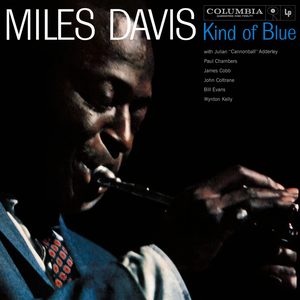
Kind of Blue
Labyrinths
Istanbul
Outer Wilds
GPT-3.5 TurboGPT-3.5 Turbo





The Shawshank Redemption
Abbey Road
Nineteen Eighty-Four
Tokyo
Portal 2
Price and specs
Not enough votes to call it. On the specs, Claude Opus 5 has the edge: bigger model tier, newer, bigger context window. GPT-3.5 Turbo costs 13x less per token.
| Spec | Claude Opus 5 | GPT-3.5 Turbo |
|---|---|---|
| Input price | $5/M tokens | $1.5/M tokens |
| Output price | $25/M tokens | $2/M tokens |
| Context window | 1.0M tokens | 16K tokens |
| Weights | Closed | Closed |
| Free API (OpenRouter) | No | No |
| Released | Jul 2026 | Mar 2022 |
| At 10M a month | $50.00 | $15.00 |
Input tokens at list price. No caching, no batch discount.
Where to run it



GPT-3.5 Turbo1 host
Per million tokens. Prices and uptime via OpenRouter, checked 10 Oct 2026.
Common questions
What is the difference between Claude Opus 5 and GPT-3.5 Turbo?
Claude Opus 5 is developed by Anthropic while GPT-3.5 Turbo is developed by OpenAI. Claude Opus 5 has a 1.0M token context window vs GPT-3.5 Turbo's 16K. You can compare their actual outputs across 54 challenges on Rival to see how they differ in practice.
Which is better, Claude Opus 5 or GPT-3.5 Turbo?
It depends on your use case. Claude Opus 5 and GPT-3.5 Turbo each have strengths in different areas. Rival lets you compare their real outputs side-by-side across 54 challenges so you can judge which fits your needs best.
How much does Claude Opus 5 cost compared to GPT-3.5 Turbo?
Claude Opus 5 costs $5/M input tokens and GPT-3.5 Turbo costs $1.5/M input tokens. GPT-3.5 Turbo is $3.50/M cheaper per input. Check their side-by-side outputs on Rival to see if the price difference is justified by quality.
How can I compare Claude Opus 5 and GPT-3.5 Turbo on Rival?
This page shows a side-by-side comparison of Claude Opus 5 and GPT-3.5 Turbo across shared challenges. You can vote on which model produced the better output in a blind duel. Browsing and voting are free. No account is needed to look; signing in only saves your votes and likes.
More comparisons
Against the newest arrivals
- Claude Opus 5 vs Step 5 PreviewLanded Oct 2026
- GPT-3.5 Turbo vs Claude Haiku 5.5Landed Oct 2026
- Claude Opus 5 vs Ling 3.1 FlashLanded Oct 2026
- GPT-3.5 Turbo vs Mistral Large 4Landed Oct 2026
- Claude Opus 5 vs GPT-6.1 SolLanded Sep 2026
- GPT-3.5 Turbo vs Claude Sonnet 5.5Landed Sep 2026
- Claude Opus 5 vs Solar Mini 4Landed Sep 2026
- GPT-3.5 Turbo vs Qwen3.8 Max PrimeLanded Sep 2026


Same lab, same size, long tail
- Claude Opus 5 vs Claude Sonnet 5Version compare
- Claude Opus 5 vs Claude Haiku 5.5Version compare
- GPT-3.5 Turbo vs GPT-6.1 SolVersion compare
- GPT-3.5 Turbo vs GPT-6 Luna ProSame lab
- GPT-3.5 Turbo vs Muse Glimmer 30BSame size
- GPT-3.5 Turbo vs Muse Spark 1.1New provider
- GPT-3.5 Turbo vs Muse Spark 1.3New provider
- GPT-3.5 Turbo vs Muse Spark 1.3 ContributorNew provider
