Claude Opus 5 vs
  Grok 3 Mini Beta
Grok 3 Mini Beta is cheaper than Claude Opus 5 at $0.4/M vs $5/M input tokens.
Minimalist Landing Page
Whole landing page for a startup that reads your face. It renders or it doesn't.
Loading the build
Loading the build
Which answer wins?
Favorites
Movie
Album
Book
City
Game
Claude Opus 5Claude Opus 5

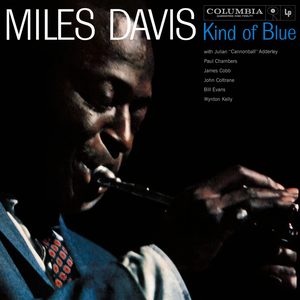



Arrival
Kind of Blue
Labyrinths
Istanbul
Outer Wilds
Grok 3 Mini BetaGrok 3 Mini Beta
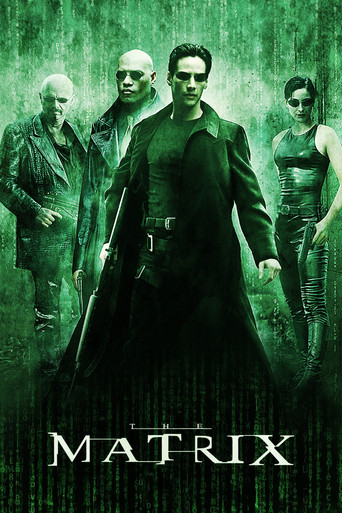



The Matrix
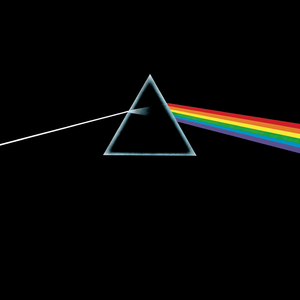
The Dark Side of the Moon
I, Robot
San Francisco
The Legend of Zelda: Breath of the Wild
Price and specs
Not enough votes to call it. On the specs, Claude Opus 5 has the edge: bigger model tier, newer, bigger context window. Grok 3 Mini Beta costs 31x less per token.
| Spec | Claude Opus 5 | Grok 3 Mini Beta |
|---|---|---|
| Input price | $5/M tokens | $0.4/M tokens |
| Output price | $25/M tokens | $0.8/M tokens |
| Context window | 1.0M tokens | 131K tokens |
| Weights | Closed | — |
| Free API (OpenRouter) | No | No |
| Released | Jul 2026 | Apr 2025 |
| At 10M a month | $50.00 | $4.00 |
Input tokens at list price. No caching, no batch discount.
Where to run it



Grok 3 Mini Beta
No hosts listed on OpenRouter.
Per million tokens. Prices and uptime via OpenRouter, checked 10 Oct 2026.
Common questions
What is the difference between Claude Opus 5 and Grok 3 Mini Beta?
Claude Opus 5 is developed by Anthropic while Grok 3 Mini Beta is developed by xAI. Claude Opus 5 has a 1.0M token context window vs Grok 3 Mini Beta's 131K. You can compare their actual outputs across 13 challenges on Rival to see how they differ in practice.
Which is better, Claude Opus 5 or Grok 3 Mini Beta?
It depends on your use case. Claude Opus 5 and Grok 3 Mini Beta each have strengths in different areas. Rival lets you compare their real outputs side-by-side across 13 challenges so you can judge which fits your needs best.
How much does Claude Opus 5 cost compared to Grok 3 Mini Beta?
Claude Opus 5 costs $5/M input tokens and Grok 3 Mini Beta costs $0.4/M input tokens. Grok 3 Mini Beta is $4.60/M cheaper per input. Check their side-by-side outputs on Rival to see if the price difference is justified by quality.
How can I compare Claude Opus 5 and Grok 3 Mini Beta on Rival?
This page shows a side-by-side comparison of Claude Opus 5 and Grok 3 Mini Beta across shared challenges. You can vote on which model produced the better output in a blind duel. Browsing and voting are free. No account is needed to look; signing in only saves your votes and likes.
More comparisons
Against the newest arrivals
- Claude Opus 5 vs Step 5 PreviewLanded Oct 2026
- Grok 3 Mini Beta vs Claude Haiku 5.5Landed Oct 2026
- Claude Opus 5 vs Ling 3.1 FlashLanded Oct 2026
- Grok 3 Mini Beta vs Mistral Large 4Landed Oct 2026
- Claude Opus 5 vs GPT-6.1 SolLanded Sep 2026
- Grok 3 Mini Beta vs Claude Sonnet 5.5Landed Sep 2026
- Claude Opus 5 vs Solar Mini 4Landed Sep 2026
- Grok 3 Mini Beta vs Qwen3.8 Max PrimeLanded Sep 2026


Same lab, same size, long tail
- Claude Opus 5 vs Claude Sonnet 5Version compare
- Claude Opus 5 vs Claude Haiku 5.5Version compare
- Grok 3 Mini Beta vs Grok 4.7Same lab
- Grok 3 Mini Beta vs Grok 4.6Version compare
- Grok 3 Mini Beta vs Nemotron 3.5 LightningNew provider
- Claude Opus 5 vs NVIDIA Nemotron Nano 9B V2New provider
- Grok 3 Mini Beta vs Nex-N2.5-Mini (free)New provider
- Grok 3 Mini Beta vs Nex-N2.5-Pro (free)New provider