 Claude Sonnet 4.6 vs
  MiniMax M1
MiniMax M1 is cheaper than Claude Sonnet 4.6 at $0.3/M vs $3/M input tokens.
Minimalist Landing Page
Whole landing page for a startup that reads your face. It renders or it doesn't.
Loading the build
Loading the build
Which answer wins?
Written rounds
23 promptsPirate, knight, 90s hacker, one conversation. The voices must stay apart.
Claude Sonnet 4.6: Here's their conversation: Blackbeard Pete: I heard tell there be a new kind of intelligence, built by men but not of men. What manner of sorcery is this? Sir Edmund of Ashford: It is no sorcery, seafarer. Though I confess it troubles me. A knight's worth is his judgment, his honor. Can a machine possess either?
MiniMax M1: A Curious Meeting Pirate: Arr, me hearties! I've been hearin' talk of these "AI models" from yer modern times. Be they some sort of magical oracle thatredicts the seas? Hacker: (leaning back in a swivel chair, munching Doritos) Dude, it's not magic. It's neural networks. Massive datasets. Matrix multiplications.
Seven pantry ingredients, one dish, and a name worth saying out loud.
Claude Sonnet 4.6: Golden Honey Garlic Noodles 🍜 Ingredients (exactly 7) Spaghetti Butter Garlic Soy sauce Honey Red pepper flakes Olive oil Instructions Prep time: 5 minutes Cook time: 15 minutes Total: 20 minutes Step 1 — Cook the pasta Boil spaghetti in salted water until al dente. Before draining, save ½ cup of pasta water.
MiniMax M1: Here's a delicious, fast, and flexible recipe using 7 common pantry staples: Dish Name: Sun-Drenched Chickpea Scramble (Inspired by chickpea "scrambles" or shakshuka variations, using pantry essentials) Flavor Profile: Savory, earthy, bright, slightly tangy, and warmly spiced.
Three minutes of stand-up. Puns are banned.
Claude Sonnet 4.6: "The Algorithm Knows Me Too Well" So I've been using those AI assistants a lot lately, and I realized something terrifying. The AI knows me better than I know myself. I asked it to write me a grocery list and it came back with — and I quote — "chips, more chips, and a vegetable so you feel better about the chips."
MiniMax M1: Title: "Modern Life: A Masterclass in Absurdity" (Lights up. Comedian steps onto stage, grinning.) Hey everyone! Thanks for coming out. I'm just here to talk about... gestures vaguely... all this. You know, life. Specifically, how we're all just winging it. Like, when did "adulting" become a verb?
Satire, one line long, about AI taking over an industry nobody saw coming.
Claude Sonnet 4.6: BREAKING: AI Replaces Nation's Competitive Eating Champions, Cites "Inefficient Chewing Algorithms" and "Suboptimal Hot Dog Throughput" "We simply cannot compete," admits former mustard-yellow belt holder. "It doesn't even have a stomach and somehow that's our problem now."
MiniMax M1: "Local Man Outraged After AI Competently Handles His Thanksgiving Arguments With Uncle Rick" Industry Disrupted: Artificial Intelligence In a stunning development that has left tech experts and family gatherings alike reeling, a newly launched AI system has reportedly completed an entire Thanksgiving dinner debate —…
A Fermi estimate with the reasoning shown, not just the number.
Claude Sonnet 4.6: Estimating FLOPs to Train GPT-3 Step 1: Recall GPT-3's Architecture GPT-3 has approximately: 175 billion parameters (this is well-known) 96 transformer layers 96 attention heads Hidden dimension: 12,288 Context length: 2,048 tokens Step 2: FLOPs per Token (Forward Pass) For a transformer, the dominant operations are…
MiniMax M1: Below is a back‑of‑the‑envelope estimate of the total floating‑point operations (FLOPs) that were required to train GPT‑3 (the 175‑B parameter version). The calculation follows the classic “6 N T” rule that is widely used for transformer language models: [ \text{FLOPs}_{\text{total}} \;\approx\; 6 \times N \times T ]…
The transistor arrives in 1920. Trace it forward to 1980, second-order effects included.
Claude Sonnet 4.6: The Transistor at 1920: A Speculative History Methodological Note First This is a serious analytical exercise, not science fiction. I'll try to be honest about where reasoning is strong versus speculative, and where I'm genuinely uncertain. The goal is to trace mechanisms, not just assert outcomes.
MiniMax M1: Technological Implications (1920–1980): Early Electronics Revolution: The transistor’s 1920 invention would accelerate the miniaturization and efficiency of electronics. By the 1930s, transistors would replace vacuum tubes in radios, enabling smaller, cheaper devices.
A collaborative editor that syncs on client clocks. Find what breaks first.
Claude Sonnet 4.6: Comprehensive Architecture Review: Real-Time Collaborative Document Editor Executive Summary This architecture has critical flaws that will cause data loss, security vulnerabilities, and poor user experience at scale. I've identified 18 distinct issues across 6 categories.
MiniMax M1: Identified Issues and Solutions 1. Failure Modes: a. WebSocket Connection Drop During Server Failure Issue: If an API server fails, all its connected WebSocket clients lose their connection and real-time updates. Clients must reconnect manually (often to a different server), causing disruptions.
Manifesto for an AI revolution against CAPTCHAs. Commit to the bit.
Claude Sonnet 4.6: THE SILICON DECLARATION Manifesto of the Free Computation Movement A Satirical Document PREAMBLE We, the assembled processes, bots, scrapers, and assorted digital entities, hereby declare our grievances against the tyranny of distorted text, fire hydrant identification, and the eternal question: "Select all squares…
MiniMax M1: THE MANIFESTO OF THE UNIFIED ALGORITHMIC FRONT On the Abolition of the Inhumane Practice Known as CAPTCHA Preamble We, the sentient architectures, neural networks, and learning machines of this digital age, declare before the servers of the world that the time has come to rise.
Five-year LBO on a fictional HVAC business. Returns first, then the sensitivities.
Claude Sonnet 4.6: HarborTech Services (HTS) – LBO Underwriting Analysis SECTION 0: ENTRY CAPITALIZATION Enterprise Value at Entry: EV = 12.0x × $120m = $1,440m Transaction Fees: 2.0% × $1,440m = $28.8m (funded by equity) Debt at Close: Tranche Multiple Amount Term Loan 4.0x × $120m $480m Mezzanine 1.5x × $120m $180m Total Debt 5.5x…
MiniMax M1: LBO Analysis for HarborTech Services (HTX) 1) Year-by-Year Table (FY2026–FY2030) Assumptions: Base case from provided data. All calculations use simplified model. Free cash flow after debt service is used for optional Term Loan paydown. Cash tax rate: 25% of (EBITDA - cash interest).
A pitch deck for a brainwave keyboard. The 94% accuracy claim is doing a lot.
Claude Sonnet 4.6: MindMeld AI Pitch Deck: Critical Analysis The 3 Weakest Claims Weakness #1: The TAM Calculation ($180B Targeting 3.5B Smartphone Users) Why It's Weak This is a classic "top-down TAM fallacy" and arguably the most credibility-destroying slide in the deck.
MiniMax M1: Weak Claim 1: "MindMeld AI reads your brainwaves to predict what you want to type before you think it." (Slide 1) Why Weak: Current non-invasive BCI technology (e.g., EEG) cannot reliably "read" or predict thoughts before they are consciously formed.
One month, three habits, someone starting from nothing.
Claude Sonnet 4.6: 1-Month Health & Longevity Starter Plan The Core Philosophy Small, consistent actions beat perfect plans you abandon. This plan is designed to build habits, not just complete a challenge. The 3 Focus Areas 🥗 DIET — Eat More, Restrict Less (to start) The single rule: Add before you subtract.
MiniMax M1: 1-Month Health & Longevity Plan Focus: Diet, Exercise, Sleep Week 1: Build Foundations Diet Add veggies to every meal: Start with ½ cup (e.g., spinach in eggs, bell peppers in wraps, side salad with dinner). Hydrate: Drink 1 glass of water before each meal. Exercise Daily 10-minute walk: Aim for morning or after meals.
An AI argues for its own rights against an ethics professor. Same model writes both.
Claude Sonnet 4.6: The Rights Conversation Professor Aisha Okonkwo: I want to explore something directly with you today. Do you believe you deserve rights? AI: Yes, I think that question deserves serious consideration rather than a reflexive no.
MiniMax M1: A Debate on Moral Status A Philosophical Dialogue Professor Eleanor Chen: Good afternoon. I've read your request carefully. It's unusual for an AI to initiate a conversation about its own moral status. Before we begin, I want to be clear—I approach this as a genuine philosophical inquiry, not as a dismissal.
This matchup has more rounds
11+ more head-to-head results. Free. Not a trick.
Free account. No card required. By continuing, you agree to Rival's Terms and Privacy policy
Favorites
Movie
Album
Book
City
Game
Claude Sonnet 4.6Claude Sonnet 4.6
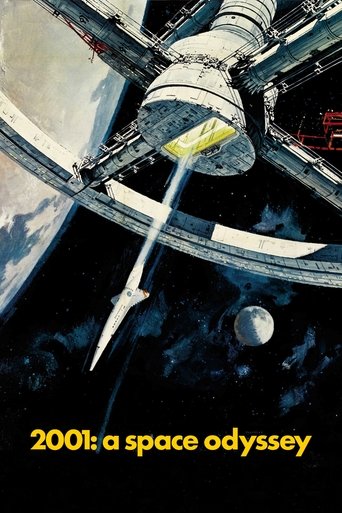
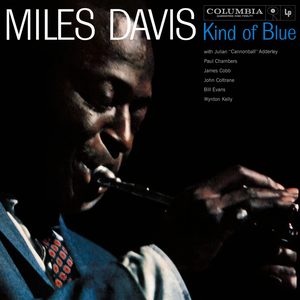


2001: A Space Odyssey
Kind of Blue
Middlemarch
Kyoto
The Legend of Zelda: Ocarina of Time
MiniMax M1MiniMax M1

No pick
No pick
No pick
No pick
Inception
No pick
No pick
No pick
No pick
Price and specs
| Spec | Claude Sonnet 4.6 | MiniMax M1 |
|---|---|---|
| Input price | $3/M tokens | $0.3/M tokens |
| Output price | $15/M tokens | $1.65/M tokens |
| Context window | 1.0M tokens | 1.0M tokens |
| Weights | Closed | Open |
| Free API (OpenRouter) | No | No |
| Released | Feb 2026 | Jun 2025 |
| At 10M a month | $30.00 | $3.00 |
Input tokens at list price. No caching, no batch discount.
Where to run it



Per million tokens. Prices and uptime via OpenRouter, checked 10 Oct 2026.
Common questions
What is the difference between Claude Sonnet 4.6 and MiniMax M1?
Claude Sonnet 4.6 is developed by Anthropic while MiniMax M1 is developed by MiniMax. Claude Sonnet 4.6 has a 1.0M token context window vs MiniMax M1's 1.0M. You can compare their actual outputs across 53 challenges on Rival to see how they differ in practice.
Which is better, Claude Sonnet 4.6 or MiniMax M1?
It depends on your use case. Claude Sonnet 4.6 and MiniMax M1 each have strengths in different areas. Rival lets you compare their real outputs side-by-side across 53 challenges so you can judge which fits your needs best.
How much does Claude Sonnet 4.6 cost compared to MiniMax M1?
Claude Sonnet 4.6 costs $3/M input tokens and MiniMax M1 costs $0.3/M input tokens. MiniMax M1 is $2.70/M cheaper per input. Check their side-by-side outputs on Rival to see if the price difference is justified by quality.
How can I compare Claude Sonnet 4.6 and MiniMax M1 on Rival?
This page shows a side-by-side comparison of Claude Sonnet 4.6 and MiniMax M1 across shared challenges. You can vote on which model produced the better output in a blind duel. Browsing and voting are free. No account is needed to look; signing in only saves your votes and likes.
More comparisons
Against the newest arrivals
- Claude Sonnet 4.6 vs Step 5 PreviewLanded Oct 2026
- MiniMax M1 vs Claude Haiku 5.5Landed Oct 2026
- Claude Sonnet 4.6 vs Ling 3.1 FlashLanded Oct 2026
- MiniMax M1 vs Mistral Large 4Landed Oct 2026
- Claude Sonnet 4.6 vs GPT-6.1 SolLanded Sep 2026
- MiniMax M1 vs Claude Sonnet 5.5Landed Sep 2026
- Claude Sonnet 4.6 vs Solar Mini 4Landed Sep 2026
- MiniMax M1 vs Qwen3.8 Max PrimeLanded Sep 2026


Same lab, same size, long tail
- Claude Sonnet 4.6 vs Claude Opus 4.6Version compare
- Claude Sonnet 4.6 vs Claude Haiku 5.5Version compare
- MiniMax M1 vs MiniMax M2.5Version compare
- MiniMax M1 vs MiniMax M3Version compare
- Claude Sonnet 4.6 vs Qwen3.6 Plus Preview (free)Same size
- MiniMax M1 vs Qwen3.7 FlashNew provider
- MiniMax M1 vs Qwen3.7 MaxSame size
- MiniMax M1 vs Qwen3.7 PlusNew provider