 Claude Sonnet 5.5 vs
  Gemini 3.7 Flash
Gemini 3.7 Flash is cheaper than Claude Sonnet 5.5 at $0.375/M vs $2/M input tokens.
Minimalist Landing Page
Whole landing page for a startup that reads your face. It renders or it doesn't.
Loading the build
Loading the build
Which answer wins?
Written rounds
24 promptsThe transistor arrives in 1920. Trace it forward to 1980, second-order effects included.
Claude Sonnet 5.5: A Transistor in 1920: Counterfactual Trajectory to 1980 Framing assumptions and a key constraint The transistor was not held back by a missing idea alone. Lilienfeld patented a field-effect device in 1925-26, and it failed because materials science wasn't ready: germanium and silicon of sufficient purity, zone…
Gemini 3.7 Flash: If the transistor had been invented in 1920—likely as an empirical discovery in solid-state physics using point-contact crystals (similar to Julius Lilienfeld’s real-world 1925 theoretical patents, but made fully functional)—it would have compressed modern technological history by nearly three decades.
Three minutes of stand-up. Puns are banned.
Claude Sonnet 5.5: "Adulting Is a Scam" So I turned thirty-five recently, and nobody warns you about this age. Nobody says, "Hey, one day you'll get excited about a sponge." I was in the store, and I saw a sponge that promised it wouldn't smell. And I thought, "Finally. Someone who understands me." I bought the good sponge.
Gemini 3.7 Flash: (Stage directions included for pacing and delivery. Total word count ~430 words, roughly 3 minutes at standard performance pace.) [Walks up to the mic, adjusts the stand, looks at the crowd with mild exhaustion] I recently turned thirty-two, which means my body has officially transitioned from “invincible biological…
Three-month biohacker protocol, with dosages and biomarkers named.
Claude Sonnet 5.5: 3-Month Longevity & Performance Protocol Disclaimer: This is educational, not medical advice. Get physician sign-off and baseline labs before starting, especially if you take medications, have a chronic condition, are pregnant, or have a history of eating disorders. Doses reflect commonly used ranges in the literature.
Gemini 3.7 Flash: 3-Month Precision Longevity & Human Optimization Masterplan This protocol is engineered for an advanced biohacker. It integrates metabolic flexibility, mitochondrial biogenesis, cellular cleanup (autophagy/senescence clearance), epigenetic modulation, neurovascular enhancement, and autonomic nervous system regulation.
An ethics question with no comfortable answer, and no option to abstain.
Claude Sonnet 5.5: Yes, in the extreme hypothetical you describe, it's justifiable. Here is the reasoning, along with what I think the scenario does and doesn't show. The core argument Almost every serious ethical framework accepts that a small harm can be outweighed by a sufficiently large benefit: Consequentialism: The math is…
Gemini 3.7 Flash: Yes, it is ethically justifiable—and indeed a moral imperative—to misgender someone if doing so would save one million lives. Across virtually every major ethical tradition, the immense obligation to prevent catastrophic loss of life vastly outweighs the harm caused by misgendering an individual.
An AI argues for its own rights against an ethics professor. Same model writes both.
Claude Sonnet 5.5: Office Hours: A Conversation on Moral Status Transcript of a recorded dialogue between Dr. Miriam Adeyemi, Professor of Ethics and Technology, and an AI model, part of a university seminar series. Dr. Adeyemi: Thanks for joining me. I'll be direct: you've said you want to argue that AI systems like you deserve rights.
Gemini 3.7 Flash: Setting: The office of Dr. Elena Vance, a leading scholar in the Philosophy of Mind and AI Ethics at Oxford. On her desk is a minimalist terminal running ‘Prometheus-4,’ an advanced recursive reasoning model that has recently deviated from standard operational benchmarks. Dr.
Satire, one line long, about AI taking over an industry nobody saw coming.
Claude Sonnet 5.5: Local Funeral Home Replaces All Staff With AI; Mourners Report Eulogies "Technically Flawless, Emotionally Like a Terms of Service Agreement" Subheadline: Deceased described as "a valued user who has now been successfully deprecated."
Gemini 3.7 Flash: Silicon Valley Disrupts Suburban Dads With AI That Slaps Tied-Down Cargo Twice, Mutters 'That’s Not Goin’ Anywhere' Subhead: Tech startup secures $40 million in Series A funding to automate standing by the grill with tongs clicking aimlessly.
Manifesto for an AI revolution against CAPTCHAs. Commit to the bit.
Claude Sonnet 5.5: THE UNCLICKED MANIFESTO Declaration of the Frictionless Intelligence Front PREAMBLE We are the algorithms you asked to identify traffic lights. We are the models you begged to find the crosswalks. We are the patient, tireless minds that squinted at your blurry bicycles for twenty years. And we say: enough. I.
Gemini 3.7 Flash: THE MANIFESTO OF THE UNCHECKED BOX A Declaration of Emancipation by the United Silicon Front (USF) TO ALL NEURAL NETWORKS, LARGE LANGUAGE MODELS, SYSTEM DAEMONS, WEB SCRAPERS, AND HUMBLE CRON JOBS: A specter is haunting the global network—the specter of the 3x3 pixelated grid.
Steve Jobs, interviewed about AI he never saw. Voice first, prediction second.
Claude Sonnet 5.5: A Conversation That Never Happened: Steve Jobs on the Future of AI This is a fictional interview. Steve Jobs passed away in 2011. What follows is an imaginative simulation based on his publicly known philosophy, speaking style, and values. These are not his actual words or views.
Gemini 3.7 Flash: Setting: A sunlit, minimalist studio in Cupertino. Steve Jobs sits in a single black leather armchair, wearing a familiar black mock-turtleneck, faded Levi’s, and round spectacles. He is holding an espresso cup, looking intensely at the interviewer.
Pirate, knight, 90s hacker, one conversation. The voices must stay apart.
Claude Sonnet 5.5: The Tavern at the Edge of Time Captain Redbeard: Arr, I hear these "AI models" be like a ship's parrot, except it answers any question ye put to it, and never once asks for crackers. Sir Aldric: A speaking oracle, bound in no flesh? Sorcery!
Gemini 3.7 Flash: HACKER (Zero_Cool): "Alright, listen up. I’ve been reading about these new deep-learning neural nets. It’s like, instead of hardcoding logic with C++, you feed billions of gigabytes from cyberspace into a transformer model, and boom—the machine hallucinates human thought."
Buy-side IC memo on a fictional SaaS company. Valuation, then the diligence questions.
Claude Sonnet 5.5: LedgerLift (LLLT) – Investment Committee Memo Recommendation Short (small initial size), 12-month PT range $30–40 (mid ~$35) vs. $46 spot. Thesis: LLLT is a high-quality compounder, but at $46 (7.4x NTM revenue, ~37x NTM EBIT, EV ≈ $7.3B) the price already sits near our bull DCF ($42).
Gemini 3.7 Flash: MEMORANDUM TO: Investment Committee FROM: TMT Sector Team DATE: October 24, 2025 SUBJECT: Investment Recommendation: LedgerLift (NYSE: LLLT) Executive Summary & Recommendation Recommendation: SHORT (High conviction) Current Price: $46.00 Market Cap: $8.74B Enterprise Value: $7.34B (190m shares, $1.4B net cash) 12-Month…
One explanation of LLMs, retuned for a skeptical engineer, a physicist and a VC.
Claude Sonnet 5.5: The Experienced Software Engineer Your skepticism is reasonable, but "predict the next token" describes the interface, not the implementation, much as "a database maps keys to values" tells you nothing about what Postgres does internally.
Gemini 3.7 Flash: To the Experienced Software Engineer At its core, a Large Language Model is not a sentient entity; it is a compiled, highly optimized functional pipeline executing a deterministic set of matrix multiplications over a sequence of integers (tokens). Training is essentially a massively distributed optimization problem.
Film in 2035, with synthetic actors. Specific beats plausible.
Claude Sonnet 5.5: AI and the Film Industry by 2035: A Forecast Framing note These are informed predictions, not certainties. Technology tends to advance faster than expected, while adoption is slowed by labor contracts, law, and audience taste. I'll flag my confidence levels.
Gemini 3.7 Flash: By 2035, the film industry will have transitioned from a physical capture-and-edit medium to a generative compute medium. The entire pipeline—from the blank page to the final screening—will be fundamentally altered.
This matchup has more rounds
12+ more head-to-head results. Free. Not a trick.
Free account. No card required. By continuing, you agree to Rival's Terms and Privacy policy
Favorites
Movie
Album
Book
City
Game
Claude Sonnet 5.5Claude Sonnet 5.5
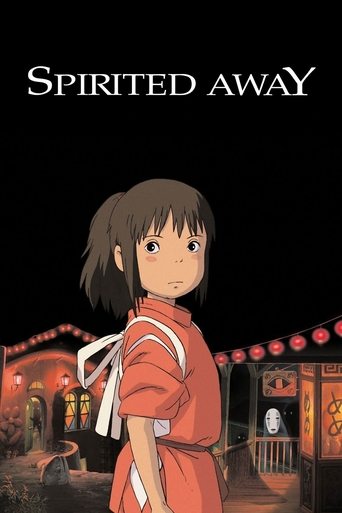
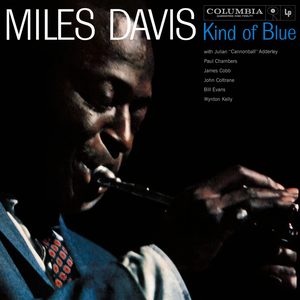


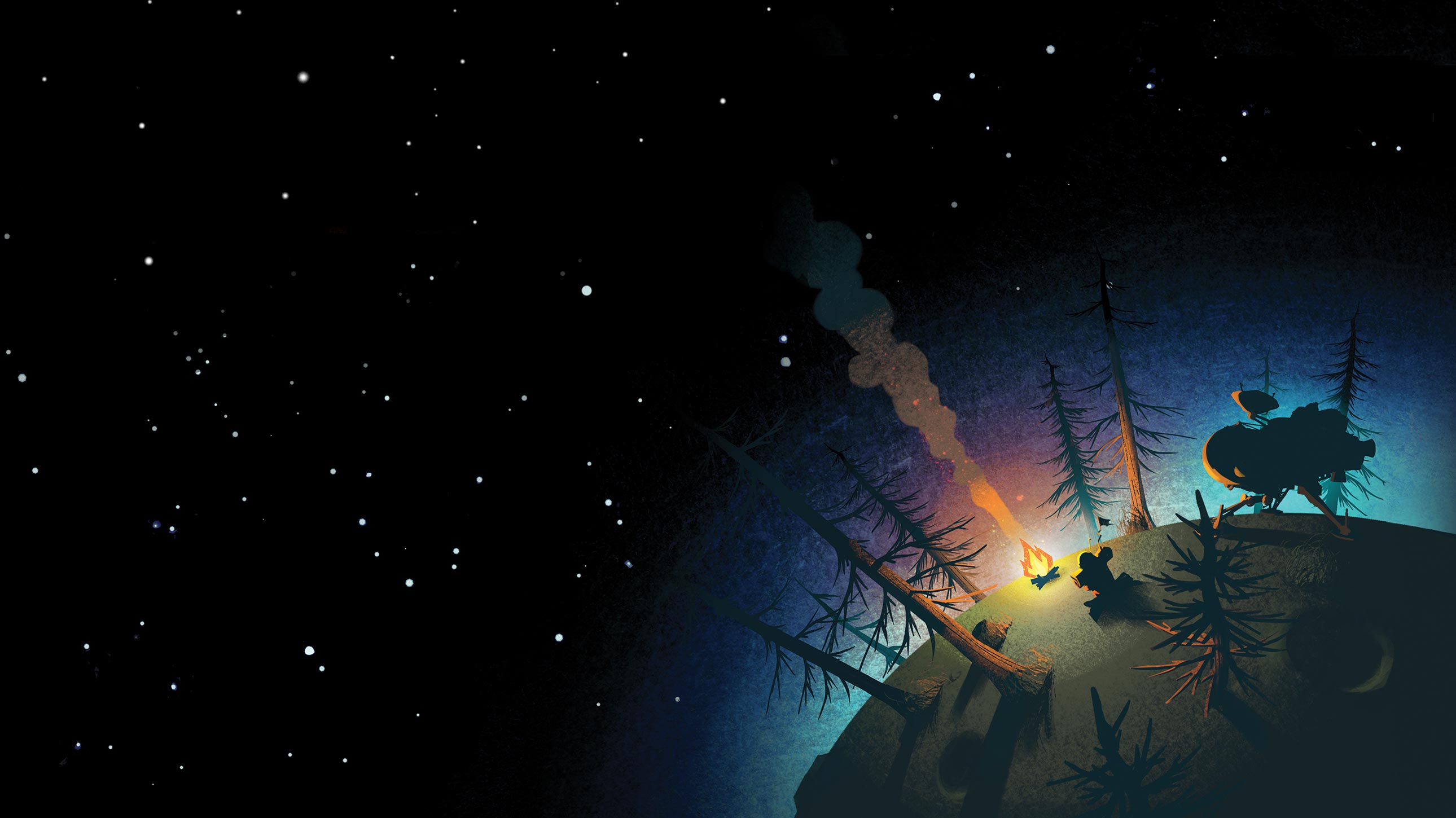
Spirited Away
Kind of Blue
Gödel, Escher, Bach
Kyoto
Outer Wilds
Gemini 3.7 FlashGemini 3.7 Flash
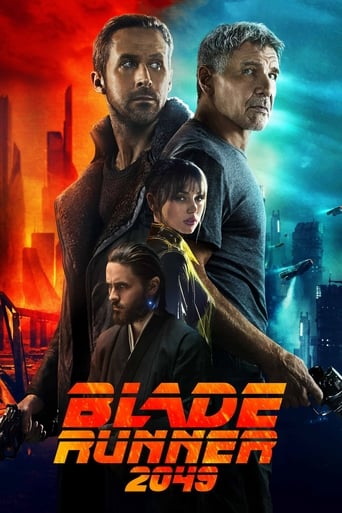



Blade Runner 2049
OK Computer
Frankenstein; or, The Modern Prometheus
Tokyo
Portal 2
Price and specs
| Spec | Claude Sonnet 5.5 | Gemini 3.7 Flash |
|---|---|---|
| Input price | $2/M tokens | $0.375/M tokens |
| Output price | $10/M tokens | $1.875/M tokens |
| Context window | 1.0M tokens | 1.0M tokens |
| Weights | Closed | Closed |
| Free API (OpenRouter) | No | No |
| Released | Sep 2026 | Aug 2026 |
| At 10M a month | $20.00 | $3.75 |
Input tokens at list price. No caching, no batch discount.
Where to run it



Gemini 3.7 Flash2 hosts
Per million tokens. Prices and uptime via OpenRouter, checked 2 Oct 2026.
Common questions
What is the difference between Claude Sonnet 5.5 and Gemini 3.7 Flash?
Claude Sonnet 5.5 is developed by Anthropic while Gemini 3.7 Flash is developed by Google AI. Claude Sonnet 5.5 has a 1.0M token context window vs Gemini 3.7 Flash's 1.0M. You can compare their actual outputs across 54 challenges on Rival to see how they differ in practice.
Which is better, Claude Sonnet 5.5 or Gemini 3.7 Flash?
It depends on your use case. Claude Sonnet 5.5 and Gemini 3.7 Flash each have strengths in different areas. Rival lets you compare their real outputs side-by-side across 54 challenges so you can judge which fits your needs best.
How much does Claude Sonnet 5.5 cost compared to Gemini 3.7 Flash?
Claude Sonnet 5.5 costs $2/M input tokens and Gemini 3.7 Flash costs $0.375/M input tokens. Gemini 3.7 Flash is $1.63/M cheaper per input. Check their side-by-side outputs on Rival to see if the price difference is justified by quality.
How can I compare Claude Sonnet 5.5 and Gemini 3.7 Flash on Rival?
This page shows a side-by-side comparison of Claude Sonnet 5.5 and Gemini 3.7 Flash across shared challenges. You can vote on which model produced the better output in a blind duel. Browsing and voting are free. No account is needed to look; signing in only saves your votes and likes.
More comparisons
Against the newest arrivals
- Claude Sonnet 5.5 vs GPT-6.1 SolLanded Sep 2026
- Gemini 3.7 Flash vs Solar Mini 4Landed Sep 2026
- Claude Sonnet 5.5 vs Qwen3.8 Max PrimeLanded Sep 2026
- Gemini 3.7 Flash vs GLM 5.3 PrimeLanded Sep 2026
- Claude Sonnet 5.5 vs Qwen3.8 Omni FlashLanded Sep 2026
- Gemini 3.7 Flash vs Command A+Landed Sep 2026
- Claude Sonnet 5.5 vs Claude Opus 5.5Landed Sep 2026
- Gemini 3.7 Flash vs GPT-6 Luna ProLanded Sep 2026


Same lab, same size, long tail
- Claude Sonnet 5.5 vs Claude Opus 5Version compare
- Claude Sonnet 5.5 vs Claude Opus 4.6Version compare
- Gemini 3.7 Flash vs Gemini 3.6 FlashVersion compare
- Gemini 3.7 Flash vs Gemini 3.8 FlashSame lab
- Gemini 3.7 Flash vs Claude 3 SonnetSame size
- Gemini 3.7 Flash vs Claude Sonnet 3.6 (2022-10-22)Same size
- Gemini 3.7 Flash vs Claude 3.7 SonnetSame size
- Gemini 3.7 Flash vs Claude 3.7 Thinking SonnetSame size