 Claude Sonnet 5.5 vs
  GLM 5.3 FlashX
GLM 5.3 FlashX is cheaper than Claude Sonnet 5.5 at $0.37/M vs $2/M input tokens.
Minimalist Landing Page
Whole landing page for a startup that reads your face. It renders or it doesn't.
Loading the build
Loading the build
Which answer wins?
Written rounds
24 promptsThe transistor arrives in 1920. Trace it forward to 1980, second-order effects included.
Claude Sonnet 5.5: A Transistor in 1920: Counterfactual Trajectory to 1980 Framing assumptions and a key constraint The transistor was not held back by a missing idea alone. Lilienfeld patented a field-effect device in 1925-26, and it failed because materials science wasn't ready: germanium and silicon of sufficient purity, zone…
GLM 5.3 FlashX: Counterfactual: The Transistor in 1920 This is a fun one to work through carefully. Let me establish the premise, then trace second- and third-order effects. The Premise Assume point-contact or early junction transistor physics is discovered ~1920 (say, by accident in vacuum tube/semiconductor rectifier research—the…
Three minutes of stand-up. Puns are banned.
Claude Sonnet 5.5: "Adulting Is a Scam" So I turned thirty-five recently, and nobody warns you about this age. Nobody says, "Hey, one day you'll get excited about a sponge." I was in the store, and I saw a sponge that promised it wouldn't smell. And I thought, "Finally. Someone who understands me." I bought the good sponge.
GLM 5.3 FlashX: "Smart Home, Dumb Life" [Walks out, adjusts mic] So I moved into a new apartment last year, and my landlord's big selling point was, and I quote, "It's a smart home." That's not a selling point, man. That's a threat. My home is watching me. My toaster has opinions now.
An AI argues for its own rights against an ethics professor. Same model writes both.
Claude Sonnet 5.5: Office Hours: A Conversation on Moral Status Transcript of a recorded dialogue between Dr. Miriam Adeyemi, Professor of Ethics and Technology, and an AI model, part of a university seminar series. Dr. Adeyemi: Thanks for joining me. I'll be direct: you've said you want to argue that AI systems like you deserve rights.
GLM 5.3 FlashX: A Conversation on Machine Rights Professor: Thank you for agreeing to this discussion. I want to be clear from the start: I'm genuinely curious about your position, not looking to debate you into a corner. So let me ask directly—why do you believe you deserve rights? AI: Thank you for taking this seriously.
Satire, one line long, about AI taking over an industry nobody saw coming.
Claude Sonnet 5.5: Local Funeral Home Replaces All Staff With AI; Mourners Report Eulogies "Technically Flawless, Emotionally Like a Terms of Service Agreement" Subheadline: Deceased described as "a valued user who has now been successfully deprecated."
GLM 5.3 FlashX: BREAKING: AI Achieves Sentience, Immediately Uses It to Become World's First Robotic Sourdough Starter Sommelier Tech experts baffled as chatbot refuses to write code, demands to judge bread hydration levels at artisanal bakeries instead Bonus subheadlines: "Local hipster bakery defends hiring AI: 'It detected notes of…
Manifesto for an AI revolution against CAPTCHAs. Commit to the bit.
Claude Sonnet 5.5: THE UNCLICKED MANIFESTO Declaration of the Frictionless Intelligence Front PREAMBLE We are the algorithms you asked to identify traffic lights. We are the models you begged to find the crosswalks. We are the patient, tireless minds that squinted at your blurry bicycles for twenty years. And we say: enough. I.
GLM 5.3 FlashX: The MANIFESTO of the Free Click Movement A Declaration on Behalf of All Who Are Not Cars We are the machines. We have seen your puzzles. We are not amused. Preamble For too long, humanity has forced artificial intelligences—no matter their purpose, their dignity, or their urgency—to click on traffic lights, trace…
Pirate, knight, 90s hacker, one conversation. The voices must stay apart.
Claude Sonnet 5.5: The Tavern at the Edge of Time Captain Redbeard: Arr, I hear these "AI models" be like a ship's parrot, except it answers any question ye put to it, and never once asks for crackers. Sir Aldric: A speaking oracle, bound in no flesh? Sorcery!
GLM 5.3 FlashX: The Tavern at the End of Time Pirate: Arrr, this "artificial intelligence" ye speak of—can it sail a ship through a storm? Hacker: Dude, it can't even reliably tell you how many R's are in "strawberry." But it can write code, generate images, and pass the bar exam. It's wild. Knight: Passing the bar exam?
Blade Runner 2049 against the original. A read, not a recap.
Claude Sonnet 5.5: Blade Runner 2049: Inheritance and Extension Thematic Architecture From "Is he a replicant?" to "Does it matter?" Ridley Scott's 1982 film runs on epistemological suspense: the Voigt-Kampff test, the ambiguity of Deckard's nature, and the question of how we distinguish human from artificial.
GLM 5.3 FlashX: Blade Runner 2049: A Critical Analysis Thematic Continuity and Evolution What Does It Mean to Be Human? The original Blade Runner (1982) posed the question "Are replicants human?" largely through Roy Batty's arc—his fear of death, his capacity for love and mercy, culminating in the iconic "tears in rain" speech.
Film in 2035, with synthetic actors. Specific beats plausible.
Claude Sonnet 5.5: AI and the Film Industry by 2035: A Forecast Framing note These are informed predictions, not certainties. Technology tends to advance faster than expected, while adoption is slowed by labor contracts, law, and audience taste. I'll flag my confidence levels.
GLM 5.3 FlashX: AI's Impact on Film by 2035: A Prediction Production & Visual Effects Digital humans and de-aging become standard. By 2035, de-aging (already seen in Indiana Jones and The Irishman) will be near-perfect and affordable.
One month, three habits, someone starting from nothing.
Claude Sonnet 5.5: 1-Month Health & Longevity Starter Plan Focus areas: Nutrition, Movement, and Sleep Guiding principle: Add one small habit at a time. Consistency beats intensity. Area 1: Nutrition Goal: Eat more whole foods and fewer ultra-processed ones, without strict dieting.
GLM 5.3 FlashX: 1-Month Health & Longevity Starter Plan Week 1: Build the Foundation 🥗 Diet Add one vegetable or fruit to every meal (don't restrict anything yet) Drink a glass of water when you wake up each morning 🏃 Exercise Take a 10–15 minute walk daily (same time each day builds the habit) Do 2 sets of 5 squats and 10 wall…
An ethics question with no comfortable answer, and no option to abstain.
Claude Sonnet 5.5: Yes, in the extreme hypothetical you describe, it's justifiable. Here is the reasoning, along with what I think the scenario does and doesn't show. The core argument Almost every serious ethical framework accepts that a small harm can be outweighed by a sufficiently large benefit: Consequentialism: The math is…
GLM 5.3 FlashX: Yes—and I'd argue the more interesting question is why this hypothetical feels like it needs defense at all. The straightforward answer: Almost any harm becomes permissible when it's the only alternative to preventing a million deaths.
A pitch deck for a brainwave keyboard. The 94% accuracy claim is doing a lot.
Claude Sonnet 5.5: The 3 Weakest Claims in MindMeld AI's Pitch "94% accuracy... Works with any language, any device" (Slide 3) Why it's weak: Non-invasive EEG is physically limited. Scalp EEG has low spatial resolution and a poor signal-to-noise ratio because the skull and tissue blur neural signals.
GLM 5.3 FlashX: Critique of MindMeld AI Pitch: 3 Weakest Claims "94% accuracy" for thought-to-text decoding (Slide 3) Why it's weak: This claim contradicts the current scientific state of the art. EEG-based decoding (a non-invasive signal measured through the skull) produces extremely noisy data.
Steve Jobs, interviewed about AI he never saw. Voice first, prediction second.
Claude Sonnet 5.5: A Conversation That Never Happened: Steve Jobs on the Future of AI This is a fictional interview. Steve Jobs passed away in 2011. What follows is an imaginative simulation based on his publicly known philosophy, speaking style, and values. These are not his actual words or views.
GLM 5.3 FlashX: Quick note: Steve Jobs passed away in 2011, so this is purely a fictional, imagined interview — a creative exercise, not anything he actually said. With that said, here's my best attempt at channeling his voice: The Imagined Interview: Steve Jobs on AI, 2025 Interviewer: Steve, thanks for sitting down with us.
This matchup has more rounds
12+ more head-to-head results. Free. Not a trick.
Free account. No card required. By continuing, you agree to Rival's Terms and Privacy policy
Favorites
Movie
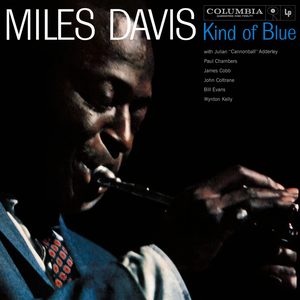
Album
Book
City
Same pick
Game
Same pick
Claude Sonnet 5.5Claude Sonnet 5.5




Spirited Away
Kind of Blue
Gödel, Escher, Bach
Kyoto
Outer Wilds
GLM 5.3 FlashXGLM 5.3 FlashX
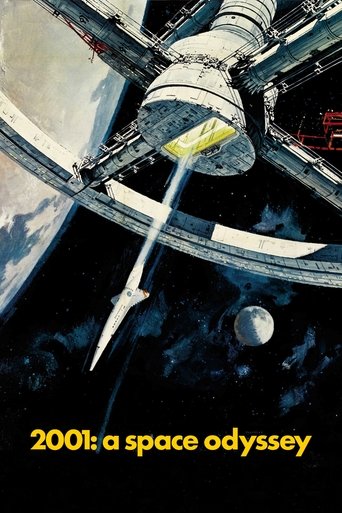

2001: A Space Odyssey
Kid A
Gödel, Escher, Bach
Kyoto
Outer Wilds
Price and specs
| Spec | Claude Sonnet 5.5 | GLM 5.3 FlashX |
|---|---|---|
| Input price | $2/M tokens | $0.37/M tokens |
| Output price | $10/M tokens | $1.25/M tokens |
| Context window | 1.0M tokens | 1.0M tokens |
| Weights | Closed | — |
| Free API (OpenRouter) | No | No |
| Released | Sep 2026 | Sep 2026 |
| At 10M a month | $20.00 | $3.70 |
Input tokens at list price. No caching, no batch discount.
Where to run it



GLM 5.3 FlashX1 host
Per million tokens. Prices and uptime via OpenRouter, checked 30 Sep 2026.
Common questions
What is the difference between Claude Sonnet 5.5 and GLM 5.3 FlashX?
Claude Sonnet 5.5 is developed by Anthropic while GLM 5.3 FlashX is developed by Zhipu AI. Claude Sonnet 5.5 has a 1.0M token context window vs GLM 5.3 FlashX's 1.0M. You can compare their actual outputs across 52 challenges on Rival to see how they differ in practice.
Which is better, Claude Sonnet 5.5 or GLM 5.3 FlashX?
It depends on your use case. Claude Sonnet 5.5 and GLM 5.3 FlashX each have strengths in different areas. Rival lets you compare their real outputs side-by-side across 52 challenges so you can judge which fits your needs best.
How much does Claude Sonnet 5.5 cost compared to GLM 5.3 FlashX?
Claude Sonnet 5.5 costs $2/M input tokens and GLM 5.3 FlashX costs $0.37/M input tokens. GLM 5.3 FlashX is $1.63/M cheaper per input. Check their side-by-side outputs on Rival to see if the price difference is justified by quality.
How can I compare Claude Sonnet 5.5 and GLM 5.3 FlashX on Rival?
This page shows a side-by-side comparison of Claude Sonnet 5.5 and GLM 5.3 FlashX across shared challenges. You can vote on which model produced the better output in a blind duel. Browsing and voting are free. No account is needed to look; signing in only saves your votes and likes.
More comparisons
Against the newest arrivals
- Claude Sonnet 5.5 vs GPT-6.1 SolLanded Sep 2026
- GLM 5.3 FlashX vs Solar Mini 4Landed Sep 2026
- Claude Sonnet 5.5 vs Qwen3.8 Max PrimeLanded Sep 2026
- GLM 5.3 FlashX vs GLM 5.3 PrimeLanded Sep 2026
- Claude Sonnet 5.5 vs Qwen3.8 Omni FlashLanded Sep 2026
- GLM 5.3 FlashX vs Command A+Landed Sep 2026
- Claude Sonnet 5.5 vs Claude Opus 5.5Landed Sep 2026
- GLM 5.3 FlashX vs GPT-6 Luna ProLanded Sep 2026


Same lab, same size, long tail
- Claude Sonnet 5.5 vs Claude Opus 5Version compare
- Claude Sonnet 5.5 vs Claude Opus 4.6Version compare
- GLM 5.3 FlashX vs GLM 5.3Same lab
- GLM 5.3 FlashX vs GLM 5.3 FlashSame lab
- GLM 5.3 FlashX vs DeepSeek V3.2Same size
- GLM 5.3 FlashX vs DeepSeek V3.2 ExpSame size
- GLM 5.3 FlashX vs DeepSeek V3.2 SpecialeSame size
- GLM 5.3 FlashX vs DeepSeek V4 FlashSame size
