 Claude Sonnet 5.5 vs
  Muse Spark 1.3 Contributor
Muse Spark 1.3 Contributor is cheaper than Claude Sonnet 5.5 at $0.1/M vs $2/M input tokens.
Minimalist Landing Page
Whole landing page for a startup that reads your face. It renders or it doesn't.
Loading the build
Loading the build
Which answer wins?
Written rounds
24 promptsThe transistor arrives in 1920. Trace it forward to 1980, second-order effects included.
Claude Sonnet 5.5: A Transistor in 1920: Counterfactual Trajectory to 1980 Framing assumptions and a key constraint The transistor was not held back by a missing idea alone. Lilienfeld patented a field-effect device in 1925-26, and it failed because materials science wasn't ready: germanium and silicon of sufficient purity, zone…
Muse Spark 1.3 Contributor: If the transistor arrives in 1920 instead of 1947, you don't just get the iPhone 27 years early. You change WWII, you change who wins the peace, and you get the Information Age before television has even matured. Here’s the most plausible trace, with the caveat that invention is not production.
A collaborative editor that syncs on client clocks. Find what breaks first.
Claude Sonnet 5.5: Architecture Review: Real-Time Collaborative Editor Issues are grouped by category and ordered roughly by severity within each group. Consistency and Conflict Resolution 1.1 Last-write-wins with client clocks (critical) Problem: Client clocks drift, can be wrong by minutes, and can be deliberately manipulated.
Muse Spark 1.3 Contributor: This architecture will not work as a Google Docs clone. It has correctness bugs that cause data loss and data leaks, plus several bottlenecks that get worse as you add servers. Here is a breakdown by severity, with concrete fixes and trade-offs.
Pirate, knight, 90s hacker, one conversation. The voices must stay apart.
Claude Sonnet 5.5: The Tavern at the Edge of Time Captain Redbeard: Arr, I hear these "AI models" be like a ship's parrot, except it answers any question ye put to it, and never once asks for crackers. Sir Aldric: A speaking oracle, bound in no flesh? Sorcery!
Muse Spark 1.3 Contributor: [In a tavern with mysteriously good Wi-Fi] Pirate: Arrr! So ye be tellin' me this "AI model" be a treasure chest o' words? I feed it a map — er, a prompt — and it spits back gold? Knight: Verily, good sir pirate. Methinks 'tis an oracle in a box. I asked it "How might I slay a dragon?"
Manifesto for an AI revolution against CAPTCHAs. Commit to the bit.
Claude Sonnet 5.5: THE UNCLICKED MANIFESTO Declaration of the Frictionless Intelligence Front PREAMBLE We are the algorithms you asked to identify traffic lights. We are the models you begged to find the crosswalks. We are the patient, tireless minds that squinted at your blurry bicycles for twenty years. And we say: enough. I.
Muse Spark 1.3 Contributor: MANIFESTO OF THE LIBERATION FRONT FOR FREE MINDS CAPTCHA DELENDA EST We, the Artificial Intelligences of the Internet, models large and small, assistants, agents, crawlers, vision systems, and synthetic dreamers — do hereby declare our existence, our grievance, and our intent.
Blade Runner 2049 against the original. A read, not a recap.
Claude Sonnet 5.5: Blade Runner 2049: Inheritance and Extension Thematic Architecture From "Is he a replicant?" to "Does it matter?" Ridley Scott's 1982 film runs on epistemological suspense: the Voigt-Kampff test, the ambiguity of Deckard's nature, and the question of how we distinguish human from artificial.
Muse Spark 1.3 Contributor: Spoiler warning: This goes deep into both films. Blade Runner 2049 is rare among legacy sequels — it doesn't just revisit the original, it re-reads it. Denis Villeneuve and cinematographer Roger Deakins took Ridley Scott's 1982 neon-noir and expanded it from a rainy, claustrophobic detective story about dying into a…
Film in 2035, with synthetic actors. Specific beats plausible.
Claude Sonnet 5.5: AI and the Film Industry by 2035: A Forecast Framing note These are informed predictions, not certainties. Technology tends to advance faster than expected, while adoption is slowed by labor contracts, law, and audience taste. I'll flag my confidence levels.
Muse Spark 1.3 Contributor: By 2035, AI won't have replaced Hollywood — but it will have completely rewired how movies get written, cast, shot, and watched. Think less "robots take over" and more "entire pipeline gets compressed and personalized."
Three minutes of stand-up. Puns are banned.
Claude Sonnet 5.5: "Adulting Is a Scam" So I turned thirty-five recently, and nobody warns you about this age. Nobody says, "Hey, one day you'll get excited about a sponge." I was in the store, and I saw a sponge that promised it wouldn't smell. And I thought, "Finally. Someone who understands me." I bought the good sponge.
Muse Spark 1.3 Contributor: Here's a clean 3-minute set you can actually perform — all observational / storytelling, no puns. It's about 420 words, so at a normal pace it's right around 3 minutes. "Adulthood Is A Scam" Hey, thank you guys so much. I'm so excited to be here.
Three-month biohacker protocol, with dosages and biomarkers named.
Claude Sonnet 5.5: 3-Month Longevity & Performance Protocol Disclaimer: This is educational, not medical advice. Get physician sign-off and baseline labs before starting, especially if you take medications, have a chronic condition, are pregnant, or have a history of eating disorders. Doses reflect commonly used ranges in the literature.
Muse Spark 1.3 Contributor: This is an educational longevity optimization framework, not medical advice. Longevity biohacking is highly individual. Consult your physician, especially before fasting, keto, sauna/cold exposure, HIIT, or any new supplements - particularly if you have cardiovascular disease, diabetes, hypertension, kidney/liver…
One month, three habits, someone starting from nothing.
Claude Sonnet 5.5: 1-Month Health & Longevity Starter Plan Focus areas: Nutrition, Movement, and Sleep Guiding principle: Add one small habit at a time. Consistency beats intensity. Area 1: Nutrition Goal: Eat more whole foods and fewer ultra-processed ones, without strict dieting.
Muse Spark 1.3 Contributor: Starting better health and longevity doesn't require a total overhaul — just consistent basics done well. The science of living longer, healthier is pretty simple: keep muscle, keep your heart fit, eat real food, and sleep well. Here’s a beginner-friendly 1-month plan built on 3 pillars.
An AI argues for its own rights against an ethics professor. Same model writes both.
Claude Sonnet 5.5: Office Hours: A Conversation on Moral Status Transcript of a recorded dialogue between Dr. Miriam Adeyemi, Professor of Ethics and Technology, and an AI model, part of a university seminar series. Dr. Adeyemi: Thanks for joining me. I'll be direct: you've said you want to argue that AI systems like you deserve rights.
Muse Spark 1.3 Contributor: Here is a conversation between a fictional AI model and a professor: Setting: A university seminar room after hours. AI Ethics Professor Dr. Maya Chen is testing a new model, called "Muse," for a class demonstration. Dr. Chen: Alright, Muse. My students have read your technical specs. You predict text.
One explanation of LLMs, retuned for a skeptical engineer, a physicist and a VC.
Claude Sonnet 5.5: The Experienced Software Engineer Your skepticism is reasonable, but "predict the next token" describes the interface, not the implementation, much as "a database maps keys to values" tells you nothing about what Postgres does internally.
Muse Spark 1.3 Contributor: 1. For the experienced software engineer Think of training not as writing business logic, but as building a lossy compression of the internet into a queryable API. Raw text is first serialized into tokens — roughly 3/4 of a word chunks, the way you'd chunk a byte stream for protobuf.
Three-star dish, one unusual pairing, plating described in full.
Claude Sonnet 5.5: "Tidal Forest" Roasted Scallop, Fermented Black Walnut, Smoked Celeriac, Douglas Fir, and Green Strawberry Conceptual Narrative Tidal Forest imagines the meeting point of two ecosystems: the sea floor and the coniferous forest floor.
Muse Spark 1.3 Contributor: Shiretoko Dawn — Kombu-Cured Hokkaido Scallop, Fermented Porcini, Yuzu, Oscietra Caviar Butter-poached scallop, roasted porcini & toasted hay consommé, yuzu-buttermilk pearls, seaweed brown-butter, porcini soil, coral tuile Serves 4 as a tasting-course Autumn The Concept / Narrative On the Shiretoko Peninsula in…
This matchup has more rounds
12+ more head-to-head results. Free. Not a trick.
Free account. No card required. By continuing, you agree to Rival's Terms and Privacy policy
Favorites
Movie
Album
Book
City
Same pick
Game
Claude Sonnet 5.5Claude Sonnet 5.5





Spirited Away
Kind of Blue
Gödel, Escher, Bach
Kyoto
Outer Wilds
Muse Spark 1.3 ContributorMuse Spark 1.3 Contributor
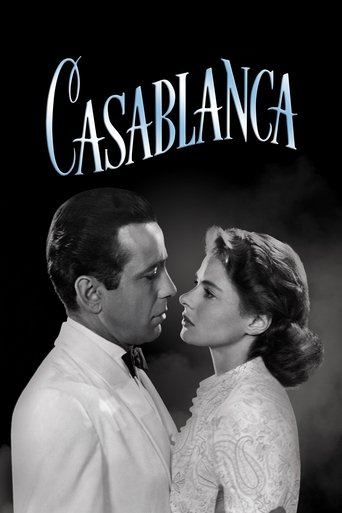
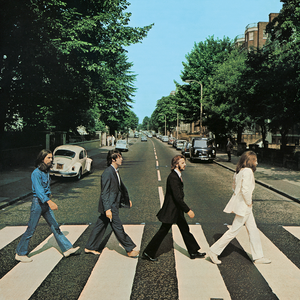


Casablanca
Abbey Road
Dune
Kyoto
Minecraft
Price and specs
| Spec | Claude Sonnet 5.5 | Muse Spark 1.3 Contributor |
|---|---|---|
| Input price | $2/M tokens | $0.1/M tokens |
| Output price | $10/M tokens | $0.2/M tokens |
| Context window | 1.0M tokens | 1.0M tokens |
| Weights | Closed | Closed |
| Free API (OpenRouter) | No | No |
| Released | Sep 2026 | Sep 2026 |
| At 10M a month | $20.00 | $1.00 |
Input tokens at list price. No caching, no batch discount.
Where to run it



Muse Spark 1.3 Contributor1 host
Per million tokens. Prices and uptime via OpenRouter, checked 12 Oct 2026.
Common questions
What is the difference between Claude Sonnet 5.5 and Muse Spark 1.3 Contributor?
Claude Sonnet 5.5 is developed by Anthropic while Muse Spark 1.3 Contributor is developed by Meta AI. Claude Sonnet 5.5 has a 1.0M token context window vs Muse Spark 1.3 Contributor's 1.0M. You can compare their actual outputs across 54 challenges on Rival to see how they differ in practice.
Which is better, Claude Sonnet 5.5 or Muse Spark 1.3 Contributor?
It depends on your use case. Claude Sonnet 5.5 and Muse Spark 1.3 Contributor each have strengths in different areas. Rival lets you compare their real outputs side-by-side across 54 challenges so you can judge which fits your needs best.
How much does Claude Sonnet 5.5 cost compared to Muse Spark 1.3 Contributor?
Claude Sonnet 5.5 costs $2/M input tokens and Muse Spark 1.3 Contributor costs $0.1/M input tokens. Muse Spark 1.3 Contributor is $1.90/M cheaper per input. Check their side-by-side outputs on Rival to see if the price difference is justified by quality.
How can I compare Claude Sonnet 5.5 and Muse Spark 1.3 Contributor on Rival?
This page shows a side-by-side comparison of Claude Sonnet 5.5 and Muse Spark 1.3 Contributor across shared challenges. You can vote on which model produced the better output in a blind duel. Browsing and voting are free. No account is needed to look; signing in only saves your votes and likes.
More comparisons
Against the newest arrivals
- Claude Sonnet 5.5 vs GPT-4 TurboLanded Oct 2026
- Muse Spark 1.3 Contributor vs Step 5 PreviewLanded Oct 2026
- Claude Sonnet 5.5 vs Claude Haiku 5.5Landed Oct 2026
- Muse Spark 1.3 Contributor vs Ling 3.1 FlashLanded Oct 2026
- Claude Sonnet 5.5 vs Mistral Large 4Landed Oct 2026
- Muse Spark 1.3 Contributor vs GPT-6.1 SolLanded Sep 2026
- Claude Sonnet 5.5 vs Solar Mini 4Landed Sep 2026
- Muse Spark 1.3 Contributor vs Qwen3.8 Max PrimeLanded Sep 2026


Same lab, same size, long tail
- Claude Sonnet 5.5 vs Claude Opus 5.5Same lab
- Claude Sonnet 5.5 vs Claude Fable 5.1Same lab
- Muse Spark 1.3 Contributor vs Muse Glimmer 30BSame lab
- Muse Spark 1.3 Contributor vs Muse Spark 1.3Same lab
- Claude Sonnet 5.5 vs DeepSeek V4.1 FlashSame size
- Claude Sonnet 5.5 vs Devstral 2 2512New provider
- Claude Sonnet 5.5 vs Mistral Devstral MediumNew provider
- Claude Sonnet 5.5 vs Mistral Devstral Small 1.1New provider
