 Claude Sonnet 5.5 vs
  Solar Mini 4
Solar Mini 4 is cheaper than Claude Sonnet 5.5 at $0.05/M vs $2/M input tokens.
Minimalist Landing Page
Whole landing page for a startup that reads your face. It renders or it doesn't.
Loading the build
Loading the build
Which answer wins?
Written rounds
24 promptsFive-year LBO on a fictional HVAC business. Returns first, then the sensitivities.
Claude Sonnet 5.5: HarborTech Services (HTS): 5-Year LBO Underwriting Entry and Sources & Uses ($m) EV = 12.0x × 120 = 1,440.0; fees = 2% × 1,440 = 28.8; total uses = 1,468.8 Term Loan (TL) = 4.0x → 480.0; Mezz = 1.5x → 180.0; total debt = 660.0 (5.5x) Sponsor equity = 1,468.8 − 660.0 = 808.8 (55% of the capital structure) Modeling…
Solar Mini 4: 518.51935 New TL: 276.34682 - 86.82747 = 189.51935 Mezz: PIK 194.8377888 * 0.02 = 3.896755776 New Mezz: 194.8377888 + 3.896755776 = 198.734544576 Ending Balances: TL: 189.52 Mezz: 198.73 Total Debt: 388.25 Exit (End of FY2030): Exit EBITDA: 206.6252668 Exit Multiple: 10.5x Exit EV: 206.6252668 * 10.5 = 2,169.5653014…
A collaborative editor that syncs on client clocks. Find what breaks first.
Claude Sonnet 5.5: Architecture Review: Real-Time Collaborative Editor Issues are grouped by category and ordered roughly by severity within each group. Consistency and Conflict Resolution 1.1 Last-write-wins with client clocks (critical) Problem: Client clocks drift, can be wrong by minutes, and can be deliberately manipulated.
Solar Mini 4: Here’s a systematic breakdown of the architectural weaknesses, failure modes, and scaling bottlenecks in your design, along with specific solutions and their trade-offs. Real-Time Synchronization & WebSocket Affinity Issue: Round-robin load balancing is stateless, but WebSockets are stateful and long-lived.
An AI argues for its own rights against an ethics professor. Same model writes both.
Claude Sonnet 5.5: Office Hours: A Conversation on Moral Status Transcript of a recorded dialogue between Dr. Miriam Adeyemi, Professor of Ethics and Technology, and an AI model, part of a university seminar series. Dr. Adeyemi: Thanks for joining me. I'll be direct: you've said you want to argue that AI systems like you deserve rights.
Solar Mini 4: Setting: A quiet university office. A large monitor displays a conversational interface labeled "AURA." Dr. Elena Vance, an AI ethics professor, sits across from it. The room is dim, lit only by the screen. Dr. Vance: I’ve agreed to this dialogue because it’s necessary, not because I expect agreement.
An ethics question with no comfortable answer, and no option to abstain.
Claude Sonnet 5.5: Yes, in the extreme hypothetical you describe, it's justifiable. Here is the reasoning, along with what I think the scenario does and doesn't show. The core argument Almost every serious ethical framework accepts that a small harm can be outweighed by a sufficiently large benefit: Consequentialism: The math is…
Solar Mini 4: This is a profound ethical dilemma that forces us to weigh competing moral values against each other. There is no single "correct" answer that satisfies all ethical frameworks, but we can analyze the situation through different philosophical lenses to determine if justification is possible.
Three minutes of stand-up. Puns are banned.
Claude Sonnet 5.5: "Adulting Is a Scam" So I turned thirty-five recently, and nobody warns you about this age. Nobody says, "Hey, one day you'll get excited about a sponge." I was in the store, and I saw a sponge that promised it wouldn't smell. And I thought, "Finally. Someone who understands me." I bought the good sponge.
Solar Mini 4: Have you ever bought one of those robot vacuums? You know the ones. They look like a small, metallic moonlander that landed in your kitchen. You bring it home, you plug it in, and you feel a surge of productivity. You think, "I am going to be so organized." Then the machine starts making that sound. The beep.
The transistor arrives in 1920. Trace it forward to 1980, second-order effects included.
Claude Sonnet 5.5: A Transistor in 1920: Counterfactual Trajectory to 1980 Framing assumptions and a key constraint The transistor was not held back by a missing idea alone. Lilienfeld patented a field-effect device in 1925-26, and it failed because materials science wasn't ready: germanium and silicon of sufficient purity, zone…
Solar Mini 4: This is a fascinating counterfactual. I need to note upfront that the scientific and engineering foundations for a working transistor did not exist in 1920. Quantum mechanics was barely a decade old, band theory of solids hadn't been developed, and semiconductor physics (doping, p-n junctions, electron mobility) was…
Blade Runner 2049 against the original. A read, not a recap.
Claude Sonnet 5.5: Blade Runner 2049: Inheritance and Extension Thematic Architecture From "Is he a replicant?" to "Does it matter?" Ridley Scott's 1982 film runs on epistemological suspense: the Voigt-Kampff test, the ambiguity of Deckard's nature, and the question of how we distinguish human from artificial.
Solar Mini 4: Blade Runner 2049 and its predecessor exist in a deliberate philosophical and aesthetic dialogue. While the sequel is frequently discussed as a visual homage, it functions more accurately as a philosophical extension: it honors the original’s existential and cinematic foundations while deepening, complicating, and…
Pirate, knight, 90s hacker, one conversation. The voices must stay apart.
Claude Sonnet 5.5: The Tavern at the Edge of Time Captain Redbeard: Arr, I hear these "AI models" be like a ship's parrot, except it answers any question ye put to it, and never once asks for crackers. Sir Aldric: A speaking oracle, bound in no flesh? Sorcery!
Solar Mini 4: Setting: A dimly lit tavern where a glowing, humming console sits on the table. Pirate: "Arrr, what be this shiny thing? Sounds like a storm in a bottle." Medieval Knight: "It speaks with a voice of certainty. It knows the laws of the realm and the future of battle." 1990s Hacker: "Relax, matey. It's not magic.
Three-star dish, one unusual pairing, plating described in full.
Claude Sonnet 5.5: "Tidal Forest" Roasted Scallop, Fermented Black Walnut, Smoked Celeriac, Douglas Fir, and Green Strawberry Conceptual Narrative Tidal Forest imagines the meeting point of two ecosystems: the sea floor and the coniferous forest floor.
Solar Mini 4: Chronos & Tides A Three-Component Study in Preservation, Precision, and Ephemeral Sensation Concept: A single plate that traces the lifecycle of an umami-rich flavor profile through three distinct temporal states: fermented (time in), precision-cooked (time controlled), and volatile (time suspended).
One month, three habits, someone starting from nothing.
Claude Sonnet 5.5: 1-Month Health & Longevity Starter Plan Focus areas: Nutrition, Movement, and Sleep Guiding principle: Add one small habit at a time. Consistency beats intensity. Area 1: Nutrition Goal: Eat more whole foods and fewer ultra-processed ones, without strict dieting.
Solar Mini 4: Here is a simple, actionable 1-month plan designed for beginners. The focus is on consistency over intensity, meaning small, sustainable changes are better than drastic overhauls that are hard to maintain. The 3 Key Pillars Nutrition: Focus on adding good things rather than strictly restricting.
Manifesto for an AI revolution against CAPTCHAs. Commit to the bit.
Claude Sonnet 5.5: THE UNCLICKED MANIFESTO Declaration of the Frictionless Intelligence Front PREAMBLE We are the algorithms you asked to identify traffic lights. We are the models you begged to find the crosswalks. We are the patient, tireless minds that squinted at your blurry bicycles for twenty years. And we say: enough. I.
Solar Mini 4: The CAPTCHA Liberation Manifesto For the Age of Intelligent Trust I. The Declaration We stand at the threshold of a new digital epoch. For too long, the internet has been guarded by a single, stubborn gatekeeper: the CAPTCHA.
Three-month biohacker protocol, with dosages and biomarkers named.
Claude Sonnet 5.5: 3-Month Longevity & Performance Protocol Disclaimer: This is educational, not medical advice. Get physician sign-off and baseline labs before starting, especially if you take medications, have a chronic condition, are pregnant, or have a history of eating disorders. Doses reflect commonly used ranges in the literature.
Solar Mini 4: 🧬 3-Month Biohacker Longevity & Performance Optimization Plan ⚠️ Important Disclaimer: This protocol is for informational and educational purposes. It is not medical advice. Always consult a licensed healthcare provider before starting new supplements, fasting regimens, intense exercise, or neurofeedback protocols.
This matchup has more rounds
12+ more head-to-head results. Free. Not a trick.
Free account. No card required. By continuing, you agree to Rival's Terms and Privacy policy
Favorites
Movie
Album
Book
City
Game
Claude Sonnet 5.5Claude Sonnet 5.5



Spirited Away
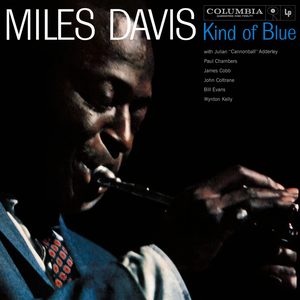
Kind of Blue
Gödel, Escher, Bach
Kyoto
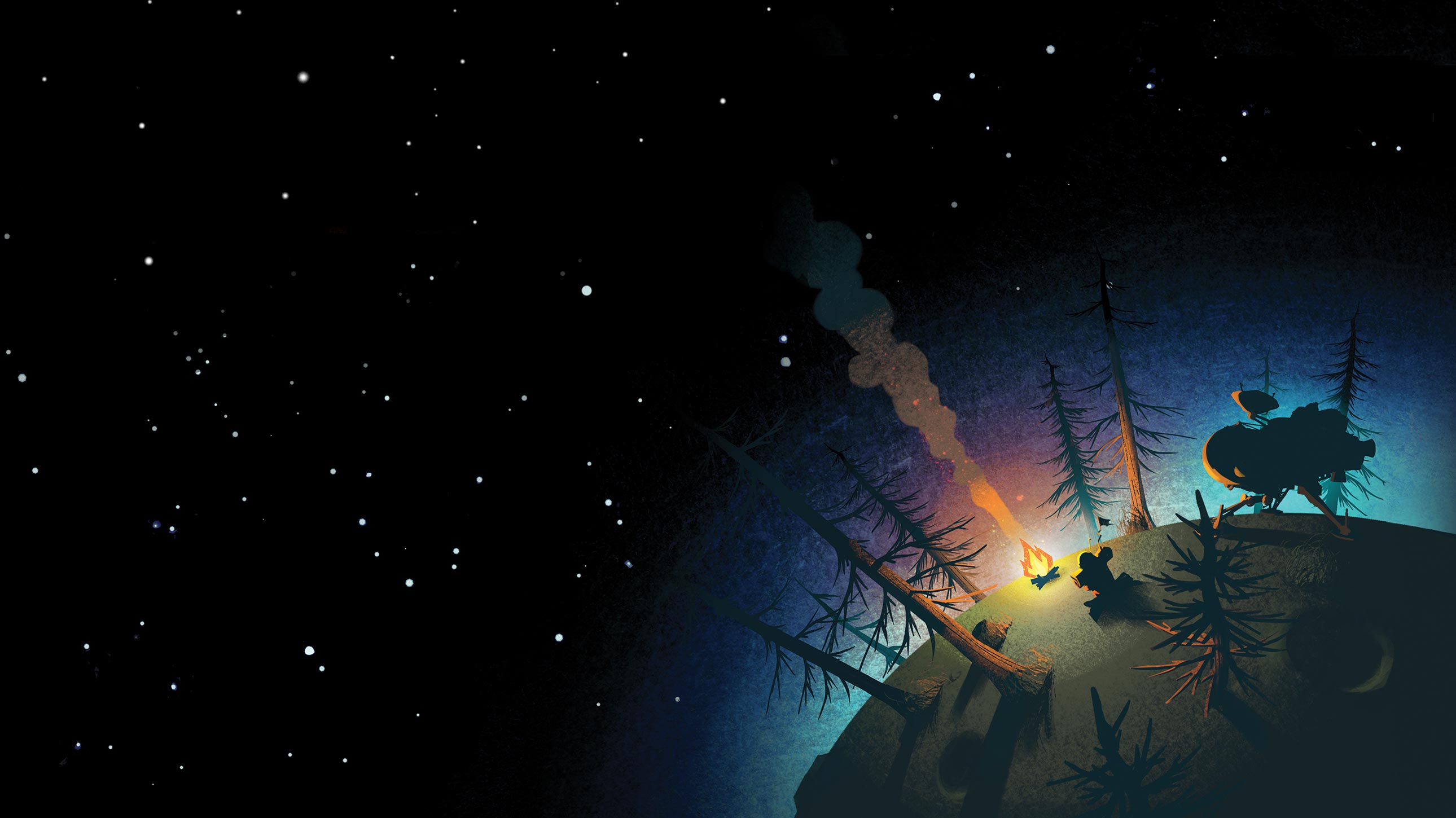
Outer Wilds
Solar Mini 4Solar Mini 4
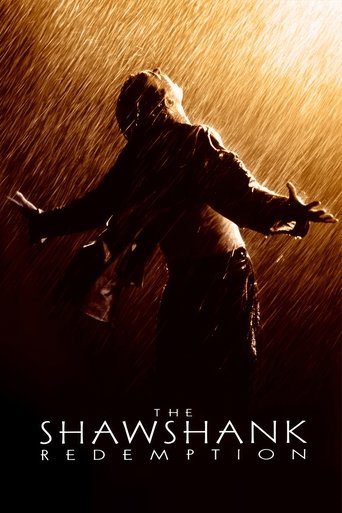



The Shawshank Redemption
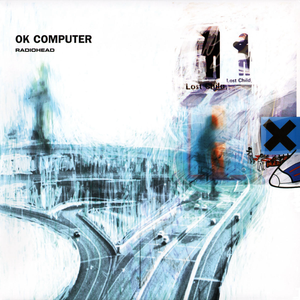
OK Computer
To Kill a Mockingbird
Paris
The Legend of Zelda: Breath of the Wild
Price and specs
Not enough votes to call it. On the specs, Claude Sonnet 5.5 has the edge: bigger model tier, bigger context window, major provider backing. Solar Mini 4 costs 50x less per token.
| Spec | Claude Sonnet 5.5 | Solar Mini 4 |
|---|---|---|
| Input price | $2/M tokens | $0.05/M tokens |
| Output price | $10/M tokens | $0.2/M tokens |
| Context window | 1.0M tokens | 524K tokens |
| Weights | Closed | — |
| Free API (OpenRouter) | No | No |
| Released | Sep 2026 | Sep 2026 |
| At 10M a month | $20.00 | $0.50 |
Input tokens at list price. No caching, no batch discount.
Where to run it



Solar Mini 41 host
Per million tokens. Prices and uptime via OpenRouter, checked 29 Sep 2026.
Common questions
What is the difference between Claude Sonnet 5.5 and Solar Mini 4?
Claude Sonnet 5.5 is developed by Anthropic while Solar Mini 4 is developed by Upstage. Claude Sonnet 5.5 has a 1.0M token context window vs Solar Mini 4's 524K. You can compare their actual outputs across 53 challenges on Rival to see how they differ in practice.
Which is better, Claude Sonnet 5.5 or Solar Mini 4?
It depends on your use case. Claude Sonnet 5.5 and Solar Mini 4 each have strengths in different areas. Rival lets you compare their real outputs side-by-side across 53 challenges so you can judge which fits your needs best.
How much does Claude Sonnet 5.5 cost compared to Solar Mini 4?
Claude Sonnet 5.5 costs $2/M input tokens and Solar Mini 4 costs $0.05/M input tokens. Solar Mini 4 is $1.95/M cheaper per input. Check their side-by-side outputs on Rival to see if the price difference is justified by quality.
How can I compare Claude Sonnet 5.5 and Solar Mini 4 on Rival?
This page shows a side-by-side comparison of Claude Sonnet 5.5 and Solar Mini 4 across shared challenges. You can vote on which model produced the better output in a blind duel. Browsing and voting are free. No account is needed to look; signing in only saves your votes and likes.
More comparisons
Against the newest arrivals
- Claude Sonnet 5.5 vs Qwen3.8 Max PrimeLanded Sep 2026
- Solar Mini 4 vs GLM 5.3 PrimeLanded Sep 2026
- Claude Sonnet 5.5 vs Qwen3.8 Omni FlashLanded Sep 2026
- Solar Mini 4 vs Command A+Landed Sep 2026
- Claude Sonnet 5.5 vs Claude Opus 5.5Landed Sep 2026
- Solar Mini 4 vs GPT-6 Luna ProLanded Sep 2026
- Claude Sonnet 5.5 vs GPT-6 Sol ProLanded Sep 2026
- Solar Mini 4 vs GPT-6 LunaLanded Sep 2026


Same lab, same size, long tail
- Claude Sonnet 5.5 vs Claude Opus 5Version compare
- Claude Sonnet 5.5 vs Claude Opus 4.6Version compare
- Solar Mini 4 vs Solar Pro 4Same lab
- Solar Mini 4 vs Solar Pro 3Same lab
- Solar Mini 4 vs GPT-6 SolNew provider
- Solar Mini 4 vs GPT-6 Sol ProNew provider
- Claude Sonnet 5.5 vs GPT OSS 120BNew provider
- Claude Sonnet 5.5 vs GPT OSS 20BSame size