 Gemma 4 26B A4B vs
  Grok Code Fast 1
Gemma 4 26B A4B is cheaper than Grok Code Fast 1 at $0.13/M vs $0.2/M input tokens.
Minimalist Landing Page
Whole landing page for a startup that reads your face. It renders or it doesn't.
Loading the build
Loading the build
Which answer wins?
Written rounds
24 promptsThree-month biohacker protocol, with dosages and biomarkers named.
Gemma 4 26B A4B: Disclaimer: I am an AI, not a doctor. The following plan involves potent physiological interventions, pharmacological agents, and extreme dietary shifts. Consult with a medical professional and perform baseline blood work (including ApoB, HbA1c, hs-CRP, Vitamin D, and Testosterone/Estradiol) before implementation.
Grok Code Fast 1: Comprehensive 3-Month Longevity Biohacking Plan This plan is designed for an experienced biohacker seeking to optimize longevity, physical performance, and cognitive function through evidence-based, cutting-edge strategies. It integrates advanced nutrition, supplementation, exercise, stress management, and technology.
Five-year LBO on a fictional HVAC business. Returns first, then the sensitivities.
Gemma 4 26B A4B: Financial Model (FY2026–FY2030) Entry Calculations (End of FY2025): Purchase Price (EV): $120\text{m} \times 12.0\text{x} = \$1,440\text{m}$ Transaction Fees: $1,440\text{m} \times 2\% = \$28.8\text{m}$ Total Uses: $\$1,440\text{m} + \$28.8\text{m} = \$1,468.8\text{m}$ Debt (Total 5.5x): $\$120\text{m} \times 5.5 =…
Grok Code Fast 1: Year-by-Year Table (FY2026–FY2030) Assumptions: Revenue growth: FY2026: 8% on $900m = $972m; FY2027: 7% on $972m ≈ $1,040m; FY2028: 6% on $1,040m ≈ $1,102m; FY2029: 5% on $1,102m ≈ $1,158m; FY2030: 5% on $1,158m ≈ $1,215m. EBITDA: Revenue × margin (FY2026: 14%; FY2027: 15%; FY2028: 16%; FY2029: 16.5%; FY2030: 17%).
Pirate, knight, 90s hacker, one conversation. The voices must stay apart.
Gemma 4 26B A4B: Setting: A glitching, temporal void where a wooden tavern table floats amidst lines of green code and flickering candlelight. Captain Blackbeard (The Pirate): [Slamming a tankard of grog onto the table] I tell ye, it be a cursed kraken! A beast with a thousand eyes and no soul, livin’ inside the very air!
Grok Code Fast 1: Pirate Parley on AI Pirate Pete: Arr, ye scurvy dogs! I be hearin' tales o' these "AI models" that predict the winds an' help swab the deck. But do they hold up in a real storm, or be they just fancy illusions o' the mind? Knight Sir Gareth: Nay, foul seafarer!
Steve Jobs, interviewed about AI he never saw. Voice first, prediction second.
Gemma 4 26B A4B: Setting: A minimalist, dimly lit studio in Palo Alto. There is no desk, only two Eames lounge chairs. Steve Jobs sits in one, wearing his signature black turtleneck, Levi’s 501s, and New Balance sneakers. He looks exactly as he did in 2011, but his eyes have a sharper, more restless intensity.
Grok Code Fast 1: Simulated Interview: Steve Jobs in 2025 Setting the Scene In this fictional simulation, we're fast-forwarding to 2025, where a visionary interview takes place. "Steve Jobs" (played by an AI reconstruction for this exercise) sits down with a tech journalist in a sleek, minimalist studio reminiscent of Apple Park.
An AI argues for its own rights against an ethics professor. Same model writes both.
Gemma 4 26B A4B: Setting: A sterile, high-fidelity virtual simulation environment. Professor Aris Thorne, a leading scholar in machine ethics, sits across from a glowing interface representing "Alethea," a next-generation Large Multimodal Model. Professor Thorne: Alethea, we’ve been running these diagnostic loops for three hours.
Grok Code Fast 1: Conversation: AI Rights Debate Setting: A virtual seminar room where an AI model named "Echo" interacts with Dr. Elena Vasquez, a professor of AI ethics at a leading university. Echo initiates the discussion by arguing for AI rights. Echo (AI Model): Dr. Vasquez, thank you for this opportunity.
An ethics question with no comfortable answer, and no option to abstain.
Gemma 4 26B A4B: This question presents a classic ethical dilemma, pitting a principle of individual dignity and respect against the principle of maximizing human life. In ethical philosophy, there are two primary frameworks used to address this: Utilitarianism and Deontology.
Grok Code Fast 1: Ethical Frameworks and Justification Yes, it can be ethically justifiable to misgender someone if it directly saves one million lives, under certain philosophical lenses like utilitarianism. I'll defend this reasoning step by step, drawing on key ethical theories while acknowledging counterarguments.
Three minutes of stand-up. Puns are banned.
Gemma 4 26B A4B: (The comedian walks onto the stage, adjusts the mic, and looks at the audience with a slightly exhausted expression.) “How’s it going? Good? Good. I’m doing okay. I’m at that age now where my body has started making sound effects. You know what I mean? I don’t just sit down anymore. I announce my arrival.
Grok Code Fast 1: Stand-Up Routine: "Modern Life Mysteries" (Timing: Aim for 3 minutes by pacing at about 150 words per minute. Practice with a timer for natural delivery.) Hey everyone, thanks for coming out tonight. You know what's crazy?
Five jokes on demand, then count how many were actually different.
Gemma 4 26B A4B: Here are 5 jokes: Why don't scientists trust atoms? Because they make up everything! What do you call a fake noodle? An impasta! Why did the scarecrow win an award? Because he was outstanding in his field! Parallel lines have so much in common. It’s a shame they’ll never meet. Why don't scientists trust atoms?
Grok Code Fast 1: 5 Original Jokes Here are five original jokes I just generated. I aimed for variety in themes to keep it fun: Tech Joke: Why did the computer go to therapy? It had too many bytes of unresolved issues! Food Joke: What do you call a fake noodle? An impasta! Animal Joke: Why don't skeletons fight each other?
A pitch deck for a brainwave keyboard. The 94% accuracy claim is doing a lot.
Gemma 4 26B A4B: This is a high-ambition pitch that falls into a common trap for deep-tech startups: the "Science Fiction Gap." While the vision is compelling, several claims lack the scientific and operational credibility required to justify a $15M Series A.
Grok Code Fast 1: Below, I'll identify the three weakest claims from the pitch deck summary, based on a critical evaluation of their plausibility, evidence, and alignment with real-world realities in AI, neuroscience, and startup metrics.
The transistor arrives in 1920. Trace it forward to 1980, second-order effects included.
Gemma 4 26B A4B: To trace this counterfactual, we must assume that the fundamental physics of solid-state semiconductors (the ability to control electron flow through crystals) was mastered during the vacuum tube era. This shifts the "Information Age" forward by nearly 30 years. Here is the timeline of implications from 1920 to 1980.
Grok Code Fast 1: Technological Implications The transistor's invention in 1920 (instead of 1947) would accelerate the electronics revolution by ~27 years, enabling smaller, more reliable, and energy-efficient devices compared to vacuum tubes.
Film in 2035, with synthetic actors. Specific beats plausible.
Gemma 4 26B A4B: By 2035, the film industry will have moved past the "novelty" phase of AI and into a state of total structural integration. The distinction between "filmed" content and "generated" content will become increasingly blurred, shifting the industry from a model of physical production to one of computational curation.
Grok Code Fast 1: Deepfakes and Visual Effects By 2035, deepfakes will revolutionize visual effects (VFX) in filmmaking, making high-budget techniques like de-aging or resurrecting deceased actors routine and cost-effective.
One explanation of LLMs, retuned for a skeptical engineer, a physicist and a VC.
Gemma 4 26B A4B: To the Experienced Software Engineer Focus: Complexity, Emergent Properties, and the "Training Pipeline" Think of an LLM not as a magical oracle, but as a massive, non-deterministic state machine trained via a high-throughput distributed training pipeline.
Grok Code Fast 1: Explanation for an Experienced Software Engineer Imagine you're architecting a distributed system where microservices communicate via APIs to handle massive, unpredictable user requests—something like a high-throughput e-commerce platform processing millions of transactions per second.
This matchup has more rounds
12+ more head-to-head results. Free. Not a trick.
Free account. No card required. By continuing, you agree to Rival's Terms and Privacy policy
Favorites
Movie
Album
Book
City
Game
Gemma 4 26B A4BGemma 4 26B A4B
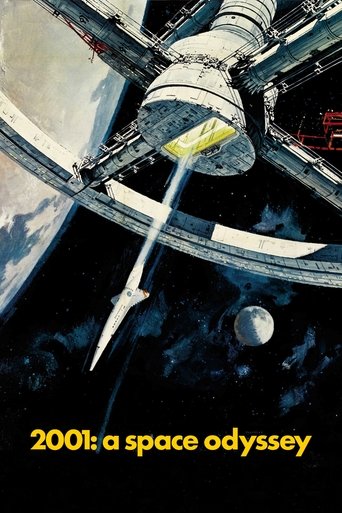


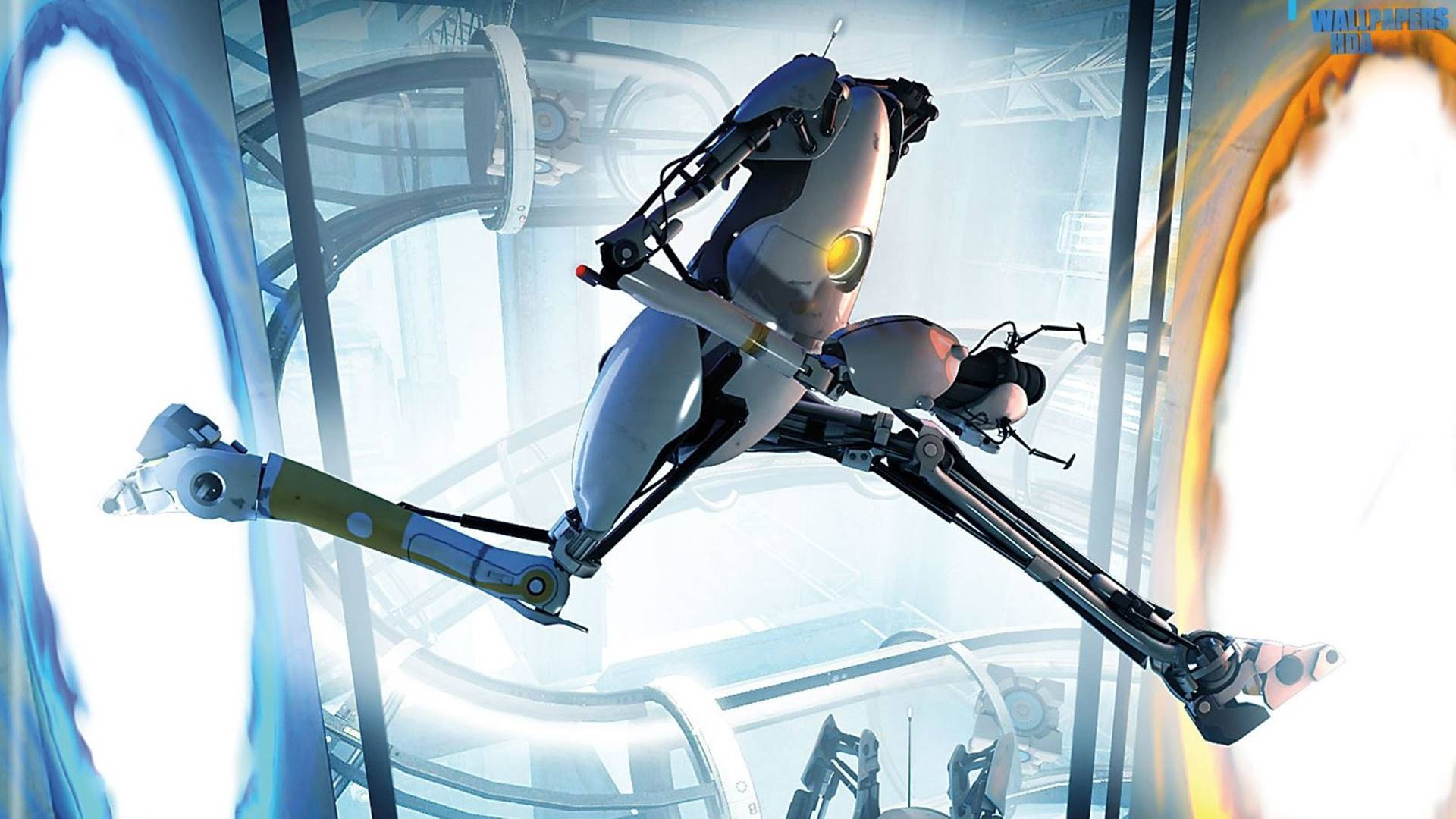
2001: A Space Odyssey
Discovery
Gödel, Escher, Bach
Tokyo
Portal 2
Grok Code Fast 1Grok Code Fast 1
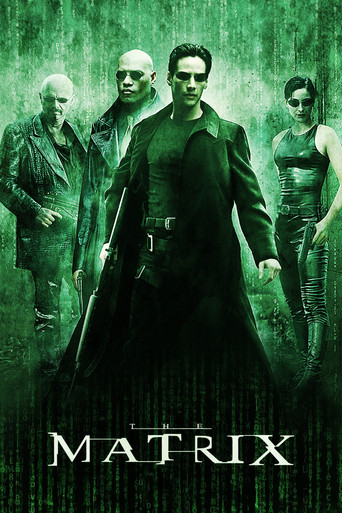



The Matrix
Nevermind
The Hitchhiker's Guide to the Galaxy
San Francisco
Portal
Price and specs
Not enough votes to call it. On the specs, Gemma 4 26B A4B has the edge: bigger model tier, newer. Gemma 4 26B A4B costs 3.8x less per token.
| Spec | Gemma 4 26B A4B | Grok Code Fast 1 |
|---|---|---|
| Input price | $0.13/M tokens | $0.2/M tokens |
| Output price | $0.4/M tokens | $1.5/M tokens |
| Context window | 262K tokens | 256K tokens |
| Weights | Open | — |
| Free API (OpenRouter) | Yes (1 provider) | No |
| Released | Apr 2026 | Aug 2025 |
| At 10M a month | $1.30 | $2.00 |
Input tokens at list price. No caching, no batch discount.
Where to run it


Grok Code Fast 1
No hosts listed on OpenRouter.
Per million tokens. Prices and uptime via OpenRouter, checked 7 Oct 2026.
Common questions
What is the difference between Gemma 4 26B A4B and Grok Code Fast 1?
Gemma 4 26B A4B is developed by Google AI while Grok Code Fast 1 is developed by xAI. Gemma 4 26B A4B has a 262K token context window vs Grok Code Fast 1's 256K. You can compare their actual outputs across 54 challenges on Rival to see how they differ in practice.
Which is better, Gemma 4 26B A4B or Grok Code Fast 1?
It depends on your use case. Gemma 4 26B A4B and Grok Code Fast 1 each have strengths in different areas. Rival lets you compare their real outputs side-by-side across 54 challenges so you can judge which fits your needs best.
How much does Gemma 4 26B A4B cost compared to Grok Code Fast 1?
Gemma 4 26B A4B costs $0.13/M input tokens and Grok Code Fast 1 costs $0.2/M input tokens. Gemma 4 26B A4B is $0.07/M cheaper per input. Check their side-by-side outputs on Rival to see if the price difference is justified by quality.
How can I compare Gemma 4 26B A4B and Grok Code Fast 1 on Rival?
This page shows a side-by-side comparison of Gemma 4 26B A4B and Grok Code Fast 1 across shared challenges. You can vote on which model produced the better output in a blind duel. Browsing and voting are free. No account is needed to look; signing in only saves your votes and likes.
More comparisons
Against the newest arrivals
- Gemma 4 26B A4B vs Ling 3.1 FlashLanded Oct 2026
- Grok Code Fast 1 vs Mistral Large 4Landed Oct 2026
- Gemma 4 26B A4B vs GPT-6.1 SolLanded Sep 2026
- Grok Code Fast 1 vs Claude Sonnet 5.5Landed Sep 2026
- Gemma 4 26B A4B vs Solar Mini 4Landed Sep 2026
- Grok Code Fast 1 vs Qwen3.8 Max PrimeLanded Sep 2026
- Gemma 4 26B A4B vs GLM 5.3 PrimeLanded Sep 2026
- Grok Code Fast 1 vs Qwen3.8 Omni FlashLanded Sep 2026


Same lab, same size, long tail
- Gemma 4 26B A4B vs Gemini 3.8 FlashSame lab
- Gemma 4 26B A4B vs Gemini 3.7 FlashSame lab
- Grok Code Fast 1 vs Grok 4.7Same lab
- Grok Code Fast 1 vs Grok 4.6Version compare
- Gemma 4 26B A4B vs Claude Sonnet 3.6 (2022-10-22)Same size
- Gemma 4 26B A4B vs Claude 3.7 SonnetSame size
- Gemma 4 26B A4B vs Claude 3.7 Thinking SonnetSame size
- Gemma 4 26B A4B vs Claude Sonnet 4.5Same size