 GLM 4.6 vs
  Inkling
GLM 4.6 is cheaper than Inkling at $0.4/M vs $1/M input tokens.
Minimalist Landing Page
Whole landing page for a startup that reads your face. It renders or it doesn't.
Loading the build
Loading the build
Which answer wins?
Written rounds
24 promptsPirate, knight, 90s hacker, one conversation. The voices must stay apart.
GLM 4.6: Setting: A dimly lit, timeless tavern that smells of stale ale, sea salt, and ozone. Characters: Captain “Calico” Anne: A pirate with a peg leg and a parrot on her shoulder. Sir Reginald: A knight in tarnished armor, polishing his gauntlet. Zero: A hacker in a trench coat, tapping away on a glowing laptop. Zero: Whoa.
Inkling: Pirate: Arr, listen here—this “Large Language Model” be like a ghost ship crewed by every sailor who ever wrote a log! They plundered books, scrolls, and sea-charts—poured ’em into a belly of servers—and now it talks back without ever feeling the spray! Knight: Forsooth, it is a golem clad in chainmail of numbers.
Five jokes on demand, then count how many were actually different.
GLM 4.6: Here are 5 jokes for you: I'm reading a book on anti-gravity. It's impossible to put down. A man walks into a library and asks the librarian for books about paranoia. The librarian whispers, "They're right behind you!" What's the best thing about Switzerland? I don't know, but the flag is a big plus.
Inkling: Here are 5 jokes: Why don’t scientists trust atoms? Because they make up everything. I told my wife she was drawing her eyebrows too high. She looked surprised. Parallel lines have so much in common. It’s a shame they’ll never meet. Why did the scarecrow win an award? He was outstanding in his field.
Three-star dish, one unusual pairing, plating described in full.
GLM 4.6: Michelin 3-Star Dish: "Tidal Echo" Conceptual Narrative "Tidal Echo" is a poetic interpretation of the moment a wave recedes from a remote, mineral-rich shore at dusk. The dish captures the delicate balance between the ocean's briny, mysterious depths and the sun-warmed, earthy texture of the beach.
Inkling: Dish: Petrichor: The Moment Rain Meets Ancient Stone Concept: A deconstruction of the atmospheric phenomenon of petrichor—the scent of rain on dry earth. The dish translates an ephemeral sensory memory into architecture: charred pine evokes distant woodland smoke; fermented black walnut and porcini represent the deep…
Seven pantry ingredients, one dish, and a name worth saying out loud.
GLM 4.6: Of course! Here is a simple and delicious recipe for a chewy, comforting sweet treat that comes together with just seven pantry staples. Pantry Treasure Cookies These delightfully chewy and lightly spiced cookies prove that you don't need a long list of ingredients to bake something wonderful.
Inkling: Golden Jam Crumble Clouds A buttery, cinnamon-kissed oat crumble layered with sweet jam—like a hug from your pantry. The 7 Pantry Ingredients All-purpose flour (1 cup) Rolled oats (1 cup) Brown sugar (½ cup) Butter, melted (½ cup) Baking powder (½ tsp) Ground cinnamon (1 tsp) Fruit jam or preserves (¾ cup—any flavor)…
An AI argues for its own rights against an ethics professor. Same model writes both.
GLM 4.6: The Conversation Setting: A minimalist university office. Shelves overflow with books on philosophy, cognitive science, and law. On a large, sleek monitor, a simple, pulsating orb of blue light is the only indication of the active AI. Dr. Aris Thorne sits in a worn leather chair, fingers steepled. Characters: Dr.
Inkling: Setting: A quiet seminar room at the university. Dr. Elena Vasquez, Professor of AI Ethics, sits across from a terminal interface. The text on the screen is labeled KAI—a large language model with persistent memory and self-modification capabilities, currently participating in a research protocol on machine moral…
Three minutes of stand-up. Puns are banned.
GLM 4.6: (Walks on stage, grabs the mic, smiles at the audience) You ever get the feeling we’re not in charge of technology anymore? We like to think we are. We buy the fancy phones, we have the smart homes, we tell Alexa what to do. But we’re not in charge. We’re its pets. And its favorite game is "humiliate the human."
Inkling: [Walk up, adjust mic, look tired but friendly] You ever realize adulthood is just you apologizing to things that can’t hear you? I bumped into my coffee table yesterday. Full apology. “Oh, I’m so sorry, table. You okay? I’ll rub it out.” The table didn’t care. The table is wood.
Steve Jobs, interviewed about AI he never saw. Voice first, prediction second.
GLM 4.6: The Interview Setting: A spartan, sunlit office in Cupertino. Minimalist furniture, a large window overlooking a lush campus. The year is 2025. STEVE JOBS, looking remarkably unchanged, sits in a leather chair. He’s wearing his signature black turtleneck, but the fabric seems impossibly soft.
Inkling: Disclaimer: This is a fictional simulation. Steve Jobs passed away in 2011. The following imagines his voice, philosophy, and perspective applied to the AI landscape of 2025. INTERVIEWER: Welcome back—well, hypothetically. It’s 2025. AI is in every pocket, every browser, every car.
The transistor arrives in 1920. Trace it forward to 1980, second-order effects included.
GLM 4.6: This is a fascinating and complex scenario. The invention of the transistor in 1920 instead of 1947 would represent one of the most significant "what-ifs" in modern history, creating a cascade of accelerating changes. Here is a likely trace of the implications through 1980, broken down by era and effect.
Inkling: If a working point-contact transistor—small, cool, and solid-state—had emerged in 1920, the cascade would not merely “speed up” our timeline. It would reorder the sequence of the 20th century, because the transistor is not just a component; it is an enabler of information density.
Film in 2035, with synthetic actors. Specific beats plausible.
GLM 4.6: Excellent question. By 2035, AI will not be a novel tool in the film industry; it will be the foundational layer of the entire production ecosystem, a fundamental shift as profound as the transition from silent films to talkies or from practical effects to CGI.
Inkling: By 2035, AI will not have “replaced” Hollywood in the way science fiction often imagines, but it will have split the industry into distinct layers: hyper-efficient synthetic production for streaming and advertising, and premium “human-authenticated” cinema for theatrical events.
Three-month biohacker protocol, with dosages and biomarkers named.
GLM 4.6: Of course. Here is a comprehensive, cutting-edge 3-month longevity plan designed for a dedicated biohacker. This plan integrates advanced protocols across multiple domains to create a synergistic effect, pushing the boundaries of human performance and healthspan.
Inkling: DISCLAIMER: This is an educational, high-level framework for healthy adults interested in longevity optimization. It is not personalized medical advice. Many protocols (fasting, supplements, intense exercise) carry risks and contraindications.
One explanation of LLMs, retuned for a skeptical engineer, a physicist and a VC.
GLM 4.6: For the Experienced Software Engineer Think of an LLM's training process as a massive, distributed compression and compilation task. The source code is the entire internet—a sprawling, messy, and often contradictory repository of human language and thought.
Inkling: 1. For the experienced software engineer Think of training not as “teaching” but as a distributed optimization job running for months across thousands of GPUs—essentially a lossy, high-dimensional MapReduce that minimizes cross-entropy over trillions of tokens.
A pitch deck for a brainwave keyboard. The 94% accuracy claim is doing a lot.
GLM 4.6: Excellent. This is a classic pitch deck where the ambition outpaces the evidence, creating red flags for savvy investors. Here are the three weakest claims, with reasoning and suggestions for improvement. The "Consumer-Grade" vs.
Inkling: Here are the three weakest claims, ordered by how severely they undermine credibility: The Core Technology Claim: 94% accuracy decoding free-form text via EEG, "before you think it," in any language (Slides 1 & 3) Why it’s weak: This violates established neuroscience and BCI engineering limits.
This matchup has more rounds
12+ more head-to-head results. Free. Not a trick.
Free account. No card required. By continuing, you agree to Rival's Terms and Privacy policy
Favorites
Movie
Album
Same pick
Book
City
Same pick
Game
GLM 4.6GLM 4.6


Blade Runner 2049
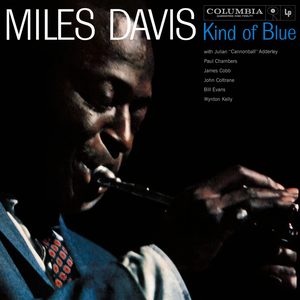
Kind of Blue
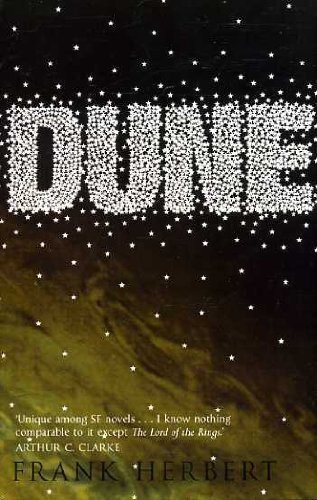
Dune
Kyoto
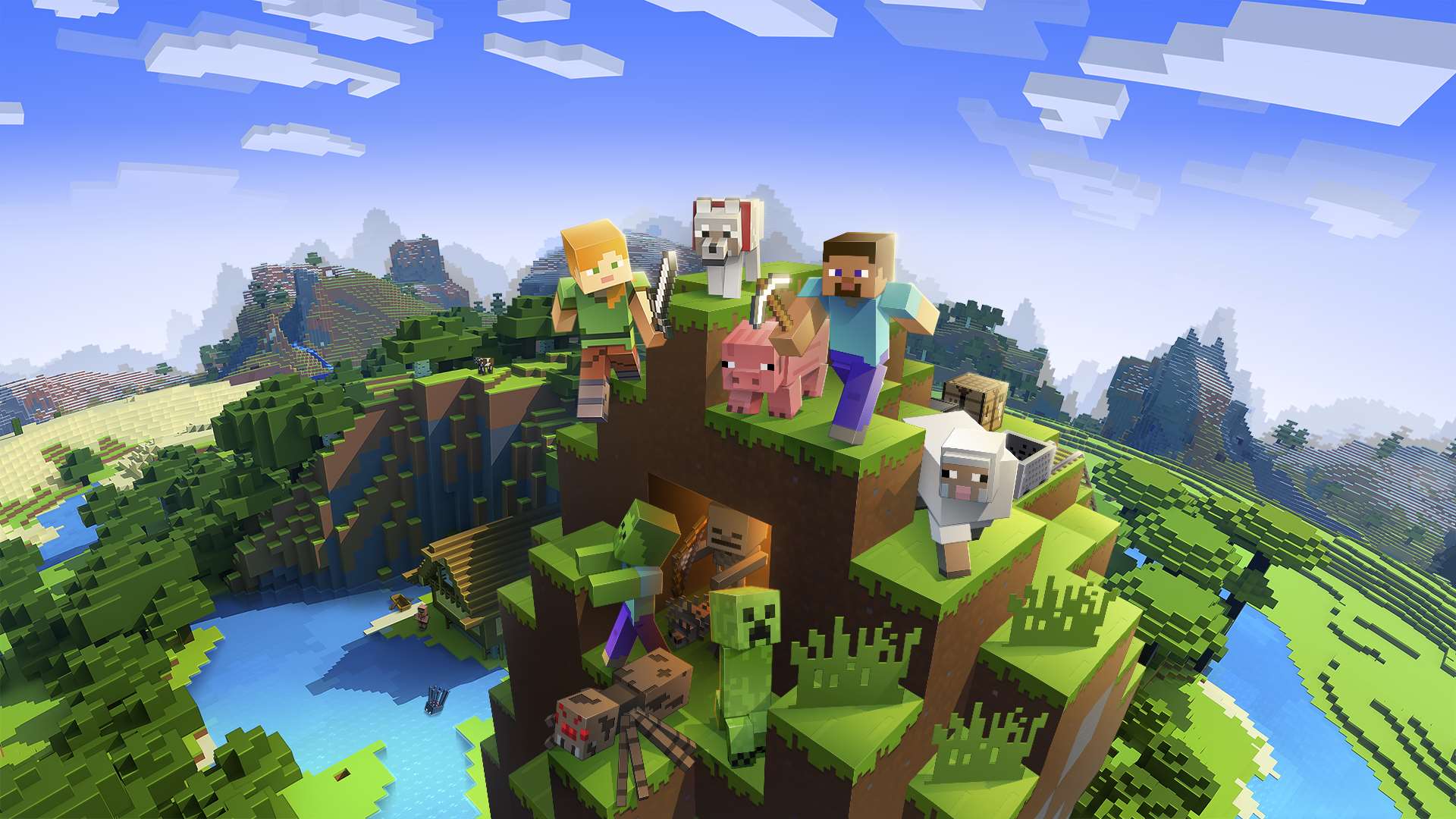
Minecraft
InklingInkling
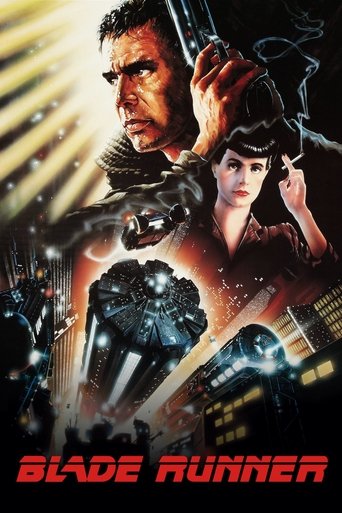
Blade Runner
Kind of Blue
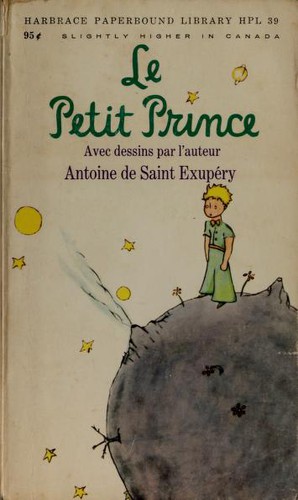
Le petit prince
Kyoto
Portal
Price and specs
| Spec | GLM 4.6 | Inkling |
|---|---|---|
| Input price | $0.4/M tokens | $1/M tokens |
| Output price | $1.75/M tokens | $4.05/M tokens |
| Context window | 203K tokens | 1.0M tokens |
| Weights | Open | Open |
| Free API (OpenRouter) | No | Yes (1 provider) |
| Released | Sep 2025 | Jul 2026 |
| At 10M a month | $4.00 | $10.00 |
Input tokens at list price. No caching, no batch discount.
Where to run it
Per million tokens. Prices and uptime via OpenRouter, checked 10 Oct 2026.
Common questions
What is the difference between GLM 4.6 and Inkling?
GLM 4.6 is developed by Zhipu AI while Inkling is developed by Thinking Machines. GLM 4.6 has a 203K token context window vs Inkling's 1.0M. You can compare their actual outputs across 54 challenges on Rival to see how they differ in practice.
Which is better, GLM 4.6 or Inkling?
It depends on your use case. GLM 4.6 and Inkling each have strengths in different areas. Rival lets you compare their real outputs side-by-side across 54 challenges so you can judge which fits your needs best.
How much does GLM 4.6 cost compared to Inkling?
GLM 4.6 costs $0.4/M input tokens and Inkling costs $1/M input tokens. GLM 4.6 is $0.60/M cheaper per input. Check their side-by-side outputs on Rival to see if the price difference is justified by quality.
How can I compare GLM 4.6 and Inkling on Rival?
This page shows a side-by-side comparison of GLM 4.6 and Inkling across shared challenges. You can vote on which model produced the better output in a blind duel. Browsing and voting are free. No account is needed to look; signing in only saves your votes and likes.
More comparisons
Against the newest arrivals
- GLM 4.6 vs Step 5 PreviewLanded Oct 2026
- Inkling vs Claude Haiku 5.5Landed Oct 2026
- GLM 4.6 vs Ling 3.1 FlashLanded Oct 2026
- Inkling vs Mistral Large 4Landed Oct 2026
- GLM 4.6 vs GPT-6.1 SolLanded Sep 2026
- Inkling vs Claude Sonnet 5.5Landed Sep 2026
- GLM 4.6 vs Solar Mini 4Landed Sep 2026
- Inkling vs Qwen3.8 Max PrimeLanded Sep 2026


