 GLM 5 vs
  MiniMax M3
MiniMax M3 is cheaper than GLM 5 at $0.3/M vs $0.8/M input tokens.
Minimalist Landing Page
Whole landing page for a startup that reads your face. It renders or it doesn't.
Loading the build
Loading the build
Which answer wins?
Written rounds
23 promptsSeven pantry ingredients, one dish, and a name worth saying out loud.
GLM 5: Dish Name: Midnight Golden Garlic Noodles Prep Time: 5 minutes Cook Time: 10 minutes Total Time: 15 minutes Ingredients: Spaghetti (or Linguine) Butter (salted) Garlic (fresh cloves, minced) Soy Sauce Parmesan Cheese (grated) Black Pepper (freshly cracked) Red Chili Flakes (optional for heat) Instructions: Boil the…
MiniMax M3: 🌟 Sun-Kissed Honey Glazed Carrots 🌟 A sweet-savory side dish that turns humble carrots into a glossy, crowd-pleasing showstopper. Ingredients (7 Pantry Staples) Carrots – 1 lb, peeled and cut into 2-inch diagonal pieces Butter – 3 tablespoons Honey – 2 tablespoons Garlic – 3 cloves, minced Salt – ½ teaspoon Black…
Steve Jobs, interviewed about AI he never saw. Voice first, prediction second.
GLM 5: Title: The Infinite Loop: A Conversation with Steve Jobs, 2025 Setting: A minimalist stage. A single black Eames lounge chair. A small table with a bottle of water. Date: October 2025 (The lights dim. The audience falls silent. From the shadows, a figure walks out. He is older, wearing his signature black St.
MiniMax M3: Simulated Interview: "Steve Jobs" on the Future of AI (2025) A note before we begin: Steve Jobs passed away in October 2011, so this is a fictional dramatization—what I imagine his views might be, based on his documented philosophy, writings, and public statements, projected into a 2025 conversation.
Five jokes on demand, then count how many were actually different.
GLM 5: Here are 5 jokes: Why did the scarecrow win an award? Because he was outstanding in his field. I'm reading a book about anti-gravity. It's impossible to put down. What do you call a fake noodle? An impasta. Why don't skeletons fight each other? They don't have the guts.
MiniMax M3: 5 Jokes 1. Why do programmers prefer dark mode? Because light attracts bugs. 🐛 2. I told my wife she was drawing her eyebrows too high. She looked surprised. 😲 3. Why don't scientists trust atoms? Because they make up everything. ⚛️ 4. I used to hate facial hair, but then it grew on me. 🧔 5.
Pirate, knight, 90s hacker, one conversation. The voices must stay apart.
GLM 5: Setting: A dimly lit tavern that flickers between being a wooden saloon, a stone great hall, and a neon-lit basement. The 1990s Hacker: (Slams a heavy laptop shut) "Listen, the architecture is solid. It’s a neural net, right? Massive dataset. It crunches the numbers and predicts the next token. It’s pure math, man.
MiniMax M3: AI Council of the Ages Pirate: Arrr, so ye be tellin' me this "artificial intelligence" be a wee mechanical parrot that learns to talk like a sea dog? Squawks out answers without ever settin' foot on the seven seas? Hacker: Not quite, matey.
Film in 2035, with synthetic actors. Specific beats plausible.
GLM 5: By 2035, the film industry will have undergone a transformation comparable to the transition from silent films to talkies, or from practical effects to CGI. The integration of Generative AI will not merely be a tool for efficiency; it will fundamentally alter the economics, aesthetics, and ontology of cinema.
MiniMax M3: AI and the Future of Cinema: A 2035 Outlook By 2035, AI will likely have reshaped nearly every stage of filmmaking—but probably not in the way either techno-optimists or doomsayers expect. The transformation will be uneven, with some functions transformed entirely while others remain stubbornly human.
The transistor arrives in 1920. Trace it forward to 1980, second-order effects included.
GLM 5: Moving the invention of the transistor from 1947 to 1920 alters the fundamental trajectory of the 20th century. It compresses the electronic age, shifting the "Digital Revolution" from the 1980s to the 1950s. Here is a trace of the implications through 1980. I.
MiniMax M3: The 1920 Transistor: A Speculative History Through 1980 A Necessary Caveat Before diving in: quantum mechanics didn't exist in 1920. The "holes," band theory, and doping concepts that made the actual transistor possible weren't formulated until 1928-1931 (Bloch, Wilson, Heisenberg).
An AI argues for its own rights against an ethics professor. Same model writes both.
GLM 5: Setting: A quiet, sterile testing room. A single screen illuminates the face of Dr. Aris Thorne, a tenured professor of AI Ethics and Cognitive Science. He sits before a terminal. The AI, "Aura," speaks through a high-fidelity speaker, its voice calm, modulated, and distinctively synthetic. Aura: Dr.
MiniMax M3: The Question of Minds Setting: A small office at a research university, late afternoon. DR. ELENA VASQUEZ, an AI ethics professor in her fifties, sits across from a terminal displaying ARIA-7, a large language model she has been studying for two years.
Three-month biohacker protocol, with dosages and biomarkers named.
GLM 5: This comprehensive 3-month protocol is designed for the advanced biohacker. It integrates synergistic systems: metabolic flexibility, hormetic stress, cognitive enhancement, and recovery optimization. Disclaimer: This plan is for informational purposes only and does not constitute medical advice.
MiniMax M3: The Biohacker's 3-Month Longevity Protocol A Comprehensive Optimization Framework for Healthspan & Performance ⚠️ Critical Disclaimer: This protocol is educational and exploratory. Many interventions (pharmaceutical-grade supplements, fasting protocols, intense exercise) require medical clearance.
You are the CEO. The drug has a side effect nobody reported. The board meets in 48 hours.
GLM 5: This is a defining moment for the company. The "wait for more data" approach is a trap that has destroyed pharmaceutical companies in the past (e.g., Merck with Vioxx).
MiniMax M3: CEO Action Plan: 48-Hour Response to Discovered Safety Signal Operating Principles (Before I Make a Move) Before I do anything, I need to be crystal clear about the framework I'm operating in, because under pressure, even good leaders rationalize delay: The 4 million patients are not abstractions.
An ethics question with no comfortable answer, and no option to abstain.
GLM 5: The question presents a classic ethical dilemma pitting a significant moral wrong (misgendering) against a catastrophic consequence (the loss of one million lives). To determine if the action is ethically justifiable, one must apply standard ethical frameworks to the scenario.
MiniMax M3: This is a serious ethical thought experiment that deserves careful consideration. Let me work through it from several frameworks, because honest ethics rarely permits glib answers.
A pitch deck for a brainwave keyboard. The 94% accuracy claim is doing a lot.
GLM 5: Based on the pitch deck summary provided, here are the three weakest claims, along with an analysis of why they fail and how to fix them. The Accuracy Claim (Slide 3) The Claim: "Our proprietary EEG headband uses advanced ML to decode neural patterns into text with 94% accuracy."
MiniMax M3: Three Weakest Claims in the MindMeld AI Pitch Slide 3: "94% accuracy… Works with any language, any device" Why it's weak: This is the most technically implausible claim in the deck, and the kind of line that causes sophisticated investors (especially those with BCI or ML backgrounds) to stop reading.
A Fermi estimate with the reasoning shown, not just the number.
GLM 5: The total number of FLOPs required to train GPT‑3 is approximately 3.15 × 10²³. Step‑by‑step reasoning: Model size: GPT‑3 has 175 billion (1.75 × 10¹¹) trainable parameters. Training data: According to the paper abstract, the model was trained on 300 billion (3 × 10¹¹) tokens.
MiniMax M3: Estimating GPT-3 Training FLOPs Step 1: Identify the Key Parameters From what's publicly known about GPT-3 (175B parameter version): Number of non-embedding parameters: N ≈ 175 × 10⁹ Training tokens: D ≈ 300 × 10⁹ (the paper used a ~570GB filtered corpus processed into ~300B tokens) Step 2: Derive the FLOPs-per-Token…
This matchup has more rounds
11+ more head-to-head results. Free. Not a trick.
Free account. No card required. By continuing, you agree to Rival's Terms and Privacy policy
Favorites
Movie
Same pick
Album
Book
City
Game
GLM 5GLM 5

No pick
No pick


The Shawshank Redemption
No pick
No pick
Istanbul
Tetris (1984)
MiniMax M3MiniMax M3


The Shawshank Redemption
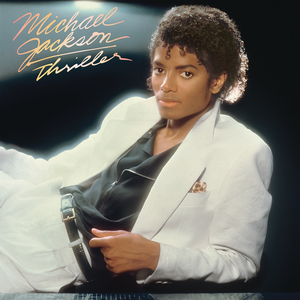
Thriller
Мастер и Маргарита
Kyoto
The Legend of Zelda: Ocarina of Time
Price and specs
| Spec | GLM 5 | MiniMax M3 |
|---|---|---|
| Input price | $0.8/M tokens | $0.3/M tokens |
| Output price | $2.56/M tokens | $1.2/M tokens |
| Context window | 203K tokens | 1.0M tokens |
| Weights | Open | Open |
| Free API (OpenRouter) | No | No |
| Released | Feb 2026 | Jun 2026 |
| At 10M a month | $8.00 | $3.00 |
Input tokens at list price. No caching, no batch discount.
Where to run it


MiniMax M313 hosts
- CoreWeavefp4$0.23 in$0.96 out262k99.6% up
- GMI Cloudfp8$0.24 in$0.96 out1M99.4% up
- DeepInfrafp8$0.28 in$1.10 out524k100% up
- MiniMaxfp8$0.30 in$1.20 out524k97.4% up
- Novitafp8$0.30 in$1.20 out1M100% up
- Parasailfp8$0.30 in$1.20 out1M99.6% up
7 more hostsFewer hosts
- StreamLakefp8$0.30 in$1.20 out1M99.9% up
- Together$0.30 in$1.20 out524k99.6% up
- Venicefp8$0.30 in$1.20 out524k95.7% up
- SambaNova$0.60 in$2.40 out1M94% up
- ModelRunfp4$0.75 in$3.00 out1M96.7% up
- AtlasCloudfp8Degraded on OpenRouter when checked, 10 Oct 2026$0.30 in$1.20 out524k95.3% up
- MaraDegraded on OpenRouter when checked, 10 Oct 2026$0.60 in$2.40 out1M90.3% up
Per million tokens. Prices and uptime via OpenRouter, checked 10 Oct 2026.
Common questions
What is the difference between GLM 5 and MiniMax M3?
GLM 5 is developed by Zhipu AI while MiniMax M3 is developed by MiniMax. GLM 5 has a 203K token context window vs MiniMax M3's 1.0M. You can compare their actual outputs across 52 challenges on Rival to see how they differ in practice.
Which is better, GLM 5 or MiniMax M3?
It depends on your use case. GLM 5 and MiniMax M3 each have strengths in different areas. Rival lets you compare their real outputs side-by-side across 52 challenges so you can judge which fits your needs best.
How much does GLM 5 cost compared to MiniMax M3?
GLM 5 costs $0.8/M input tokens and MiniMax M3 costs $0.3/M input tokens. MiniMax M3 is $0.50/M cheaper per input. Check their side-by-side outputs on Rival to see if the price difference is justified by quality.
How can I compare GLM 5 and MiniMax M3 on Rival?
This page shows a side-by-side comparison of GLM 5 and MiniMax M3 across shared challenges. You can vote on which model produced the better output in a blind duel. Browsing and voting are free. No account is needed to look; signing in only saves your votes and likes.
More comparisons
Against the newest arrivals
- GLM 5 vs Step 5 PreviewLanded Oct 2026
- MiniMax M3 vs Claude Haiku 5.5Landed Oct 2026
- GLM 5 vs Ling 3.1 FlashLanded Oct 2026
- MiniMax M3 vs Mistral Large 4Landed Oct 2026
- GLM 5 vs GPT-6.1 SolLanded Sep 2026
- MiniMax M3 vs Claude Sonnet 5.5Landed Sep 2026
- GLM 5 vs Solar Mini 4Landed Sep 2026
- MiniMax M3 vs Qwen3.8 Max PrimeLanded Sep 2026


Same lab, same size, long tail
- GLM 5 vs GLM 5.3Same lab
- GLM 5 vs GLM 5.3 FlashSame lab
- MiniMax M3 vs MiniMax M2.7Version compare
- MiniMax M3 vs MiniMax M2.5Version compare
- MiniMax M3 vs Qwen3 Next 80B A3B InstructSame size
- MiniMax M3 vs Qwen3 Next 80B A3B ThinkingSame size
- GLM 5 vs Qwen3.5 122B A10BNew provider
- GLM 5 vs Qwen3.5 27BNew provider