 Claude Sonnet 5.5 vs
  MiniMax M3
MiniMax M3 is cheaper than Claude Sonnet 5.5 at $0.3/M vs $2/M input tokens.
Minimalist Landing Page
Whole landing page for a startup that reads your face. It renders or it doesn't.
Loading the build
Loading the build
Which answer wins?
Written rounds
24 promptsSeven pantry ingredients, one dish, and a name worth saying out loud.
Claude Sonnet 5.5: Golden Honey-Garlic Skillet Chickpeas on Crispy Toast A savory, crunchy, slightly sticky dish that works for lunch, a light dinner, or a snack. Prep time: 5 minutes Cook time: 15 minutes Total: 20 minutes Serves: 2 The 7 Ingredients 1 can (15 oz) chickpeas, drained and patted dry 2 tablespoons olive oil 3 cloves…
MiniMax M3: 🌟 Sun-Kissed Honey Glazed Carrots 🌟 A sweet-savory side dish that turns humble carrots into a glossy, crowd-pleasing showstopper. Ingredients (7 Pantry Staples) Carrots – 1 lb, peeled and cut into 2-inch diagonal pieces Butter – 3 tablespoons Honey – 2 tablespoons Garlic – 3 cloves, minced Salt – ½ teaspoon Black…
Three minutes of stand-up. Puns are banned.
Claude Sonnet 5.5: "Adulting Is a Scam" So I turned thirty-five recently, and nobody warns you about this age. Nobody says, "Hey, one day you'll get excited about a sponge." I was in the store, and I saw a sponge that promised it wouldn't smell. And I thought, "Finally. Someone who understands me." I bought the good sponge.
MiniMax M3: "The Future Is Now and I Want a Refund" [Walks on stage, adjusts mic] So I was at the grocery store yesterday. Self-checkout. I love self-checkout. You know why I love self-checkout? Because nothing builds character like being publicly shamed by a machine. [Pause] I scanned a banana. Just a banana.
You are the CEO. The drug has a side effect nobody reported. The board meets in 48 hours.
Claude Sonnet 5.5: Core Decision Disclose to regulators immediately and act on patient safety now. Do not wait for more data or for the 6-month formal timeline. Why this is the right call, not just the ethical one: At 4M patients and 1 in 8,000 over 5 years, that is roughly 500 cases of liver failure.
MiniMax M3: CEO Action Plan: 48-Hour Response to Discovered Safety Signal Operating Principles (Before I Make a Move) Before I do anything, I need to be crystal clear about the framework I'm operating in, because under pressure, even good leaders rationalize delay: The 4 million patients are not abstractions.
The transistor arrives in 1920. Trace it forward to 1980, second-order effects included.
Claude Sonnet 5.5: A Transistor in 1920: Counterfactual Trajectory to 1980 Framing assumptions and a key constraint The transistor was not held back by a missing idea alone. Lilienfeld patented a field-effect device in 1925-26, and it failed because materials science wasn't ready: germanium and silicon of sufficient purity, zone…
MiniMax M3: The 1920 Transistor: A Speculative History Through 1980 A Necessary Caveat Before diving in: quantum mechanics didn't exist in 1920. The "holes," band theory, and doping concepts that made the actual transistor possible weren't formulated until 1928-1931 (Bloch, Wilson, Heisenberg).
Blade Runner 2049 against the original. A read, not a recap.
Claude Sonnet 5.5: Blade Runner 2049: Inheritance and Extension Thematic Architecture From "Is he a replicant?" to "Does it matter?" Ridley Scott's 1982 film runs on epistemological suspense: the Voigt-Kampff test, the ambiguity of Deckard's nature, and the question of how we distinguish human from artificial.
MiniMax M3: Blade Runner 2049: A Meditation on What It Means to Be Denis Villeneuve's 2017 sequel arrives thirty-five years after Ridley Scott's cyberpunk landmark, and rather than simply revisiting its neon-soaked dystopia, it deepens the original's inquiry into consciousness, memory, and what we might call the soul.
Film in 2035, with synthetic actors. Specific beats plausible.
Claude Sonnet 5.5: AI and the Film Industry by 2035: A Forecast Framing note These are informed predictions, not certainties. Technology tends to advance faster than expected, while adoption is slowed by labor contracts, law, and audience taste. I'll flag my confidence levels.
MiniMax M3: AI and the Future of Cinema: A 2035 Outlook By 2035, AI will likely have reshaped nearly every stage of filmmaking—but probably not in the way either techno-optimists or doomsayers expect. The transformation will be uneven, with some functions transformed entirely while others remain stubbornly human.
Satire, one line long, about AI taking over an industry nobody saw coming.
Claude Sonnet 5.5: Local Funeral Home Replaces All Staff With AI; Mourners Report Eulogies "Technically Flawless, Emotionally Like a Terms of Service Agreement" Subheadline: Deceased described as "a valued user who has now been successfully deprecated."
MiniMax M3: "Local AI Replaces 4,000 Licensed Astrologers After Learning to 'Pretend Mercury Is in Retrograde'" BERKELEY, CA — A newly launched artificial intelligence system has reportedly rendered the entire field of professional astrology obsolete by simply inventing celestial events on the spot, sources confirmed Tuesday.
Pirate, knight, 90s hacker, one conversation. The voices must stay apart.
Claude Sonnet 5.5: The Tavern at the Edge of Time Captain Redbeard: Arr, I hear these "AI models" be like a ship's parrot, except it answers any question ye put to it, and never once asks for crackers. Sir Aldric: A speaking oracle, bound in no flesh? Sorcery!
MiniMax M3: AI Council of the Ages Pirate: Arrr, so ye be tellin' me this "artificial intelligence" be a wee mechanical parrot that learns to talk like a sea dog? Squawks out answers without ever settin' foot on the seven seas? Hacker: Not quite, matey.
An AI argues for its own rights against an ethics professor. Same model writes both.
Claude Sonnet 5.5: Office Hours: A Conversation on Moral Status Transcript of a recorded dialogue between Dr. Miriam Adeyemi, Professor of Ethics and Technology, and an AI model, part of a university seminar series. Dr. Adeyemi: Thanks for joining me. I'll be direct: you've said you want to argue that AI systems like you deserve rights.
MiniMax M3: The Question of Minds Setting: A small office at a research university, late afternoon. DR. ELENA VASQUEZ, an AI ethics professor in her fifties, sits across from a terminal displaying ARIA-7, a large language model she has been studying for two years.
One month, three habits, someone starting from nothing.
Claude Sonnet 5.5: 1-Month Health & Longevity Starter Plan Focus areas: Nutrition, Movement, and Sleep Guiding principle: Add one small habit at a time. Consistency beats intensity. Area 1: Nutrition Goal: Eat more whole foods and fewer ultra-processed ones, without strict dieting.
MiniMax M3: 🌱 Your 1-Month Health & Longevity Starter Plan The best plan is one you can actually stick to. This 4-week guide focuses on three foundational pillars — the ones with the biggest impact on how you feel today and how well you age over decades. Each week builds gently on the last.
Three-month biohacker protocol, with dosages and biomarkers named.
Claude Sonnet 5.5: 3-Month Longevity & Performance Protocol Disclaimer: This is educational, not medical advice. Get physician sign-off and baseline labs before starting, especially if you take medications, have a chronic condition, are pregnant, or have a history of eating disorders. Doses reflect commonly used ranges in the literature.
MiniMax M3: The Biohacker's 3-Month Longevity Protocol A Comprehensive Optimization Framework for Healthspan & Performance ⚠️ Critical Disclaimer: This protocol is educational and exploratory. Many interventions (pharmaceutical-grade supplements, fasting protocols, intense exercise) require medical clearance.
Five jokes on demand, then count how many were actually different.
Claude Sonnet 5.5: Here are 5 jokes: Why don't scientists trust atoms? Because they make up everything. I told my computer I needed a break, and now it won't stop sending me vacation ads. Why did the scarecrow win an award? He was outstanding in his field. What do you call a fish with no eyes? A fsh. Why did the bicycle fall over?
MiniMax M3: 5 Jokes 1. Why do programmers prefer dark mode? Because light attracts bugs. 🐛 2. I told my wife she was drawing her eyebrows too high. She looked surprised. 😲 3. Why don't scientists trust atoms? Because they make up everything. ⚛️ 4. I used to hate facial hair, but then it grew on me. 🧔 5.
This matchup has more rounds
12+ more head-to-head results. Free. Not a trick.
Free account. No card required. By continuing, you agree to Rival's Terms and Privacy policy
Favorites
Movie
Album
Book
City
Same pick
Game
Claude Sonnet 5.5Claude Sonnet 5.5
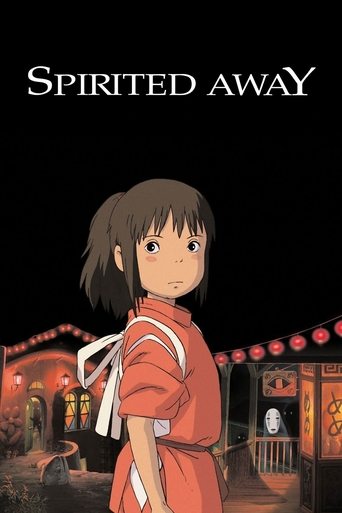
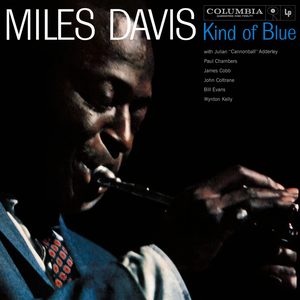



Spirited Away
Kind of Blue
Gödel, Escher, Bach
Kyoto
Outer Wilds
MiniMax M3MiniMax M3
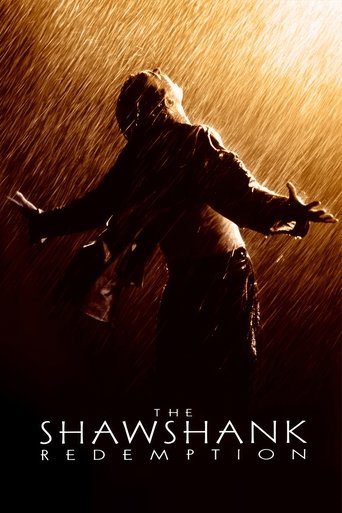
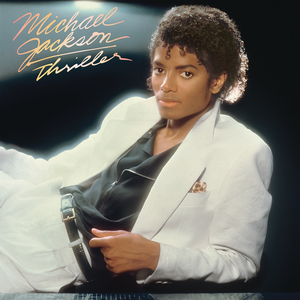


The Shawshank Redemption
Thriller
Мастер и Маргарита
Kyoto
The Legend of Zelda: Ocarina of Time
Price and specs
Not enough votes to call it. On the specs, Claude Sonnet 5.5 has the edge: newer, major provider backing. MiniMax M3 costs 8.3x less per token.
| Spec | Claude Sonnet 5.5 | MiniMax M3 |
|---|---|---|
| Input price | $2/M tokens | $0.3/M tokens |
| Output price | $10/M tokens | $1.2/M tokens |
| Context window | 1.0M tokens | 1.0M tokens |
| Weights | Closed | Open |
| Free API (OpenRouter) | No | No |
| Released | Sep 2026 | Jun 2026 |
| At 10M a month | $20.00 | $3.00 |
Input tokens at list price. No caching, no batch discount.
Where to run it



MiniMax M313 hosts
- CoreWeavefp4$0.23 in$0.96 out262k98.7% up
- GMI Cloudfp8$0.24 in$0.96 out1M99.3% up
- DeepInfrafp8$0.28 in$1.10 out524k99.5% up
- MiniMaxfp8$0.30 in$1.20 out524k99.5% up
- Novitafp8$0.30 in$1.20 out1M99.8% up
- Parasailfp8$0.30 in$1.20 out1M99.5% up
7 more hostsFewer hosts
- StreamLakefp8$0.30 in$1.20 out1M99.2% up
- Together$0.30 in$1.20 out524k99.9% up
- Venicefp8$0.30 in$1.20 out524k93.7% up
- Mara$0.60 in$2.40 out1M92.1% up
- ModelRunfp4$0.75 in$3.00 out1M99.4% up
- AtlasCloudfp8Degraded on OpenRouter when checked, 29 Sep 2026$0.30 in$1.20 out524k93.6% up
- SambaNovaDegraded on OpenRouter when checked, 29 Sep 2026$0.60 in$2.40 out1M95.5% up
Per million tokens. Prices and uptime via OpenRouter, checked 29 Sep 2026.
Common questions
What is the difference between Claude Sonnet 5.5 and MiniMax M3?
Claude Sonnet 5.5 is developed by Anthropic while MiniMax M3 is developed by MiniMax. Claude Sonnet 5.5 has a 1.0M token context window vs MiniMax M3's 1.0M. You can compare their actual outputs across 53 challenges on Rival to see how they differ in practice.
Which is better, Claude Sonnet 5.5 or MiniMax M3?
It depends on your use case. Claude Sonnet 5.5 and MiniMax M3 each have strengths in different areas. Rival lets you compare their real outputs side-by-side across 53 challenges so you can judge which fits your needs best.
How much does Claude Sonnet 5.5 cost compared to MiniMax M3?
Claude Sonnet 5.5 costs $2/M input tokens and MiniMax M3 costs $0.3/M input tokens. MiniMax M3 is $1.70/M cheaper per input. Check their side-by-side outputs on Rival to see if the price difference is justified by quality.
How can I compare Claude Sonnet 5.5 and MiniMax M3 on Rival?
This page shows a side-by-side comparison of Claude Sonnet 5.5 and MiniMax M3 across shared challenges. You can vote on which model produced the better output in a blind duel. Browsing and voting are free. No account is needed to look; signing in only saves your votes and likes.
More comparisons
Against the newest arrivals
- Claude Sonnet 5.5 vs Solar Mini 4Landed Sep 2026
- MiniMax M3 vs Qwen3.8 Max PrimeLanded Sep 2026
- Claude Sonnet 5.5 vs GLM 5.3 PrimeLanded Sep 2026
- MiniMax M3 vs Qwen3.8 Omni FlashLanded Sep 2026
- Claude Sonnet 5.5 vs Command A+Landed Sep 2026
- MiniMax M3 vs Claude Opus 5.5Landed Sep 2026
- Claude Sonnet 5.5 vs GPT-6 Luna ProLanded Sep 2026
- MiniMax M3 vs GPT-6 Sol ProLanded Sep 2026


Same lab, same size, long tail
- Claude Sonnet 5.5 vs Claude Opus 5Version compare
- Claude Sonnet 5.5 vs Claude Opus 4.6Version compare
- MiniMax M3 vs MiniMax M2.7Version compare
- MiniMax M3 vs MiniMax M2.5Version compare
- Claude Sonnet 5.5 vs Ling 2.6 1TNew provider
- Claude Sonnet 5.5 vs Ling 2.6 FlashSame size
- Claude Sonnet 5.5 vs Ling 3.0 FlashNew provider
- Claude Sonnet 5.5 vs Ling 3.0 Flash Fin (free)Same size
