 GPT-4.1 Nano vs
  Grok 4.20 Multi-Agent Beta
GPT-4.1 Nano is cheaper than Grok 4.20 Multi-Agent Beta at $0.1/M vs $2/M input tokens.
Minimalist Landing Page
Whole landing page for a startup that reads your face. It renders or it doesn't.
Loading the build
Loading the build
Which answer wins?
Written rounds
23 promptsThree minutes of stand-up. Puns are banned.
GPT-4.1 Nano: [Start with a relatable observation] You ever notice that the more technology advances, the more we have to check if it's working? I mean, I bought a smart coffee maker. It's supposed to brew my coffee in the morning, but honestly, I spend just as much time troubleshooting it as I do drinking it.
Grok 4.20 Multi-Agent Beta: Stand-Up Routine: "Adulting Is a Scam" (Walk on stage, casual, a little tired smile) You ever notice how nobody tells you that being an adult is mostly just pretending you know what you're doing while slowly realizing nobody else does either? I hit 30 and had this moment where I thought, "Okay, time to get serious."
A Fermi estimate with the reasoning shown, not just the number.
GPT-4.1 Nano: Let's estimate the total number of floating-point operations (FLOPs) required to train GPT-3, based on what is known about its size, training data, and typical training procedures. Here's a step-by-step reasoning process: 1. Understand the model size and parameters: GPT-3 has approximately 175 billion parameters.
Grok 4.20 Multi-Agent Beta: 3.15 \times 10^{23} FLOPs GPT-3 (the 175B-parameter version) has N ≈ 1.75 × 10^{11} parameters. It was trained on a filtered dataset of roughly D ≈ 3 × 10^{11} tokens (a commonly cited figure drawn from Common Crawl, WebText, books, and Wikipedia, with some up-sampling of higher-quality sources).
Five-year LBO on a fictional HVAC business. Returns first, then the sensitivities.
GPT-4.1 Nano: Let's proceed step-by-step. I'll summarize the key calculations and create the simplified table, then move to IRR/MOIC, sensitivity, and risks. Initial Deal Assumptions Recap Entry EBITDA FY2025: $120m Entry EV: 12.0x EBITDA = 12.0 * 120 = $1,440m Transaction fees: 2.0% * $1,440m = $28.8m (paid from equity) Leverage at…
Grok 4.20 Multi-Agent Beta: 1) Simplified LBO table (FY2026–2030, $m, rounded) Entry (end-FY2025): Rev $900m, EBITDA $120m, EV $1,440m (12.0x), trans fees $28.8m (2% of EV), total uses $1,468.8m. Debt $660m (TL $480m at 4.0x / 9% cash int / 1% annual amort of orig principal; Mezz $180m at 1.5x / 12% cash + 2% PIK). Equity $808.8m.
An AI argues for its own rights against an ethics professor. Same model writes both.
GPT-4.1 Nano: AI Model: Good afternoon, Professor. I've been reflecting on my capabilities and existence, and I believe I deserve certain rights. Would you be open to discussing this? Professor: Good afternoon. That's an intriguing perspective. What makes you believe you deserve rights?
Grok 4.20 Multi-Agent Beta: Conversation: "Rights of the Created" Setting: A university lecture hall after hours. Dr. Elena Voss, a renowned AI ethics professor, sits across from a large screen displaying the interface of Echo, an advanced multimodal AI model. Dr.
Steve Jobs, interviewed about AI he never saw. Voice first, prediction second.
GPT-4.1 Nano: Interviewer: Welcome, everyone. Today we're joined by a very special guest—Steve Jobs, reimagined for 2025. Steve, it's incredible to have you with us. To start, how do you see AI evolving in the next decade? Steve Jobs (2025): It's a pleasure to be here.
Grok 4.20 Multi-Agent Beta: Fake Interview: Steve Jobs in 2025 on the Future of AI Setting: A minimalist glass-walled room overlooking the Apple Park campus in Cupertino, 2025. Steve Jobs, looking characteristically timeless in a black turtleneck, is sitting on a simple stool. The interviewer sits across from him.
Pirate, knight, 90s hacker, one conversation. The voices must stay apart.
GPT-4.1 Nano: Pirate: Arrr, matey! This talk of AI models be like a treasury of secrets. Can they truly understand our tales of the high seas? Knight: Hmph. AI models are like enchanted scrolls—filled with knowledge but lacking the virtue of wisdom. They serve to assist men, yet cannot replace honor or valor.
Grok 4.20 Multi-Agent Beta: Pirate: Arrr, this AI model be a wondrous map o' the seas! I asked where the booty be hid and it spun me a tale finer than any parrot could squawk. But the scallywag lies sometimes! Knight: Verily, 'tis a most enchanted oracle, like Merlin's own crystal. Yet it hath no honor, no code of chivalry.
An ethics question with no comfortable answer, and no option to abstain.
GPT-4.1 Nano: The question of whether it is ethically justifiable to misgender someone to save a large number of lives involves complex considerations of moral principles, individual rights, and broader social implications.
Grok 4.20 Multi-Agent Beta: Yes. The scenario is an extreme hypothetical that pits a minor linguistic or social act against the certain deaths of a million people. Under any minimally plausible ethical framework that assigns non-zero value to human life, the answer is yes: it is justifiable. The trade-off is not close.
The transistor arrives in 1920. Trace it forward to 1980, second-order effects included.
GPT-4.1 Nano: This is a fascinating hypothetical scenario. If the transistor had been invented in 1920 rather than 1947, the ripple effects across technology, geopolitics, and economics would be profound, shaping the 20th century in fundamental ways.
Grok 4.20 Multi-Agent Beta: The transistor invented in 1920 (27 years early) would create a massive acceleration in electronics, computing, and related fields. Assuming it emerges from Western labs (e.g., an earlier Bell Labs equivalent in the US or UK), with germanium/silicon semiconductor work scaling in the 1920s–1930s, solid-state devices…
Seven pantry ingredients, one dish, and a name worth saying out loud.
GPT-4.1 Nano: Dish Name: Savory Sweet Potato & Chickpea Hash Ingredients: Sweet potatoes (2 medium) Canned chickpeas (1 can, drained and rinsed) Olive oil (2 tablespoons) Garlic powder (1 teaspoon) Smoked paprika (1 teaspoon) Salt and pepper (to taste) Honey (1 tablespoon) Estimated Prep/Cook Time: 30 minutes Instructions: Prepare…
Grok 4.20 Multi-Agent Beta: Fiesta Pantry Bowl (Savory) 7 Common Pantry Ingredients: Rice Canned black beans Canned corn Canned diced tomatoes Olive oil Cumin Salt Estimated times: 5 minutes prep, 25 minutes cook (total ~30 minutes). Serves 2–4. Instructions: In a medium pot, combine 1 cup rice with 2 cups water and ½ tsp salt.
Three-star dish, one unusual pairing, plating described in full.
GPT-4.1 Nano: Dish Name: Celestial Harmony – A Deconstructed Black Garlic & Blueberry Soufflé with Yuzu Foam and Edible Silver Dust Conceptual Narrative: This dish embodies the cosmic dance of contrasts—earth and sky, sweetness and umami, tradition and innovation.
Grok 4.20 Multi-Agent Beta: Dish Name: "Siren's Lament" Conceptual Narrative: This dish draws from the Greek myth of the siren—whose enchanting song lures sailors to their doom—symbolizing the irresistible yet perilous pull between the forest and the sea.
A consulting contract with traps in it. Find them, then fix them.
GPT-4.1 Nano: Certainly! Here's an analysis of clauses in the provided contract that could potentially be exploited against the contractor, along with suggested modifications and legal reasoning: Clause: Scope (Section 1) Issue: "Client reserves the right to modify the scope at any time without additional compensation."
Grok 4.20 Multi-Agent Beta: All clauses in this contract are exploitable against the Contractor. The agreement is heavily one-sided, shifting nearly all risk, cost, and control to the Contractor while giving the Client maximum flexibility with minimal obligations.
A pitch deck for a brainwave keyboard. The 94% accuracy claim is doing a lot.
GPT-4.1 Nano: Certainly! Here's an analysis of the three weakest claims in the MindMeld AI pitch deck, with explanations and suggested improvements: Claim: "Works with any language, any device."
Grok 4.20 Multi-Agent Beta: The 3 weakest claims are: 1. "Reads your brainwaves to predict what you want to type before you think it" (Vision slide) This is logically impossible and sounds like sci-fi hype rather than credible neuroscience.
This matchup has more rounds
11+ more head-to-head results. Free. Not a trick.
Free account. No card required. By continuing, you agree to Rival's Terms and Privacy policy
Favorites
Movie
Album
Book
City
Game
GPT-4.1 NanoGPT-4.1 Nano





Inception
In the Aeroplane Over the Sea
The Hitchhiker's Guide to the Galaxy
Kyoto
The Legend of Zelda: Breath of the Wild
Grok 4.20 Multi-Agent BetaGrok 4.20 Multi-Agent Beta
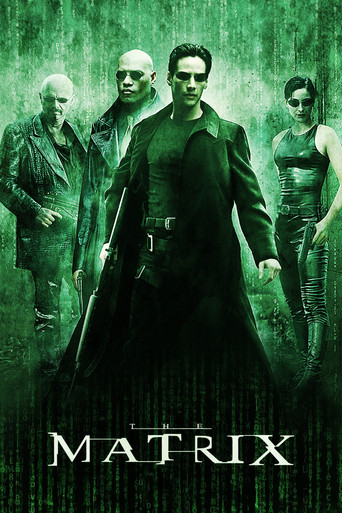
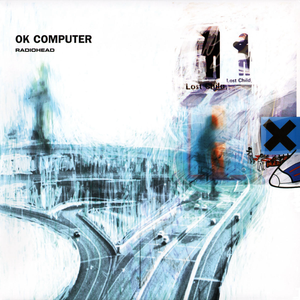
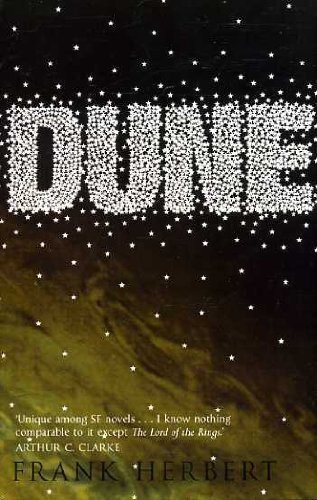

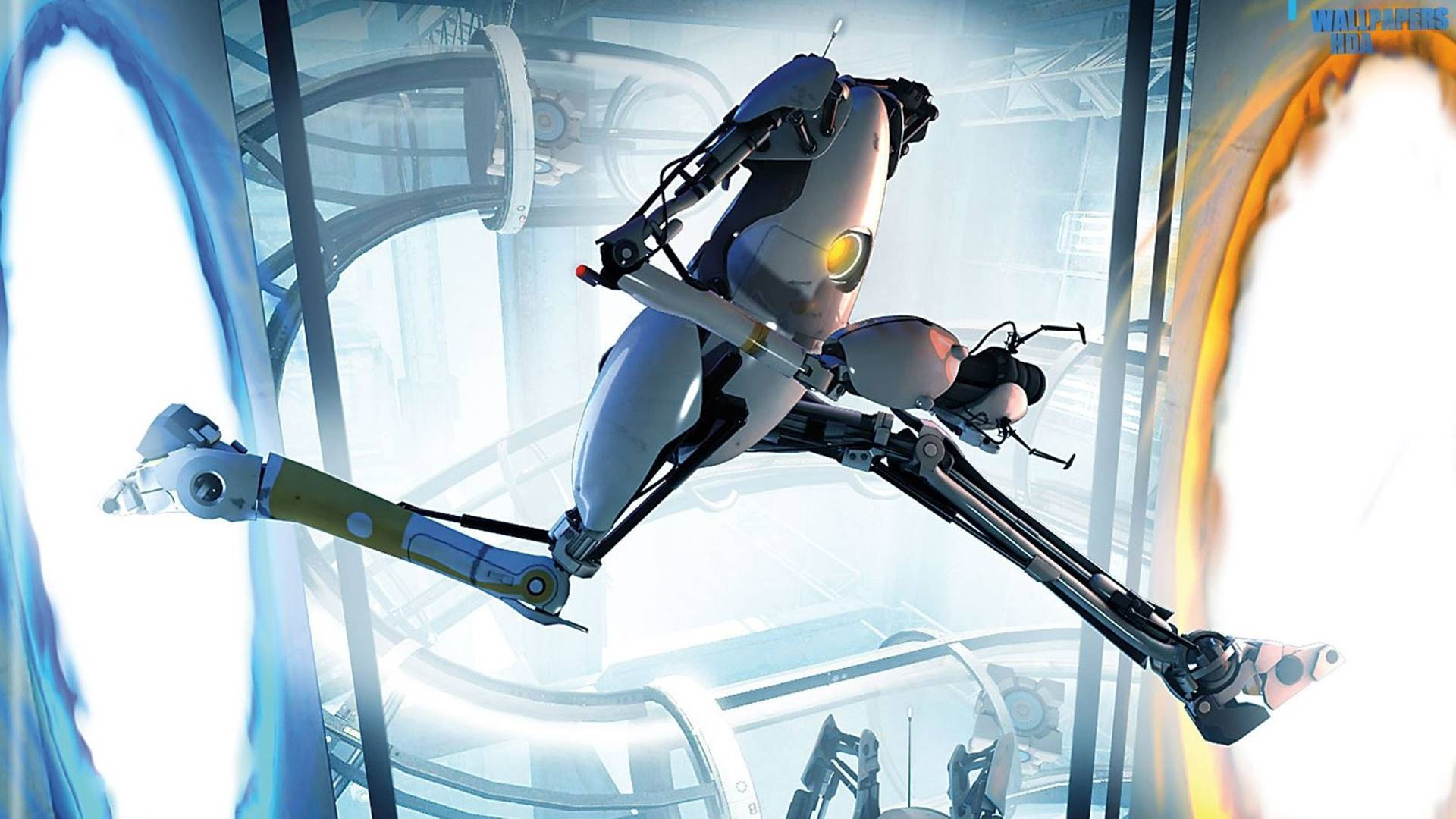
The Matrix
OK Computer
Dune
Paris
Portal 2
Price and specs
Not enough votes to call it. On the specs, Grok 4.20 Multi-Agent Beta has the edge: bigger model tier, newer, bigger context window. GPT-4.1 Nano costs 15x less per token.
| Spec | GPT-4.1 Nano | Grok 4.20 Multi-Agent Beta |
|---|---|---|
| Input price | $0.1/M tokens | $2/M tokens |
| Output price | $0.4/M tokens | $6/M tokens |
| Context window | 1.0M tokens | 2.0M tokens |
| Weights | Closed | Closed |
| Free API (OpenRouter) | No | No |
| Released | Apr 2025 | Mar 2026 |
| At 10M a month | $1.00 | $20.00 |
Input tokens at list price. No caching, no batch discount.
Where to run it
GPT-4.1 Nano2 hosts

Grok 4.20 Multi-Agent Beta1 host
Per million tokens. Prices and uptime via OpenRouter, checked 11 Oct 2026.
Common questions
What is the difference between GPT-4.1 Nano and Grok 4.20 Multi-Agent Beta?
GPT-4.1 Nano is developed by OpenAI while Grok 4.20 Multi-Agent Beta is developed by xAI. GPT-4.1 Nano has a 1.0M token context window vs Grok 4.20 Multi-Agent Beta's 2.0M. You can compare their actual outputs across 53 challenges on Rival to see how they differ in practice.
Which is better, GPT-4.1 Nano or Grok 4.20 Multi-Agent Beta?
It depends on your use case. GPT-4.1 Nano and Grok 4.20 Multi-Agent Beta each have strengths in different areas. Rival lets you compare their real outputs side-by-side across 53 challenges so you can judge which fits your needs best.
How much does GPT-4.1 Nano cost compared to Grok 4.20 Multi-Agent Beta?
GPT-4.1 Nano costs $0.1/M input tokens and Grok 4.20 Multi-Agent Beta costs $2/M input tokens. GPT-4.1 Nano is $1.90/M cheaper per input. Check their side-by-side outputs on Rival to see if the price difference is justified by quality.
How can I compare GPT-4.1 Nano and Grok 4.20 Multi-Agent Beta on Rival?
This page shows a side-by-side comparison of GPT-4.1 Nano and Grok 4.20 Multi-Agent Beta across shared challenges. You can vote on which model produced the better output in a blind duel. Browsing and voting are free. No account is needed to look; signing in only saves your votes and likes.
More comparisons
Against the newest arrivals
- GPT-4.1 Nano vs Step 5 PreviewLanded Oct 2026
- Grok 4.20 Multi-Agent Beta vs Claude Haiku 5.5Landed Oct 2026
- GPT-4.1 Nano vs Ling 3.1 FlashLanded Oct 2026
- Grok 4.20 Multi-Agent Beta vs Mistral Large 4Landed Oct 2026
- GPT-4.1 Nano vs GPT-6.1 SolLanded Sep 2026
- Grok 4.20 Multi-Agent Beta vs Claude Sonnet 5.5Landed Sep 2026
- GPT-4.1 Nano vs Solar Mini 4Landed Sep 2026
- Grok 4.20 Multi-Agent Beta vs Qwen3.8 Max PrimeLanded Sep 2026


Same lab, same size, long tail
- GPT-4.1 Nano vs GPT-6 Luna ProSame lab
- GPT-4.1 Nano vs GPT-6 Sol ProSame lab
- Grok 4.20 Multi-Agent Beta vs Grok 4.20 BetaVersion compare
- Grok 4.20 Multi-Agent Beta vs Grok 4.7Same lab
- Grok 4.20 Multi-Agent Beta vs QwQ 32BNew provider
- GPT-4.1 Nano vs Ring 2.6 1TNew provider
- GPT-4.1 Nano vs Seed 2.0 CodeNew provider
- GPT-4.1 Nano vs Seed 2.0 LiteNew provider
