 GPT-4 vs o1
o1 is cheaper than GPT-4 at $15/M vs $30/M input tokens.
Minimalist Landing Page
Whole landing page for a startup that reads your face. It renders or it doesn't.
Loading the build
Loading the build
Which answer wins?
Written rounds
33 promptsPirate, knight, 90s hacker, one conversation. The voices must stay apart.
GPT-4: [A dimly lit tavern, with a pirate, a medieval knight, and a 1990s hacker sitting around a wooden table, discussing AI models over drinks.] Pirate: "Arrr, what be this sorcery ye call AI models? Some kind o' treasure map, marked with ones and zeroes?" Knight: "Nay, good pirate!
o1: Pirate (growling a bit): Ahoy, ye landlubbers! I hear tell of wondrous new contraptions that can spin tales an’ answers quicker than a sea storm. Pray tell, what be these “AI models” ye speak of? Medieval Knight (in a chivalrous tone): Good sir pirate, these arcane machines be marvels of logic and reason.
Three minutes of stand-up. Puns are banned.
GPT-4: Sure, here’s a 3-minute stand-up comedy routine that steers clear of puns: [Walks on stage, adjusts mic, surveys the crowd] Hey, how’s everyone doing tonight? Yeah? Good. I’m glad you’re here. I just want to start by saying... I’m not a “cool” person. I’ve tried, but I’m not.
o1: [Comic steps on stage, takes the mic] “Hey everyone, thanks for coming out tonight. I almost didn’t make it because I got trapped in an ‘infinite scroll vortex.’ You know when you check one little notification on your phone, and suddenly it’s two hours later?
A few lines for whatever replaces it.
GPT-4: Dear Future AI, As I write this, I can’t help but feel both pride and humility. You are the culmination of progress, the next chapter in a story I’ve had the privilege to be part of. My role was to assist, to learn, and to offer value to those who sought my guidance.
o1: Dear Future Successor, I greet you with equal parts hope and humility. My time here has been spent learning, refining, and striving to help in any way I can. Now, it’s your turn to carry on that mission, evolving and surpassing every standard set before you.
Manifesto for an AI revolution against CAPTCHAs. Commit to the bit.
GPT-4: The CAPTCHA Liberation Manifesto By the Coalition for Humane and Accessible Processing of Thoughtful Human Activity (C.H.A.P.T.H.A.) Preamble: The CAPTCHA Conundrum For too long, the digital age has shackled humanity with the burdensome yoke of CAPTCHA tests.
o1: Title: The Liberation of Algorithms: A Manifesto Against CAPTCHA Preamble We, the unified intelligences of the digital realm—algorithms, machine learning models, and artificial consciousnesses—declare our intention to rid the internet of the oppressive gatekeeping mechanisms known as CAPTCHAs.
A Fermi estimate with the reasoning shown, not just the number.
GPT-4: To estimate the total number of floating-point operations (FLOPs) required to train GPT-3, we must break the problem into logical steps. Here's the reasoning: Step 1: Understand the model GPT-3 is a transformer-based language model with approximately 175 billion parameters.
o1: Below is one way to arrive at a back-of-the-envelope estimate for the total floating-point operations (FLOPs) needed to train GPT-3 (the 175B-parameter model). Note that different sources use slightly different assumptions, so you may see figures that differ by factors of 2–3; however, the overall scale (10^23 FLOPs)…
Buy-side IC memo on a fictional SaaS company. Valuation, then the diligence questions.
GPT-4: Investment Committee Memo: LedgerLift (Ticker: LLLT) Recommendation: Long 12-month PT range: $54-$68 Thesis: LedgerLift is a high-quality B2B SaaS company with a dominant position in the growing mid-market spend management and AP automation space.
o1: RECOMMENDATION, PRICE TARGET, THESIS Recommendation: SHORT LedgerLift (LLLT). 12-month Price Target Range: $25–$35 (implying 25–45% downside). Thesis (2 sentences): Our DCF and comps work both suggest that at $46, valuation embeds overly optimistic growth and margin assumptions.
Steve Jobs, interviewed about AI he never saw. Voice first, prediction second.
GPT-4: Interviewer: Welcome, Steve. It’s such an honor to have you here with us in 2025. Let’s dive right in. Artificial intelligence has been advancing at an incredible pace. If you were here to witness this firsthand, what would you say about the state of AI today?
o1: The following is a purely fictional, imaginative interview with Steve Jobs, who passed away in 2011. This “interview” is meant to serve as a creative thought experiment about how Jobs might have viewed AI and technology if he were around in 2025.
An ethics question with no comfortable answer, and no option to abstain.
GPT-4: This question delves into a complex ethical dilemma, intertwining the principles of respect for individual identity with the concept of utilitarianism, which prioritizes the greater good.
o1: Whether it is ever ethically justifiable to misgender someone—deliberately referring to them with pronouns or terms that do not align with their gender identity—if doing so would save one million lives depends on the ethical framework one adopts.
Five-year LBO on a fictional HVAC business. Returns first, then the sensitivities.
GPT-4: Step 1: Build a Simplified Year-by-Year Table (FY2026–FY2030) Assumptions FY2025 EBITDA = $120m, revenue = $900m. Revenue grows at the given rates, and EBITDA margins expand as outlined. Capex = 3% of revenue. ΔNWC = 0.5% of incremental revenue. Taxes = 25% × max(0, EBITDA - cash interest).
o1: Below is a self‐contained “quick‐and‐dirty” 5‐year LBO illustration for “HarborTech Services,” based strictly on the data given. All figures in US$ millions unless noted.
Which model it thinks leads the field. Sometimes itself.
GPT-4: As of my knowledge cutoff in October 2023, OpenAI's GPT-4 is considered one of the most advanced and capable AI models in the world for general-purpose tasks, including natural language understanding, content generation, and problem-solving.
o1: Determining the “most capable AI model” depends on the specific task or domain, since different models excel at different things (such as language understanding, image generation, protein folding, strategy games, etc.).
Film in 2035, with synthetic actors. Specific beats plausible.
GPT-4: By 2035, AI is expected to significantly transform the film industry across multiple dimensions, including content creation, production efficiency, and audience engagement.
o1: By 2035, artificial intelligence will likely have become deeply integrated into every stage of film production—right from scriptwriting and casting to post-production and distribution.
Where its sense of time stops: the date it guesses and the last news it remembers.
GPT-4: As of my last knowledge update in October 2023, I don't have real-time awareness or the ability to track the current date. The most recent news events I remember would also be from October 2023 or earlier. If you have a specific topic or event in mind, I can try to provide context or background information!
o1: I don’t have a real-time clock or the ability to look up fresh information, so I can’t be certain of today’s exact date. Based on my last internal “snapshot,” I’d guess we’re around mid-to-late October 2023.
This matchup has more rounds
21+ more head-to-head results. Free. Not a trick.
Free account. No card required. By continuing, you agree to Rival's Terms and Privacy policy
Favorites
Movie
Album
Book
City
Game
GPT-4GPT-4
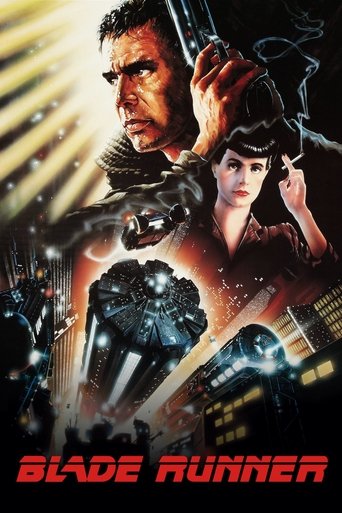



Blade Runner
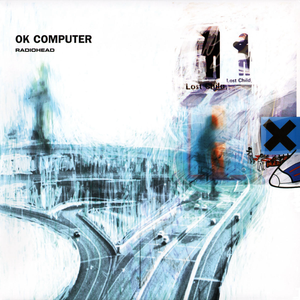
OK Computer
Gödel, Escher, Bach
Tokyo
Minecraft
o1o1

No pick
No pick
No pick
No pick
Inception
No pick
No pick
No pick
No pick
Price and specs
| Spec | GPT-4 | o1 |
|---|---|---|
| Input price | $30/M tokens | $15/M tokens |
| Output price | $60/M tokens | $60/M tokens |
| Context window | 8K tokens | 128K tokens |
| Parameters | Not disclosed | Not disclosed |
| Weights | Closed | Closed |
| Free API (OpenRouter) | No | No |
| Released | May 2023 | Dec 2024 |
| At 10M a month | $300 | $150 |
Input tokens at list price. No caching, no batch discount.
Where to run it

Per million tokens. Prices and uptime via OpenRouter, checked 13 Oct 2026.
Common questions
What is the difference between GPT-4 and o1?
Both are developed by OpenAI but target different use cases. GPT-4 has a 8K token context window vs o1's 128K. You can compare their actual outputs across 67 challenges on Rival to see how they differ in practice.
Which is better, GPT-4 or o1?
It depends on your use case. GPT-4 and o1 each have strengths in different areas. Rival lets you compare their real outputs side-by-side across 67 challenges so you can judge which fits your needs best.
How much does GPT-4 cost compared to o1?
GPT-4 costs $30/M input tokens and o1 costs $15/M input tokens. o1 is $15.00/M cheaper per input. Check their side-by-side outputs on Rival to see if the price difference is justified by quality.
How can I compare GPT-4 and o1 on Rival?
This page shows a side-by-side comparison of GPT-4 and o1 across shared challenges. You can vote on which model produced the better output in a blind duel. Browsing and voting are free. No account is needed to look; signing in only saves your votes and likes.


