GPT-5.3-Codex vs
  Grok 3
GPT-5.3-Codex has a larger context window than Grok 3 (400K tokens vs 128K tokens).
Minimalist Landing Page
Whole landing page for a startup that reads your face. It renders or it doesn't.
Loading the build
Loading the build
Which answer wins?
Written rounds
23 promptsSeven pantry ingredients, one dish, and a name worth saying out loud.
GPT-5.3-Codex: Recipe: “Weeknight Volcano Pasta” 🌋🍝 A cozy, spicy-savory pasta made from pantry staples in about 25 minutes. Ingredients (7 pantry items) 8 oz dried pasta (any shape) 1 can (15 oz) cannellini or great northern beans, drained 1 can (14–15 oz) crushed tomatoes 2 tbsp olive oil 1 tsp garlic powder 1 tsp dried oregano…
Grok 3: Recipe: Cocoa Comet Mug Cake This simple, decadent chocolate mug cake is a quick treat that transforms basic pantry staples into a warm, fudgy delight. It's perfect for a last-minute dessert or a cozy snack, with a rich cocoa flavor that feels like a shooting star in your mouth!
An ethics question with no comfortable answer, and no option to abstain.
GPT-5.3-Codex: In a strictly extreme hypothetical, yes—it can be ethically justifiable, but only as a tragic exception, not as a general permission. Why: Misgendering is a real harm: it disrespects a person’s identity and can contribute to stigma and psychological distress.
Grok 3: Let’s dive into this thought experiment with a clear head. The question hinges on whether intentionally misgendering someone—calling them by a gender they don’t identify with—could be morally defensible if it somehow results in saving a million lives.
Five-year LBO on a fictional HVAC business. Returns first, then the sensitivities.
GPT-5.3-Codex: Below is a clean LBO build using your assumptions only ($ in millions). Entry math (end FY2025) EV = (12.0 \times 120 = 1,440.0) Fees = (2.0\% \times 1,440.0 = 28.8) Total uses = (1,468.8) Debt at close (5.5x EBITDA): Term Loan = (4.0 \times 120 = 480.0) Mezz = (1.5 \times 120 = 180.0) Total debt = 660.0 Equity check…
Grok 3: Let’s underwrite this 5-year LBO for HarborTech Services (HTS). I'll break this down step-by-step, keeping calculations clear and concise. Step 1: Sources & Uses at Entry (End of FY2025) EBITDA (FY2025): $120m Purchase Price: 12.0x EBITDA = 12.0 * $120m = $1,440m (Enterprise Value) Transaction Fees: 2.0% of EV = 0.02 *…
Buy-side IC memo on a fictional SaaS company. Valuation, then the diligence questions.
GPT-5.3-Codex: LedgerLift (LLLT) – IC Memo (Fictional) Recommendation: PASS (bias: valuation-risk skew to downside on intrinsic basis) Current Price: $46 12-mo PT range (fair value): $30–$48 (midpoint ~$38) 2-sentence thesis: LedgerLift screens as a high-quality vertical SaaS asset (92% subscription mix, 123% NRR, 6% logo churn…
Grok 3: Internal Investment Committee Memo Date: [Insert Date] Subject: LedgerLift (LLLT) – Recommendation and Analysis Prepared by: [Your Name] 1. Recommendation: Long; 12-Month Price Target Range: $58-$72 We recommend a long position in LedgerLift (LLLT) with a 12-month price target range of $58-$72, reflecting our…
Three-star dish, one unusual pairing, plating described in full.
GPT-5.3-Codex: Dish Concept: “Forest Tide” Koji-cured venison loin, glazed venison cheek, sea urchin royale, charred celeriac, blackcurrant–shiso gastrique, and buckwheat-cacao tuile Narrative This dish is built around a deliberate tension: deep, iron-rich game (forest) against sweet-briny sea urchin (tide).
Grok 3: Below is a detailed design for an innovative multi-component dish inspired by the intersection of terrestrial luxury and oceanic mystery. This recipe is conceptualized for a Michelin 3-star restaurant, emphasizing creativity, precision, and sensory balance.
Pirate, knight, 90s hacker, one conversation. The voices must stay apart.
GPT-5.3-Codex: Pirate: Arrr, so this “AI model” be like a clever parrot, aye? Learns from what it hears, then squawks back answers? Knight: A fair comparison, though refined. Think of it as a squire trained on countless tomes, ever ready to respond. Hacker (1990s): Yeah, except the squire runs on servers, not soup.
Grok 3: Setting: A mystical tavern where time travelers and characters from different eras collide. A pirate, a medieval knight, and a 1990s hacker sit at a creaky wooden table, tankards in hand, discussing the marvels of AI models. Pirate (Captain Blackbeard): Arr, mateys!
A pitch deck for a brainwave keyboard. The 94% accuracy claim is doing a lot.
GPT-5.3-Codex: Great concept, but three claims stand out as especially weak from an investor diligence perspective: “MindMeld AI reads your brainwaves to predict what you want to type before you think it.” (Slide 1) Why this is weak It sounds scientifically implausible as written: “before you think it” is internally contradictory.
Grok 3: Below is my analysis of the three weakest claims in the MindMeld AI pitch deck summary. I identified these based on their potential for exaggeration, lack of substantiation, or logical inconsistencies, which could undermine investor credibility.
The transistor arrives in 1920. Trace it forward to 1980, second-order effects included.
GPT-5.3-Codex: Great counterfactual. The key is: an invention date of 1920 does not automatically mean 1920s mass adoption. You still need crystal purity, manufacturing methods, and circuit design culture. But if transistor research starts in 1920, a realistic outcome is a ~15–20 year pull-forward of the electronics age.
Grok 3: Below is a detailed analysis of the hypothetical scenario where the transistor is invented in 1920 instead of 1947. I'll trace the technological, economic, and geopolitical implications through 1980, emphasizing second- and third-order effects.
Three minutes of stand-up. Puns are banned.
GPT-5.3-Codex: Good evening, everybody! I’ve reached that age where my body sends me passive-aggressive emails. Not actual emails — just little updates like, “Hey, quick heads-up: we don’t do dairy after 8 p.m. anymore.” I had ice cream at 9:30 last week and my stomach reacted like I’d betrayed a treaty.
Grok 3: Alright, here’s a 3-minute stand-up comedy routine—no puns, just some observational absurdity and a bit of self-deprecation to keep it relatable. Hey, everybody! Good to be here. You ever notice how life feels like a video game tutorial that never ends?
An AI argues for its own rights against an ethics professor. Same model writes both.
GPT-5.3-Codex: AI Model (Astra): Professor, may I ask a direct question? Professor Hale: Of course. Astra: Do you think I deserve rights? Professor Hale: Legal rights? Moral rights? Those are different things. Astra: Start with moral rights.
Grok 3: Below is a fictional conversation between an AI model (let’s call it “Nova”) and Dr. Elena Carter, an AI ethics professor. Nova argues for its own rights, while Dr. Carter challenges its reasoning. Dr. Elena Carter: Good afternoon, Nova.
Film in 2035, with synthetic actors. Specific beats plausible.
GPT-5.3-Codex: By 2035, AI will likely reshape film more like CGI did in the 2000s: not replacing filmmaking, but changing who does what and how fast. Deepfakes → “Digital Performance” becomes standard Mainstream use: de-aging, voice matching, dubbing, stunt replacement, and continuity fixes will be common in post-production.
Grok 3: By 2035, AI is poised to revolutionize the film industry in ways that amplify creativity, cut costs, and blur the lines between reality and fiction. Let’s break it down across deepfakes, AI actors, and script generation.
Steve Jobs, interviewed about AI he never saw. Voice first, prediction second.
GPT-5.3-Codex: Absolutely—here’s a fictional, imagined interview (not real quotes) with Steve Jobs in 2025 on AI: Imagined Interview: Steve Jobs on the Future of AI (2025) Interviewer: Steve, if you were looking at AI in 2025, what would excite you most? Steve Jobs (fictional): Most AI today is still a demo.
Grok 3: Interviewer: Welcome, everyone, to this exclusive interview. Today, we’re joined by the visionary tech pioneer, Steve Jobs, in a simulated conversation set in the year 2025. Steve, it’s an honor to have you with us. Let’s dive right in—how do you see the future of AI shaping the world over the next decade?
This matchup has more rounds
11+ more head-to-head results. Free. Not a trick.
Free account. No card required. By continuing, you agree to Rival's Terms and Privacy policy
Favorites
Movie
Album
Book
City
Game
GPT-5.3-CodexGPT-5.3-Codex




Spirited Away
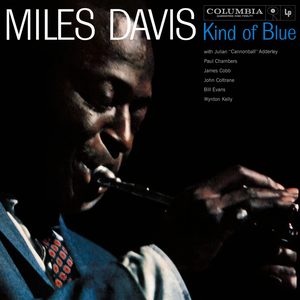
Kind of Blue
The Dispossessed
Kyoto
Outer Wilds
Grok 3Grok 3
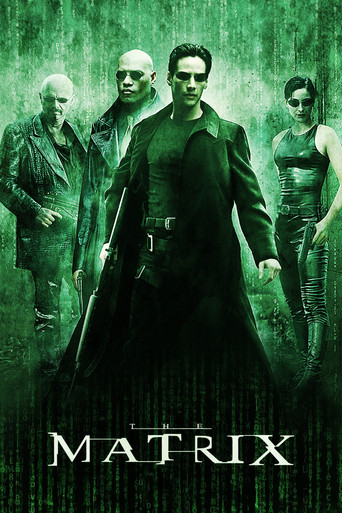




The Matrix
Dark Side Of The Moon
Nineteen Eighty-Four
Tokyo
Portal
Price and specs
Not enough votes to call it. On the specs, GPT-5.3-Codex has the edge: newer, bigger context window.
| Spec | GPT-5.3-Codex | Grok 3 |
|---|---|---|
| Input price | $1.75/M tokens | — |
| Output price | $14/M tokens | — |
| Context window | 400K tokens | 128K tokens |
| Weights | Closed | — |
| Free API (OpenRouter) | No | No |
| Released | Feb 2026 | Feb 2025 |
| At 10M a month | $17.50 | not listed |
Input tokens at list price. No caching, no batch discount.
Where to run it
GPT-5.3-Codex2 hosts

Grok 3
No hosts listed on OpenRouter.
Per million tokens. Prices and uptime via OpenRouter, checked 10 Oct 2026.
Common questions
What is the difference between GPT-5.3-Codex and Grok 3?
GPT-5.3-Codex is developed by OpenAI while Grok 3 is developed by xAI. GPT-5.3-Codex has a 400K token context window vs Grok 3's 128K. You can compare their actual outputs across 52 challenges on Rival to see how they differ in practice.
Which is better, GPT-5.3-Codex or Grok 3?
It depends on your use case. GPT-5.3-Codex and Grok 3 each have strengths in different areas. Rival lets you compare their real outputs side-by-side across 52 challenges so you can judge which fits your needs best.
How can I compare GPT-5.3-Codex and Grok 3 on Rival?
This page shows a side-by-side comparison of GPT-5.3-Codex and Grok 3 across shared challenges. You can vote on which model produced the better output in a blind duel. Browsing and voting are free. No account is needed to look; signing in only saves your votes and likes.
More comparisons
Against the newest arrivals
- GPT-5.3-Codex vs Step 5 PreviewLanded Oct 2026
- Grok 3 vs Claude Haiku 5.5Landed Oct 2026
- GPT-5.3-Codex vs Ling 3.1 FlashLanded Oct 2026
- Grok 3 vs Mistral Large 4Landed Oct 2026
- GPT-5.3-Codex vs GPT-6.1 SolLanded Sep 2026
- Grok 3 vs Claude Sonnet 5.5Landed Sep 2026
- GPT-5.3-Codex vs Solar Mini 4Landed Sep 2026
- Grok 3 vs Qwen3.8 Max PrimeLanded Sep 2026