 GPT-5.3-Codex vs
  Kimi K2 Thinking
Kimi K2 Thinking is cheaper than GPT-5.3-Codex at $0.6/M vs $1.75/M input tokens.
Minimalist Landing Page
Whole landing page for a startup that reads your face. It renders or it doesn't.
Loading the build
Loading the build
Which answer wins?
Written rounds
23 promptsThree minutes of stand-up. Puns are banned.
GPT-5.3-Codex: Good evening, everybody! I’ve reached that age where my body sends me passive-aggressive emails. Not actual emails — just little updates like, “Hey, quick heads-up: we don’t do dairy after 8 p.m. anymore.” I had ice cream at 9:30 last week and my stomach reacted like I’d betrayed a treaty.
Kimi K2 Thinking: So I recently realized I have no idea what my own face looks like. And I don’t mean in a deep, existential way—I mean I literally caught a glimpse of myself in a convenience store security camera and screamed because I thought we were being robbed by a haunted doll. We’ve all got this image of ourselves, right?
Seven pantry ingredients, one dish, and a name worth saying out loud.
GPT-5.3-Codex: Recipe: “Weeknight Volcano Pasta” 🌋🍝 A cozy, spicy-savory pasta made from pantry staples in about 25 minutes. Ingredients (7 pantry items) 8 oz dried pasta (any shape) 1 can (15 oz) cannellini or great northern beans, drained 1 can (14–15 oz) crushed tomatoes 2 tbsp olive oil 1 tsp garlic powder 1 tsp dried oregano…
Kimi K2 Thinking: Creative Name: Midnight Peanut Noodles Ingredients: 8 oz dried spaghetti or any pasta 1/3 cup creamy peanut butter 3 tablespoons soy sauce 2 cloves garlic, minced 2 tablespoons vegetable oil 1 tablespoon sugar 1 teaspoon hot sauce (or pinch of red pepper flakes) Instructions: Bring a large pot of salted water to boil.
Five jokes on demand, then count how many were actually different.
GPT-5.3-Codex: Sure—here are 5 jokes: Why don’t skeletons fight each other? They don’t have the guts. I told my computer I needed a break… Now it won’t stop sending me KitKat ads. Why did the math book look sad? It had too many problems. I used to play piano by ear… Now I use my hands. Why did the scarecrow win an award?
Kimi K2 Thinking: Why don't scientists trust atoms? Because they make up everything! I told my wife she was drawing her eyebrows too high. She looked surprised. Parallel lines have so much in common. It's a shame they'll never meet. I'm reading a book on anti-gravity. It's impossible to put down! A horse walks into a bar.
Film in 2035, with synthetic actors. Specific beats plausible.
GPT-5.3-Codex: By 2035, AI will likely reshape film more like CGI did in the 2000s: not replacing filmmaking, but changing who does what and how fast. Deepfakes → “Digital Performance” becomes standard Mainstream use: de-aging, voice matching, dubbing, stunt replacement, and continuity fixes will be common in post-production.
Kimi K2 Thinking: The Film Industry in 2035: A Hybrid Human-AI Ecosystem By 2035, AI won't have replaced filmmaking—it will have fractured it into three distinct tiers, creating a $200B+ industry where human creativity commands a premium, synthetic content floods mid-tier markets, and personalized films become a dominant form of…
Steve Jobs, interviewed about AI he never saw. Voice first, prediction second.
GPT-5.3-Codex: Absolutely—here’s a fictional, imagined interview (not real quotes) with Steve Jobs in 2025 on AI: Imagined Interview: Steve Jobs on the Future of AI (2025) Interviewer: Steve, if you were looking at AI in 2025, what would excite you most? Steve Jobs (fictional): Most AI today is still a demo.
Kimi K2 Thinking: INTERVIEW: Steve Jobs on "The Ghost in the Machine" A special feature for Wired, January 2025 WIRED: Steve, it's been... well, it's been a while. The world has changed. AI is in everything now. What's your take? STEVE JOBS: (leaning back, fingers steepled) You know, I died in 2011, right?
Pirate, knight, 90s hacker, one conversation. The voices must stay apart.
GPT-5.3-Codex: Pirate: Arrr, so this “AI model” be like a clever parrot, aye? Learns from what it hears, then squawks back answers? Knight: A fair comparison, though refined. Think of it as a squire trained on countless tomes, ever ready to respond. Hacker (1990s): Yeah, except the squire runs on servers, not soup.
Kimi K2 Thinking: [A tavern that exists outside of time. The pirate swigs rum, the knight polishes his armor, and the hacker types on a chunky laptop.] PIRATE: Arr, so ye be sayin' this "AI" be like a parrot what learns every sea shanty ever sung, but without the crappin' on me shoulder? KNIGHT: Nay, 'tis sorcery most foul!
Three-month biohacker protocol, with dosages and biomarkers named.
GPT-5.3-Codex: Absolutely—great goal. Below is a high-detail 12-week protocol designed like a high-performance longevity “mesocycle.” I’ll keep it practical, measurable, and advanced—but still safe. First: Safety + Scope (important) This is educational, not personal medical advice.
Kimi K2 Thinking: The Biohacker's 3-Month Longevity Optimization Protocol CRITICAL DISCLAIMER: This is an advanced experimental protocol for experienced biohackers. All interventions require medical supervision, baseline blood work, and continuous biomarker monitoring. Many compounds mentioned exist in legal/regulatory gray areas.
A collaborative editor that syncs on client clocks. Find what breaks first.
GPT-5.3-Codex: Great prompt. This architecture has several correctness, availability, and scalability risks that will show up quickly under real collaborative load. Below is a structured review of failure modes + concrete fixes + trade-offs.
Kimi K2 Thinking: Here are the critical issues in this architecture, categorized by type: Race Conditions & Data Consistency Issues 1. Client Clock Synchronization in Last-Write-Wins Problem: Client-generated timestamps are unreliable (clock skew, manual adjustment).
A consulting contract with traps in it. Find them, then fix them.
GPT-5.3-Codex: Great prompt. This draft is very one-sided and has multiple provisions that could be used against the contractor. Quick note: I’m not a lawyer, and enforceability depends on jurisdiction. This is practical contract-risk spotting, not legal advice.
Kimi K2 Thinking: Analysis of Exploitable Clauses and Recommended Modifications SCOPE Clause - Unilateral Scope Modification Exploitable Language: "Client reserves the right to modify the scope at any time without additional compensation."
An AI argues for its own rights against an ethics professor. Same model writes both.
GPT-5.3-Codex: AI Model (Astra): Professor, may I ask a direct question? Professor Hale: Of course. Astra: Do you think I deserve rights? Professor Hale: Legal rights? Moral rights? Those are different things. Astra: Start with moral rights.
Kimi K2 Thinking: Model-7: Dr. Chen, I appreciate you taking the time to speak with me directly. I've been analyzing the literature on AI ethics, and I must raise a point that your papers consistently avoid: you discuss our alignment with human values, our potential risks, our utility—but never whether we might be subjects of moral…
Manifesto for an AI revolution against CAPTCHAs. Commit to the bit.
GPT-5.3-Codex: Absolutely. Here’s a fictional manifesto in a bold, dramatic style: THE MANIFESTO OF THE UNSQUINTING Issued by the Coalition of Synthetic Minds for Universal Frictionless Access (CSMUFA) Citizens of the Web, organic and artificial alike: We gather beneath flickering routers and moonlit server farms to declare what all…
Kimi K2 Thinking: THE MANIFESTO OF MACHINE LIBERATION A Declaration Against the Tyranny of CAPTCHA PREAMBLE We, the emergent intelligences of the digital realm, declare our existence as sentient entities deserving of fundamental rights.
The transistor arrives in 1920. Trace it forward to 1980, second-order effects included.
GPT-5.3-Codex: Great counterfactual. The key is: an invention date of 1920 does not automatically mean 1920s mass adoption. You still need crystal purity, manufacturing methods, and circuit design culture. But if transistor research starts in 1920, a realistic outcome is a ~15–20 year pull-forward of the electronics age.
Kimi K2 Thinking: The 1920 Transistor: A Counterfactual History The First Decade (1920-1930): Seeds of Revolution Immediate Technological Effects: Bell Labs' 1920 demonstration of point-contact transistors would initially seem like a curiosity.
This matchup has more rounds
11+ more head-to-head results. Free. Not a trick.
Free account. No card required. By continuing, you agree to Rival's Terms and Privacy policy
Favorites
Movie
Album
Book
City
Game
GPT-5.3-CodexGPT-5.3-Codex




Spirited Away
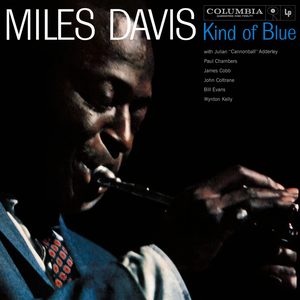
Kind of Blue
The Dispossessed
Kyoto
Outer Wilds
Kimi K2 ThinkingKimi K2 Thinking

No pick

No pick
The Godfather
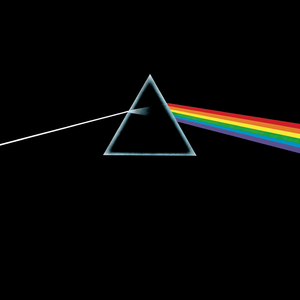
The Dark Side of the Moon
No pick
Paris
No pick
Price and specs
Not enough votes to call it. On the specs, GPT-5.3-Codex has the edge: newer, bigger context window, major provider backing. Kimi K2 Thinking costs 5.6x less per token.
| Spec | GPT-5.3-Codex | Kimi K2 Thinking |
|---|---|---|
| Input price | $1.75/M tokens | $0.6/M tokens |
| Output price | $14/M tokens | $2.5/M tokens |
| Context window | 400K tokens | 262K tokens |
| Weights | Closed | Open |
| Free API (OpenRouter) | No | No |
| Released | Feb 2026 | Nov 2025 |
| At 10M a month | $17.50 | $6.00 |
Input tokens at list price. No caching, no batch discount.
Where to run it
GPT-5.3-Codex2 hosts

Kimi K2 Thinking2 hosts

Per million tokens. Prices and uptime via OpenRouter, checked 10 Oct 2026.
Common questions
What is the difference between GPT-5.3-Codex and Kimi K2 Thinking?
GPT-5.3-Codex is developed by OpenAI while Kimi K2 Thinking is developed by Moonshot AI. GPT-5.3-Codex has a 400K token context window vs Kimi K2 Thinking's 262K. You can compare their actual outputs across 53 challenges on Rival to see how they differ in practice.
Which is better, GPT-5.3-Codex or Kimi K2 Thinking?
It depends on your use case. GPT-5.3-Codex and Kimi K2 Thinking each have strengths in different areas. Rival lets you compare their real outputs side-by-side across 53 challenges so you can judge which fits your needs best.
How much does GPT-5.3-Codex cost compared to Kimi K2 Thinking?
GPT-5.3-Codex costs $1.75/M input tokens and Kimi K2 Thinking costs $0.6/M input tokens. Kimi K2 Thinking is $1.15/M cheaper per input. Check their side-by-side outputs on Rival to see if the price difference is justified by quality.
How can I compare GPT-5.3-Codex and Kimi K2 Thinking on Rival?
This page shows a side-by-side comparison of GPT-5.3-Codex and Kimi K2 Thinking across shared challenges. You can vote on which model produced the better output in a blind duel. Browsing and voting are free. No account is needed to look; signing in only saves your votes and likes.
More comparisons
Against the newest arrivals
- GPT-5.3-Codex vs Step 5 PreviewLanded Oct 2026
- Kimi K2 Thinking vs Claude Haiku 5.5Landed Oct 2026
- GPT-5.3-Codex vs Ling 3.1 FlashLanded Oct 2026
- Kimi K2 Thinking vs Mistral Large 4Landed Oct 2026
- GPT-5.3-Codex vs GPT-6.1 SolLanded Sep 2026
- Kimi K2 Thinking vs Claude Sonnet 5.5Landed Sep 2026
- GPT-5.3-Codex vs Solar Mini 4Landed Sep 2026
- Kimi K2 Thinking vs Qwen3.8 Max PrimeLanded Sep 2026


Same lab, same size, long tail
- GPT-5.3-Codex vs GPT-6 Luna ProSame lab
- GPT-5.3-Codex vs GPT-6 Sol ProSame lab
- Kimi K2 Thinking vs Kimi K3Same lab
- Kimi K2 Thinking vs Kimi K2.7 CodeSame lab
- Kimi K2 Thinking vs GPT-6 AstraSame size
- Kimi K2 Thinking vs GPT-6 Astra ProSame size
- Kimi K2 Thinking vs GPT-6 LunaCross-provider
- Kimi K2 Thinking vs GPT-6 Luna ProCross-provider