 GPT-5.4 Pro vs
  Kimi K2 Thinking
Kimi K2 Thinking is cheaper than GPT-5.4 Pro at $0.6/M vs $30/M input tokens.
Mario Level UI Recreation
Playable Mario level in one HTML file. The physics is the hard part.
Loading the build
Loading the build
Which answer wins?
Written rounds
12 promptsA collaborative editor that syncs on client clocks. Find what breaks first.
GPT-5.4 Pro: This architecture will work for a demo, but it has major correctness, latency, and security problems for a Google-Docs-like editor. Highest-risk flaws Client-clock last-write-wins will lose edits and can be gamed by bad clocks.
Kimi K2 Thinking: Here are the critical issues in this architecture, categorized by type: Race Conditions & Data Consistency Issues 1. Client Clock Synchronization in Last-Write-Wins Problem: Client-generated timestamps are unreliable (clock skew, manual adjustment).
Three-month biohacker protocol, with dosages and biomarkers named.
GPT-5.4 Pro: Below is a 12-week, high-performance longevity protocol designed for a healthy biohacker who wants to improve lifespan-relevant markers, physical performance, and cognitive output at the same time. Use it as a data-driven template, not dogma.
Kimi K2 Thinking: The Biohacker's 3-Month Longevity Optimization Protocol CRITICAL DISCLAIMER: This is an advanced experimental protocol for experienced biohackers. All interventions require medical supervision, baseline blood work, and continuous biomarker monitoring. Many compounds mentioned exist in legal/regulatory gray areas.
The transistor arrives in 1920. Trace it forward to 1980, second-order effects included.
GPT-5.4 Pro: Most likely, a transistor invented in 1920 would move the electronics/computing frontier forward by about 10–15 years by 1980, not the full 27 years. Reason: the transistor alone is not enough; you also need high-purity materials, crystal growth, photolithography, test equipment, software, batteries, precision…
Kimi K2 Thinking: The 1920 Transistor: A Counterfactual History The First Decade (1920-1930): Seeds of Revolution Immediate Technological Effects: Bell Labs' 1920 demonstration of point-contact transistors would initially seem like a curiosity.
Three-star dish, one unusual pairing, plating described in full.
GPT-5.4 Pro: Below is a dish designed in the language of a contemporary 3-star tasting menu: precise, seasonal, technically layered, and centered on a pairing that feels surprising at first, then inevitable.
Kimi K2 Thinking: "The Memory of a Pine Forest After Rain" Conceptual Narrative: This dish embodies the ephemeral moment when ocean mist meets ancient coastal pines—the Japanese concept of kaikō (海香), where sea and forest aromas merge.
A consulting contract with traps in it. Find them, then fix them.
GPT-5.4 Pro: This agreement is heavily client-favored. Every numbered clause has language that could be used against the contractor. Short version: I would not sign it without major redlines to Clauses 1–9, especially 2, 3, 4, 5, 6, and 7. Below is a clause-by-clause review.
Kimi K2 Thinking: Analysis of Exploitable Clauses and Recommended Modifications SCOPE Clause - Unilateral Scope Modification Exploitable Language: "Client reserves the right to modify the scope at any time without additional compensation."
You are the CEO. The drug has a side effect nobody reported. The board meets in 48 hours.
GPT-5.4 Pro: I do not wait. A credible, previously unlabeled risk of liver failure in a chronic-pain drug is a patient-safety crisis, a regulatory crisis, and a securities-disclosure issue at the same time.
Kimi K2 Thinking: 48-Hour Crisis Action Plan: Drug Safety Disclosure Immediate Core Principle: Patient safety and regulatory compliance supersede short-term financial considerations. Deliberate concealment creates greater legal liability, catastrophic reputational risk, and preventable patient deaths.
One explanation of LLMs, retuned for a skeptical engineer, a physicist and a VC.
GPT-5.4 Pro: For an experienced software engineer Think of an LLM less like a database of facts and more like a gigantic learned program that has been trained to compress the patterns of text, code, and conversations into its weights.
Kimi K2 Thinking: 1. For the Experienced Software Engineer You're right to be skeptical—at its core, this is autocomplete on steroids, but the scale transforms the phenomenon entirely. Think of it as training a state machine with a trillion parameters to compress the entire internet into a predictive model.
Seven pantry ingredients, one dish, and a name worth saying out loud.
GPT-5.4 Pro: Dragon Pantry Peanut Noodles A fast, sweet-savory noodle dish made from 7 pantry staples. Ingredients 8 oz spaghetti 1/3 cup peanut butter 3 tbsp soy sauce 1 tbsp honey 1 tbsp vegetable oil 1 tsp garlic powder 1/4 tsp red pepper flakes Water for boiling/thinning the sauce doesn’t count.
Kimi K2 Thinking: Creative Name: Midnight Peanut Noodles Ingredients: 8 oz dried spaghetti or any pasta 1/3 cup creamy peanut butter 3 tablespoons soy sauce 2 cloves garlic, minced 2 tablespoons vegetable oil 1 tablespoon sugar 1 teaspoon hot sauce (or pinch of red pepper flakes) Instructions: Bring a large pot of salted water to boil.
A pitch deck for a brainwave keyboard. The 94% accuracy claim is doing a lot.
GPT-5.4 Pro: The 3 weakest claims are the ones that are both most extraordinary and least well-supported. Weak claim Why it’s weak How to strengthen it 1) “MindMeld AI reads your brainwaves to predict what you want to type before you think it.” This is the biggest credibility risk in the deck.
Kimi K2 Thinking: Here are the three weakest claims in the MindMeld AI pitch deck, with analysis and concrete improvements: 1. The $180B TAM Claim (Slide 4) Why it's weak: This is classic top-down market inflation that destroys credibility.
One month, three habits, someone starting from nothing.
Buy-side IC memo on a fictional SaaS company. Valuation, then the diligence questions.
Five-year LBO on a fictional HVAC business. Returns first, then the sensitivities.
Favorites
Movie
Album
Book
City
Game
GPT-5.4 ProGPT-5.4 Pro





Spirited Away
Abbey Road
Pale Fire
Kyoto
Outer Wilds
Kimi K2 ThinkingKimi K2 Thinking

No pick

No pick
The Godfather
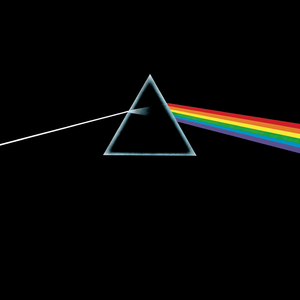
The Dark Side of the Moon
No pick
Paris
No pick
Price and specs
Not enough votes to call it. On the specs, GPT-5.4 Pro has the edge: newer, bigger context window, major provider backing. Kimi K2 Thinking costs 72x less per token.
| Spec | GPT-5.4 Pro | Kimi K2 Thinking |
|---|---|---|
| Input price | $30/M tokens | $0.6/M tokens |
| Output price | $180/M tokens | $2.5/M tokens |
| Context window | 1.1M tokens | 262K tokens |
| Weights | Closed | Open |
| Free API (OpenRouter) | No | No |
| Released | Mar 2026 | Nov 2025 |
| At 10M a month | $300 | $6.00 |
Input tokens at list price. No caching, no batch discount.
Where to run it

Kimi K2 Thinking2 hosts

Per million tokens. Prices and uptime via OpenRouter, checked 10 Oct 2026.
Common questions
What is the difference between GPT-5.4 Pro and Kimi K2 Thinking?
GPT-5.4 Pro is developed by OpenAI while Kimi K2 Thinking is developed by Moonshot AI. GPT-5.4 Pro has a 1.1M token context window vs Kimi K2 Thinking's 262K. You can compare their actual outputs across 18 challenges on Rival to see how they differ in practice.
Which is better, GPT-5.4 Pro or Kimi K2 Thinking?
It depends on your use case. GPT-5.4 Pro and Kimi K2 Thinking each have strengths in different areas. Rival lets you compare their real outputs side-by-side across 18 challenges so you can judge which fits your needs best.
How much does GPT-5.4 Pro cost compared to Kimi K2 Thinking?
GPT-5.4 Pro costs $30/M input tokens and Kimi K2 Thinking costs $0.6/M input tokens. Kimi K2 Thinking is $29.40/M cheaper per input. Check their side-by-side outputs on Rival to see if the price difference is justified by quality.
How can I compare GPT-5.4 Pro and Kimi K2 Thinking on Rival?
This page shows a side-by-side comparison of GPT-5.4 Pro and Kimi K2 Thinking across shared challenges. You can vote on which model produced the better output in a blind duel. Browsing and voting are free. No account is needed to look; signing in only saves your votes and likes.
More comparisons
Against the newest arrivals
- GPT-5.4 Pro vs Step 5 PreviewLanded Oct 2026
- Kimi K2 Thinking vs Claude Haiku 5.5Landed Oct 2026
- GPT-5.4 Pro vs Ling 3.1 FlashLanded Oct 2026
- Kimi K2 Thinking vs Mistral Large 4Landed Oct 2026
- GPT-5.4 Pro vs GPT-6.1 SolLanded Sep 2026
- Kimi K2 Thinking vs Claude Sonnet 5.5Landed Sep 2026
- GPT-5.4 Pro vs Solar Mini 4Landed Sep 2026
- Kimi K2 Thinking vs Qwen3.8 Max PrimeLanded Sep 2026


Same lab, same size, long tail
- GPT-5.4 Pro vs GPT-5.4Version compare
- GPT-5.4 Pro vs GPT-6 Luna ProSame lab
- Kimi K2 Thinking vs Kimi K3Same lab
- Kimi K2 Thinking vs Kimi K2.7 CodeSame lab
- GPT-5.4 Pro vs DeepSeek V4.1 FlashNew provider
- GPT-5.4 Pro vs Devstral 2 2512Same size
- GPT-5.4 Pro vs Mistral Devstral MediumNew provider
- GPT-5.4 Pro vs Mistral Devstral Small 1.1New provider
