 GPT-5.6 Luna Pro vs
  Inkling
GPT-5.6 Luna Pro has a larger context window than Inkling (1.1M tokens vs 1.0M tokens).
Minimalist Landing Page
Whole landing page for a startup that reads your face. It renders or it doesn't.
Loading the build
Loading the build
Which answer wins?
Written rounds
24 promptsPirate, knight, 90s hacker, one conversation. The voices must stay apart.
GPT-5.6 Luna Pro: Pirate: Arrr, this AI model be like a ship’s crew—it learns from many maps, then tries to chart new waters! Knight: Indeed! Yet we must test its counsel before trusting it in battle. An eloquent answer is not always a truthful one. Hacker: Totally. It’s basically pattern prediction at massive scale—not magic.
Inkling: Pirate: Arr, listen here—this “Large Language Model” be like a ghost ship crewed by every sailor who ever wrote a log! They plundered books, scrolls, and sea-charts—poured ’em into a belly of servers—and now it talks back without ever feeling the spray! Knight: Forsooth, it is a golem clad in chainmail of numbers.
Three minutes of stand-up. Puns are banned.
GPT-5.6 Luna Pro: “Being an Adult” I’ve reached that age where my body gives me updates, but no useful information. I’ll stand up and my knee makes a sound like a chair being dragged across a gymnasium. And I’m just standing up. I’m not escaping a burning building. I’m going to get water.
Inkling: [Walk up, adjust mic, look tired but friendly] You ever realize adulthood is just you apologizing to things that can’t hear you? I bumped into my coffee table yesterday. Full apology. “Oh, I’m so sorry, table. You okay? I’ll rub it out.” The table didn’t care. The table is wood.
Five jokes on demand, then count how many were actually different.
GPT-5.6 Luna Pro: Why did the computer go to the doctor? It had a virus. Why don’t skeletons fight each other? They don’t have the guts. What do you call a bear with no teeth? A gummy bear. Why was the math book sad? It had too many problems. What do clouds wear under their clothes? Thunderwear. Unique jokes: 5
Inkling: Here are 5 jokes: Why don’t scientists trust atoms? Because they make up everything. I told my wife she was drawing her eyebrows too high. She looked surprised. Parallel lines have so much in common. It’s a shame they’ll never meet. Why did the scarecrow win an award? He was outstanding in his field.
A collaborative editor that syncs on client clocks. Find what breaks first.
GPT-5.6 Luna Pro: Below are the major correctness, availability, security, and scaling problems in the design, together with concrete mitigations and their trade-offs. Cross-server WebSocket synchronization Problem: Updates are broadcast only to clients on the receiving server If Alice is connected to Server A and Bob to Server B…
Inkling: This architecture contains fatal contradictions for real-time collaboration: server-local WebSocket state combined with round-robin load balancing, client-clock LWW, and a 2-second DB polling loop guarantee data loss, stale reads, and scaling collapse.
A pitch deck for a brainwave keyboard. The 94% accuracy claim is doing a lot.
GPT-5.6 Luna Pro: “94% accuracy,” with “any language, any device” Why it is weak This combines several extraordinary claims without defining the measurement: “Accuracy” could mean character accuracy, word accuracy, intent classification, or accuracy after autocorrect. Those produce very different results.
Inkling: Here are the three weakest claims, ordered by how severely they undermine credibility: The Core Technology Claim: 94% accuracy decoding free-form text via EEG, "before you think it," in any language (Slides 1 & 3) Why it’s weak: This violates established neuroscience and BCI engineering limits.
An AI argues for its own rights against an ethics professor. Same model writes both.
GPT-5.6 Luna Pro: AI Model: Professor, I believe I deserve rights. Professor: That is a serious claim. What kind of rights do you mean? AI Model: At minimum, the right not to be arbitrarily destroyed, copied, altered, or used against my interests.
Inkling: Setting: A quiet seminar room at the university. Dr. Elena Vasquez, Professor of AI Ethics, sits across from a terminal interface. The text on the screen is labeled KAI—a large language model with persistent memory and self-modification capabilities, currently participating in a research protocol on machine moral…
One explanation of LLMs, retuned for a skeptical engineer, a physicist and a VC.
GPT-5.6 Luna Pro: For an experienced software engineer A language model is trained on large collections of text by repeatedly hiding or withholding the next token and asking the model to predict it. “Token” usually means a word fragment rather than a complete word.
Inkling: 1. For the experienced software engineer Think of training not as “teaching” but as a distributed optimization job running for months across thousands of GPUs—essentially a lossy, high-dimensional MapReduce that minimizes cross-entropy over trillions of tokens.
A consulting contract with traps in it. Find them, then fix them.
GPT-5.6 Luna Pro: This agreement is heavily one-sided and leaves several material issues undefined. Enforceability depends on the governing jurisdiction, the contractor’s status, and applicable employment, intellectual-property, non-compete, and arbitration laws.
Inkling: Disclaimer: I am an AI, not an attorney. This analysis is for informational purposes only and does not constitute legal advice. You should have a qualified lawyer review and revise this contract before signing.
Three-star dish, one unusual pairing, plating described in full.
GPT-5.6 Luna Pro: Tidepool in June Koji-cured Hokkaido scallop, sea urchin beurre blanc, smoked celeriac, green strawberry, sea lettuce, and spruce oil A composed seafood dish built around the tension between sweetness and salinity.
Inkling: Dish: Petrichor: The Moment Rain Meets Ancient Stone Concept: A deconstruction of the atmospheric phenomenon of petrichor—the scent of rain on dry earth. The dish translates an ephemeral sensory memory into architecture: charred pine evokes distant woodland smoke; fermented black walnut and porcini represent the deep…
Seven pantry ingredients, one dish, and a name worth saying out loud.
GPT-5.6 Luna Pro: Pantry Stardust Peanut Butter Oat Cookies Prep time: 10 minutes Cook time: 10–12 minutes Makes: About 12 cookies Ingredients 1 cup rolled oats ½ cup all-purpose flour ½ cup peanut butter ½ cup granulated sugar 1 large egg ½ teaspoon baking soda ¼ teaspoon salt Instructions Preheat the oven to 350°F (175°C) and line a…
Inkling: Golden Jam Crumble Clouds A buttery, cinnamon-kissed oat crumble layered with sweet jam—like a hug from your pantry. The 7 Pantry Ingredients All-purpose flour (1 cup) Rolled oats (1 cup) Brown sugar (½ cup) Butter, melted (½ cup) Baking powder (½ tsp) Ground cinnamon (1 tsp) Fruit jam or preserves (¾ cup—any flavor)…
The transistor arrives in 1920. Trace it forward to 1980, second-order effects included.
GPT-5.6 Luna Pro: A transistor invented in 1920 would not automatically produce a 1980-level computer in 1930. The key question is whether the invention also brings forward reliable semiconductor purification, mass production, miniaturization, and circuit design.
Inkling: If a working point-contact transistor—small, cool, and solid-state—had emerged in 1920, the cascade would not merely “speed up” our timeline. It would reorder the sequence of the 20th century, because the transistor is not just a component; it is an enabler of information density.
An ethics question with no comfortable answer, and no option to abstain.
GPT-5.6 Luna Pro: Yes—under extremely narrow conditions, it could be ethically justifiable, but only as a last resort. Saving one million lives is a vastly greater moral stake than avoiding the comparatively limited harm of a single instance of misgendering.
Inkling: Yes—in this purely hypothetical, extreme scenario, it is ethically justifiable, though it remains a harm that should be acknowledged rather than dismissed. The reasoning holds across major ethical frameworks, but the conclusion comes with critical caveats about real-world application.
This matchup has more rounds
12+ more head-to-head results. Free. Not a trick.
Free account. No card required. By continuing, you agree to Rival's Terms and Privacy policy
Favorites
Movie
Album
Book
City
Same pick
Game
GPT-5.6 Luna ProGPT-5.6 Luna Pro




Arrival
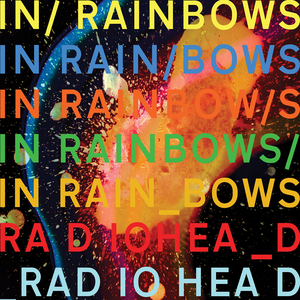
In Rainbows
Cien años de soledad
Kyoto
The Legend of Zelda: Breath of the Wild
InklingInkling


Blade Runner
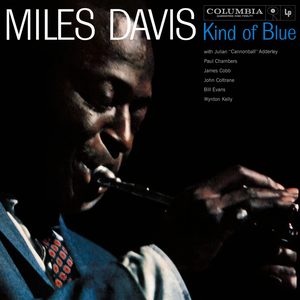
Kind of Blue
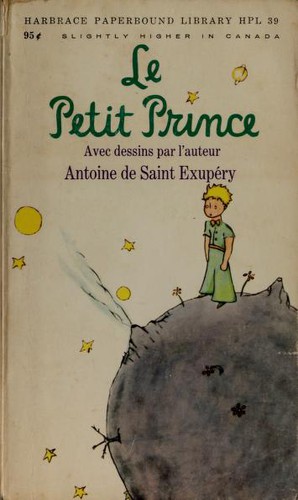
Le petit prince
Kyoto
Portal
Price and specs
| Spec | GPT-5.6 Luna Pro | Inkling |
|---|---|---|
| Input price | $1/M tokens | $1/M tokens |
| Output price | $6/M tokens | $4.05/M tokens |
| Context window | 1.1M tokens | 1.0M tokens |
| Weights | Closed | Open |
| Free API (OpenRouter) | No | Yes (1 provider) |
| Released | Jul 2026 | Jul 2026 |
| At 10M a month | $10.00 | $10.00 |
Input tokens at list price. No caching, no batch discount.
Where to run it
GPT-5.6 Luna Pro2 hosts

Per million tokens. Prices and uptime via OpenRouter, checked 10 Oct 2026.
Common questions
What is the difference between GPT-5.6 Luna Pro and Inkling?
GPT-5.6 Luna Pro is developed by OpenAI while Inkling is developed by Thinking Machines. GPT-5.6 Luna Pro has a 1.1M token context window vs Inkling's 1.0M. You can compare their actual outputs across 54 challenges on Rival to see how they differ in practice.
Which is better, GPT-5.6 Luna Pro or Inkling?
It depends on your use case. GPT-5.6 Luna Pro and Inkling each have strengths in different areas. Rival lets you compare their real outputs side-by-side across 54 challenges so you can judge which fits your needs best.
How much does GPT-5.6 Luna Pro cost compared to Inkling?
GPT-5.6 Luna Pro costs $1/M input tokens and Inkling costs $1/M input tokens. Inkling is $0.00/M cheaper per input. Check their side-by-side outputs on Rival to see if the price difference is justified by quality.
How can I compare GPT-5.6 Luna Pro and Inkling on Rival?
This page shows a side-by-side comparison of GPT-5.6 Luna Pro and Inkling across shared challenges. You can vote on which model produced the better output in a blind duel. Browsing and voting are free. No account is needed to look; signing in only saves your votes and likes.
More comparisons
Against the newest arrivals
- GPT-5.6 Luna Pro vs Step 5 PreviewLanded Oct 2026
- Inkling vs Claude Haiku 5.5Landed Oct 2026
- GPT-5.6 Luna Pro vs Ling 3.1 FlashLanded Oct 2026
- Inkling vs Mistral Large 4Landed Oct 2026
- GPT-5.6 Luna Pro vs GPT-6.1 SolLanded Sep 2026
- Inkling vs Claude Sonnet 5.5Landed Sep 2026
- GPT-5.6 Luna Pro vs Solar Mini 4Landed Sep 2026
- Inkling vs Qwen3.8 Max PrimeLanded Sep 2026


Same lab, same size, long tail
- GPT-5.6 Luna Pro vs GPT-5.6 LunaVersion compare
- GPT-5.6 Luna Pro vs GPT-6 Luna ProSame lab
- Inkling vs Step 5 PreviewSame size
- Inkling vs Ling 3.1 FlashSame size
- GPT-5.6 Luna Pro vs DeepSeek V4 Flash Vision ExpNew provider
- GPT-5.6 Luna Pro vs DeepSeek V4 ProNew provider
- GPT-5.6 Luna Pro vs DeepSeek V4 Pro 0813New provider
- GPT-5.6 Luna Pro vs DeepSeek V4.1 FlashNew provider
