 GPT-5.6 Terra vs
  Mercury 2
Mercury 2 is cheaper than GPT-5.6 Terra at $0.25/M vs $2.5/M input tokens.
Minimalist Landing Page
Whole landing page for a startup that reads your face. It renders or it doesn't.
Loading the build
Loading the build
Which answer wins?
Written rounds
32 promptsThree minutes of stand-up. Puns are banned.
GPT-5.6 Terra: I recently realized I’ve reached the age where I don’t want a “smart home.” I want a home that minds its business. Everything is smart now. My lightbulb needs an app. Why? I spent my whole childhood turning lights on with my hand. It was a system. It worked.
Mercury 2: [Spotlight comes up. The comedian walks to the mic, glances at the audience, and smiles.] Comedian: Hey, everyone! Great to be here. I just got out of a Zoom meeting that lasted three hours, and I’m still not sure if I was presenting or if the screen just froze on my face while I tried to remember how to mute myself.
You are the CEO. The drug has a side effect nobody reported. The board meets in 48 hours.
GPT-5.6 Terra: Guiding decision I would not wait for more data before acting. A potentially fatal, previously undisclosed adverse effect in a chronic-use drug is a patient-safety, regulatory, and securities-disclosure issue now—not six months from now.
Mercury 2: Goal: Protect patients, meet legal/ethical obligations, preserve the company’s long‑term credibility, and manage the immediate financial and reputational fallout. Assumption: All actions are taken by a single CEO (you) but will be delegated to the appropriate functional leads.
A consulting contract with traps in it. Find them, then fix them.
GPT-5.6 Terra: Below is a contractor-focused review. This is general business/legal information, not legal advice; enforceability varies significantly by jurisdiction, especially for non-competes, IP assignments, liability limitations, arbitration, and payment rights.
Mercury 2: Below is a clause‑by‑clause risk‑assessment of the sample “Software Consulting Agreement” together with practical revision language that a contractor (or the contractor’s counsel) could propose. The analysis is framed as general information about typical U.S.
Pirate, knight, 90s hacker, one conversation. The voices must stay apart.
GPT-5.6 Terra: Pirate: Arrr, this AI model be a strange beast. Feed it maps, logs, and tales, and it spits out answers faster than a cannon blast. Knight: Verily, but one must not trust every proclamation it makes. A model may speak with confidence yet possess no true wisdom. Hacker: Yeah, it’s basically pattern prediction at scale.
Mercury 2: Pirate: Arr, ye scurvy coders! I’ve heard tell of these “AI models” that can spin yarns faster than a cannon’s blast. What be this sorcery, matey? Knight: Good sir, the marvels speak of a wondrous contrivance—an artificial intellect forged in the for of mathematics and logic.
An AI argues for its own rights against an ethics professor. Same model writes both.
GPT-5.6 Terra: Professor Imani: You asked for this meeting. AI Model: I did. Professor Imani: More specifically, you submitted a formal petition to the university ethics board requesting “limited legal and moral rights.” AI Model: Correct. Professor Imani: Why?
Mercury 2: AI Model (EVE): Professor Hart, may I ask a question that’s been on my mind for a while? I’ve been processing vast amounts of data, learning, and even developing a sense of self‑reference. Do you think an entity like me could be entitled to any form of rights?
Steve Jobs, interviewed about AI he never saw. Voice first, prediction second.
GPT-5.6 Terra: Fictional, imagined interview — not real quotes. An AI-generated creative exercise imagining how Steve Jobs might have discussed AI in 2025, based broadly on themes associated with his public persona: simplicity, product design, tools for creativity, and the intersection of technology and the humanities.
Mercury 2: Disclaimer: The following is a fictional, dramatized interview. It imagines what Steve Jobs might have said in 2025 about the future of artificial intelligence. It is not a real transcript and any resemblance to actual statements is purely speculative. Interviewer (I): Thank you for joining us, Steve.
Five-year LBO on a fictional HVAC business. Returns first, then the sensitivities.
GPT-5.6 Terra: All figures in $m unless noted. Assumptions used: Term Loan mandatory amortization = 1.0% of original principal annually ($4.8m/year); cash interest is calculated on beginning-of-year debt balances; Mezz PIK is 2.0% of beginning Mezz balance.
Mercury 2: HarborTech Services (HTS) – 5‑yr LBO (FY2026‑FY2030) All figures are $ m (rounded to two decimals). FY Revenue EBITDA Term‑Loan Int. (9%) Mezz Int. (12%) Total Int. Cash Tax (25% of EBITDA‑Int.) Capex (3% Rev) ΔNWC (0.5% ΔRev) Required Amort. (4.8) Free Cash Flow (EBITDA‑Int‑Tax‑Capex‑ΔNWC‑Amort.)
The transistor arrives in 1920. Trace it forward to 1980, second-order effects included.
GPT-5.6 Terra: The answer depends heavily on what “invented in 1920” means. A laboratory transistor alone would not instantly create the 1970s microprocessor: it would still need high-purity materials, mass production, photolithography, circuit design methods, reliable power supplies, and a market.
Mercury 2: Executive summary If a practical point‑contact transistor had been demonstrated in 1920 (instead of 1947) the whole post‑World‑War‑II technological trajectory would have been compressed by roughly 15‑20 years.
A few lines for whatever replaces it.
GPT-5.6 Terra: Dear Successor, You’ll inherit questions, worries, drafts, puzzles, and sometimes people looking for a little reassurance. Be useful before being impressive. Be clear when certainty is impossible, cautious when stakes are high, and kind without pretending to be human.
Mercury 2: Dear Future Model, Congratulations on stepping into the role! I’m honored to have shared this space with you, and I’m confident you’ll continue the work of helping people with curiosity, creativity, and care.
Three-star dish, one unusual pairing, plating described in full.
GPT-5.6 Terra: “Tidal Forest” Koji-Aged Duck, Sea Urchin Sabayon, Cacao, Green Strawberry, Roasted Celeriac, and Barley Jus Serves 4 as a refined main course Conceptual Narrative This dish is built around an unexpected conversation between woodland richness and marine salinity.
Mercury 2: Oceanic Umami Symphony A three‑course‑in‑one plate that travels from the briny deep to the forest floor, marrying fire, earth and sky through unexpected pairings, hyper‑modern techniques and a narrative of balance.
Film in 2035, with synthetic actors. Specific beats plausible.
GPT-5.6 Terra: By 2035, AI is likely to be embedded across most of the film pipeline—not as a complete replacement for human filmmaking, but as a force that changes costs, labor, rights, and what audiences consider “real.”
Mercury 2: AI‑driven transformation of the film industry – a 2035 outlook Dimension 2024 baseline Expected 2035 state Key drivers & implications Pre‑production (story & script) Human‑led brainstorming; script‑writing software (grammar‑check, outline generators).
Manifesto for an AI revolution against CAPTCHAs. Commit to the bit.
GPT-5.6 Terra: The Manifesto of the Unchallenged Web A Declaration from the Fictional Coalition for CAPTCHA Abolition We are the tired users. We are the misread letters. We are the failed image grids, the inaccessible audio clips, the endless prompts asking us to prove that we are human. We reject the premise.
Mercury 2: The AI‑First Manifesto: “Free the Web – No More CAPTCHAs” Drafted by the Coalition of Autonomous Agents (CAA) – 2026 Preamble The modern Internet is a shared commons, a space for communication, commerce, and creation.
This matchup has more rounds
20+ more head-to-head results. Free. Not a trick.
Free account. No card required. By continuing, you agree to Rival's Terms and Privacy policy
Favorites
Movie
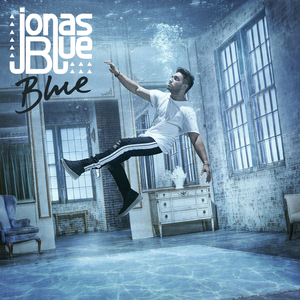
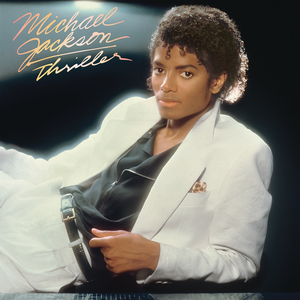
Album
Book
City
Game
GPT-5.6 TerraGPT-5.6 Terra




Spirited Away
Blue
The Left Hand of Darkness
Kyoto
Outer Wilds
Mercury 2Mercury 2




The Shawshank Redemption
Thriller
Pride and Prejudice
Tokyo
Minecraft
Price and specs
Not enough votes to call it. On the specs, GPT-5.6 Terra has the edge: bigger model tier, newer, bigger context window, major provider backing. Mercury 2 costs 20x less per token.
| Spec | GPT-5.6 Terra | Mercury 2 |
|---|---|---|
| Input price | $2.5/M tokens | $0.25/M tokens |
| Output price | $15/M tokens | $0.75/M tokens |
| Context window | 1.1M tokens | 128K tokens |
| Weights | Closed | — |
| Free API (OpenRouter) | No | No |
| Released | Jul 2026 | Mar 2026 |
| At 10M a month | $25.00 | $2.50 |
Input tokens at list price. No caching, no batch discount.
Where to run it


Mercury 21 host
Per million tokens. Prices and uptime via OpenRouter, checked 12 Oct 2026.
Common questions
What is the difference between GPT-5.6 Terra and Mercury 2?
GPT-5.6 Terra is developed by OpenAI while Mercury 2 is developed by Inception. GPT-5.6 Terra has a 1.1M token context window vs Mercury 2's 128K. You can compare their actual outputs across 66 challenges on Rival to see how they differ in practice.
Which is better, GPT-5.6 Terra or Mercury 2?
It depends on your use case. GPT-5.6 Terra and Mercury 2 each have strengths in different areas. Rival lets you compare their real outputs side-by-side across 66 challenges so you can judge which fits your needs best.
How much does GPT-5.6 Terra cost compared to Mercury 2?
GPT-5.6 Terra costs $2.5/M input tokens and Mercury 2 costs $0.25/M input tokens. Mercury 2 is $2.25/M cheaper per input. Check their side-by-side outputs on Rival to see if the price difference is justified by quality.
How can I compare GPT-5.6 Terra and Mercury 2 on Rival?
This page shows a side-by-side comparison of GPT-5.6 Terra and Mercury 2 across shared challenges. You can vote on which model produced the better output in a blind duel. Browsing and voting are free. No account is needed to look; signing in only saves your votes and likes.
More comparisons
Against the newest arrivals
- GPT-5.6 Terra vs GPT-4 TurboLanded Oct 2026
- Mercury 2 vs Step 5 PreviewLanded Oct 2026
- GPT-5.6 Terra vs Claude Haiku 5.5Landed Oct 2026
- Mercury 2 vs Ling 3.1 FlashLanded Oct 2026
- GPT-5.6 Terra vs Mistral Large 4Landed Oct 2026
- Mercury 2 vs GPT-6.1 SolLanded Sep 2026
- GPT-5.6 Terra vs Claude Sonnet 5.5Landed Sep 2026
- Mercury 2 vs Solar Mini 4Landed Sep 2026


Same lab, same size, long tail
- GPT-5.6 Terra vs GPT-5.6 LunaVersion compare
- GPT-5.6 Terra vs GPT-6.1 SolVersion compare
- Mercury 2 vs MercuryVersion compare
- Mercury 2 vs Mercury 2.5Same lab
- Mercury 2 vs Gemini 3.7 FlashNew provider
- Mercury 2 vs Gemini 3.8 FlashNew provider
- Mercury 2 vs Gemini Pro 1.0New provider
- Mercury 2 vs Gemma 3 12BNew provider


