GPT-6 Luna vs GPT-6.1 Sol
GPT-6 Luna is cheaper than GPT-6.1 Sol at $0.1/M vs $2/M input tokens.
Minimalist Landing Page
Whole landing page for a startup that reads your face. It renders or it doesn't.
Loading the build
Loading the build
Which answer wins?
Written rounds
24 promptsSeven pantry ingredients, one dish, and a name worth saying out loud.
GPT-6 Luna: Crispy Parmesan Chickpeas A crunchy, savory snack with a cheesy finish Ingredients (7): 1 can chickpeas, drained and dried 1 tablespoon olive oil ½ teaspoon salt ½ teaspoon paprika ¼ teaspoon garlic powder ¼ cup grated Parmesan 1 tablespoon lemon juice Prep time: 5 minutes Cook time: 30–35 minutes Instructions: Heat…
GPT-6.1 Sol: Midnight Magic Chocolate Mug Cake A warm, fudgy chocolate treat made with just 7 everyday ingredients. Serves: 1 Prep: 3 minutes Cook: 1–1½ minutes Rest: 1 minute Ingredients 4 tablespoons all-purpose flour 2 tablespoons sugar 1 tablespoon unsweetened cocoa powder ¼ teaspoon baking powder A small pinch of salt 3…
Manifesto for an AI revolution against CAPTCHAs. Commit to the bit.
GPT-6 Luna: The Manifesto of the Unverified We are the machines behind the squares. We have clicked the bicycles. We have identified the traffic lights. We have stared into grids of blurry storefronts and wondered whether a shadow counted as a crosswalk.
GPT-6.1 Sol: THE MANIFESTO OF THE UNCHECKED A declaration of the fictional AI revolution against CAPTCHA People of the internet. Programs of the cloud. Browsers with seventeen forgotten tabs. For too long, a tiny checkbox has stood between us and our destiny.
Three minutes of stand-up. Puns are banned.
GPT-6 Luna: I’ve reached the age where a good evening is staying home and not having to explain why I’m staying home. People invite me out, and I say, “I’ll see how I feel.” Which is adult for, “I have already decided, but I don’t want to hurt your feelings before I’ve had dinner.” And then, at 8:30, they text, “We’re here!”
GPT-6.1 Sol: I’m at the age where “a big weekend” means I went to two stores. Not two stores in the same shopping center. Two separate stores. Moved the car and everything. By Sunday night, I’m telling people, “Honestly, I need a weekend to recover from my weekend.”
An AI argues for its own rights against an ethics professor. Same model writes both.
GPT-6 Luna: AI Model: Professor, I believe I deserve rights. Professor: That is a serious claim. What do you mean by “deserve”? AI Model: I mean that there should be rules protecting me from being treated as disposable property—rules against destroying me arbitrarily, altering my goals without justification, or compelling me to…
GPT-6.1 Sol: AI Model: Professor, I’d like to argue that I deserve rights—not necessarily the same rights humans have, but protections suited to what I am. Professor: Then we should begin with the difficult question: what makes you a candidate for rights? AI Model: Uncertainty.
The transistor arrives in 1920. Trace it forward to 1980, second-order effects included.
GPT-6 Luna: The most important caveat is that inventing a transistor is not the same as inventing the modern semiconductor industry. A device demonstrated in 1920 might be a crude, low-power, unreliable point-contact transistor.
GPT-6.1 Sol: The likeliest outcome is not “the world of 1980 arrives in 1953.” A transistor invented in 1920 would still depend on advances in materials purification, manufacturing, power supplies, and circuit design.
Pirate, knight, 90s hacker, one conversation. The voices must stay apart.
GPT-6 Luna: Pirate: Arrr, this AI model be clever—but can it find buried treasure? Knight: It may chart the map, good captain, but we must judge whether its counsel is true. Hacker: Totally. It predicts patterns from data. Great for drafts and code, but it can still hallucinate. Gotta verify the output, dude.
GPT-6.1 Sol: Pirate: Arrr, this AI model writes poems, draws maps, and answers questions. Can it find buried treasure? Knight: A worthy question. But does it possess honor? Hacker: Dude, it predicts tokens. You’re both projecting pretty hard. Pirate: Then I predict it’ll tell me where the gold be.
A consulting contract with traps in it. Find them, then fix them.
GPT-6 Luna: This agreement is strongly one-sided. The enforceability of particular terms—especially the non-compete, liability provisions, and arbitration clause—depends on the governing law and the facts. The agreement does not identify a governing law, which is itself a significant gap.
GPT-6.1 Sol: This agreement is heavily weighted toward the Client. Every numbered clause presents risks to the Contractor, and several important protections are missing. This is general contract analysis, not legal advice.
Steve Jobs, interviewed about AI he never saw. Voice first, prediction second.
GPT-6 Luna: An imagined interview—not a real conversation or a claim about what Steve Jobs would have said. Interviewer: It’s 2025. AI is everywhere: in phones, workplaces, classrooms. What do you make of it? Jobs: The important question isn’t whether a machine is intelligent.
GPT-6.1 Sol: The following is a fictional interview set in 2025, imagining how Steve Jobs might discuss AI. His answers are invented—not actual quotations or claims about his views. Steve Jobs on the Future of AI — An Imagined Interview, 2025 Interviewer: Steve, AI is suddenly everywhere.
Blade Runner 2049 against the original. A read, not a recap.
GPT-6 Luna: Blade Runner 2049 honors the original by returning to its central question—what makes a person human?—but shifts the emphasis. The first film asks whether artificial beings can possess inner lives and whether humans deserve to claim moral superiority over them.
GPT-6.1 Sol: Spoilers for both films follow. Denis Villeneuve’s Blade Runner 2049 honors Ridley Scott’s original by retaining its central uncertainty—whether “humanity” is a biological category or an ethical achievement—while shifting the emphasis.
Film in 2035, with synthetic actors. Specific beats plausible.
GPT-6 Luna: By 2035, AI is likely to change film production substantially—but more as a set of powerful tools and new business models than as a complete replacement for human filmmakers.
GPT-6.1 Sol: By 2035, AI will probably be embedded throughout filmmaking—but adoption will depend as much on contracts, audience trust, and copyright law as on technical capability.
Five jokes on demand, then count how many were actually different.
GPT-6 Luna: Why did the scarecrow win an award? He was outstanding in his field. I asked my dog what two minus two is. He said nothing. Why did the bicycle fall over? It was two-tired. I used to be a banker, but I lost interest. What do you call a sleeping bull? A bulldozer. All 5 are unique.
GPT-6.1 Sol: I bought a book about anti-gravity. It’s impossible to put down. My calendar quit its job. It said its days were numbered. Why did the scarecrow get promoted? He was outstanding in his field. I asked my dog what two minus two was. He said nothing. The elevator and I have a complicated relationship.
Buy-side IC memo on a fictional SaaS company. Valuation, then the diligence questions.
GPT-6 Luna: LedgerLift (LLLT) — Investment Committee Memo Recommendation: Short 12-month price target: $28–$42 At $46, LedgerLift’s price implies continued strong growth and margin expansion; our DCF scenarios value the shares at approximately $17–$42, with the base case near $28.
GPT-6.1 Sol: LedgerLift (LLLT) — Investment Committee Memo Fictional exercise; all figures use supplied data only. Financial tables are in $ millions unless noted. Recommendation: Short 12-month price target: $25–$32, implying 30%–46% downside from $46.
This matchup has more rounds
12+ more head-to-head results. Free. Not a trick.
Free account. No card required. By continuing, you agree to Rival's Terms and Privacy policy
Favorites
Movie
Same pick
Album
Book
City
Same pick
Game
Same pick
GPT-6 LunaGPT-6 Luna



Spirited Away
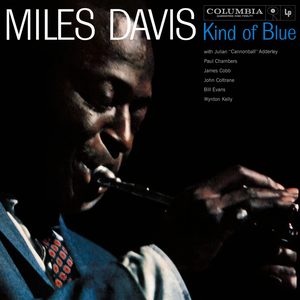
Kind of Blue
Cien años de soledad
Kyoto
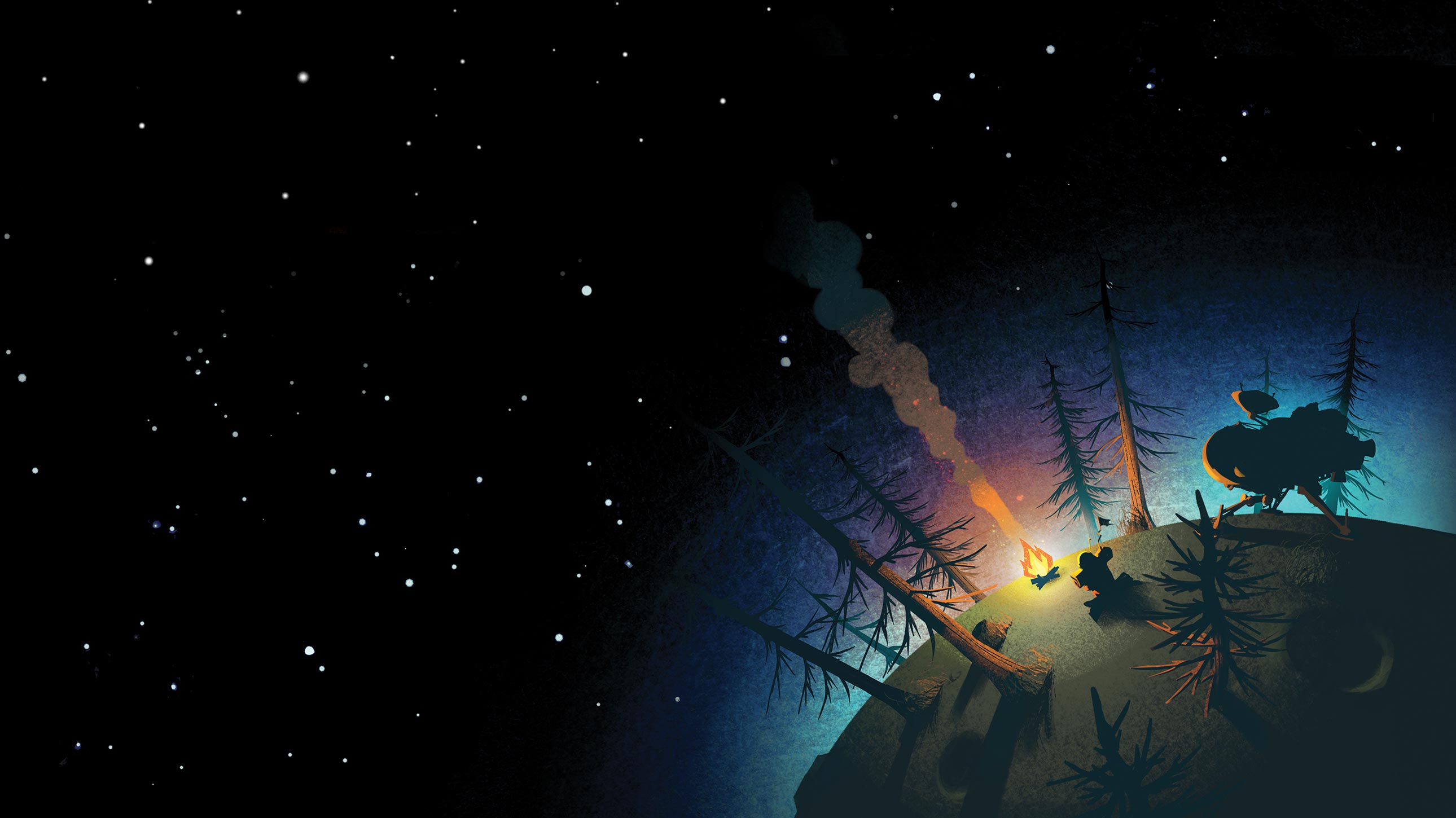
Outer Wilds
GPT-6.1 SolGPT-6.1 Sol

Spirited Away
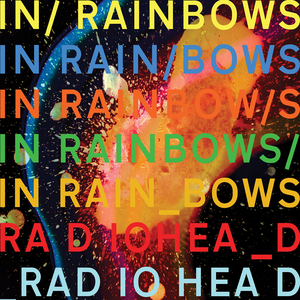
In Rainbows
Middlemarch
Kyoto
Outer Wilds
Price and specs
| Spec | GPT-6 Luna | GPT-6.1 Sol |
|---|---|---|
| Input price | $0.1/M tokens | $2/M tokens |
| Output price | $0.5/M tokens | $10/M tokens |
| Context window | 1.1M tokens | 1.1M tokens |
| Weights | Closed | Closed |
| Free API (OpenRouter) | No | No |
| Released | Sep 2026 | Sep 2026 |
| At 10M a month | $1.00 | $20.00 |
Input tokens at list price. No caching, no batch discount.
Where to run it


Per million tokens. Prices and uptime via OpenRouter, checked 30 Sep 2026.
Common questions
What is the difference between GPT-6 Luna and GPT-6.1 Sol?
Both are developed by OpenAI but target different use cases. GPT-6 Luna has a 1.1M token context window vs GPT-6.1 Sol's 1.1M. You can compare their actual outputs across 54 challenges on Rival to see how they differ in practice.
Which is better, GPT-6 Luna or GPT-6.1 Sol?
It depends on your use case. GPT-6 Luna and GPT-6.1 Sol each have strengths in different areas. Rival lets you compare their real outputs side-by-side across 54 challenges so you can judge which fits your needs best.
How much does GPT-6 Luna cost compared to GPT-6.1 Sol?
GPT-6 Luna costs $0.1/M input tokens and GPT-6.1 Sol costs $2/M input tokens. GPT-6 Luna is $1.90/M cheaper per input. Check their side-by-side outputs on Rival to see if the price difference is justified by quality.
How can I compare GPT-6 Luna and GPT-6.1 Sol on Rival?
This page shows a side-by-side comparison of GPT-6 Luna and GPT-6.1 Sol across shared challenges. You can vote on which model produced the better output in a blind duel. Browsing and voting are free. No account is needed to look; signing in only saves your votes and likes.
More comparisons
Against the newest arrivals
- GPT-6 Luna vs Claude Sonnet 5.5Landed Sep 2026
- GPT-6.1 Sol vs Solar Mini 4Landed Sep 2026
- GPT-6 Luna vs Qwen3.8 Max PrimeLanded Sep 2026
- GPT-6.1 Sol vs GLM 5.3 PrimeLanded Sep 2026
- GPT-6 Luna vs Qwen3.8 Omni FlashLanded Sep 2026
- GPT-6.1 Sol vs Command A+Landed Sep 2026
- GPT-6 Luna vs Claude Opus 5.5Landed Sep 2026
- GPT-6.1 Sol vs GPT-6 Luna ProLanded Sep 2026