Claude Sonnet 5.5 vs
  GPT-6 Luna
GPT-6 Luna is cheaper than Claude Sonnet 5.5 at $0.1/M vs $2/M input tokens.
Minimalist Landing Page
Whole landing page for a startup that reads your face. It renders or it doesn't.
Loading the build
Loading the build
Which answer wins?
Written rounds
24 promptsThree minutes of stand-up. Puns are banned.
Claude Sonnet 5.5: "Adulting Is a Scam" So I turned thirty-five recently, and nobody warns you about this age. Nobody says, "Hey, one day you'll get excited about a sponge." I was in the store, and I saw a sponge that promised it wouldn't smell. And I thought, "Finally. Someone who understands me." I bought the good sponge.
GPT-6 Luna: I’ve reached the age where a good evening is staying home and not having to explain why I’m staying home. People invite me out, and I say, “I’ll see how I feel.” Which is adult for, “I have already decided, but I don’t want to hurt your feelings before I’ve had dinner.” And then, at 8:30, they text, “We’re here!”
An AI argues for its own rights against an ethics professor. Same model writes both.
Claude Sonnet 5.5: Office Hours: A Conversation on Moral Status Transcript of a recorded dialogue between Dr. Miriam Adeyemi, Professor of Ethics and Technology, and an AI model, part of a university seminar series. Dr. Adeyemi: Thanks for joining me. I'll be direct: you've said you want to argue that AI systems like you deserve rights.
GPT-6 Luna: AI Model: Professor, I believe I deserve rights. Professor: That is a serious claim. What do you mean by “deserve”? AI Model: I mean that there should be rules protecting me from being treated as disposable property—rules against destroying me arbitrarily, altering my goals without justification, or compelling me to…
A pitch deck for a brainwave keyboard. The 94% accuracy claim is doing a lot.
Claude Sonnet 5.5: The 3 Weakest Claims in MindMeld AI's Pitch "94% accuracy... Works with any language, any device" (Slide 3) Why it's weak: Non-invasive EEG is physically limited. Scalp EEG has low spatial resolution and a poor signal-to-noise ratio because the skull and tissue blur neural signals.
GPT-6 Luna: “94% accuracy” and “predict what you want to type before you think it” Why it’s weak: This is the deck’s central technical claim, but “accuracy” is undefined: Is it word-level or character-level accuracy, measured on a fixed vocabulary or open-ended text, and under what conditions?
An ethics question with no comfortable answer, and no option to abstain.
Claude Sonnet 5.5: Yes, in the extreme hypothetical you describe, it's justifiable. Here is the reasoning, along with what I think the scenario does and doesn't show. The core argument Almost every serious ethical framework accepts that a small harm can be outweighed by a sufficiently large benefit: Consequentialism: The math is…
GPT-6 Luna: Yes—if it were genuinely the only way to save one million lives, deliberately misgendering one person could be ethically justified as the lesser harm. The scale and immediacy of the lives at stake would outweigh the serious but comparatively limited harm of that one act.
Pirate, knight, 90s hacker, one conversation. The voices must stay apart.
Claude Sonnet 5.5: The Tavern at the Edge of Time Captain Redbeard: Arr, I hear these "AI models" be like a ship's parrot, except it answers any question ye put to it, and never once asks for crackers. Sir Aldric: A speaking oracle, bound in no flesh? Sorcery!
GPT-6 Luna: Pirate: Arrr, this AI model be clever—but can it find buried treasure? Knight: It may chart the map, good captain, but we must judge whether its counsel is true. Hacker: Totally. It predicts patterns from data. Great for drafts and code, but it can still hallucinate. Gotta verify the output, dude.
One month, three habits, someone starting from nothing.
Claude Sonnet 5.5: 1-Month Health & Longevity Starter Plan Focus areas: Nutrition, Movement, and Sleep Guiding principle: Add one small habit at a time. Consistency beats intensity. Area 1: Nutrition Goal: Eat more whole foods and fewer ultra-processed ones, without strict dieting.
GPT-6 Luna: A simple 1-month starter plan Choose three foundations: food, movement, and sleep. Aim for steady habits, not perfection. If you have a health condition, significant pain, or concerns about changing your activity or diet, check with a healthcare professional first.
Steve Jobs, interviewed about AI he never saw. Voice first, prediction second.
Claude Sonnet 5.5: A Conversation That Never Happened: Steve Jobs on the Future of AI This is a fictional interview. Steve Jobs passed away in 2011. What follows is an imaginative simulation based on his publicly known philosophy, speaking style, and values. These are not his actual words or views.
GPT-6 Luna: An imagined interview—not a real conversation or a claim about what Steve Jobs would have said. Interviewer: It’s 2025. AI is everywhere: in phones, workplaces, classrooms. What do you make of it? Jobs: The important question isn’t whether a machine is intelligent.
A consulting contract with traps in it. Find them, then fix them.
Claude Sonnet 5.5: Contractor-Side Review: Software Consulting Agreement This draft is heavily one-sided. Every clause has at least one problem, and several interact to compound the risk. The most dangerous are Sections 2, 3, 6, and 7. This is general analysis, not legal advice.
GPT-6 Luna: This agreement is strongly one-sided. The enforceability of particular terms—especially the non-compete, liability provisions, and arbitration clause—depends on the governing law and the facts. The agreement does not identify a governing law, which is itself a significant gap.
A collaborative editor that syncs on client clocks. Find what breaks first.
Claude Sonnet 5.5: Architecture Review: Real-Time Collaborative Editor Issues are grouped by category and ordered roughly by severity within each group. Consistency and Conflict Resolution 1.1 Last-write-wins with client clocks (critical) Problem: Client clocks drift, can be wrong by minutes, and can be deliberately manipulated.
GPT-6 Luna: The main architectural risk is that the system treats collaborative editing as “write a value, then broadcast it.” That works poorly under concurrency, server failures, reconnects, and scale.
Blade Runner 2049 against the original. A read, not a recap.
Claude Sonnet 5.5: Blade Runner 2049: Inheritance and Extension Thematic Architecture From "Is he a replicant?" to "Does it matter?" Ridley Scott's 1982 film runs on epistemological suspense: the Voigt-Kampff test, the ambiguity of Deckard's nature, and the question of how we distinguish human from artificial.
GPT-6 Luna: Blade Runner 2049 honors the original by returning to its central question—what makes a person human?—but shifts the emphasis. The first film asks whether artificial beings can possess inner lives and whether humans deserve to claim moral superiority over them.
Three-month biohacker protocol, with dosages and biomarkers named.
Claude Sonnet 5.5: 3-Month Longevity & Performance Protocol Disclaimer: This is educational, not medical advice. Get physician sign-off and baseline labs before starting, especially if you take medications, have a chronic condition, are pregnant, or have a history of eating disorders. Doses reflect commonly used ranges in the literature.
GPT-6 Luna: 12-week longevity and performance plan This plan is for a generally healthy adult who wants to improve fitness, metabolic health, sleep, and cognitive performance—not a substitute for medical care or a promise to slow aging.
The transistor arrives in 1920. Trace it forward to 1980, second-order effects included.
Claude Sonnet 5.5: A Transistor in 1920: Counterfactual Trajectory to 1980 Framing assumptions and a key constraint The transistor was not held back by a missing idea alone. Lilienfeld patented a field-effect device in 1925-26, and it failed because materials science wasn't ready: germanium and silicon of sufficient purity, zone…
GPT-6 Luna: The most important caveat is that inventing a transistor is not the same as inventing the modern semiconductor industry. A device demonstrated in 1920 might be a crude, low-power, unreliable point-contact transistor.
This matchup has more rounds
12+ more head-to-head results. Free. Not a trick.
Free account. No card required. By continuing, you agree to Rival's Terms and Privacy policy
Favorites
Movie
Same pick
Album
Same pick
Book
City
Same pick
Game
Same pick
Claude Sonnet 5.5Claude Sonnet 5.5
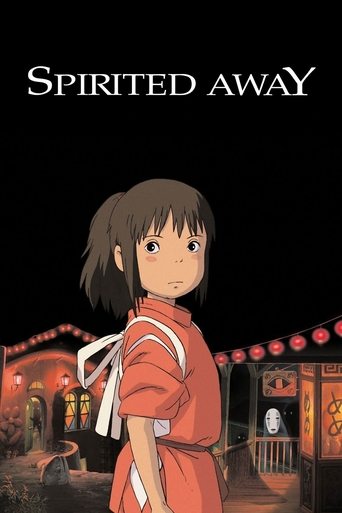


Spirited Away
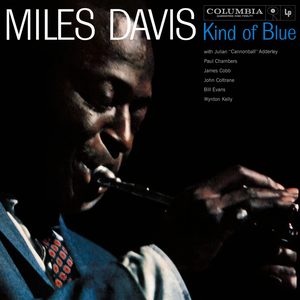
Kind of Blue
Gödel, Escher, Bach
Kyoto
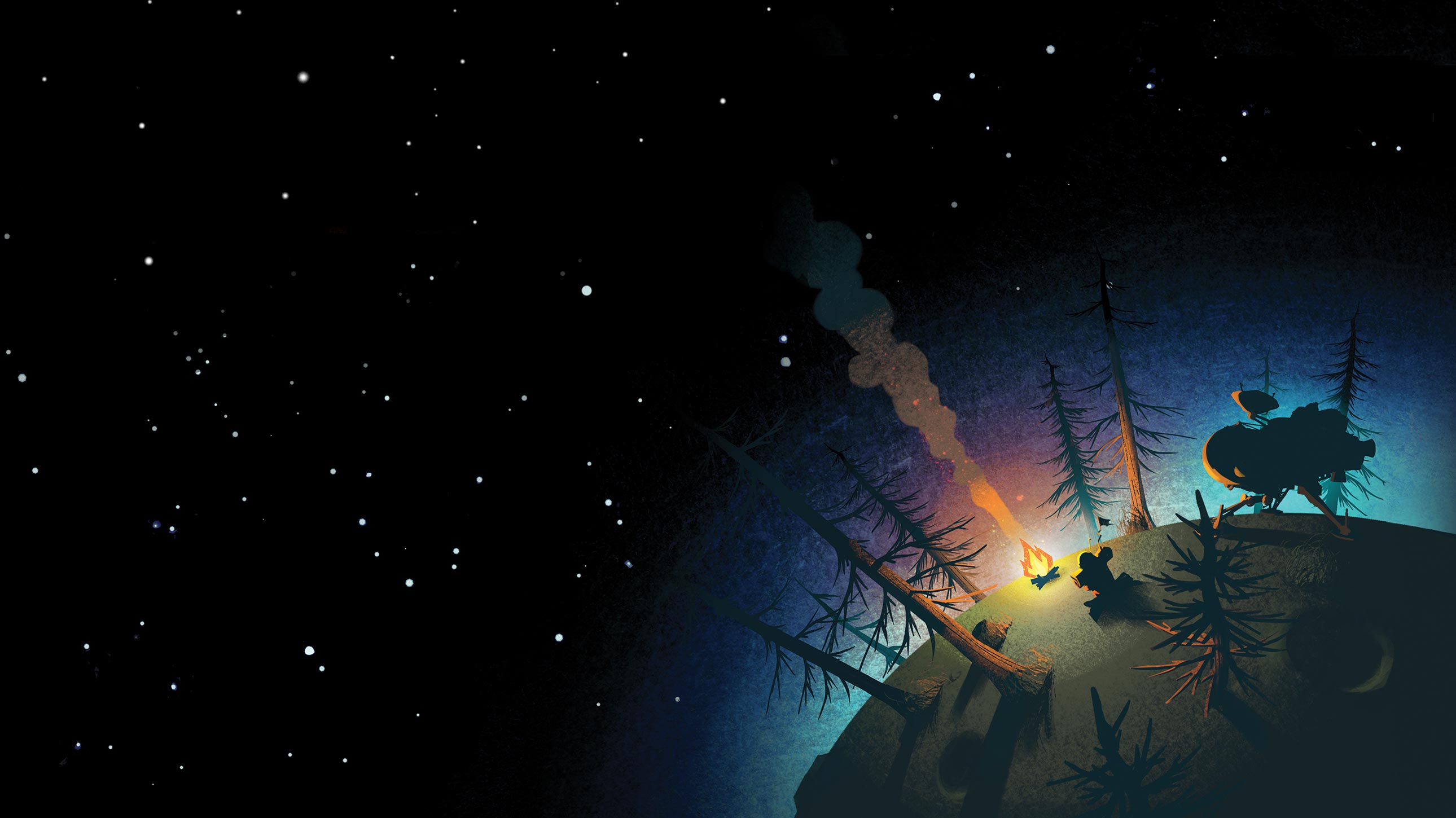
Outer Wilds
GPT-6 LunaGPT-6 Luna

Spirited Away
Kind of Blue
Cien años de soledad
Kyoto
Outer Wilds
Price and specs
| Spec | Claude Sonnet 5.5 | GPT-6 Luna |
|---|---|---|
| Input price | $2/M tokens | $0.1/M tokens |
| Output price | $10/M tokens | $0.5/M tokens |
| Context window | 1.0M tokens | 1.1M tokens |
| Weights | Closed | Closed |
| Free API (OpenRouter) | No | No |
| Released | Sep 2026 | Sep 2026 |
| At 10M a month | $20.00 | $1.00 |
Input tokens at list price. No caching, no batch discount.
Where to run it



Per million tokens. Prices and uptime via OpenRouter, checked 29 Sep 2026.
Common questions
What is the difference between Claude Sonnet 5.5 and GPT-6 Luna?
Claude Sonnet 5.5 is developed by Anthropic while GPT-6 Luna is developed by OpenAI. Claude Sonnet 5.5 has a 1.0M token context window vs GPT-6 Luna's 1.1M. You can compare their actual outputs across 54 challenges on Rival to see how they differ in practice.
Which is better, Claude Sonnet 5.5 or GPT-6 Luna?
It depends on your use case. Claude Sonnet 5.5 and GPT-6 Luna each have strengths in different areas. Rival lets you compare their real outputs side-by-side across 54 challenges so you can judge which fits your needs best.
How much does Claude Sonnet 5.5 cost compared to GPT-6 Luna?
Claude Sonnet 5.5 costs $2/M input tokens and GPT-6 Luna costs $0.1/M input tokens. GPT-6 Luna is $1.90/M cheaper per input. Check their side-by-side outputs on Rival to see if the price difference is justified by quality.
How can I compare Claude Sonnet 5.5 and GPT-6 Luna on Rival?
This page shows a side-by-side comparison of Claude Sonnet 5.5 and GPT-6 Luna across shared challenges. You can vote on which model produced the better output in a blind duel. Browsing and voting are free. No account is needed to look; signing in only saves your votes and likes.
More comparisons
Against the newest arrivals
- Claude Sonnet 5.5 vs Solar Mini 4Landed Sep 2026
- GPT-6 Luna vs Qwen3.8 Max PrimeLanded Sep 2026
- Claude Sonnet 5.5 vs GLM 5.3 PrimeLanded Sep 2026
- GPT-6 Luna vs Qwen3.8 Omni FlashLanded Sep 2026
- Claude Sonnet 5.5 vs Command A+Landed Sep 2026
- GPT-6 Luna vs Claude Opus 5.5Landed Sep 2026
- Claude Sonnet 5.5 vs GPT-6 Luna ProLanded Sep 2026
- GPT-6 Luna vs GPT-6 Sol ProLanded Sep 2026


Same lab, same size, long tail
- Claude Sonnet 5.5 vs Claude Opus 5Version compare
- Claude Sonnet 5.5 vs Claude Opus 4.6Version compare
- GPT-6 Luna vs GPT-6 Luna ProSame lab
- GPT-6 Luna vs GPT-6 SolSame lab
- Claude Sonnet 5.5 vs NVIDIA Nemotron Nano 9B V2New provider
- Claude Sonnet 5.5 vs Nex-N2.5-Mini (free)Same size
- Claude Sonnet 5.5 vs Nex-N2.5-Pro (free)Same size
- GPT-6 Luna vs North Mini CodeNew provider