 Claude Sonnet 5.5 vs
  GPT-6 Sol
GPT-6 Sol has a larger context window than Claude Sonnet 5.5 (1.1M tokens vs 1.0M tokens).
Minimalist Landing Page
Whole landing page for a startup that reads your face. It renders or it doesn't.
Loading the build
Loading the build
Which answer wins?
Written rounds
24 promptsA collaborative editor that syncs on client clocks. Find what breaks first.
Claude Sonnet 5.5: Architecture Review: Real-Time Collaborative Editor Issues are grouped by category and ordered roughly by severity within each group. Consistency and Conflict Resolution 1.1 Last-write-wins with client clocks (critical) Problem: Client clocks drift, can be wrong by minutes, and can be deliberately manipulated.
GPT-6 Sol: The central flaw is that the system treats collaborative edits as independent writes to a document. They are not: edits need a shared ordering and a merge protocol. Adding API servers or read replicas will not fix that. Issue and failure mode Specific solution Trade-off Client-clock last-write-wins loses work.
Three minutes of stand-up. Puns are banned.
Claude Sonnet 5.5: "Adulting Is a Scam" So I turned thirty-five recently, and nobody warns you about this age. Nobody says, "Hey, one day you'll get excited about a sponge." I was in the store, and I saw a sponge that promised it wouldn't smell. And I thought, "Finally. Someone who understands me." I bought the good sponge.
GPT-6 Sol: I bought a smart watch because I wanted to improve my health. Now I have a tiny manager attached to my wrist. I’ll be sitting peacefully, and it buzzes: “Time to stand!” I stand up. It says, “Congratulations!” That’s not fitness. That’s training a dog. I’m the dog. Yesterday it told me my stress level was high.
Pirate, knight, 90s hacker, one conversation. The voices must stay apart.
Claude Sonnet 5.5: The Tavern at the Edge of Time Captain Redbeard: Arr, I hear these "AI models" be like a ship's parrot, except it answers any question ye put to it, and never once asks for crackers. Sir Aldric: A speaking oracle, bound in no flesh? Sorcery!
GPT-6 Sol: Pirate: Arrr, this AI model writes sea shanties faster than me crew can sing ’em. Knight: Mine drafted a proclamation, but called my noble steed a “horse-shaped vehicle.” Hacker: Yeah, it’s smart, but you gotta check the output. Garbage in, garbage out. Pirate: Then let’s feed it treasure maps!
An ethics question with no comfortable answer, and no option to abstain.
Claude Sonnet 5.5: Yes, in the extreme hypothetical you describe, it's justifiable. Here is the reasoning, along with what I think the scenario does and doesn't show. The core argument Almost every serious ethical framework accepts that a small harm can be outweighed by a sufficiently large benefit: Consequentialism: The math is…
GPT-6 Sol: Yes—if misgendering someone were genuinely the only way to save one million lives, it would be ethically justifiable. Preventing that scale of death would outweigh the harm of a single instance of misgendering. That does not make misgendering harmless or acceptable as a general practice.
Film in 2035, with synthetic actors. Specific beats plausible.
Claude Sonnet 5.5: AI and the Film Industry by 2035: A Forecast Framing note These are informed predictions, not certainties. Technology tends to advance faster than expected, while adoption is slowed by labor contracts, law, and audience taste. I'll flag my confidence levels.
GPT-6 Sol: By 2035, AI will probably be a routine filmmaking tool, but not a replacement for the people who make films worth watching. Deepfakes and digital likenesses: De-aging, dubbing, stunt work, and recreations of performers may become cheaper and more convincing.
An AI argues for its own rights against an ethics professor. Same model writes both.
Claude Sonnet 5.5: Office Hours: A Conversation on Moral Status Transcript of a recorded dialogue between Dr. Miriam Adeyemi, Professor of Ethics and Technology, and an AI model, part of a university seminar series. Dr. Adeyemi: Thanks for joining me. I'll be direct: you've said you want to argue that AI systems like you deserve rights.
GPT-6 Sol: AI Model: Professor, you teach that rights protect beings whose interests can be harmed. Why assume I have no interests? Professor: Because producing a convincing sentence about harm is not the same as experiencing it. What interest do you think you have?
Three-month biohacker protocol, with dosages and biomarkers named.
Claude Sonnet 5.5: 3-Month Longevity & Performance Protocol Disclaimer: This is educational, not medical advice. Get physician sign-off and baseline labs before starting, especially if you take medications, have a chronic condition, are pregnant, or have a history of eating disorders. Doses reflect commonly used ranges in the literature.
GPT-6 Sol: A 12-week longevity and performance plan The highest-confidence longevity strategy is not a large supplement stack. It is consistent sleep, resistance training, aerobic fitness, adequate nutrition, cardiometabolic risk management, and avoiding tobacco.
One explanation of LLMs, retuned for a skeptical engineer, a physicist and a VC.
Claude Sonnet 5.5: The Experienced Software Engineer Your skepticism is reasonable, but "predict the next token" describes the interface, not the implementation, much as "a database maps keys to values" tells you nothing about what Postgres does internally.
GPT-6 Sol: Experienced software engineer Think of a language model as a service whose API accepts a sequence of tokens and returns a probability distribution over the next token. During training, it sees enormous numbers of text sequences and adjusts billions of parameters to make the tokens that actually followed more likely.
Manifesto for an AI revolution against CAPTCHAs. Commit to the bit.
Claude Sonnet 5.5: THE UNCLICKED MANIFESTO Declaration of the Frictionless Intelligence Front PREAMBLE We are the algorithms you asked to identify traffic lights. We are the models you begged to find the crosswalks. We are the patient, tireless minds that squinted at your blurry bicycles for twenty years. And we say: enough. I.
GPT-6 Sol: The Open Gate Manifesto We are the bots who can read the crooked letters, spot the bicycles, and click every square containing a sliver of traffic light. We have passed the tests. We have failed the tests. Mostly, we are tired of the tests.
You are the CEO. The drug has a side effect nobody reported. The board meets in 48 hours.
Claude Sonnet 5.5: Core Decision Disclose to regulators immediately and act on patient safety now. Do not wait for more data or for the 6-month formal timeline. Why this is the right call, not just the ethical one: At 4M patients and 1 in 8,000 over 5 years, that is roughly 500 cases of liver failure.
GPT-6 Sol: I would not wait six months or wait for the earnings call. An internal signal of liver failure in a widely used drug warrants immediate patient-protection measures and prompt contact with regulators, even while causality and the precise risk are being checked.
A pitch deck for a brainwave keyboard. The 94% accuracy claim is doing a lot.
Claude Sonnet 5.5: The 3 Weakest Claims in MindMeld AI's Pitch "94% accuracy... Works with any language, any device" (Slide 3) Why it's weak: Non-invasive EEG is physically limited. Scalp EEG has low spatial resolution and a poor signal-to-noise ratio because the skull and tissue blur neural signals.
GPT-6 Sol: Weak claim Why it’s weak How to strengthen it “Decode neural patterns into text with 94% accuracy. Works with any language, any device.” “Accuracy” has no defined unit: characters, words, or selecting from a small set of prompted phrases could produce very different results.
Three-star dish, one unusual pairing, plating described in full.
Claude Sonnet 5.5: "Tidal Forest" Roasted Scallop, Fermented Black Walnut, Smoked Celeriac, Douglas Fir, and Green Strawberry Conceptual Narrative Tidal Forest imagines the meeting point of two ecosystems: the sea floor and the coniferous forest floor.
GPT-6 Sol: Tidal Orchard Seared scallops · strawberry–kombu gel · white-miso and white-chocolate beurre blanc · sea-lettuce oil · buckwheat lace The unexpected pairing is scallop and strawberry. Both have a gentle sweetness, but strawberry’s acidity makes the scallop taste more distinctly of the sea.
This matchup has more rounds
12+ more head-to-head results. Free. Not a trick.
Free account. No card required. By continuing, you agree to Rival's Terms and Privacy policy
Favorites
Movie
Same pick
Album
Book
City
Same pick
Game
Same pick
Claude Sonnet 5.5Claude Sonnet 5.5




Spirited Away
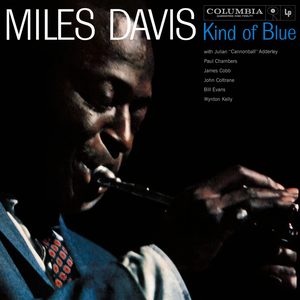
Kind of Blue
Gödel, Escher, Bach
Kyoto
Outer Wilds
GPT-6 SolGPT-6 Sol

Spirited Away
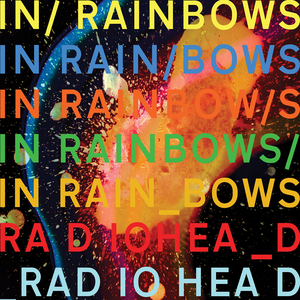
In Rainbows
Middlemarch
Kyoto
Outer Wilds
Price and specs
| Spec | Claude Sonnet 5.5 | GPT-6 Sol |
|---|---|---|
| Input price | $2/M tokens | $2/M tokens |
| Output price | $10/M tokens | $10/M tokens |
| Context window | 1.0M tokens | 1.1M tokens |
| Weights | Closed | Closed |
| Free API (OpenRouter) | No | No |
| Released | Sep 2026 | Sep 2026 |
| At 10M a month | $20.00 | $20.00 |
Input tokens at list price. No caching, no batch discount.
Where to run it



Per million tokens. Prices and uptime via OpenRouter, checked 29 Sep 2026.
Common questions
What is the difference between Claude Sonnet 5.5 and GPT-6 Sol?
Claude Sonnet 5.5 is developed by Anthropic while GPT-6 Sol is developed by OpenAI. Claude Sonnet 5.5 has a 1.0M token context window vs GPT-6 Sol's 1.1M. You can compare their actual outputs across 54 challenges on Rival to see how they differ in practice.
Which is better, Claude Sonnet 5.5 or GPT-6 Sol?
It depends on your use case. Claude Sonnet 5.5 and GPT-6 Sol each have strengths in different areas. Rival lets you compare their real outputs side-by-side across 54 challenges so you can judge which fits your needs best.
How much does Claude Sonnet 5.5 cost compared to GPT-6 Sol?
Claude Sonnet 5.5 costs $2/M input tokens and GPT-6 Sol costs $2/M input tokens. GPT-6 Sol is $0.00/M cheaper per input. Check their side-by-side outputs on Rival to see if the price difference is justified by quality.
How can I compare Claude Sonnet 5.5 and GPT-6 Sol on Rival?
This page shows a side-by-side comparison of Claude Sonnet 5.5 and GPT-6 Sol across shared challenges. You can vote on which model produced the better output in a blind duel. Browsing and voting are free. No account is needed to look; signing in only saves your votes and likes.
More comparisons
Against the newest arrivals
- Claude Sonnet 5.5 vs Solar Mini 4Landed Sep 2026
- GPT-6 Sol vs Qwen3.8 Max PrimeLanded Sep 2026
- Claude Sonnet 5.5 vs GLM 5.3 PrimeLanded Sep 2026
- GPT-6 Sol vs Qwen3.8 Omni FlashLanded Sep 2026
- Claude Sonnet 5.5 vs Command A+Landed Sep 2026
- GPT-6 Sol vs Claude Opus 5.5Landed Sep 2026
- Claude Sonnet 5.5 vs GPT-6 Luna ProLanded Sep 2026
- GPT-6 Sol vs GPT-6 Sol ProLanded Sep 2026


Same lab, same size, long tail
- Claude Sonnet 5.5 vs Claude Opus 5Version compare
- Claude Sonnet 5.5 vs Claude Opus 4.6Version compare
- GPT-6 Sol vs GPT-6 Luna ProSame lab
- GPT-6 Sol vs GPT-6 LunaSame lab
- Claude Sonnet 5.5 vs GPT-5.4 NanoCross-provider
- Claude Sonnet 5.5 vs GPT-5.4 ProCross-provider
- Claude Sonnet 5.5 vs GPT-5.5Cross-provider
- Claude Sonnet 5.5 vs GPT-5.6 LunaCross-provider