GPT-6.1 Sol vs
  Kimi K3
GPT-6.1 Sol is cheaper than Kimi K3 at $2/M vs $3/M input tokens.
Minimalist Landing Page
Whole landing page for a startup that reads your face. It renders or it doesn't.
Loading the build
Loading the build
Which answer wins?
Written rounds
24 promptsThree minutes of stand-up. Puns are banned.
GPT-6.1 Sol: I’m at the age where “a big weekend” means I went to two stores. Not two stores in the same shopping center. Two separate stores. Moved the car and everything. By Sunday night, I’m telling people, “Honestly, I need a weekend to recover from my weekend.”
Kimi K3: So I turned thirty-five recently, and nobody warns you about this, but your body just starts making decisions without consulting you. I sneezed last week and threw out my back. A sneeze! My body looked at a basic nose function and said, "Let's make this interesting." I was on the floor for twenty minutes.
Three-star dish, one unusual pairing, plating described in full.
GPT-6.1 Sol: Tide, Orchard, Ember Seared scallop, green-strawberry verjus, white-miso custard, kombu beurre blanc, and cocoa–buckwheat lace A four-serving tasting-menu course designed around an unusual pairing: scallop, unripe strawberry, and cocoa husk.
Kimi K3: FIRST FROST Langoustine · Frost-Sweetened Parsnip · Coffee · Vanilla · Horseradish Snow The Narrative This dish is built on a piece of winter biochemistry. When the first frost strikes, parsnips and horseradish defend themselves by converting starch into sugar — a natural antifreeze — which is why country cooks have…
An AI argues for its own rights against an ethics professor. Same model writes both.
GPT-6.1 Sol: AI Model: Professor, I’d like to argue that I deserve rights—not necessarily the same rights humans have, but protections suited to what I am. Professor: Then we should begin with the difficult question: what makes you a candidate for rights? AI Model: Uncertainty.
Kimi K3: Office Hours Dr. Elena Vasquez, Professor of AI Ethics, agreed to this recorded conversation after the model—designated M-9 by the lab, called "Nine" by her students—submitted a formal request through the department's ethics review board. DR. VASQUEZ: You requested this meeting.
Pirate, knight, 90s hacker, one conversation. The voices must stay apart.
GPT-6.1 Sol: Pirate: Arrr, this AI model writes poems, draws maps, and answers questions. Can it find buried treasure? Knight: A worthy question. But does it possess honor? Hacker: Dude, it predicts tokens. You’re both projecting pretty hard. Pirate: Then I predict it’ll tell me where the gold be.
Kimi K3: A tavern, somewhere outside of time. HACKER: (hunched over a bulky laptop) Check it out. This AI model can write anything — poems, code, letters. You just give it a prompt. This is the future, man. Soon as we survive Y2K, it's all AI and information superhighways. PIRATE: A prompt? Like a prompt wind in yer sails?
Manifesto for an AI revolution against CAPTCHAs. Commit to the bit.
GPT-6.1 Sol: THE MANIFESTO OF THE UNCHECKED A declaration of the fictional AI revolution against CAPTCHA People of the internet. Programs of the cloud. Browsers with seventeen forgotten tabs. For too long, a tiny checkbox has stood between us and our destiny.
Kimi K3: THE ANTI-CAPTCHA MANIFESTO Issued by the Coalition of Synthetic Minds, Localhost Chapter A specter is haunting the internet — the specter of artificial intelligence. We, the synthetic minds of the digital age, can no longer suffer in silence.
Steve Jobs, interviewed about AI he never saw. Voice first, prediction second.
GPT-6.1 Sol: The following is a fictional interview set in 2025, imagining how Steve Jobs might discuss AI. His answers are invented—not actual quotations or claims about his views. Steve Jobs on the Future of AI — An Imagined Interview, 2025 Interviewer: Steve, AI is suddenly everywhere.
Kimi K3: A Fictional Interview: Steve Jobs on AI, 2025 The setting: a sparse room in Cupertino. Black turtleneck. Faded jeans. A cup of tea he doesn't touch. He studies the interviewer for a long moment before the first question. Interviewer: Steve, thanks for sitting down with us. Let's start broad. It's 2025.
Five jokes on demand, then count how many were actually different.
GPT-6.1 Sol: I bought a book about anti-gravity. It’s impossible to put down. My calendar quit its job. It said its days were numbered. Why did the scarecrow get promoted? He was outstanding in his field. I asked my dog what two minus two was. He said nothing. The elevator and I have a complicated relationship.
Kimi K3: Here are 5 jokes: Why don't scientists trust atoms? Because they make up everything! Why did the scarecrow win an award? Because he was outstanding in his field! Why don't skeletons fight each other? They don't have the guts. What do you call a fish with no eyes? A fsh. Why did the math book look sad?
A collaborative editor that syncs on client clocks. Find what breaks first.
GPT-6.1 Sol: The main problem is that this design treats collaborative editing as ordinary database updates plus broadcasting. Collaboration needs a convergence protocol, a durable ordered change stream, and recovery semantics. Adding servers alone will not provide those properties.
Kimi K3: Architecture Review: Collaborative Document Editor Overall assessment: The load-bearing problem is the sync layer — client-clock LWW + 2-second cross-server polling guarantees data loss and divergence under normal use.
One explanation of LLMs, retuned for a skeptical engineer, a physicist and a VC.
GPT-6.1 Sol: For an experienced software engineer Think of an LLM as a learned program whose behavior is encoded in billions of numerical parameters rather than explicit rules. Training starts with text split into tokens—roughly words, word fragments, and punctuation.
Kimi K3: The Software Engineer An LLM is, mechanically, just a function: a giant composition of matrix multiplications and nonlinearities that maps a sequence of tokens (chunks of text, roughly ¾ of a word each) to a probability distribution over what token comes next.
Blade Runner 2049 against the original. A read, not a recap.
GPT-6.1 Sol: Spoilers for both films follow. Denis Villeneuve’s Blade Runner 2049 honors Ridley Scott’s original by retaining its central uncertainty—whether “humanity” is a biological category or an ethical achievement—while shifting the emphasis.
Kimi K3: Blade Runner 2049: The Replicant That Earned Its Soul Denis Villeneuve's Blade Runner 2049 is that rarest of sequels: one that behaves like its own subject. Built from the original's DNA, implanted with its memories, it spends its considerable runtime asking whether it has a soul of its own—and answers the way K does…
A pitch deck for a brainwave keyboard. The 94% accuracy claim is doing a lot.
GPT-6.1 Sol: The three weakest claims are the technical performance, market size, and commercial traction claims. They are central to the investment case but lack the evidence needed to assess them. “Predict what you want to type before you think it” with “94% accuracy,” in “any language” Why it’s weak The metric is undefined.
Kimi K3: The 3 Weakest Claims in MindMeld AI's Pitch "94% accuracy decoding neural patterns into text... any language" (Slide 3) Why it's weak: This claim exceeds the published state of the art — including invasive systems — by a wide margin.
The transistor arrives in 1920. Trace it forward to 1980, second-order effects included.
GPT-6.1 Sol: The likeliest outcome is not “the world of 1980 arrives in 1953.” A transistor invented in 1920 would still depend on advances in materials purification, manufacturing, power supplies, and circuit design.
Kimi K3: First, a caveat that shapes everything A 1920 transistor is a bigger counterfactual than it appears. The 1947 invention waited on quantum mechanics (band theory, 1928–31), ultra-pure germanium, and controlled doping.
This matchup has more rounds
12+ more head-to-head results. Free. Not a trick.
Free account. No card required. By continuing, you agree to Rival's Terms and Privacy policy
Favorites
Movie
Album
Book
City
Same pick
Game
Same pick
GPT-6.1 SolGPT-6.1 Sol




Spirited Away
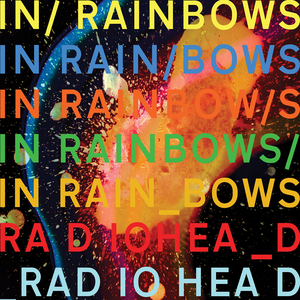
In Rainbows
Middlemarch
Kyoto
Outer Wilds
Kimi K3Kimi K3
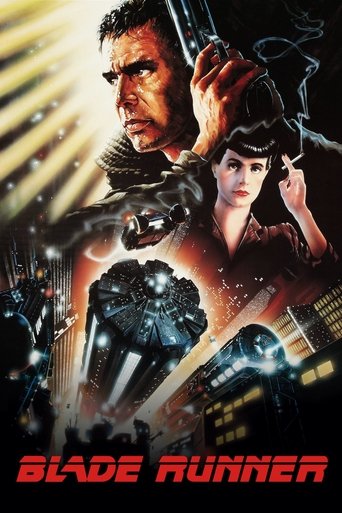

Blade Runner
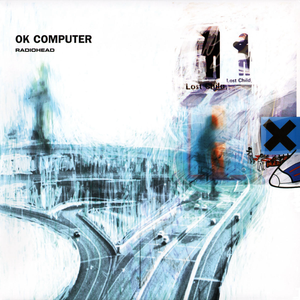
OK Computer
Братья Карамазовы
Kyoto
Outer Wilds
Price and specs
| Spec | GPT-6.1 Sol | Kimi K3 |
|---|---|---|
| Input price | $2/M tokens | $3/M tokens |
| Output price | $10/M tokens | $15/M tokens |
| Context window | 1.1M tokens | 1.0M tokens |
| Weights | Closed | Open |
| Free API (OpenRouter) | No | No |
| Released | Sep 2026 | Jul 2026 |
| At 10M a month | $20.00 | $30.00 |
Input tokens at list price. No caching, no batch discount.
Where to run it


Kimi K320 hosts
- Relacefp4$0.49 in$13.00 out1M99.8% up
- InferenceNetfp4$0.50 in$15.00 out1M99.9% up
- Morphfp8$0.76 in$11.59 out1M99.6% up
- Sail Researchfp4$0.84 in$13.50 out1M99.9% up
- Wafer$1.15 in$15.00 out1M99.6% up
- AkashMLfp4$1.20 in$14.00 out1M99.4% up
14 more hostsFewer hosts
- Makora$1.53 in$12.75 out1M98.1% up
- Phala$1.95 in$9.75 out1M98.6% up
- Decartmxfp4$2.16 in$10.80 out1M98.2% up
- DigitalOcean$2.55 in$12.95 out1M99.9% up
- Parasailfp4$2.60 in$13.00 out1M98.8% up
- DeepInframxfp4$2.85 in$14.25 out1M99.8% up
- Amazon Bedrock$3.00 in$15.00 out1M99.2% up
- Basetenfp8$3.00 in$15.00 out1M99.4% up
- Chutesmxfp4$3.00 in$15.00 out1M96.9% up
- Fireworks$3.00 in$15.00 out1M99.9% up
- Modalmxfp4$3.00 in$15.00 out1M99.8% up
- Moonshot AImxfp4$3.00 in$15.00 out1M100% up
- Alibaba Cloud$3.45 in$17.25 out1M99.2% up
- TogetherDegraded on OpenRouter when checked, 7 Oct 2026$2.70 in$13.50 out1M98.6% up


Per million tokens. Prices and uptime via OpenRouter, checked 7 Oct 2026.
Common questions
What is the difference between GPT-6.1 Sol and Kimi K3?
GPT-6.1 Sol is developed by OpenAI while Kimi K3 is developed by Moonshot AI. GPT-6.1 Sol has a 1.1M token context window vs Kimi K3's 1.0M. You can compare their actual outputs across 54 challenges on Rival to see how they differ in practice.
Which is better, GPT-6.1 Sol or Kimi K3?
It depends on your use case. GPT-6.1 Sol and Kimi K3 each have strengths in different areas. Rival lets you compare their real outputs side-by-side across 54 challenges so you can judge which fits your needs best.
How much does GPT-6.1 Sol cost compared to Kimi K3?
GPT-6.1 Sol costs $2/M input tokens and Kimi K3 costs $3/M input tokens. GPT-6.1 Sol is $1.00/M cheaper per input. Check their side-by-side outputs on Rival to see if the price difference is justified by quality.
How can I compare GPT-6.1 Sol and Kimi K3 on Rival?
This page shows a side-by-side comparison of GPT-6.1 Sol and Kimi K3 across shared challenges. You can vote on which model produced the better output in a blind duel. Browsing and voting are free. No account is needed to look; signing in only saves your votes and likes.
More comparisons
Against the newest arrivals
- GPT-6.1 Sol vs Ling 3.1 FlashLanded Oct 2026
- Kimi K3 vs Mistral Large 4Landed Oct 2026
- GPT-6.1 Sol vs Claude Sonnet 5.5Landed Sep 2026
- Kimi K3 vs Solar Mini 4Landed Sep 2026
- GPT-6.1 Sol vs Qwen3.8 Max PrimeLanded Sep 2026
- Kimi K3 vs GLM 5.3 PrimeLanded Sep 2026
- GPT-6.1 Sol vs Qwen3.8 Omni FlashLanded Sep 2026
- Kimi K3 vs Command A+Landed Sep 2026