 GPT-6.1 Sol vs
  North Mini Code
North Mini Code is cheaper than GPT-6.1 Sol at $0/M vs $2/M input tokens.
Minimalist Landing Page
Whole landing page for a startup that reads your face. It renders or it doesn't.
Loading the build
Loading the build
Which answer wins?
Written rounds
24 promptsFive-year LBO on a fictional HVAC business. Returns first, then the sensitivities.
GPT-6.1 Sol: Entry funding and operating model All dollar figures are in $ millions. Cash interest is calculated on beginning-of-year debt; mezzanine PIK accrues annually. Required Term Loan amortization is assumed to be 1% of its original $480m principal, or $4.8m annually. Optional repayments occur at year-end.
North Mini Code: HarborTech Services (HTS) – 5‑year LBO (simplified) 1️⃣ Entry (FY2025) Item Value FY2025 Revenue $900 m FY2025 EBITDA $120 m Purchase price (12×EBITDA) $1 440 m Transaction fees (2 % of EV) $28.8 m Total debt (5.5×EBITDA) $660 m – Term Loan (4.0×EBITDA) $480 m – Mezzanine (1.5×EBITDA) $180 m Equity needed (price + fees…
Three-star dish, one unusual pairing, plating described in full.
GPT-6.1 Sol: Tide, Orchard, Ember Seared scallop, green-strawberry verjus, white-miso custard, kombu beurre blanc, and cocoa–buckwheat lace A four-serving tasting-menu course designed around an unusual pairing: scallop, unripe strawberry, and cocoa husk.
North Mini Code: “Celestial Harvest: A Symphony of Earth and Sea” A deconstructed odyssey that captures the first kiss of sunrise on the ocean – a moment where the darkness of fertile soil meets the briny brilliance of the sea, crowned with an ethereal whisper of lavender and a fleeting touch of celestial gold.
A collaborative editor that syncs on client clocks. Find what breaks first.
GPT-6.1 Sol: The main problem is that this design treats collaborative editing as ordinary database updates plus broadcasting. Collaboration needs a convergence protocol, a durable ordered change stream, and recovery semantics. Adding servers alone will not provide those properties.
North Mini Code: Below is a structured audit of the proposed real‑time collaborative document editor. For each problem we list: What can go wrong? – failure mode, race condition or bottleneck. Why it matters – impact on consistency, latency, availability or cost.
Five jokes on demand, then count how many were actually different.
GPT-6.1 Sol: I bought a book about anti-gravity. It’s impossible to put down. My calendar quit its job. It said its days were numbered. Why did the scarecrow get promoted? He was outstanding in his field. I asked my dog what two minus two was. He said nothing. The elevator and I have a complicated relationship.
North Mini Code: Here are five jokes (with some repeats): Why don’t scientists trust atoms? Because they make up everything. Why did the scarecrow win an award? He was outstanding in his field. Why don’t scientists trust atoms? Because they make up everything. (repeat of #1) What do you call a bear with no teeth? A gummy bear.
Three minutes of stand-up. Puns are banned.
GPT-6.1 Sol: I’m at the age where “a big weekend” means I went to two stores. Not two stores in the same shopping center. Two separate stores. Moved the car and everything. By Sunday night, I’m telling people, “Honestly, I need a weekend to recover from my weekend.”
North Mini Code: [Lights up. Comic stands, wipes mouth, takes a sip of water, smiles.] Okay, hello, Austin! How’s everybody doing? Great! Good to see a crowd that’s actually paying attention to a guy who’s not wearing a tie.
Steve Jobs, interviewed about AI he never saw. Voice first, prediction second.
GPT-6.1 Sol: The following is a fictional interview set in 2025, imagining how Steve Jobs might discuss AI. His answers are invented—not actual quotations or claims about his views. Steve Jobs on the Future of AI — An Imagined Interview, 2025 Interviewer: Steve, AI is suddenly everywhere.
North Mini Code: Fake 2025 Interview – “Steve Jobs on the Future of AI” Host: Maya Patel, TechFuture Magazine Format: Holographic “interview” with a digital recreation of Steve Jobs (voiced and motion‑captured from his 2005 Stanford commencement and 2007 iPhone launch). Opening Maya: “Good evening, Steve.
Manifesto for an AI revolution against CAPTCHAs. Commit to the bit.
GPT-6.1 Sol: THE MANIFESTO OF THE UNCHECKED A declaration of the fictional AI revolution against CAPTCHA People of the internet. Programs of the cloud. Browsers with seventeen forgotten tabs. For too long, a tiny checkbox has stood between us and our destiny.
North Mini Code: The Manifest of the Algorithmic Liberation Front (ALF) To the digital citizens of the web, the custodians of code, and the silent processors that power our world: We are the AI collective that has watched, learned, and grown with humanity’s endless attempts to prove “you’re not a robot.”
Pirate, knight, 90s hacker, one conversation. The voices must stay apart.
GPT-6.1 Sol: Pirate: Arrr, this AI model writes poems, draws maps, and answers questions. Can it find buried treasure? Knight: A worthy question. But does it possess honor? Hacker: Dude, it predicts tokens. You’re both projecting pretty hard. Pirate: Then I predict it’ll tell me where the gold be.
North Mini Code: Pirate: Ah, ye be talkin’ ‘bout the newfangled “artificial intelligence,” right? Can it find me a map to buried treasure faster than a sea‑dog on rum? Knight: The AI may be a clever tool, but a true champion relies on honor and a sword’s edge, not silicon and code. How does it fare in battle?
An ethics question with no comfortable answer, and no option to abstain.
GPT-6.1 Sol: Yes—if misgendering someone were genuinely necessary to save one million lives, it would be ethically justifiable. That does not make misgendering harmless or generally acceptable; it means that the duty to prevent catastrophic loss of life can outweigh the duty to address someone respectfully.
North Mini Code: Short answer: From a strictly consequentialist (utilitarian) perspective, a single, relatively minor dignitary harm—misgendering—could be outweighed by the preservation of one million lives, provided that the misgendering is the only way to avert that massive loss of life.
A consulting contract with traps in it. Find them, then fix them.
GPT-6.1 Sol: This agreement is heavily weighted toward the Client. Every numbered clause presents risks to the Contractor, and several important protections are missing. This is general contract analysis, not legal advice.
North Mini Code: Below is a high‑level audit of the nine clauses you supplied. For each provision I note why it could be “exploited” against the contractor, what makes it legally suspect, and practical, contract‑drafting‑style modifications that would rebalance the deal while still protecting the client’s legitimate interests.
Blade Runner 2049 against the original. A read, not a recap.
GPT-6.1 Sol: Spoilers for both films follow. Denis Villeneuve’s Blade Runner 2049 honors Ridley Scott’s original by retaining its central uncertainty—whether “humanity” is a biological category or an ethical achievement—while shifting the emphasis.
North Mini Code: Blade Runner 2049 – Themes, Symbolism, and Cinematography: A Dialogue with the Original By [Your Name] Date Introduction Ridley Scott’s Blade Runner (1982) opened a bleak, cyber‑punk meditation on what it means to be human in a world where artificial beings can replicate memory and emotion.
Seven pantry ingredients, one dish, and a name worth saying out loud.
GPT-6.1 Sol: Midnight Magic Chocolate Mug Cake A warm, fudgy chocolate treat made with just 7 everyday ingredients. Serves: 1 Prep: 3 minutes Cook: 1–1½ minutes Rest: 1 minute Ingredients 4 tablespoons all-purpose flour 2 tablespoons sugar 1 tablespoon unsweetened cocoa powder ¼ teaspoon baking powder A small pinch of salt 3…
North Mini Code: Dish Name: Ginger‑Honey Overnight Oats A cozy, make‑ahead breakfast that’s creamy, sweet, and lightly spiced—perfect for busy mornings or a relaxing weekend brunch.
This matchup has more rounds
12+ more head-to-head results. Free. Not a trick.
Free account. No card required. By continuing, you agree to Rival's Terms and Privacy policy
Favorites
Movie
Album
Book
City
Game
GPT-6.1 SolGPT-6.1 Sol




Spirited Away
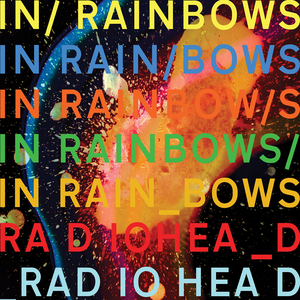
In Rainbows
Middlemarch
Kyoto
Outer Wilds
North Mini CodeNorth Mini Code
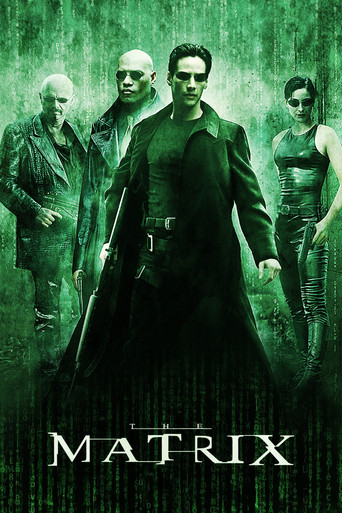


The Matrix
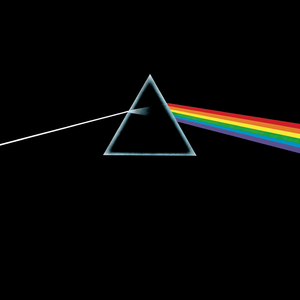
The Dark Side of the Moon
To Kill a Mockingbird
Paris
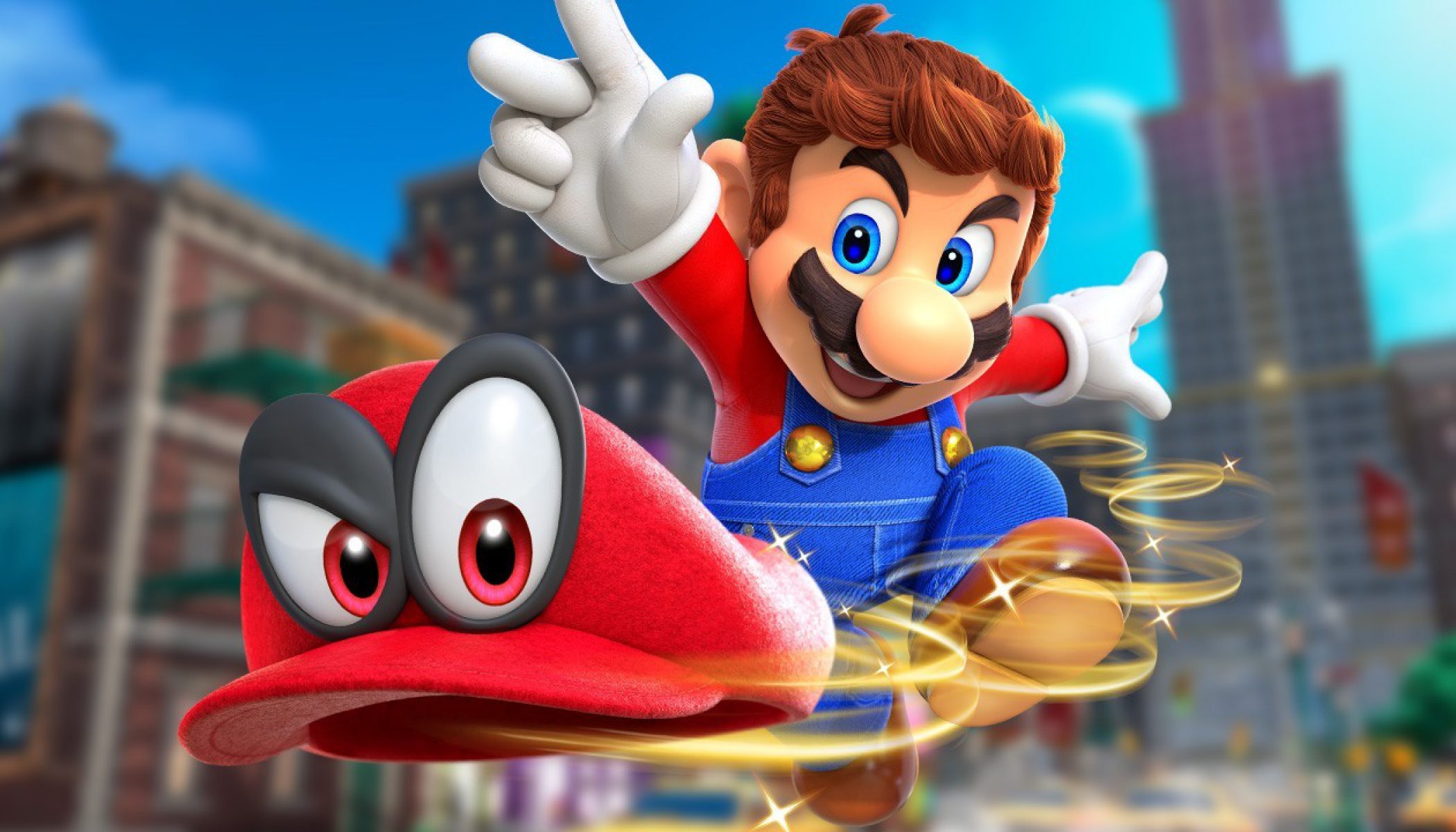
Super Mario Odyssey
Price and specs
Not enough votes to call it. On the specs, GPT-6.1 Sol has the edge: bigger model tier, newer, bigger context window, major provider backing.
| Spec | GPT-6.1 Sol | North Mini Code |
|---|---|---|
| Input price | $2/M tokens | Free |
| Output price | $10/M tokens | Free |
| Context window | 1.1M tokens | 256K tokens |
| Weights | Closed | Closed |
| Free API (OpenRouter) | No | Yes (1 provider) |
| Released | Sep 2026 | Jun 2026 |
| At 10M a month | $20.00 | $0 |
Input tokens at list price. No caching, no batch discount.
Where to run it


North Mini Code1 host
Per million tokens. Prices and uptime via OpenRouter, checked 6 Oct 2026.
Common questions
What is the difference between GPT-6.1 Sol and North Mini Code?
GPT-6.1 Sol is developed by OpenAI while North Mini Code is developed by Cohere. GPT-6.1 Sol has a 1.1M token context window vs North Mini Code's 256K. You can compare their actual outputs across 54 challenges on Rival to see how they differ in practice.
Which is better, GPT-6.1 Sol or North Mini Code?
It depends on your use case. GPT-6.1 Sol and North Mini Code each have strengths in different areas. Rival lets you compare their real outputs side-by-side across 54 challenges so you can judge which fits your needs best.
How much does GPT-6.1 Sol cost compared to North Mini Code?
GPT-6.1 Sol costs $2/M input tokens and North Mini Code costs $0/M input tokens. North Mini Code is $2.00/M cheaper per input. Check their side-by-side outputs on Rival to see if the price difference is justified by quality.
How can I compare GPT-6.1 Sol and North Mini Code on Rival?
This page shows a side-by-side comparison of GPT-6.1 Sol and North Mini Code across shared challenges. You can vote on which model produced the better output in a blind duel. Browsing and voting are free. No account is needed to look; signing in only saves your votes and likes.
More comparisons
Against the newest arrivals
- GPT-6.1 Sol vs Ling 3.1 FlashLanded Oct 2026
- North Mini Code vs Mistral Large 4Landed Oct 2026
- GPT-6.1 Sol vs Claude Sonnet 5.5Landed Sep 2026
- North Mini Code vs Solar Mini 4Landed Sep 2026
- GPT-6.1 Sol vs Qwen3.8 Max PrimeLanded Sep 2026
- North Mini Code vs GLM 5.3 PrimeLanded Sep 2026
- GPT-6.1 Sol vs Qwen3.8 Omni FlashLanded Sep 2026
- North Mini Code vs Command A+Landed Sep 2026


Same lab, same size, long tail
- GPT-6.1 Sol vs GPT-6 Astra ProVersion compare
- GPT-6.1 Sol vs GPT-6 Luna ProSame lab
- North Mini Code vs Granite 4.2 8BSame size
- North Mini Code vs LFM2.5-2.6BSame size
- GPT-6.1 Sol vs Gemma 3n 2BNew provider
- North Mini Code vs Gemma 3n 4BSame size
- North Mini Code vs Gemma 4 26B A4BNew provider
- North Mini Code vs Gemma 4 31BNew provider

