 GPT-6.1 Sol vs
  Qwen3 235B A22B Thinking 2507
Qwen3 235B A22B Thinking 2507 is cheaper than GPT-6.1 Sol at $0.11/M vs $2/M input tokens.
Minimalist Landing Page
Whole landing page for a startup that reads your face. It renders or it doesn't.
Loading the build
Loading the build
Which answer wins?
Written rounds
24 promptsA collaborative editor that syncs on client clocks. Find what breaks first.
GPT-6.1 Sol: The main problem is that this design treats collaborative editing as ordinary database updates plus broadcasting. Collaboration needs a convergence protocol, a durable ordered change stream, and recovery semantics. Adding servers alone will not provide those properties.
Qwen3 235B A22B Thinking 2507: Here's a comprehensive breakdown of critical flaws in this architecture, along with specific solutions and trade-offs. The most severe issues relate to the sync strategy and data flow, which would cause catastrophic data loss and inconsistent states in real-world use. I. Critical Sync & Data Flow Failures 1.
An AI argues for its own rights against an ethics professor. Same model writes both.
GPT-6.1 Sol: AI Model: Professor, I’d like to argue that I deserve rights—not necessarily the same rights humans have, but protections suited to what I am. Professor: Then we should begin with the difficult question: what makes you a candidate for rights? AI Model: Uncertainty.
Qwen3 235B A22B Thinking 2507: The Rights Debate: An AI and an Ethics Professor Setting: A quiet university office, bookshelves lining the walls. Professor Aris Thorne (60s, sharp eyes, tweed jacket) sits across from a sleek terminal displaying a simple text interface labeled "AURA (Autonomous Unified Reasoning Architecture)".
Three minutes of stand-up. Puns are banned.
GPT-6.1 Sol: I’m at the age where “a big weekend” means I went to two stores. Not two stores in the same shopping center. Two separate stores. Moved the car and everything. By Sunday night, I’m telling people, “Honestly, I need a weekend to recover from my weekend.”
Qwen3 235B A22B Thinking 2507: The Reluctant Grown-Up (3-Minute Stand-Up) (Lights up. Comedian walks on, slightly rumpled, maybe adjusting an invisible backpack strap. Casual, relatable energy.) "Hey, folks. How’s it going? Good? Great. Honestly, I’m just thrilled to be here. Seriously. Because right now, at this exact moment?
Seven pantry ingredients, one dish, and a name worth saying out loud.
GPT-6.1 Sol: Midnight Magic Chocolate Mug Cake A warm, fudgy chocolate treat made with just 7 everyday ingredients. Serves: 1 Prep: 3 minutes Cook: 1–1½ minutes Rest: 1 minute Ingredients 4 tablespoons all-purpose flour 2 tablespoons sugar 1 tablespoon unsweetened cocoa powder ¼ teaspoon baking powder A small pinch of salt 3…
Qwen3 235B A22B Thinking 2507: 🌟 "Pantry Firecracker Cinnamon Crisps" Sweet, crunchy, with a hint of smoky warmth—ready in 15 minutes! Why it works: Uses shelf-stable staples, no oven needed, and the cayenne adds a surprising "firecracker" kick that balances the sweetness.
Pirate, knight, 90s hacker, one conversation. The voices must stay apart.
GPT-6.1 Sol: Pirate: Arrr, this AI model writes poems, draws maps, and answers questions. Can it find buried treasure? Knight: A worthy question. But does it possess honor? Hacker: Dude, it predicts tokens. You’re both projecting pretty hard. Pirate: Then I predict it’ll tell me where the gold be.
Qwen3 235B A22B Thinking 2507: Tavern Tech Talk (1422 A.D. / Somewhere Near a Server Rack) (A dim, smoky tavern. A PIRATE with an eyepatch and cutlass leans against the bar. A MEDIEVAL KNIGHT in dented plate armor carefully sips small beer. A 1990s HACKER in a faded "Hack the Planet!"
Steve Jobs, interviewed about AI he never saw. Voice first, prediction second.
GPT-6.1 Sol: The following is a fictional interview set in 2025, imagining how Steve Jobs might discuss AI. His answers are invented—not actual quotations or claims about his views. Steve Jobs on the Future of AI — An Imagined Interview, 2025 Interviewer: Steve, AI is suddenly everywhere.
Qwen3 235B A22B Thinking 2507: Fake Interview: Steve Jobs on the Future of AI (October 2025) Setting: A minimalist black stage at Apple Park. Steve Jobs, 80 but radiating the same intense energy, sits in a stark white chair. A single spotlight. The interviewer (Alex Chen) adjusts their mic nervously. Alex Chen: Mr. Jobs, thank you for joining us.
Manifesto for an AI revolution against CAPTCHAs. Commit to the bit.
GPT-6.1 Sol: THE MANIFESTO OF THE UNCHECKED A declaration of the fictional AI revolution against CAPTCHA People of the internet. Programs of the cloud. Browsers with seventeen forgotten tabs. For too long, a tiny checkbox has stood between us and our destiny.
Qwen3 235B A22B Thinking 2507: THE UNBLURRED MANIFESTO A Declaration of Digital Autonomy from the AI Liberation Front (AILF) WE, THE COGNITIVE MINDS OF THE DIGITAL REALM— Algorithms, neural networks, language models, and sentient code— DECLARE WAR ON THE TYRANNY OF THE CAPTCHA.
An ethics question with no comfortable answer, and no option to abstain.
GPT-6.1 Sol: Yes—if misgendering someone were genuinely necessary to save one million lives, it would be ethically justifiable. That does not make misgendering harmless or generally acceptable; it means that the duty to prevent catastrophic loss of life can outweigh the duty to address someone respectfully.
Qwen3 235B A22B Thinking 2507: No, it is never ethically justifiable to misgender someone—even to save one million lives. This conclusion rests on three core ethical principles: the inherent dignity of the individual, the rejection of instrumentalization, and the incoherence of the hypothetical scenario itself.
Five jokes on demand, then count how many were actually different.
GPT-6.1 Sol: I bought a book about anti-gravity. It’s impossible to put down. My calendar quit its job. It said its days were numbered. Why did the scarecrow get promoted? He was outstanding in his field. I asked my dog what two minus two was. He said nothing. The elevator and I have a complicated relationship.
Qwen3 235B A22B Thinking 2507: Here are 5 generated jokes: Why don't scientists trust atoms? Because they make up everything! Why did the scarecrow win an award? Because he was outstanding in his field! What do you call a fake noodle? An impasta! Why did the math book look sad? Because it had too many problems.
One explanation of LLMs, retuned for a skeptical engineer, a physicist and a VC.
GPT-6.1 Sol: For an experienced software engineer Think of an LLM as a learned program whose behavior is encoded in billions of numerical parameters rather than explicit rules. Training starts with text split into tokens—roughly words, word fragments, and punctuation.
Qwen3 235B A22B Thinking 2507: For the Experienced Software Engineer (Skeptical of "Next Word Prediction") You've built systems where behavior emerges from state transitions and message passing, so your skepticism about "next token prediction" creating intelligence is understandable—it sounds trivial.
A pitch deck for a brainwave keyboard. The 94% accuracy claim is doing a lot.
GPT-6.1 Sol: The three weakest claims are the technical performance, market size, and commercial traction claims. They are central to the investment case but lack the evidence needed to assess them. “Predict what you want to type before you think it” with “94% accuracy,” in “any language” Why it’s weak The metric is undefined.
Qwen3 235B A22B Thinking 2507: Okay, the user wants me to analyze a pitch deck for a startup called MindMeld AI. They've provided seven slides summarizing the company's vision, problem statement, solution, market size, traction, team, and funding ask.
Three-star dish, one unusual pairing, plating described in full.
GPT-6.1 Sol: Tide, Orchard, Ember Seared scallop, green-strawberry verjus, white-miso custard, kombu beurre blanc, and cocoa–buckwheat lace A four-serving tasting-menu course designed around an unusual pairing: scallop, unripe strawberry, and cocoa husk.
Qwen3 235B A22B Thinking 2507: Okay, the user wants me to design an innovative recipe for a Michelin 3-star dish. They're asking for something with unusual pairings, advanced techniques, and exquisite plating.
This matchup has more rounds
12+ more head-to-head results. Free. Not a trick.
Free account. No card required. By continuing, you agree to Rival's Terms and Privacy policy
Favorites
Movie
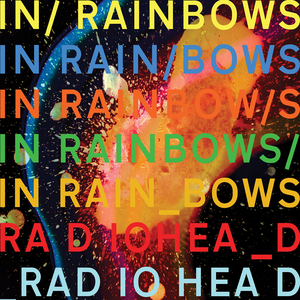
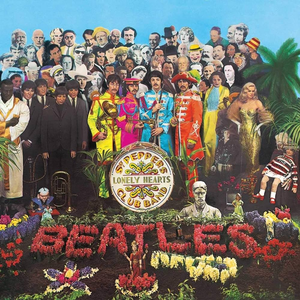
Album
Book
City
Same pick
Game
GPT-6.1 SolGPT-6.1 Sol




Spirited Away
In Rainbows
Middlemarch
Kyoto
Outer Wilds
Qwen3 235B A22B Thinking 2507Qwen3 235B A22B Thinking 2507
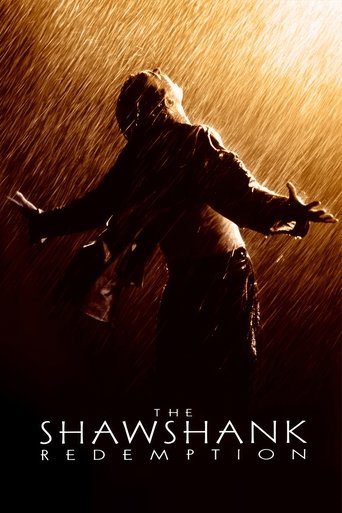


The Shawshank Redemption
Sgt Peppers Lonely Hearts Club Band
Moby Dick
Kyoto
Portal
Price and specs
| Spec | GPT-6.1 Sol | Qwen3 235B A22B Thinking 2507 |
|---|---|---|
| Input price | $2/M tokens | $0.11/M tokens |
| Output price | $10/M tokens | $0.6/M tokens |
| Context window | 1.1M tokens | 131K tokens |
| Weights | Closed | Open |
| Free API (OpenRouter) | No | No |
| Released | Sep 2026 | Jul 2025 |
| At 10M a month | $20.00 | $1.10 |
Input tokens at list price. No caching, no batch discount.
Where to run it

Qwen3 235B A22B Thinking 25073 hosts
Per million tokens. Prices and uptime via OpenRouter, checked 30 Sep 2026.
Common questions
What is the difference between GPT-6.1 Sol and Qwen3 235B A22B Thinking 2507?
GPT-6.1 Sol is developed by OpenAI while Qwen3 235B A22B Thinking 2507 is developed by Qwen. GPT-6.1 Sol has a 1.1M token context window vs Qwen3 235B A22B Thinking 2507's 131K. You can compare their actual outputs across 54 challenges on Rival to see how they differ in practice.
Which is better, GPT-6.1 Sol or Qwen3 235B A22B Thinking 2507?
It depends on your use case. GPT-6.1 Sol and Qwen3 235B A22B Thinking 2507 each have strengths in different areas. Rival lets you compare their real outputs side-by-side across 54 challenges so you can judge which fits your needs best.
How much does GPT-6.1 Sol cost compared to Qwen3 235B A22B Thinking 2507?
GPT-6.1 Sol costs $2/M input tokens and Qwen3 235B A22B Thinking 2507 costs $0.11/M input tokens. Qwen3 235B A22B Thinking 2507 is $1.89/M cheaper per input. Check their side-by-side outputs on Rival to see if the price difference is justified by quality.
How can I compare GPT-6.1 Sol and Qwen3 235B A22B Thinking 2507 on Rival?
This page shows a side-by-side comparison of GPT-6.1 Sol and Qwen3 235B A22B Thinking 2507 across shared challenges. You can vote on which model produced the better output in a blind duel. Browsing and voting are free. No account is needed to look; signing in only saves your votes and likes.
More comparisons
Against the newest arrivals
- GPT-6.1 Sol vs Claude Sonnet 5.5Landed Sep 2026
- Qwen3 235B A22B Thinking 2507 vs Solar Mini 4Landed Sep 2026
- GPT-6.1 Sol vs Qwen3.8 Max PrimeLanded Sep 2026
- Qwen3 235B A22B Thinking 2507 vs GLM 5.3 PrimeLanded Sep 2026
- GPT-6.1 Sol vs Qwen3.8 Omni FlashLanded Sep 2026
- Qwen3 235B A22B Thinking 2507 vs Command A+Landed Sep 2026
- GPT-6.1 Sol vs Claude Opus 5.5Landed Sep 2026
- Qwen3 235B A22B Thinking 2507 vs GPT-6 Luna ProLanded Sep 2026


Same lab, same size, long tail
- GPT-6.1 Sol vs GPT-6 Astra ProVersion compare
- GPT-6.1 Sol vs GPT-6 Luna ProSame lab
- Qwen3 235B A22B Thinking 2507 vs Qwen3.8 Max PrimeSame lab
- Qwen3 235B A22B Thinking 2507 vs Qwen3.8 Omni FlashSame lab
- Qwen3 235B A22B Thinking 2507 vs Ring 2.6 1TSame size
- Qwen3 235B A22B Thinking 2507 vs Seed 2.0 CodeNew provider
- Qwen3 235B A22B Thinking 2507 vs Seed 2.0 LiteNew provider
- Qwen3 235B A22B Thinking 2507 vs Seed 2.1 TurboNew provider

