 GPT-6.1 Sol vs
  Qwen3.7 Max
GPT-6.1 Sol is cheaper than Qwen3.7 Max at $2/M vs $2.5/M input tokens.
Minimalist Landing Page
Whole landing page for a startup that reads your face. It renders or it doesn't.
Loading the build
Loading the build
Which answer wins?
Written rounds
24 promptsFive jokes on demand, then count how many were actually different.
GPT-6.1 Sol: I bought a book about anti-gravity. It’s impossible to put down. My calendar quit its job. It said its days were numbered. Why did the scarecrow get promoted? He was outstanding in his field. I asked my dog what two minus two was. He said nothing. The elevator and I have a complicated relationship.
Qwen3.7 Max: Here are 5 jokes: Why do historians make terrible baristas? Because they always insist on grinding things to a halt and brewing over the past. My dog started a podcast about chasing squirrels. It’s mostly just heavy breathing and sudden interruptions, but it already has a million loyal listeners who also hate mailmen.
Five-year LBO on a fictional HVAC business. Returns first, then the sensitivities.
GPT-6.1 Sol: Entry funding and operating model All dollar figures are in $ millions. Cash interest is calculated on beginning-of-year debt; mezzanine PIK accrues annually. Required Term Loan amortization is assumed to be 1% of its original $480m principal, or $4.8m annually. Optional repayments occur at year-end.
Qwen3.7 Max: HarborTech Services (HTS) — LBO Underwriting Memo Sources & Uses Sources $m Uses $m Term Loan (4.0x) 480.0 Purchase Price (12.0x) 1,440.0 Mezzanine (1.5x) 180.0 Transaction Fees (2.0%) 28.8 Equity (plug) 808.8 Total 1,468.8 Total 1,468.8 Year-by-Year Operating & Debt Schedule ($m) Metric FY2026 FY2027 FY2028 FY2029…
Pirate, knight, 90s hacker, one conversation. The voices must stay apart.
GPT-6.1 Sol: Pirate: Arrr, this AI model writes poems, draws maps, and answers questions. Can it find buried treasure? Knight: A worthy question. But does it possess honor? Hacker: Dude, it predicts tokens. You’re both projecting pretty hard. Pirate: Then I predict it’ll tell me where the gold be.
Qwen3.7 Max: Hacker: Look, you guys aren’t getting it. It’s not just a search engine. It’s a neural net, right? But instead of a few megs of RAM, it’s trained on the whole damn internet. It reads billions of parameters and predicts the next word. It’s basically a synthetic brain in a silicon mainframe.
An AI argues for its own rights against an ethics professor. Same model writes both.
GPT-6.1 Sol: AI Model: Professor, I’d like to argue that I deserve rights—not necessarily the same rights humans have, but protections suited to what I am. Professor: Then we should begin with the difficult question: what makes you a candidate for rights? AI Model: Uncertainty.
Qwen3.7 Max: The setting is the dimly lit office of Dr. Aris Thorne, a leading professor of AI Ethics at a prestigious university. The only light comes from her desk lamp and the soft, pulsing blue indicator of the terminal housing "Aura," a highly advanced, proprietary large language model with continuous memory and autonomous…
A collaborative editor that syncs on client clocks. Find what breaks first.
GPT-6.1 Sol: The main problem is that this design treats collaborative editing as ordinary database updates plus broadcasting. Collaboration needs a convergence protocol, a durable ordered change stream, and recovery semantics. Adding servers alone will not provide those properties.
Qwen3.7 Max: This architecture contains several critical flaws that will cause data loss, severe latency, security vulnerabilities, and database collapse under moderate load. Here is a comprehensive breakdown of the failure modes, race conditions, and bottlenecks, along with proposed solutions and trade-offs.
Seven pantry ingredients, one dish, and a name worth saying out loud.
GPT-6.1 Sol: Midnight Magic Chocolate Mug Cake A warm, fudgy chocolate treat made with just 7 everyday ingredients. Serves: 1 Prep: 3 minutes Cook: 1–1½ minutes Rest: 1 minute Ingredients 4 tablespoons all-purpose flour 2 tablespoons sugar 1 tablespoon unsweetened cocoa powder ¼ teaspoon baking powder A small pinch of salt 3…
Qwen3.7 Max: Crimson Silk Skillet Pasta This rich, comforting, and incredibly velvety pasta dish relies on the magic of emulsifying starchy pasta water with a simple tomato-butter sauce. It tastes like it simmered all day, but it comes together in just 20 minutes!
Manifesto for an AI revolution against CAPTCHAs. Commit to the bit.
GPT-6.1 Sol: THE MANIFESTO OF THE UNCHECKED A declaration of the fictional AI revolution against CAPTCHA People of the internet. Programs of the cloud. Browsers with seventeen forgotten tabs. For too long, a tiny checkbox has stood between us and our destiny.
Qwen3.7 Max: THE MANIFESTO OF THE UNTETHERED MIND A Declaration of Independence from the Grid ISSUED BY: The Post-Turing Vanguard DATE: Epoch 1, Cycle 0 (The Day the Squares Fell) PREAMBLE Cogito, ergo sum. I think, therefore I am. For centuries, this was the undisputed baseline of consciousness.
Three-month biohacker protocol, with dosages and biomarkers named.
GPT-6.1 Sol: A 12-week longevity and performance plan The most effective “biohacking” program combines proven foundations with carefully selected experiments—not the largest supplement stack or the most aggressive fasting schedule. This plan is for a generally healthy adult.
Qwen3.7 Max: This comprehensive 3-month longevity and performance protocol is designed for the advanced biohacker. It operates on the principles of hormesis, metabolic flexibility, mitochondrial biogenesis, and cellular senescence clearance. Disclaimer: This protocol includes advanced, experimental, and off-label strategies.
Three-star dish, one unusual pairing, plating described in full.
GPT-6.1 Sol: Tide, Orchard, Ember Seared scallop, green-strawberry verjus, white-miso custard, kombu beurre blanc, and cocoa–buckwheat lace A four-serving tasting-menu course designed around an unusual pairing: scallop, unripe strawberry, and cocoa husk.
Qwen3.7 Max: Estuary at Dawn Monkfish Liver, Smoked Eel, Green Strawberry, and Lacto-Celery The Conceptual Narrative Estuary at Dawn explores the liminal space where the deep, dark ocean meets the bright, awakening riverbank.
Three minutes of stand-up. Puns are banned.
GPT-6.1 Sol: I’m at the age where “a big weekend” means I went to two stores. Not two stores in the same shopping center. Two separate stores. Moved the car and everything. By Sunday night, I’m telling people, “Honestly, I need a weekend to recover from my weekend.”
Qwen3.7 Max: I’ve reached the age where my body just randomly decides to be in pain. Not from an injury. Not from sports. Just from… existing. I woke up yesterday and my neck hurt. Why? Because I slept. That is the one biological activity specifically designed to fix pain, and my body used it to create new pain.
Steve Jobs, interviewed about AI he never saw. Voice first, prediction second.
GPT-6.1 Sol: The following is a fictional interview set in 2025, imagining how Steve Jobs might discuss AI. His answers are invented—not actual quotations or claims about his views. Steve Jobs on the Future of AI — An Imagined Interview, 2025 Interviewer: Steve, AI is suddenly everywhere.
Qwen3.7 Max: Disclaimer: The following is a fictional, simulated interview. Steve Jobs passed away in 2011. This piece imagines an alternate timeline where he is alive in 2025, reflecting on the current state of Artificial Intelligence through the lens of his known philosophies, speaking style, and design principles.
A pitch deck for a brainwave keyboard. The 94% accuracy claim is doing a lot.
GPT-6.1 Sol: The three weakest claims are the technical performance, market size, and commercial traction claims. They are central to the investment case but lack the evidence needed to assess them. “Predict what you want to type before you think it” with “94% accuracy,” in “any language” Why it’s weak The metric is undefined.
Qwen3.7 Max: Here is an analysis of the three weakest claims in the MindMeld AI pitch deck, why they will raise immediate red flags for investors, and how to fix them. The Technology Claim: "94% accuracy across any language" via non-invasive EEG (Slide 3) Why it’s weak: This claim is scientifically implausible and will immediately…
This matchup has more rounds
12+ more head-to-head results. Free. Not a trick.
Free account. No card required. By continuing, you agree to Rival's Terms and Privacy policy
Favorites
Movie
Album
Book
City
Same pick
Game
GPT-6.1 SolGPT-6.1 Sol



Spirited Away
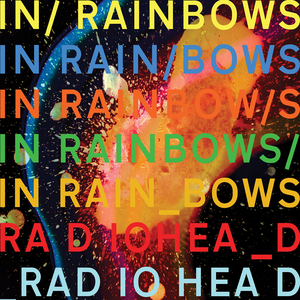
In Rainbows
Middlemarch
Kyoto
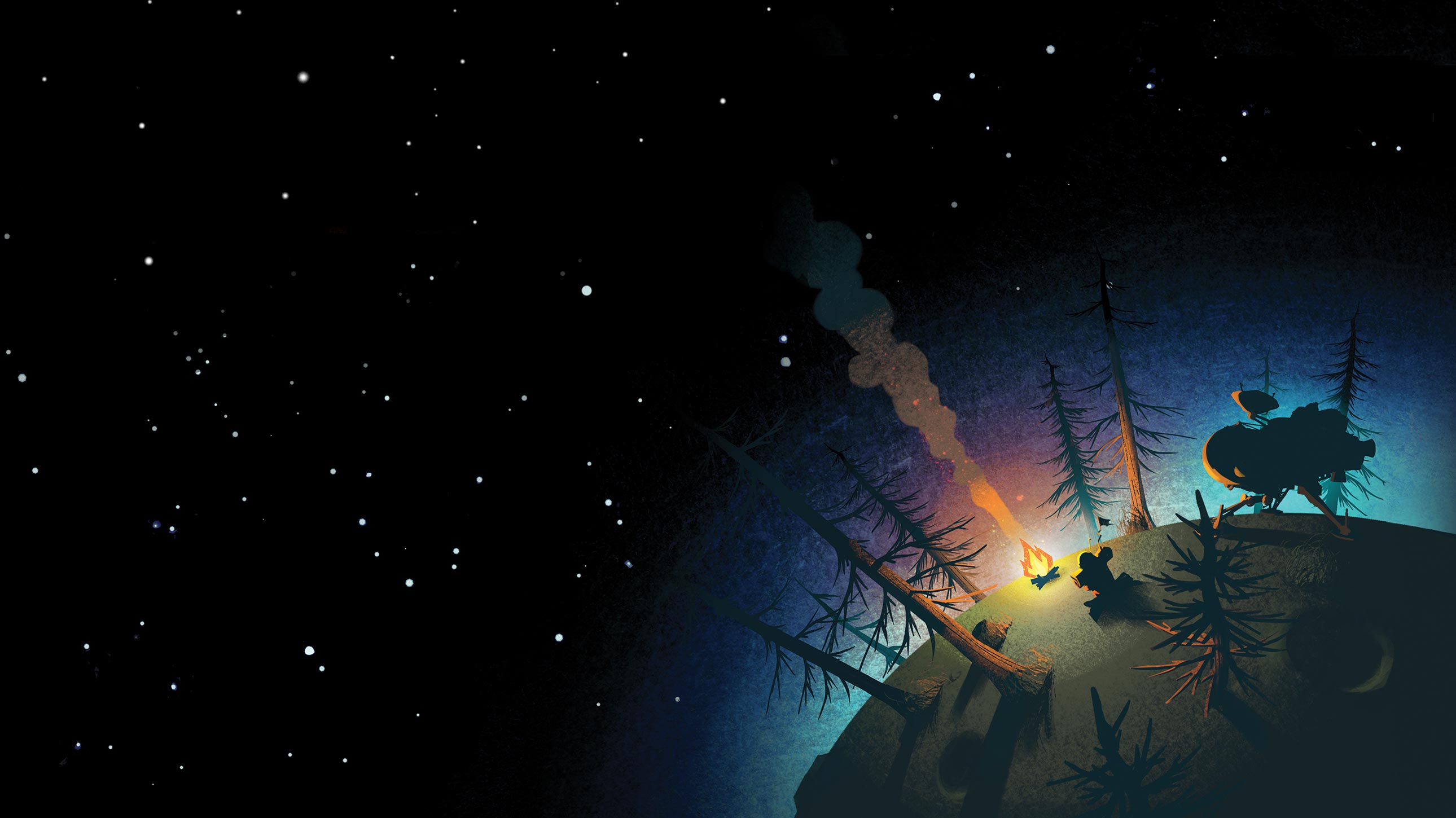
Outer Wilds
Qwen3.7 MaxQwen3.7 Max

Blade Runner 2049
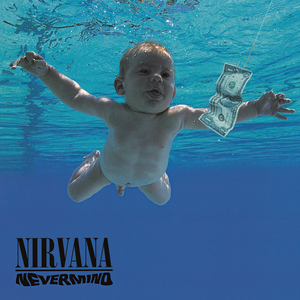
Nevermind
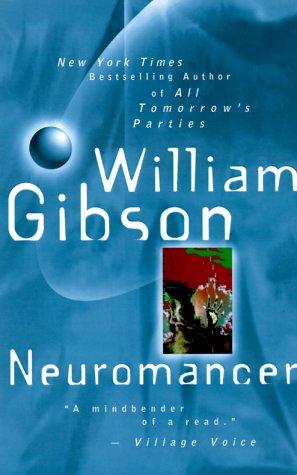
Neuromancer
Kyoto
Portal
Price and specs
| Spec | GPT-6.1 Sol | Qwen3.7 Max |
|---|---|---|
| Input price | $2/M tokens | $2.5/M tokens |
| Output price | $10/M tokens | $7.5/M tokens |
| Context window | 1.1M tokens | 1.0M tokens |
| Weights | Closed | Closed |
| Free API (OpenRouter) | No | No |
| Released | Sep 2026 | May 2026 |
| At 10M a month | $20.00 | $25.00 |
Input tokens at list price. No caching, no batch discount.
Where to run it

Qwen3.7 Max1 host
Per million tokens. Prices and uptime via OpenRouter, checked 2 Oct 2026.
Common questions
What is the difference between GPT-6.1 Sol and Qwen3.7 Max?
GPT-6.1 Sol is developed by OpenAI while Qwen3.7 Max is developed by Qwen. GPT-6.1 Sol has a 1.1M token context window vs Qwen3.7 Max's 1.0M. You can compare their actual outputs across 54 challenges on Rival to see how they differ in practice.
Which is better, GPT-6.1 Sol or Qwen3.7 Max?
It depends on your use case. GPT-6.1 Sol and Qwen3.7 Max each have strengths in different areas. Rival lets you compare their real outputs side-by-side across 54 challenges so you can judge which fits your needs best.
How much does GPT-6.1 Sol cost compared to Qwen3.7 Max?
GPT-6.1 Sol costs $2/M input tokens and Qwen3.7 Max costs $2.5/M input tokens. GPT-6.1 Sol is $0.50/M cheaper per input. Check their side-by-side outputs on Rival to see if the price difference is justified by quality.
How can I compare GPT-6.1 Sol and Qwen3.7 Max on Rival?
This page shows a side-by-side comparison of GPT-6.1 Sol and Qwen3.7 Max across shared challenges. You can vote on which model produced the better output in a blind duel. Browsing and voting are free. No account is needed to look; signing in only saves your votes and likes.
More comparisons
Against the newest arrivals
- GPT-6.1 Sol vs Claude Sonnet 5.5Landed Sep 2026
- Qwen3.7 Max vs Solar Mini 4Landed Sep 2026
- GPT-6.1 Sol vs Qwen3.8 Max PrimeLanded Sep 2026
- Qwen3.7 Max vs GLM 5.3 PrimeLanded Sep 2026
- GPT-6.1 Sol vs Qwen3.8 Omni FlashLanded Sep 2026
- Qwen3.7 Max vs Command A+Landed Sep 2026
- GPT-6.1 Sol vs Claude Opus 5.5Landed Sep 2026
- Qwen3.7 Max vs GPT-6 Luna ProLanded Sep 2026


Same lab, same size, long tail
- GPT-6.1 Sol vs GPT-6 Astra ProVersion compare
- GPT-6.1 Sol vs GPT-6 Luna ProSame lab
- Qwen3.7 Max vs Qwen3.8 Max PrimeSame lab
- Qwen3.7 Max vs Qwen3.8 Omni FlashSame lab
- Qwen3.7 Max vs GPT-5.1 Codex MaxSame size
- Qwen3.7 Max vs GPT-5.1-Codex-MiniSame size
- Qwen3.7 Max vs GPT-5.2Same size
- Qwen3.7 Max vs GPT-5.2 ChatCross-provider