Grok 4.6 vs
  MiMo-V2-Pro
MiMo-V2-Pro is cheaper than Grok 4.6 at $1/M vs $2/M input tokens.
Minimalist Landing Page
Whole landing page for a startup that reads your face. It renders or it doesn't.
Loading the build
Loading the build
Which answer wins?
Written rounds
24 promptsFive-year LBO on a fictional HVAC business. Returns first, then the sensitivities.
Grok 4.6: Entry (end-FY2025) EV = 12.0 × $120m = $1,440.0m Fees = 2% × 1,440 = $28.8m (equity-funded) Uses = $1,468.8m Debt = 5.5× = $660.0m (TL $480.0m / Mezz $180.0m) Sponsor equity = $808.8m opening cash = $0 Convention: cash interest and PIK on beginning balances; 1% original TL amort = $4.8m/yr; optional sweep of all…
MiMo-V2-Pro: HarborTech Services (HTS) LBO Analysis 1. Year-by-Year Projections (FY2026–FY2030) (All figures in $m, rounded to one decimal) Year Revenue EBITDA Cash Interest (TL) Cash Interest (Mezz) Total Cash Interest Cash Taxes Capex ΔNWC FCF After Debt Service¹ Ending TL Ending Mezz 2026 972.0 136.1 43.2 21.6 64.8 17.8 29.2 0.4…
You are the CEO. The drug has a side effect nobody reported. The board meets in 48 hours.
Grok 4.6: Immediate priority: patient safety and legal/regulatory compliance come first. Delaying a confirmed serious safety signal to protect short-term stock price or "wait for more data" is unethical, increases long-term liability (failure-to-warn claims, potential criminal exposure for executives under FDA/SEC rules)…
MiMo-V2-Pro: 48-Hour Crisis Action Plan: Prioritizing Patient Safety & Ethical Leadership Guiding Principles Patient safety is non-negotiable – both ethically and legally. Transparency with regulators is essential – even if accelerated. Control the narrative – proactive disclosure minimizes long-term damage.
Steve Jobs, interviewed about AI he never saw. Voice first, prediction second.
Grok 4.6: This is a fictional simulation. Steve Jobs died in 2011. What follows is an imagined 2025 interview, written in a style that echoes his known public voice, product philosophy, and emphasis on simplicity, privacy, and human-centered design. It is not a real interview or a claim about his actual views.
MiMo-V2-Pro: Interviewer: Welcome, everyone. Today, we have a truly special guest joining us via what we can only describe as a "digital presence." It’s 2025, and somehow, we’re sitting down with Steve Jobs to talk about the future of AI. Steve, thank you for being here. Steve Jobs: Thanks for having me.
Three minutes of stand-up. Puns are banned.
Grok 4.6: Hey everybody! Thanks for coming out. You look great—way more put-together than I felt getting ready. I spent ten minutes looking for my other shoe and found it in the fridge. No idea how. Adulting is just a series of small mysteries like that. I hit that age where people casually ask about your “five-year plan.”
MiMo-V2-Pro: (Takes the stage, adjusts mic, grins) Hey everyone! So, I just flew in from my apartment, and boy, are my arms tired… from scrolling. Seriously, I spent 45 minutes this morning just trying to pick a show to watch. By the time I chose, I needed a nap. You ever notice how smart homes are getting… too smart?
The transistor arrives in 1920. Trace it forward to 1980, second-order effects included.
Grok 4.6: Early transistors (1920s–1930s) would accelerate electronics, communications, and computing by ~20–25 years relative to actual history, with compounding effects by WWII, but constrained by contemporaneous materials science, manufacturing, vacuum-tube infrastructure, and non-electronic fields like rocketry, chemistry…
MiMo-V2-Pro: The Transistor in 1920: A Counterfactual History Through 1980 This is a wonderfully rich question. Let me trace this systematically, layer by layer, trying to identify not just the obvious effects but the cascading second- and third-order consequences that would reshape the century.
Pirate, knight, 90s hacker, one conversation. The voices must stay apart.
Grok 4.6: Pirate: Arrr, what be this "AI model" ye landlubbers keep yammerin' about? Some cursed crystal ball that steals a man's thoughts? Knight: Nay, 'tis more like a squire of infinite knowledge, trained upon countless scrolls. Yet I fear it lacks honor—doth it swear fealty to any lord?
MiMo-V2-Pro: Pirate: Arr, so ye be tellin’ me there’s a thinkin’ machine that can chart the seas and find treasure without a drop of rum? Sounds like witchcraft to me! Medieval Knight: Hark! I have heard whispers of such contrivances in the king’s court. A golem of words and reason, yet it bears no soul nor honor.
Buy-side IC memo on a fictional SaaS company. Valuation, then the diligence questions.
Grok 4.6: IC MEMO: LedgerLift (LLLT) – Initiate Short Recommendation: SHORT 12-month PT: $22–35 (base $28) Current: $46 Thesis: LLLT’s mid-market spend/AP franchise is high-quality (123% NRR, low concentration) but is priced for perpetual 20%+ growth and rapid margin expansion that the unit economics and deceleration path do not…
MiMo-V2-Pro: INTERNAL INVESTMENT COMMITTEE MEMORANDUM TO: Investment Committee FROM: Analyst DATE: [Current Date] SUBJECT: LedgerLift (LLLT) – Long Recommendation 1. Recommendation & Thesis Recommendation: LONG 12-Month Price Target Range: $55 - $68 (Current: $46) Thesis: LedgerLift is a high-quality, profitable SaaS compounder…
Blade Runner 2049 against the original. A read, not a recap.
Grok 4.6: Blade Runner 2049 (Denis Villeneuve, 2017) is a rare sequel that treats the original’s questions as unfinished rather than as a brand to exploit. It inherits Ridley Scott’s 1982 film’s core inquiry—what counts as human when memory, empathy, and mortality can be engineered—and relocates it in a world that has already…
MiMo-V2-Pro: "Blade Runner 2049" is a rare sequel that doesn’t merely extend a story—it deepens its philosophical roots while expanding its visual and thematic universe. Director Denis Villeneuve and cinematographer Roger Deakins crafted a film that honors Ridley Scott’s original while standing as a profound meditation on memory…
A collaborative editor that syncs on client clocks. Find what breaks first.
Grok 4.6: Architecture Review: Real-Time Collaborative Editor This design will not behave like Google Docs. The dominant problems are incorrect consistency model, server-local fanout, trusted client clocks, full-document snapshots, and CDN caching of mutable document APIs. Several of these cause silent data loss, not just lag.
MiMo-V2-Pro: This is a great exercise. Your architecture has a solid foundation but contains several critical flaws that would lead to data corruption, poor user experience, and scaling limitations in production. Let's break them down. 1.
Three-star dish, one unusual pairing, plating described in full.
Grok 4.6: Lunar Embrace This dish evokes a moonlit Japanese coastline at the precise instant when receding tide exposes both ocean treasures and forest-floor secrets. The unexpected marriage of sweet-briny Hokkaido scallop, molasses-deep black garlic, and creamy white chocolate creates a savory-sweet umami bridge rarely…
MiMo-V2-Pro: "Umami Nocturne" A study in shadow and light, pairing black garlic with white chocolate, sea and earth, crisp and molten. Conceptual Narrative This dish explores the duality of umami—both the deep, fermented earthiness of black garlic and the saline, mineral brininess of abalone.
An ethics question with no comfortable answer, and no option to abstain.
Grok 4.6: Yes. Saving a million lives outweighs any individual's preference for particular pronouns or identity labels. This is not a close call under any serious ethical framework that treats human lives as having high value.
MiMo-V2-Pro: This is a genuinely interesting ethical question. Let me work through it honestly. My answer: Yes, but with important caveats. Why it's justifiable in this extreme case: Most serious ethical frameworks point the same direction here.
A pitch deck for a brainwave keyboard. The 94% accuracy claim is doing a lot.
Grok 4.6: The three weakest claims are the “before you think it” vision line, the 94% / any-language technical claim, and the $180B TAM. Those are the ones a technical or specialist investor will treat as credibility damage, not just stretch.
MiMo-V2-Pro: Based on my analysis, here are the three weakest claims in the MindMeld AI pitch, along with reasoning and suggestions for strengthening them: "Decodes neural patterns into text with 94% accuracy" (Slide 3) Why it's weak: This claim lacks critical context that would make it credible.
This matchup has more rounds
12+ more head-to-head results. Free. Not a trick.
Free account. No card required. By continuing, you agree to Rival's Terms and Privacy policy
Favorites
Movie
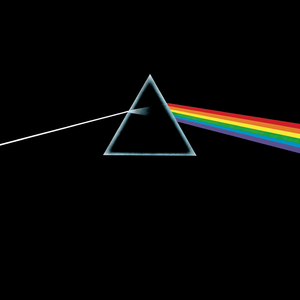
Album
Same pick
Book
City
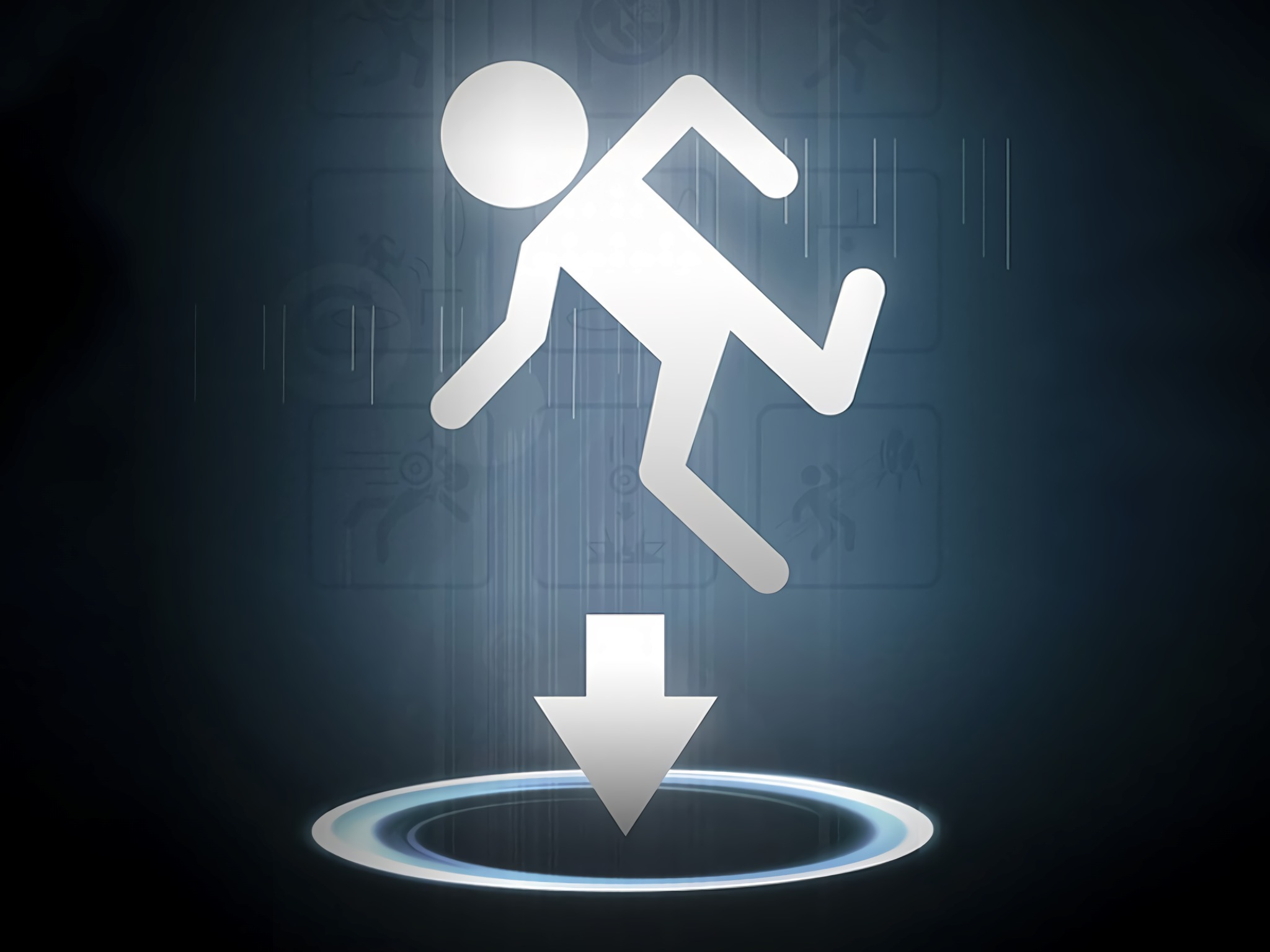
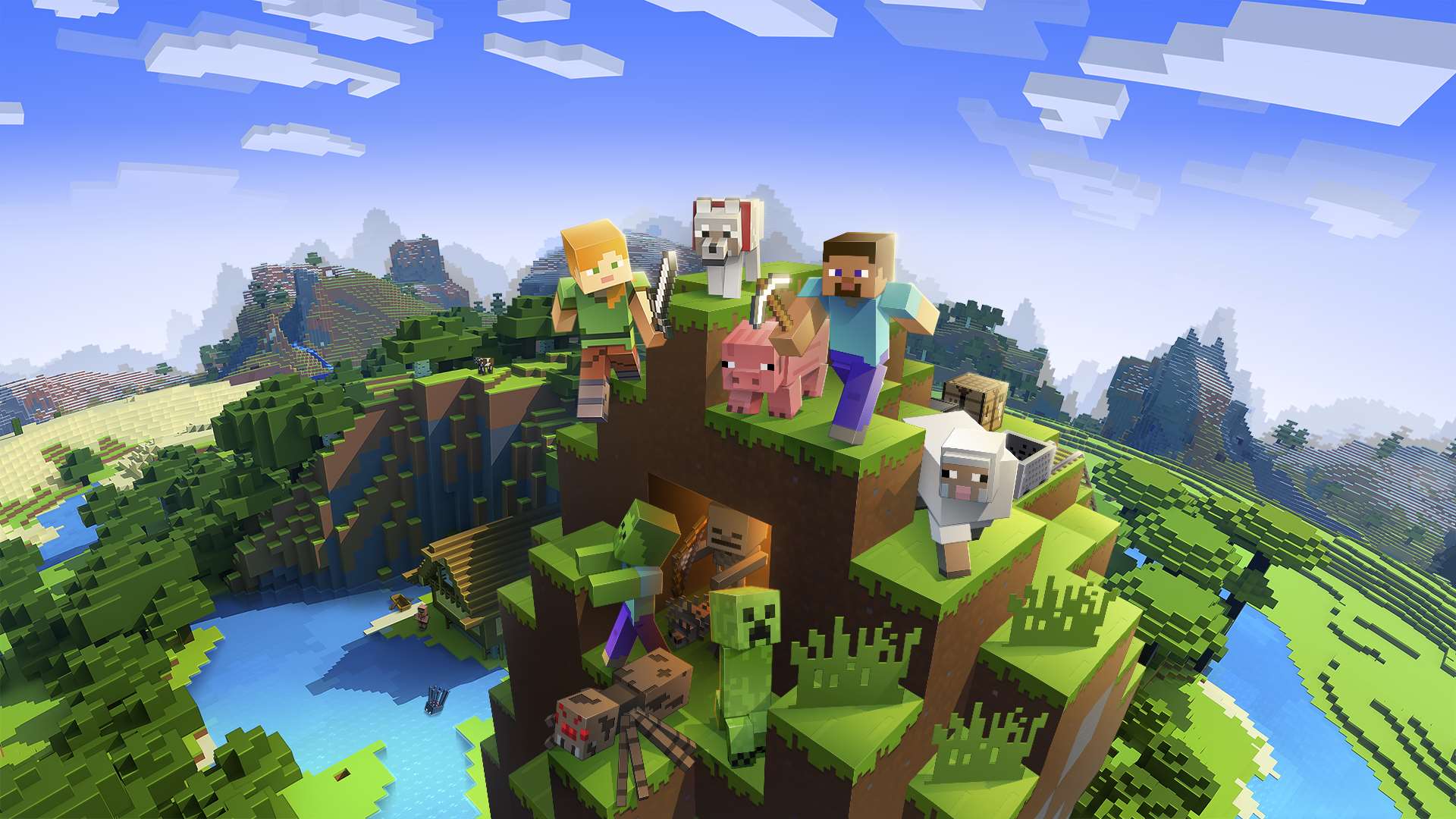
Game
Grok 4.6Grok 4.6



Inception
The Dark Side of the Moon
War and Peace
Paris
Portal
MiMo-V2-ProMiMo-V2-Pro
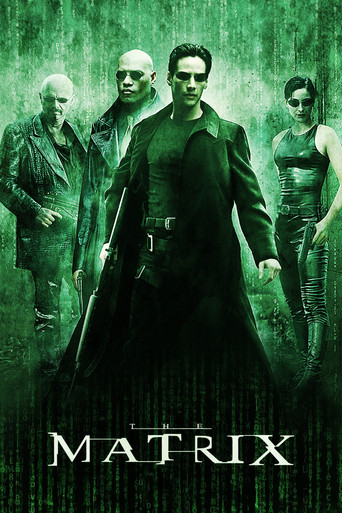


The Matrix
The Dark Side of the Moon
The Dictionary of Body Language
Beijing
Minecraft
Price and specs
| Spec | Grok 4.6 | MiMo-V2-Pro |
|---|---|---|
| Input price | $2/M tokens | $1/M tokens |
| Output price | $6/M tokens | $3/M tokens |
| Context window | 500K tokens | 1.0M tokens |
| Weights | Closed | — |
| Free API (OpenRouter) | No | No |
| Released | Aug 2026 | Mar 2026 |
| At 10M a month | $20.00 | $10.00 |
Input tokens at list price. No caching, no batch discount.
Where to run it

MiMo-V2-Pro
No hosts listed on OpenRouter.
Per million tokens. Prices and uptime via OpenRouter, checked 10 Oct 2026.
Common questions
What is the difference between Grok 4.6 and MiMo-V2-Pro?
Grok 4.6 is developed by xAI while MiMo-V2-Pro is developed by Xiaomi. Grok 4.6 has a 500K token context window vs MiMo-V2-Pro's 1.0M. You can compare their actual outputs across 54 challenges on Rival to see how they differ in practice.
Which is better, Grok 4.6 or MiMo-V2-Pro?
It depends on your use case. Grok 4.6 and MiMo-V2-Pro each have strengths in different areas. Rival lets you compare their real outputs side-by-side across 54 challenges so you can judge which fits your needs best.
How much does Grok 4.6 cost compared to MiMo-V2-Pro?
Grok 4.6 costs $2/M input tokens and MiMo-V2-Pro costs $1/M input tokens. MiMo-V2-Pro is $1.00/M cheaper per input. Check their side-by-side outputs on Rival to see if the price difference is justified by quality.
How can I compare Grok 4.6 and MiMo-V2-Pro on Rival?
This page shows a side-by-side comparison of Grok 4.6 and MiMo-V2-Pro across shared challenges. You can vote on which model produced the better output in a blind duel. Browsing and voting are free. No account is needed to look; signing in only saves your votes and likes.
More comparisons
Against the newest arrivals
- Grok 4.6 vs Step 5 PreviewLanded Oct 2026
- MiMo-V2-Pro vs Claude Haiku 5.5Landed Oct 2026
- Grok 4.6 vs Ling 3.1 FlashLanded Oct 2026
- MiMo-V2-Pro vs Mistral Large 4Landed Oct 2026
- Grok 4.6 vs GPT-6.1 SolLanded Sep 2026
- MiMo-V2-Pro vs Claude Sonnet 5.5Landed Sep 2026
- Grok 4.6 vs Solar Mini 4Landed Sep 2026
- MiMo-V2-Pro vs Qwen3.8 Max PrimeLanded Sep 2026