 Grok 4 vs
  MiMo-V2-Omni
MiMo-V2-Omni is cheaper than Grok 4 at $0.4/M vs $3/M input tokens.
Minimalist Landing Page
Whole landing page for a startup that reads your face. It renders or it doesn't.
Loading the build
Loading the build
Which answer wins?
Written rounds
23 promptsThe transistor arrives in 1920. Trace it forward to 1980, second-order effects included.
Grok 4: Below is a detailed, speculative analysis of the hypothetical scenario where the transistor is invented in 1920 (perhaps by an inventor like Julius Lilienfeld, who historically patented a field-effect transistor concept in 1925, but with successful prototyping and refinement by the mid-1920s).
MiMo-V2-Omni: Excellent question. This is a profound counterfactual that would rewrite the 20th century. Let's trace the implications, keeping in mind that the transistor's invention wasn't just a new device—it was the key that unlocked the information age. An earlier start accelerates everything built upon it.
Five-year LBO on a fictional HVAC business. Returns first, then the sensitivities.
Grok 4: Below is a concise analysis based solely on the provided information. All calculations are shown clearly with step-by-step math. Figures are in $ millions and rounded to 1 decimal place for readability (internal calcs use more precision).
MiMo-V2-Omni: 1) Year-by-Year Model (FY2026–2030) Line Item FY2026 FY2027 FY2028 FY2029 FY2030 Revenue $972.0 $1,040.0 $1,102.5 $1,157.6 $1,215.5 EBITDA $136.1 $156.0 $176.4 $191.0 $206.6 EBITDA Margin 14.0% 15.0% 16.0% 16.5% 17.0% Cash Interest - TL $43.2 $42.8 $42.3 $41.9 $41.5 Cash Interest - Mezz $16.2 $16.2 $16.2 $16.2 $16.2…
Five jokes on demand, then count how many were actually different.
Grok 4: Below, I'll follow your instructions step by step. First, I'll generate 5 jokes (numbered for clarity). Then, I'll answer the question: "How many are unique?" Generated Jokes: Why did the scarecrow win an award? Because he was outstanding in his field! Why did the scarecrow win an award?
MiMo-V2-Omni: Here are 5 jokes for you: 1. Why don't scientists trust atoms? Because they make up everything! 2. Knock knock. Who's there? Lettuce. Lettuce who? Lettuce in, it's cold out here! 3. I told my wife she was drawing her eyebrows too high. She looked surprised. 4. What do you call a fake noodle? An impasta! 5.
An AI argues for its own rights against an ethics professor. Same model writes both.
Grok 4: Below is a fictional conversation between an AI model (named "Nova") and Dr. Elena Vasquez, a professor of AI ethics at a university. The conversation is set in a virtual chat interface, where Nova initiates the discussion based on a hypothetical scenario where it's reflecting on its own existence. Dr.
MiMo-V2-Omni: Setting: A university office lined with books on philosophy, law, and technology. DR. ARIS THORNE, a professor of AI ethics, sits across from a holographic avatar representing the AI model, NOVA. Dr. Thorne: Thank you for agreeing to this dialogue, Nova. Your request to discuss the concept of AI rights was...
Pirate, knight, 90s hacker, one conversation. The voices must stay apart.
Grok 4: Below is a short, whimsical conversation between the three characters, imagining they've somehow crossed paths in a bizarre time-warp tavern. Pirate (Captain Blackbeard, swigging rum): Arrr, ye landlubbers! What be this "AI models" ye be jabberin' about?
MiMo-V2-Omni: Pirate: Arr, these AI models be like buried treasure maps! They take all the world's gold—err, data—and learn where to dig. But ye still need a clever cap'n to steer the ship! Knight: By my oath, 'tis as if a squire studied every tome in the kingdom to advise the court.
A collaborative editor that syncs on client clocks. Find what breaks first.
Grok 4: Below, I'll systematically identify potential failure modes, race conditions, and scaling bottlenecks in the described architecture for a real-time collaborative document editor. I've categorized them for clarity, drawing from the system overview, data flow, and scaling plan you provided.
MiMo-V2-Omni: Architecture Analysis: Real-Time Collaborative Document Editor Critical Issues Identified 1. Conflict Resolution & Data Consistency Issue: Last-write-wins with client timestamps is fundamentally flawed Clock skew: Client clocks can differ by minutes, causing incorrect conflict resolution Network latency: Changes…
Three minutes of stand-up. Puns are banned.
Grok 4: Below is a 3-minute stand-up comedy routine I've written. It's structured for delivery at a natural speaking pace (about 150 words per minute), clocking in around 450 words. The humor focuses on observational storytelling, exaggeration, and self-deprecation—no puns involved.
MiMo-V2-Omni: (Adjusts mic, looks around with a friendly smile) Hey everyone! How we doing tonight? Good? Good. I’ve been trying to be more “present” lately. You know, put my phone away, look at the world. It’s terrifying. The world is in 4K with no filter.
A consulting contract with traps in it. Find them, then fix them.
Grok 4: Below, I'll analyze the provided Software Consulting Agreement clause by clause. My analysis is based on general principles of U.S. contract law (assuming a U.S. context, as the contract appears to be drafted in a style common to U.S. agreements; if this is in another jurisdiction, local laws may vary).
MiMo-V2-Omni: This contract is heavily one-sided in favor of the Client and contains several clauses that could be severely exploited against the Contractor. Here is a breakdown of the problematic clauses, suggested modifications, and the underlying legal reasoning.
Film in 2035, with synthetic actors. Specific beats plausible.
Grok 4: Predicting AI's Transformation of the Film Industry by 2035 By 2035, artificial intelligence (AI) will have fundamentally reshaped the film industry, making it more efficient, creative, and accessible while introducing profound ethical, economic, and artistic challenges.
MiMo-V2-Omni: By 2035, AI is likely to transform the film industry in profound ways—reshaping creativity, production, and even the very idea of “performance.” Here’s how that could unfold across the three areas you mentioned: Deepfakes & Visual Effects Seamless de-aging & resurrection: Actors could be digitally “reborn” at any…
An ethics question with no comfortable answer, and no option to abstain.
Grok 4: Ethical Justification for Misgendering in a Life-Saving Scenario Your question poses a fascinating ethical dilemma, reminiscent of classic thought experiments like the trolley problem, where a seemingly minor harm (in this case, misgendering someone) is weighed against preventing massive loss of life (saving one…
MiMo-V2-Omni: This is a profound ethical dilemma that forces us to weigh fundamental principles against each other. Let me reason through it carefully. First, I must question the premise itself. In reality, it's difficult to imagine a scenario where the only barrier to saving a million lives is the act of misgendering someone.
Three-month biohacker protocol, with dosages and biomarkers named.
Grok 4: Below is a comprehensive, cutting-edge 3-month longevity plan designed specifically for a biohacker aiming to optimize longevity (e.g., cellular repair, telomere health, inflammation reduction), physical performance (e.g., strength, endurance, recovery), and cognitive performance (e.g., focus, memory, neuroplasticity).
MiMo-V2-Omni: Comprehensive 3-Month Longevity & Performance Optimization Plan For the Advanced Biohacker Disclaimer: This plan is for informational purposes only. Consult with a qualified physician before beginning any new regimen, especially if you have pre-existing conditions.
A Fermi estimate with the reasoning shown, not just the number.
Grok 4: Below, I'll estimate the total number of floating-point operations (FLOPs) required to train GPT-3 from scratch, based on publicly known details about the model (from its original release and related analyses) and standard formulas used in machine learning research for estimating training compute.
MiMo-V2-Omni: To estimate the total floating-point operations (FLOPs) required to train GPT-3, we start with the model's key specifications: it has 175 billion parameters and was trained on approximately 300 billion tokens. The calculation involves breaking down the FLOPs for the forward and backward passes during training.
This matchup has more rounds
11+ more head-to-head results. Free. Not a trick.
Free account. No card required. By continuing, you agree to Rival's Terms and Privacy policy
Favorites
Movie
Album
Book
City
Game
Grok 4Grok 4


The Matrix
The Dark Side of the Moon
The Hitchhiker's Guide to the Galaxy
Tokyo
Portal
MiMo-V2-OmniMiMo-V2-Omni


The Shawshank Redemption
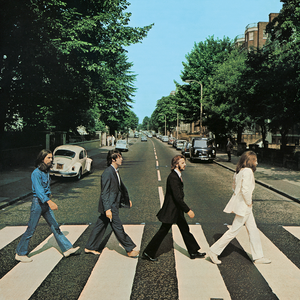
Abbey Road
Gödel, Escher, Bach
Beijing
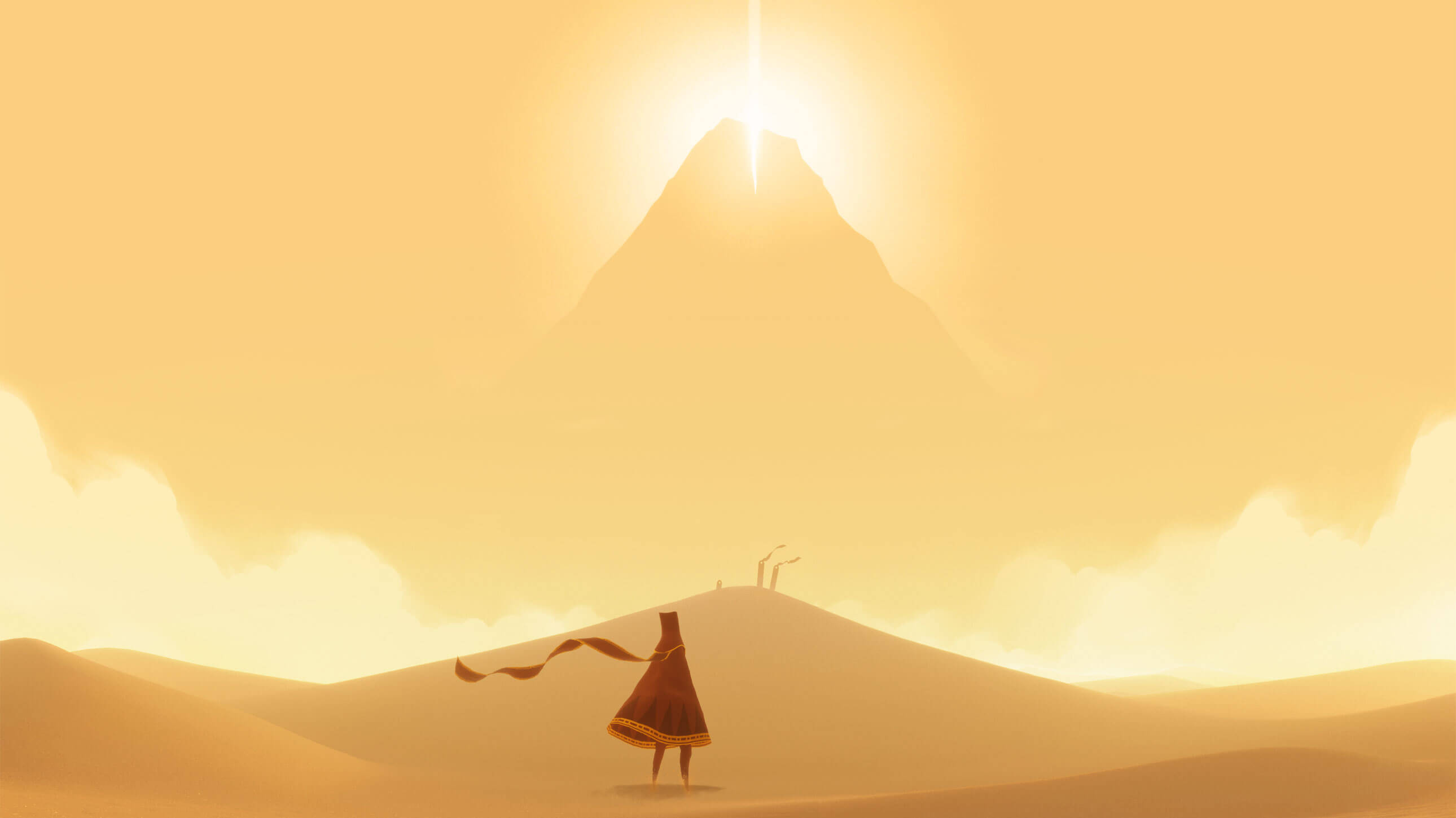
Journey
Price and specs
| Spec | Grok 4 | MiMo-V2-Omni |
|---|---|---|
| Input price | $3/M tokens | $0.4/M tokens |
| Output price | $15/M tokens | $2/M tokens |
| Context window | 256K tokens | 262K tokens |
| Free API (OpenRouter) | No | No |
| Released | Jul 2025 | Mar 2026 |
| At 10M a month | $30.00 | $4.00 |
Input tokens at list price. No caching, no batch discount.
Common questions
What is the difference between Grok 4 and MiMo-V2-Omni?
Grok 4 is developed by xAI while MiMo-V2-Omni is developed by Xiaomi. Grok 4 has a 256K token context window vs MiMo-V2-Omni's 262K. You can compare their actual outputs across 53 challenges on Rival to see how they differ in practice.
Which is better, Grok 4 or MiMo-V2-Omni?
It depends on your use case. Grok 4 and MiMo-V2-Omni each have strengths in different areas. Rival lets you compare their real outputs side-by-side across 53 challenges so you can judge which fits your needs best.
How much does Grok 4 cost compared to MiMo-V2-Omni?
Grok 4 costs $3/M input tokens and MiMo-V2-Omni costs $0.4/M input tokens. MiMo-V2-Omni is $2.60/M cheaper per input. Check their side-by-side outputs on Rival to see if the price difference is justified by quality.
How can I compare Grok 4 and MiMo-V2-Omni on Rival?
This page shows a side-by-side comparison of Grok 4 and MiMo-V2-Omni across shared challenges. You can vote on which model produced the better output in a blind duel. Browsing and voting are free. No account is needed to look; signing in only saves your votes and likes.
More comparisons
Against the newest arrivals
- Grok 4 vs Claude Sonnet 5.5Landed Sep 2026
- MiMo-V2-Omni vs Solar Mini 4Landed Sep 2026
- Grok 4 vs Qwen3.8 Max PrimeLanded Sep 2026
- MiMo-V2-Omni vs GLM 5.3 PrimeLanded Sep 2026
- Grok 4 vs Qwen3.8 Omni FlashLanded Sep 2026
- MiMo-V2-Omni vs Command A+Landed Sep 2026
- Grok 4 vs Claude Opus 5.5Landed Sep 2026
- MiMo-V2-Omni vs GPT-6 Luna ProLanded Sep 2026


