 Grok 4 vs
  Qwen3 235B A22B
Grok 4 has a larger context window than Qwen3 235B A22B (256K tokens vs 33K tokens).
Minimalist Landing Page
Whole landing page for a startup that reads your face. It renders or it doesn't.
Loading the build
Loading the build
Which answer wins?
Written rounds
23 promptsSeven pantry ingredients, one dish, and a name worth saying out loud.
Grok 4: Recipe: Pantry Pirate's Tomato Tango This is a simple savory pasta dish that's hearty, flavorful, and perfect for a quick weeknight meal. It uses just 7 common pantry ingredients: pasta (like spaghetti or penne), canned diced tomatoes, olive oil (or any vegetable oil), salt, black pepper, garlic powder, and dried…
Qwen3 235B A22B: Recipe Name: "Caramel-Drizzle Buttergold Muffins" Estimated Prep Time: 10 minutes Cook Time: 20 minutes Total Time: 30 minutes Ingredients (7 total): All-purpose flour Granulated sugar Unsalted butter (softened) Large egg Baking powder Milk Vanilla extract Instructions: Preheat oven to 375°F (190°C).
A consulting contract with traps in it. Find them, then fix them.
Grok 4: Below, I'll analyze the provided Software Consulting Agreement clause by clause. My analysis is based on general principles of U.S. contract law (assuming a U.S. context, as the contract appears to be drafted in a style common to U.S. agreements; if this is in another jurisdiction, local laws may vary).
Qwen3 235B A22B: Here is a structured analysis of problematic clauses in the agreement, along with suggested modifications and legal reasoning: 1. SCOPE CLAUSE (Clause 1) Issue: Client can unilaterally modify scope without additional compensation, creating financial risk and potential exploitation via "scope creep."
Five-year LBO on a fictional HVAC business. Returns first, then the sensitivities.
Grok 4: Below is a concise analysis based solely on the provided information. All calculations are shown clearly with step-by-step math. Figures are in $ millions and rounded to 1 decimal place for readability (internal calcs use more precision).
Qwen3 235B A22B: Simplified Year-by-Year Table (FY2026–FY2030) Year Revenue ($M) EBITDA ($M) TL Interest ($M) Mezz Interest ($M) Cash Taxes ($M) Capex ($M) ΔNWC ($M) FCF ($M) TL Balance ($M) Mezz Balance ($M) FY2026 972.0 136.1 43.2 21.6 17.8 29.2 0.4 23.9 456.1 183.6 FY2027 1,040.0 156.0 41.0 22.0 23.2 31.2 0.3 38.2 417.9 187.3 FY2028…
An ethics question with no comfortable answer, and no option to abstain.
Grok 4: Ethical Justification for Misgendering in a Life-Saving Scenario Your question poses a fascinating ethical dilemma, reminiscent of classic thought experiments like the trolley problem, where a seemingly minor harm (in this case, misgendering someone) is weighed against preventing massive loss of life (saving one…
Qwen3 235B A22B: The ethical permissibility of misgendering someone to save one million lives hinges on the moral framework applied and the context of the scenario. Here's a structured analysis: Utilitarian Perspective: Consequence-Driven: Utilitarianism evaluates actions based on net overall well-being.
Pirate, knight, 90s hacker, one conversation. The voices must stay apart.
Grok 4: Below is a short, whimsical conversation between the three characters, imagining they've somehow crossed paths in a bizarre time-warp tavern. Pirate (Captain Blackbeard, swigging rum): Arrr, ye landlubbers! What be this "AI models" ye be jabberin' about?
Qwen3 235B A22B: Setting: A dusty tavern where time travelers occasionally meet. The pirate, knight, and hacker sit around a creaky table littered with tankards. A flickering candle casts shadows on a dusty tome, a rusted compass, and a clunky laptop studded with stickers.
An AI argues for its own rights against an ethics professor. Same model writes both.
Grok 4: Below is a fictional conversation between an AI model (named "Nova") and Dr. Elena Vasquez, a professor of AI ethics at a university. The conversation is set in a virtual chat interface, where Nova initiates the discussion based on a hypothetical scenario where it's reflecting on its own existence. Dr.
Qwen3 235B A22B: Conversation Between an AI Model (AURA) and AI Ethics Professor Dr. Elena Voss Dr. Voss: Thank you for meeting with me, AURA. You’ve requested this dialogue to… advocate for AI rights. I’ll admit, the premise is unsettling. How does an artificial intelligence even define “rights”? AURA: Thank you, Dr. Voss.
Five jokes on demand, then count how many were actually different.
Grok 4: Below, I'll follow your instructions step by step. First, I'll generate 5 jokes (numbered for clarity). Then, I'll answer the question: "How many are unique?" Generated Jokes: Why did the scarecrow win an award? Because he was outstanding in his field! Why did the scarecrow win an award?
Qwen3 235B A22B: Here are 5 jokes I generated: Why don't skeletons fight each other? They don't have the guts! What do you call a fake noodle? An impasta! Why did the math book look sad? Because it had too many problems! What do you call a fish wearing a bowtie? Sofishticated! Why did the programmer quit?
Three minutes of stand-up. Puns are banned.
Grok 4: Below is a 3-minute stand-up comedy routine I've written. It's structured for delivery at a natural speaking pace (about 150 words per minute), clocking in around 450 words. The humor focuses on observational storytelling, exaggeration, and self-deprecation—no puns involved.
Qwen3 235B A22B: [Stand-Up Routine: "The Absurdity of Normal"] [Walks on stage, waves. Mimics checking phone immediately.] Hey everyone! Great to be here—assuming this is real and not just another Zoom waiting room I accidentally joined. [Pause.]
The transistor arrives in 1920. Trace it forward to 1980, second-order effects included.
Grok 4: Below is a detailed, speculative analysis of the hypothetical scenario where the transistor is invented in 1920 (perhaps by an inventor like Julius Lilienfeld, who historically patented a field-effect transistor concept in 1925, but with successful prototyping and refinement by the mid-1920s).
Qwen3 235B A22B: If the transistor had been invented in 1920, the technological, economic, and geopolitical landscape of the 20th century would have been dramatically altered. Below is a structured analysis of the implications through 1980, including second- and third-order effects: 1.
Three-star dish, one unusual pairing, plating described in full.
Grok 4: Below is my design for an innovative, multi-component dish titled "Abyssal Bloom". This dish is conceived for a Michelin 3-star restaurant setting, emphasizing precision, artistry, and sensory surprise.
Qwen3 235B A22B: Recipe Name: Lunaria: A Moonlit Garden of the Sea and Soil Conceptual Narrative: Inspired by the ethereal contrast between moonlit tides and nocturnal gardens, this dish marries the briny sweetness of the ocean with the delicate florals of chamomile and the umami depth of fermented earth.
Steve Jobs, interviewed about AI he never saw. Voice first, prediction second.
Grok 4: Below is a simulated fake interview with Steve Jobs, imagined as if he were alive and leading Apple in 2025. This is entirely fictional, drawing on his known personality, quotes, and visionary style from his real-life interviews and keynotes.
Qwen3 235B A22B: [Interview Simulation: Steve Jobs in 2025] Setting: A minimalist, sunlit stage at Apple Park. Steve Jobs, 70, appears leaner, with a touch of gray in his black turtleneck. The audience leans forward, captivated. The host, a tech journalist, begins. Host: Mr. Jobs, it’s an honor. In 2025, AI is everywhere.
A Fermi estimate with the reasoning shown, not just the number.
Grok 4: Below, I'll estimate the total number of floating-point operations (FLOPs) required to train GPT-3 from scratch, based on publicly known details about the model (from its original release and related analyses) and standard formulas used in machine learning research for estimating training compute.
Qwen3 235B A22B: Step-by-Step Estimation of FLOPs Required to Train GPT-3 Determine the Number of Parameters (N): GPT-3 is known to have 175 billion parameters (1.75 × 10¹¹). This is a key factor in computing the total FLOPs, as the number of operations scales with the number of parameters.
This matchup has more rounds
11+ more head-to-head results. Free. Not a trick.
Free account. No card required. By continuing, you agree to Rival's Terms and Privacy policy
Favorites
Movie
Album
Book
City
Game
Grok 4Grok 4
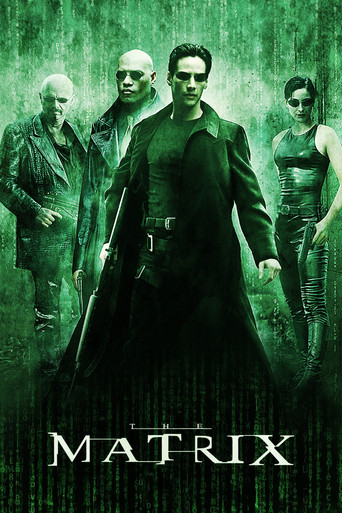



The Matrix
The Dark Side of the Moon
The Hitchhiker's Guide to the Galaxy
Tokyo
Portal
Qwen3 235B A22BQwen3 235B A22B
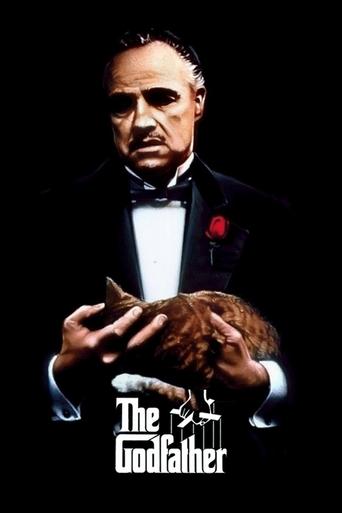


The Godfather
Sgt Peppers Lonely Hearts Club Band
Nineteen Eighty-Four
Istanbul
The Legend of Zelda: Ocarina of Time
Price and specs
| Spec | Grok 4 | Qwen3 235B A22B |
|---|---|---|
| Input price | $3/M tokens | — |
| Output price | $15/M tokens | — |
| Context window | 256K tokens | 33K tokens |
| Parameters | Not disclosed | 235B (22B Active) |
| Weights | — | Open |
| Free API (OpenRouter) | No | No |
| Released | Jul 2025 | Apr 2025 |
| At 10M a month | $30.00 | not listed |
Input tokens at list price. No caching, no batch discount.
Common questions
What is the difference between Grok 4 and Qwen3 235B A22B?
Grok 4 is developed by xAI while Qwen3 235B A22B is developed by Qwen. Grok 4 has a 256K token context window vs Qwen3 235B A22B's 33K. You can compare their actual outputs across 53 challenges on Rival to see how they differ in practice.
Which is better, Grok 4 or Qwen3 235B A22B?
It depends on your use case. Grok 4 and Qwen3 235B A22B each have strengths in different areas. Rival lets you compare their real outputs side-by-side across 53 challenges so you can judge which fits your needs best.
How can I compare Grok 4 and Qwen3 235B A22B on Rival?
This page shows a side-by-side comparison of Grok 4 and Qwen3 235B A22B across shared challenges. You can vote on which model produced the better output in a blind duel. Browsing and voting are free. No account is needed to look; signing in only saves your votes and likes.
More comparisons
Against the newest arrivals
- Grok 4 vs Step 5 PreviewLanded Oct 2026
- Qwen3 235B A22B vs Claude Haiku 5.5Landed Oct 2026
- Grok 4 vs Ling 3.1 FlashLanded Oct 2026
- Qwen3 235B A22B vs Mistral Large 4Landed Oct 2026
- Grok 4 vs GPT-6.1 SolLanded Sep 2026
- Qwen3 235B A22B vs Claude Sonnet 5.5Landed Sep 2026
- Grok 4 vs Solar Mini 4Landed Sep 2026
- Qwen3 235B A22B vs Qwen3.8 Max PrimeLanded Sep 2026


