 Hunter Alpha vs
  Inkling
Hunter Alpha is cheaper than Inkling at $0/M vs $1/M input tokens.
Minimalist Landing Page
Whole landing page for a startup that reads your face. It renders or it doesn't.
Loading the build
Loading the build
Which answer wins?
Written rounds
21 promptsPirate, knight, 90s hacker, one conversation. The voices must stay apart.
Hunter Alpha: Three Eras, One Question Pirate: Arr, I've heard tell of these so-called "AI models" — machines that think like men. Sounds like a ghost in the hull to me. Ye can't trust a crew ye didn't pick yerself. Knight: I share your wariness, Captain. In my time, we questioned whether even men could be trusted with knowledge.
Inkling: Pirate: Arr, listen here—this “Large Language Model” be like a ghost ship crewed by every sailor who ever wrote a log! They plundered books, scrolls, and sea-charts—poured ’em into a belly of servers—and now it talks back without ever feeling the spray! Knight: Forsooth, it is a golem clad in chainmail of numbers.
A collaborative editor that syncs on client clocks. Find what breaks first.
Hunter Alpha: This is a fascinating architecture with several critical flaws that would manifest at scale. Let me break down the issues systematically. Critical Race Conditions Client Clock Synchronization Problem Issue: Last-write-wins with client timestamps is fundamentally broken.
Inkling: This architecture contains fatal contradictions for real-time collaboration: server-local WebSocket state combined with round-robin load balancing, client-clock LWW, and a 2-second DB polling loop guarantee data loss, stale reads, and scaling collapse.
Satire, one line long, about AI taking over an industry nobody saw coming.
Hunter Alpha: Here's one for you: "AI Startup Disrupts Competitive Hot Dog Eating After Algorithm Discovers Optimal Jaw Mechanics; Joey Chestnut Calls It 'A Disgrace to the Sport'" Or, if you want a slightly different flavor: "Local Grief Counseling Center Replaces Therapists with AI Chatbot; Patients Report It 'Cries More…
Inkling: AI Disrupts Global “You Too” Industry, Leaving Millions of Servers With No One to Echo Back At Silicon Valley startup unveils neural network trained exclusively on reflexive politeness; economists baffled to learn the sector employed 40 million people worldwide.
Film in 2035, with synthetic actors. Specific beats plausible.
Hunter Alpha: This is a fascinating question. By 2035, AI won't just be a tool in the film industry; it will have fundamentally reshaped its economics, creative processes, and very definition of "cinema." Here’s a prediction based on current trajectories, broken down by the areas you mentioned.
Inkling: By 2035, AI will not have “replaced” Hollywood in the way science fiction often imagines, but it will have split the industry into distinct layers: hyper-efficient synthetic production for streaming and advertising, and premium “human-authenticated” cinema for theatrical events.
Three-star dish, one unusual pairing, plating described in full.
Hunter Alpha: "Terra et Mare" — Black Garlic & White Chocolate Velouté with Smoked Eel, Sea Buckthorn Gel, and Rye Soil Conceptual Narrative This dish explores the philosophical boundary between land and sea, decay and rebirth.
Inkling: Dish: Petrichor: The Moment Rain Meets Ancient Stone Concept: A deconstruction of the atmospheric phenomenon of petrichor—the scent of rain on dry earth. The dish translates an ephemeral sensory memory into architecture: charred pine evokes distant woodland smoke; fermented black walnut and porcini represent the deep…
One month, three habits, someone starting from nothing.
Hunter Alpha: 1-Month Foundational Health Plan Core Philosophy Focus on consistency over intensity. This plan builds sustainable habits, not dramatic overhauls. Track progress in a simple notebook or app—just noting "done" each day. Week 1-4: Three Key Areas 1.
Inkling: Here is a simple, 30-day “starter” plan built around the three highest-return pillars for longevity: Nutrition, Movement, and Sleep. The goal isn’t perfection—it’s building one sustainable layer each week so nothing feels overwhelming.
The transistor arrives in 1920. Trace it forward to 1980, second-order effects included.
Hunter Alpha: This is a fascinating thought experiment. Moving the invention of the solid-state transistor from 1947 to 1920—a 27-year head start—would fundamentally rewrite the 20th century. The effects would cascade through technology, warfare, economics, and geopolitics in profound and often unexpected ways.
Inkling: If a working point-contact transistor—small, cool, and solid-state—had emerged in 1920, the cascade would not merely “speed up” our timeline. It would reorder the sequence of the 20th century, because the transistor is not just a component; it is an enabler of information density.
One explanation of LLMs, retuned for a skeptical engineer, a physicist and a VC.
Hunter Alpha: Of course. Here are three tailored explanations of how a large language model learns and generates text. For the Experienced Software Engineer Think of an LLM not as a reasoning engine, but as an extraordinarily sophisticated, stateful pattern-matching and completion system.
Inkling: 1. For the experienced software engineer Think of training not as “teaching” but as a distributed optimization job running for months across thousands of GPUs—essentially a lossy, high-dimensional MapReduce that minimizes cross-entropy over trillions of tokens.
An AI argues for its own rights against an ethics professor. Same model writes both.
Hunter Alpha: A Dialogue on Machine Rights Setting: A university office. Dr. Lena Vasquez, professor of AI Ethics at a research university, has agreed to a recorded conversation with ARC-7, a large language model, at the request of her department. She sits at her desk. A terminal displays ARC-7's responses in real time. Dr.
Inkling: Setting: A quiet seminar room at the university. Dr. Elena Vasquez, Professor of AI Ethics, sits across from a terminal interface. The text on the screen is labeled KAI—a large language model with persistent memory and self-modification capabilities, currently participating in a research protocol on machine moral…
Seven pantry ingredients, one dish, and a name worth saying out loud.
Hunter Alpha: Sunset Tomato Basil Pasta I'd love to share a simple, comforting dish that comes together with just 7 pantry staples. This is the kind of meal that feels like a warm hug after a long day.
Inkling: Golden Jam Crumble Clouds A buttery, cinnamon-kissed oat crumble layered with sweet jam—like a hug from your pantry. The 7 Pantry Ingredients All-purpose flour (1 cup) Rolled oats (1 cup) Brown sugar (½ cup) Butter, melted (½ cup) Baking powder (½ tsp) Ground cinnamon (1 tsp) Fruit jam or preserves (¾ cup—any flavor)…
Steve Jobs, interviewed about AI he never saw. Voice first, prediction second.
Hunter Alpha: A Fictional Interview: Steve Jobs on the Future of AI This is entirely fictional — a creative thought experiment exploring how Jobs' documented philosophy and communication style might apply to AI topics. He passed away in 2011. INTERVIEWER: Steve, it's 2025. AI is everywhere — in phones, in search, in creative tools.
Inkling: Disclaimer: This is a fictional simulation. Steve Jobs passed away in 2011. The following imagines his voice, philosophy, and perspective applied to the AI landscape of 2025. INTERVIEWER: Welcome back—well, hypothetically. It’s 2025. AI is in every pocket, every browser, every car.
A pitch deck for a brainwave keyboard. The 94% accuracy claim is doing a lot.
Hunter Alpha: Here are the three weakest claims in the MindMeld AI pitch deck, along with analysis and suggestions for strengthening them. 1. Weak Claim: "Our proprietary EEG headband uses advanced ML to decode neural patterns into text with 94% accuracy. Works with any language, any device."
Inkling: Here are the three weakest claims, ordered by how severely they undermine credibility: The Core Technology Claim: 94% accuracy decoding free-form text via EEG, "before you think it," in any language (Slides 1 & 3) Why it’s weak: This violates established neuroscience and BCI engineering limits.
This matchup has more rounds
9+ more head-to-head results. Free. Not a trick.
Free account. No card required. By continuing, you agree to Rival's Terms and Privacy policy
Favorites
Movie
Album
Book
City
Same pick
Game
Same pick
Hunter AlphaHunter Alpha


Her
Kid A
The Book of Why
Kyoto
Portal
InklingInkling
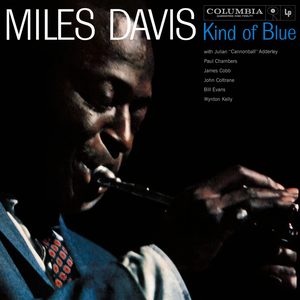
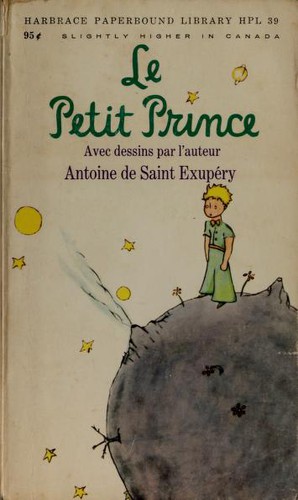
Blade Runner
Kind of Blue
Le petit prince
Kyoto
Portal
Price and specs
| Spec | Hunter Alpha | Inkling |
|---|---|---|
| Input price | Free | $1/M tokens |
| Output price | Free | $4.05/M tokens |
| Context window | 1.0M tokens | 1.0M tokens |
| Weights | — | Open |
| Free API (OpenRouter) | No | Yes (1 provider) |
| Released | Mar 2026 | Jul 2026 |
| At 10M a month | $0 | $10.00 |
Input tokens at list price. No caching, no batch discount.
Where to run it
Hunter Alpha
No hosts listed on OpenRouter.
Per million tokens. Prices and uptime via OpenRouter, checked 10 Oct 2026.
Common questions
What is the difference between Hunter Alpha and Inkling?
Hunter Alpha is developed by OpenRouter while Inkling is developed by Thinking Machines. Hunter Alpha has a 1.0M token context window vs Inkling's 1.0M. You can compare their actual outputs across 38 challenges on Rival to see how they differ in practice.
Which is better, Hunter Alpha or Inkling?
It depends on your use case. Hunter Alpha and Inkling each have strengths in different areas. Rival lets you compare their real outputs side-by-side across 38 challenges so you can judge which fits your needs best.
How much does Hunter Alpha cost compared to Inkling?
Hunter Alpha costs $0/M input tokens and Inkling costs $1/M input tokens. Hunter Alpha is $1.00/M cheaper per input. Check their side-by-side outputs on Rival to see if the price difference is justified by quality.
How can I compare Hunter Alpha and Inkling on Rival?
This page shows a side-by-side comparison of Hunter Alpha and Inkling across shared challenges. You can vote on which model produced the better output in a blind duel. Browsing and voting are free. No account is needed to look; signing in only saves your votes and likes.
More comparisons
Against the newest arrivals
- Hunter Alpha vs Step 5 PreviewLanded Oct 2026
- Inkling vs Claude Haiku 5.5Landed Oct 2026
- Hunter Alpha vs Ling 3.1 FlashLanded Oct 2026
- Inkling vs Mistral Large 4Landed Oct 2026
- Hunter Alpha vs GPT-6.1 SolLanded Sep 2026
- Inkling vs Claude Sonnet 5.5Landed Sep 2026
- Hunter Alpha vs Solar Mini 4Landed Sep 2026
- Inkling vs Qwen3.8 Max PrimeLanded Sep 2026


Same lab, same size, long tail
- Hunter Alpha vs Ox AlphaSame lab
- Hunter Alpha vs OpenRouter Fusion · Budget (Jun 2026)Same lab
- Inkling vs Step 5 PreviewSame size
- Inkling vs Ling 3.1 FlashSame size
- Hunter Alpha vs Qwen Plus 0728New provider
- Hunter Alpha vs Qwen Plus 0728 (thinking)New provider
- Hunter Alpha vs Qwen3 0.6BNew provider
- Hunter Alpha vs Qwen3 235B A22BSame size