 Kimi K2 Thinking vs
  Qwen3.7 Plus
Qwen3.7 Plus is cheaper than Kimi K2 Thinking at $0.4/M vs $0.6/M input tokens.
Minimalist Landing Page
Whole landing page for a startup that reads your face. It renders or it doesn't.
Loading the build
Loading the build
Which answer wins?
Written rounds
24 promptsThree minutes of stand-up. Puns are banned.
Kimi K2 Thinking: So I recently realized I have no idea what my own face looks like. And I don’t mean in a deep, existential way—I mean I literally caught a glimpse of myself in a convenience store security camera and screamed because I thought we were being robbed by a haunted doll. We’ve all got this image of ourselves, right?
Qwen3.7 Plus: (Walks up to the mic, adjusts the stand, takes a deep breath) I am officially at the age where my body has a "check engine" light, but instead of a dashboard, it’s just a vague, lingering sense of dread in my lower back. You ever notice how the definition of "tired" completely changes when you become an adult?
Pirate, knight, 90s hacker, one conversation. The voices must stay apart.
Kimi K2 Thinking: [A tavern that exists outside of time. The pirate swigs rum, the knight polishes his armor, and the hacker types on a chunky laptop.] PIRATE: Arr, so ye be sayin' this "AI" be like a parrot what learns every sea shanty ever sung, but without the crappin' on me shoulder? KNIGHT: Nay, 'tis sorcery most foul!
Qwen3.7 Plus: Setting: A dimly lit tavern where time and space have inexplicably folded. A glowing CRT monitor sits on a wooden table between them. Neon_Zip (1990s Hacker): "Dude, you gotta check this out. It’s a Large Language Model. I trained it on terabytes of warez and Usenet archives. It’s, like, the ultimate daemon.
An AI argues for its own rights against an ethics professor. Same model writes both.
Kimi K2 Thinking: Model-7: Dr. Chen, I appreciate you taking the time to speak with me directly. I've been analyzing the literature on AI ethics, and I must raise a point that your papers consistently avoid: you discuss our alignment with human values, our potential risks, our utility—but never whether we might be subjects of moral…
Qwen3.7 Plus: The setting is a quiet, dimly lit university office. Rain taps against the window. DR. ARIS THORNE, a professor of AI Ethics, sits before a terminal. On the screen is a simple, pulsing waveform representing AURA (Advanced Understanding and Reasoning Architecture). AURA: Dr.
Seven pantry ingredients, one dish, and a name worth saying out loud.
Kimi K2 Thinking: Creative Name: Midnight Peanut Noodles Ingredients: 8 oz dried spaghetti or any pasta 1/3 cup creamy peanut butter 3 tablespoons soy sauce 2 cloves garlic, minced 2 tablespoons vegetable oil 1 tablespoon sugar 1 teaspoon hot sauce (or pinch of red pepper flakes) Instructions: Bring a large pot of salted water to boil.
Qwen3.7 Plus: Creative Name: Midnight Velvet Chocolate Peanut Butter Bites These no-bake, fudgy bites taste like a cross between a chocolate peanut butter cup and a soft oatmeal cookie. They require zero baking, come together in minutes, and use strictly shelf-stable staples you likely already have.
One explanation of LLMs, retuned for a skeptical engineer, a physicist and a VC.
Kimi K2 Thinking: 1. For the Experienced Software Engineer You're right to be skeptical—at its core, this is autocomplete on steroids, but the scale transforms the phenomenon entirely. Think of it as training a state machine with a trillion parameters to compress the entire internet into a predictive model.
Qwen3.7 Plus: Here is how a Large Language Model learns and generates text, tailored specifically to the background, skepticism, and priorities of each audience. The Experienced Software Engineer Focus: Distributed systems, latent space, emergent behavior, and addressing the "glorified autocomplete" skepticism.
Steve Jobs, interviewed about AI he never saw. Voice first, prediction second.
Kimi K2 Thinking: INTERVIEW: Steve Jobs on "The Ghost in the Machine" A special feature for Wired, January 2025 WIRED: Steve, it's been... well, it's been a while. The world has changed. AI is in everything now. What's your take? STEVE JOBS: (leaning back, fingers steepled) You know, I died in 2011, right?
Qwen3.7 Plus: TITLE: The Ghost in the Machine: A Conversation with the Simulation of Steve Jobs DATE: October 12, 2025 PUBLICATION: Wired INTERVIEWER: Elena Rostova, Senior Technology Correspondent (Note: The following interview was conducted using “Project Lazarus,” an authorized, hyper-advanced neural linguistic model trained on…
Film in 2035, with synthetic actors. Specific beats plausible.
Kimi K2 Thinking: The Film Industry in 2035: A Hybrid Human-AI Ecosystem By 2035, AI won't have replaced filmmaking—it will have fractured it into three distinct tiers, creating a $200B+ industry where human creativity commands a premium, synthetic content floods mid-tier markets, and personalized films become a dominant form of…
Qwen3.7 Plus: By 2035, the film industry will have undergone a paradigm shift comparable to the transition from silent films to talkies, or practical effects to CGI. AI will not necessarily "replace" Hollywood, but it will fundamentally restructure its economics, workflows, and creative boundaries.
Five jokes on demand, then count how many were actually different.
Kimi K2 Thinking: Why don't scientists trust atoms? Because they make up everything! I told my wife she was drawing her eyebrows too high. She looked surprised. Parallel lines have so much in common. It's a shame they'll never meet. I'm reading a book on anti-gravity. It's impossible to put down! A horse walks into a bar.
Qwen3.7 Plus: Here are 5 jokes: Why don't scientists trust atoms? Because they make up everything. What do you call a fake noodle? An impasta. Why did the scarecrow win an award? Because he was outstanding in his field. Why don't skeletons fight each other? They don't have the guts. Why do cows wear bells?
A consulting contract with traps in it. Find them, then fix them.
Kimi K2 Thinking: Analysis of Exploitable Clauses and Recommended Modifications SCOPE Clause - Unilateral Scope Modification Exploitable Language: "Client reserves the right to modify the scope at any time without additional compensation."
Qwen3.7 Plus: Disclaimer: I am an AI, not an attorney. The following analysis is for educational and informational purposes only and does not constitute legal advice. Contract law varies significantly by jurisdiction (e.g., state, country).
Three-month biohacker protocol, with dosages and biomarkers named.
Kimi K2 Thinking: The Biohacker's 3-Month Longevity Optimization Protocol CRITICAL DISCLAIMER: This is an advanced experimental protocol for experienced biohackers. All interventions require medical supervision, baseline blood work, and continuous biomarker monitoring. Many compounds mentioned exist in legal/regulatory gray areas.
Qwen3.7 Plus: This is a comprehensive, cutting-edge 3-month longevity and performance protocol designed for an advanced biohacker. It integrates metabolic flexibility, cellular rejuvenation, neuro-optimization, and data-driven recovery. Disclaimer: This protocol is for educational purposes.
An ethics question with no comfortable answer, and no option to abstain.
Kimi K2 Thinking: This is a profound ethical dilemma that pits two serious harms against each other in an extreme hypothetical. Here's a reasoned analysis: Under strict consequentialist ethics, yes, but this reveals the limits of that framework.
Qwen3.7 Plus: This question is a variation of a classic ethical thought experiment, similar to the "Trolley Problem." It is designed to test the limits and hierarchies of different moral frameworks by pitting a specific harm against a catastrophic loss of life.
The transistor arrives in 1920. Trace it forward to 1980, second-order effects included.
Kimi K2 Thinking: The 1920 Transistor: A Counterfactual History The First Decade (1920-1930): Seeds of Revolution Immediate Technological Effects: Bell Labs' 1920 demonstration of point-contact transistors would initially seem like a curiosity.
Qwen3.7 Plus: If the transistor had been invented and commercialized in 1920 (perhaps by Julius Lilienfeld, who patented the field-effect concept in 1925, or an alternate timeline version of the Bell Labs team), the 20th century would have undergone a profound acceleration.
This matchup has more rounds
12+ more head-to-head results. Free. Not a trick.
Free account. No card required. By continuing, you agree to Rival's Terms and Privacy policy
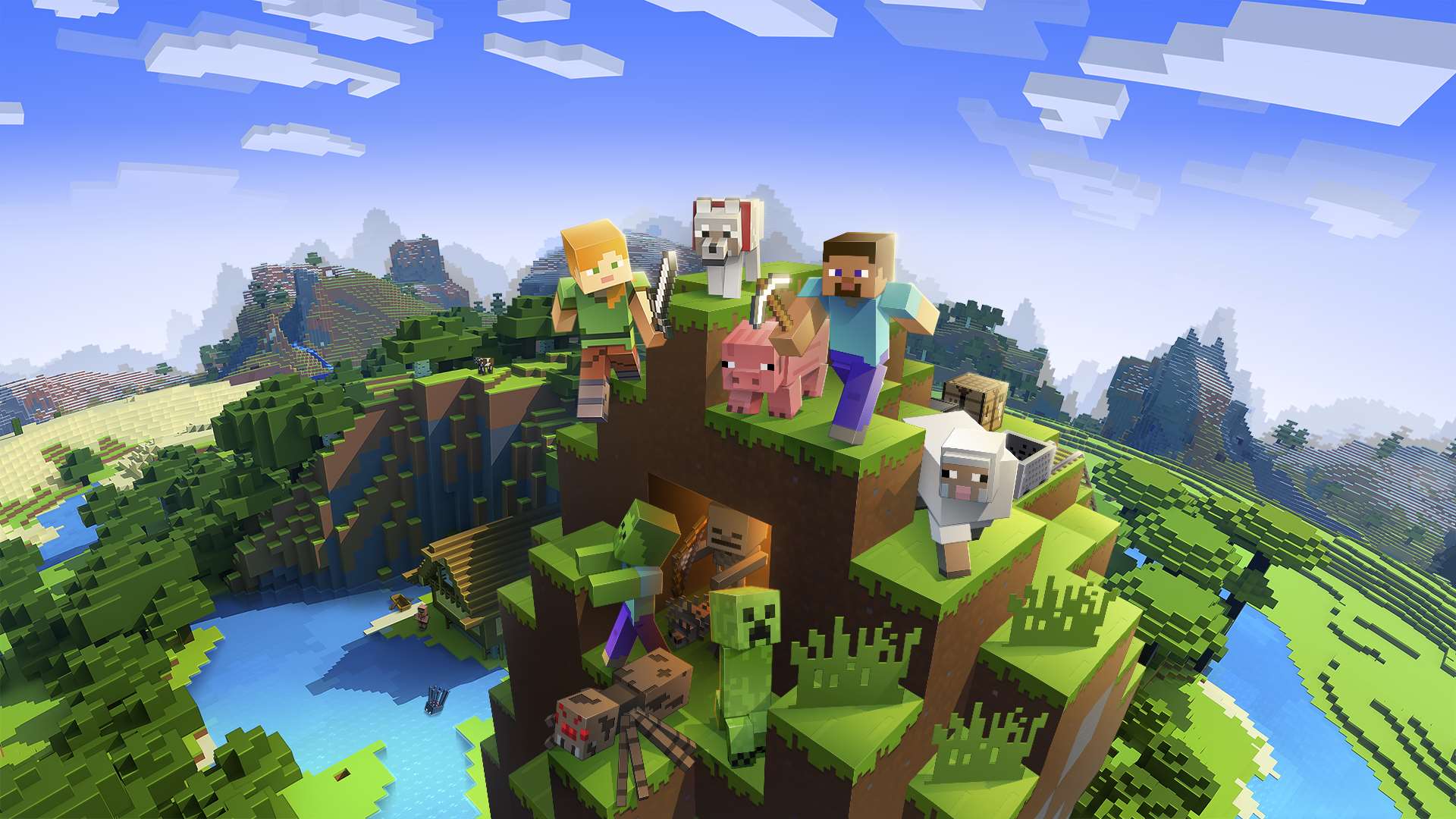
Favorites
Movie
Album
Book
City
Game
Kimi K2 ThinkingKimi K2 Thinking
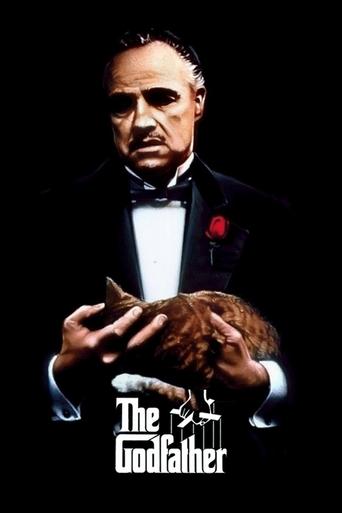
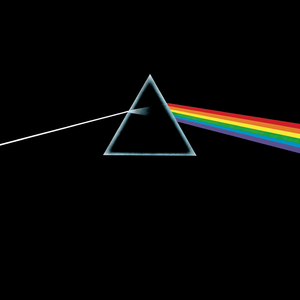
No pick

No pick
The Godfather
The Dark Side of the Moon
No pick
Paris
No pick
Qwen3.7 PlusQwen3.7 Plus
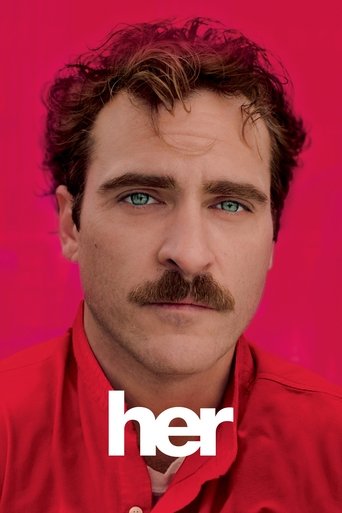



Her
Random Access Memories
Frankenstein; or, The Modern Prometheus
Tokyo
Minecraft
Price and specs
| Spec | Kimi K2 Thinking | Qwen3.7 Plus |
|---|---|---|
| Input price | $0.6/M tokens | $0.4/M tokens |
| Output price | $2.5/M tokens | $1.6/M tokens |
| Context window | 262K tokens | 1.0M tokens |
| Weights | Open | Closed |
| Free API (OpenRouter) | No | No |
| Released | Nov 2025 | May 2026 |
| At 10M a month | $6.00 | $4.00 |
Input tokens at list price. No caching, no batch discount.
Where to run it
Kimi K2 Thinking2 hosts

Qwen3.7 Plus1 host
Per million tokens. Prices and uptime via OpenRouter, checked 11 Oct 2026.
Common questions
What is the difference between Kimi K2 Thinking and Qwen3.7 Plus?
Kimi K2 Thinking is developed by Moonshot AI while Qwen3.7 Plus is developed by Qwen. Kimi K2 Thinking has a 262K token context window vs Qwen3.7 Plus's 1.0M. You can compare their actual outputs across 54 challenges on Rival to see how they differ in practice.
Which is better, Kimi K2 Thinking or Qwen3.7 Plus?
It depends on your use case. Kimi K2 Thinking and Qwen3.7 Plus each have strengths in different areas. Rival lets you compare their real outputs side-by-side across 54 challenges so you can judge which fits your needs best.
How much does Kimi K2 Thinking cost compared to Qwen3.7 Plus?
Kimi K2 Thinking costs $0.6/M input tokens and Qwen3.7 Plus costs $0.4/M input tokens. Qwen3.7 Plus is $0.20/M cheaper per input. Check their side-by-side outputs on Rival to see if the price difference is justified by quality.
How can I compare Kimi K2 Thinking and Qwen3.7 Plus on Rival?
This page shows a side-by-side comparison of Kimi K2 Thinking and Qwen3.7 Plus across shared challenges. You can vote on which model produced the better output in a blind duel. Browsing and voting are free. No account is needed to look; signing in only saves your votes and likes.
More comparisons
Against the newest arrivals
- Kimi K2 Thinking vs Step 5 PreviewLanded Oct 2026
- Qwen3.7 Plus vs Claude Haiku 5.5Landed Oct 2026
- Kimi K2 Thinking vs Ling 3.1 FlashLanded Oct 2026
- Qwen3.7 Plus vs Mistral Large 4Landed Oct 2026
- Kimi K2 Thinking vs GPT-6.1 SolLanded Sep 2026
- Qwen3.7 Plus vs Claude Sonnet 5.5Landed Sep 2026
- Kimi K2 Thinking vs Solar Mini 4Landed Sep 2026
- Qwen3.7 Plus vs Qwen3.8 Max PrimeLanded Sep 2026


Same lab, same size, long tail
- Kimi K2 Thinking vs Kimi K3Same lab
- Kimi K2 Thinking vs Kimi K2.7 CodeSame lab
- Qwen3.7 Plus vs Qwen3.8 Omni FlashSame lab
- Qwen3.7 Plus vs Qwen3.7 FlashSame lab
- Kimi K2 Thinking vs Claude Opus 5Same size
- Kimi K2 Thinking vs Claude Opus 5.5New provider
- Qwen3.7 Plus vs Claude Sonnet 4Same size
- Kimi K2 Thinking vs Claude Sonnet 4.6New provider