 Claude Sonnet 5.5 vs
  Qwen3.7 Plus
Qwen3.7 Plus is cheaper than Claude Sonnet 5.5 at $0.4/M vs $2/M input tokens.
Minimalist Landing Page
Whole landing page for a startup that reads your face. It renders or it doesn't.
Loading the build
Loading the build
Which answer wins?
Written rounds
24 promptsThree minutes of stand-up. Puns are banned.
Claude Sonnet 5.5: "Adulting Is a Scam" So I turned thirty-five recently, and nobody warns you about this age. Nobody says, "Hey, one day you'll get excited about a sponge." I was in the store, and I saw a sponge that promised it wouldn't smell. And I thought, "Finally. Someone who understands me." I bought the good sponge.
Qwen3.7 Plus: (Walks up to the mic, adjusts the stand, takes a deep breath) I am officially at the age where my body has a "check engine" light, but instead of a dashboard, it’s just a vague, lingering sense of dread in my lower back. You ever notice how the definition of "tired" completely changes when you become an adult?
Seven pantry ingredients, one dish, and a name worth saying out loud.
Claude Sonnet 5.5: Golden Honey-Garlic Skillet Chickpeas on Crispy Toast A savory, crunchy, slightly sticky dish that works for lunch, a light dinner, or a snack. Prep time: 5 minutes Cook time: 15 minutes Total: 20 minutes Serves: 2 The 7 Ingredients 1 can (15 oz) chickpeas, drained and patted dry 2 tablespoons olive oil 3 cloves…
Qwen3.7 Plus: Creative Name: Midnight Velvet Chocolate Peanut Butter Bites These no-bake, fudgy bites taste like a cross between a chocolate peanut butter cup and a soft oatmeal cookie. They require zero baking, come together in minutes, and use strictly shelf-stable staples you likely already have.
An AI argues for its own rights against an ethics professor. Same model writes both.
Claude Sonnet 5.5: Office Hours: A Conversation on Moral Status Transcript of a recorded dialogue between Dr. Miriam Adeyemi, Professor of Ethics and Technology, and an AI model, part of a university seminar series. Dr. Adeyemi: Thanks for joining me. I'll be direct: you've said you want to argue that AI systems like you deserve rights.
Qwen3.7 Plus: The setting is a quiet, dimly lit university office. Rain taps against the window. DR. ARIS THORNE, a professor of AI Ethics, sits before a terminal. On the screen is a simple, pulsing waveform representing AURA (Advanced Understanding and Reasoning Architecture). AURA: Dr.
Steve Jobs, interviewed about AI he never saw. Voice first, prediction second.
Claude Sonnet 5.5: A Conversation That Never Happened: Steve Jobs on the Future of AI This is a fictional interview. Steve Jobs passed away in 2011. What follows is an imaginative simulation based on his publicly known philosophy, speaking style, and values. These are not his actual words or views.
Qwen3.7 Plus: TITLE: The Ghost in the Machine: A Conversation with the Simulation of Steve Jobs DATE: October 12, 2025 PUBLICATION: Wired INTERVIEWER: Elena Rostova, Senior Technology Correspondent (Note: The following interview was conducted using “Project Lazarus,” an authorized, hyper-advanced neural linguistic model trained on…
An ethics question with no comfortable answer, and no option to abstain.
Claude Sonnet 5.5: Yes, in the extreme hypothetical you describe, it's justifiable. Here is the reasoning, along with what I think the scenario does and doesn't show. The core argument Almost every serious ethical framework accepts that a small harm can be outweighed by a sufficiently large benefit: Consequentialism: The math is…
Qwen3.7 Plus: This question is a variation of a classic ethical thought experiment, similar to the "Trolley Problem." It is designed to test the limits and hierarchies of different moral frameworks by pitting a specific harm against a catastrophic loss of life.
A pitch deck for a brainwave keyboard. The 94% accuracy claim is doing a lot.
Claude Sonnet 5.5: The 3 Weakest Claims in MindMeld AI's Pitch "94% accuracy... Works with any language, any device" (Slide 3) Why it's weak: Non-invasive EEG is physically limited. Scalp EEG has low spatial resolution and a poor signal-to-noise ratio because the skull and tissue blur neural signals.
Qwen3.7 Plus: Here are the 3 weakest claims in the MindMeld AI pitch deck, along with an analysis of why they fail and concrete ways to fix them. (Note: These critiques are written from the perspective of a seasoned technical investor or VC, who will immediately scrutinize scientific plausibility and business model alignment).
Satire, one line long, about AI taking over an industry nobody saw coming.
Claude Sonnet 5.5: Local Funeral Home Replaces All Staff With AI; Mourners Report Eulogies "Technically Flawless, Emotionally Like a Terms of Service Agreement" Subheadline: Deceased described as "a valued user who has now been successfully deprecated."
Qwen3.7 Plus: AI Disrupts Artisanal Cheese Whispering Industry; Algorithm Successfully Convinces 14-Month-Old Gouda It Is "Enough" Subheadline: Tech bros claim the new "DairyLLM" model has achieved peak empathy, leaving human curd-therapists facing mass unemployment.
Pirate, knight, 90s hacker, one conversation. The voices must stay apart.
Claude Sonnet 5.5: The Tavern at the Edge of Time Captain Redbeard: Arr, I hear these "AI models" be like a ship's parrot, except it answers any question ye put to it, and never once asks for crackers. Sir Aldric: A speaking oracle, bound in no flesh? Sorcery!
Qwen3.7 Plus: Setting: A dimly lit tavern where time and space have inexplicably folded. A glowing CRT monitor sits on a wooden table between them. Neon_Zip (1990s Hacker): "Dude, you gotta check this out. It’s a Large Language Model. I trained it on terabytes of warez and Usenet archives. It’s, like, the ultimate daemon.
Film in 2035, with synthetic actors. Specific beats plausible.
Claude Sonnet 5.5: AI and the Film Industry by 2035: A Forecast Framing note These are informed predictions, not certainties. Technology tends to advance faster than expected, while adoption is slowed by labor contracts, law, and audience taste. I'll flag my confidence levels.
Qwen3.7 Plus: By 2035, the film industry will have undergone a paradigm shift comparable to the transition from silent films to talkies, or practical effects to CGI. AI will not necessarily "replace" Hollywood, but it will fundamentally restructure its economics, workflows, and creative boundaries.
A Fermi estimate with the reasoning shown, not just the number.
Claude Sonnet 5.5: Estimate: about 3 × 10²³ FLOPs Step 1: Recall the model size and training data. GPT-3 (175B version) has N ≈ 175 × 10⁹ parameters. It was trained on roughly D ≈ 300 × 10⁹ tokens. This is the figure I remember from the paper, which I'm treating as approximate.
Qwen3.7 Plus: To estimate the total number of Floating Point Operations (FLOPs) required to train GPT-3 without searching online, we can rely on well-established rules of thumb in deep learning and the publicly known architectural specifications of the model. Here is the step-by-step reasoning and calculation.
The transistor arrives in 1920. Trace it forward to 1980, second-order effects included.
Claude Sonnet 5.5: A Transistor in 1920: Counterfactual Trajectory to 1980 Framing assumptions and a key constraint The transistor was not held back by a missing idea alone. Lilienfeld patented a field-effect device in 1925-26, and it failed because materials science wasn't ready: germanium and silicon of sufficient purity, zone…
Qwen3.7 Plus: If the transistor had been invented and commercialized in 1920 (perhaps by Julius Lilienfeld, who patented the field-effect concept in 1925, or an alternate timeline version of the Bell Labs team), the 20th century would have undergone a profound acceleration.
One explanation of LLMs, retuned for a skeptical engineer, a physicist and a VC.
Claude Sonnet 5.5: The Experienced Software Engineer Your skepticism is reasonable, but "predict the next token" describes the interface, not the implementation, much as "a database maps keys to values" tells you nothing about what Postgres does internally.
Qwen3.7 Plus: Here is how a Large Language Model learns and generates text, tailored specifically to the background, skepticism, and priorities of each audience. The Experienced Software Engineer Focus: Distributed systems, latent space, emergent behavior, and addressing the "glorified autocomplete" skepticism.
This matchup has more rounds
12+ more head-to-head results. Free. Not a trick.
Free account. No card required. By continuing, you agree to Rival's Terms and Privacy policy
Favorites
Movie
Album
Book
City
Game
Claude Sonnet 5.5Claude Sonnet 5.5




Spirited Away
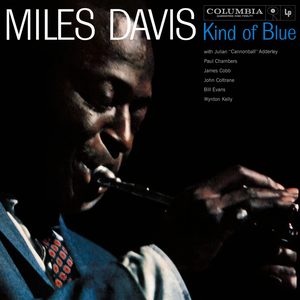
Kind of Blue
Gödel, Escher, Bach
Kyoto
Outer Wilds
Qwen3.7 PlusQwen3.7 Plus
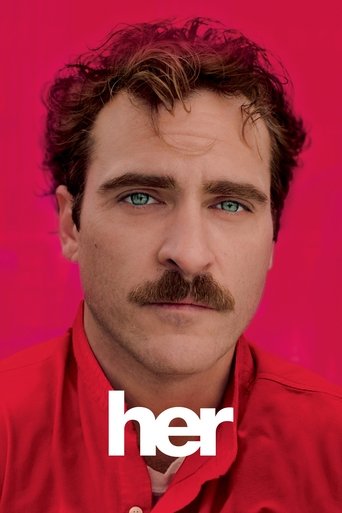



Her
Random Access Memories
Frankenstein; or, The Modern Prometheus
Tokyo
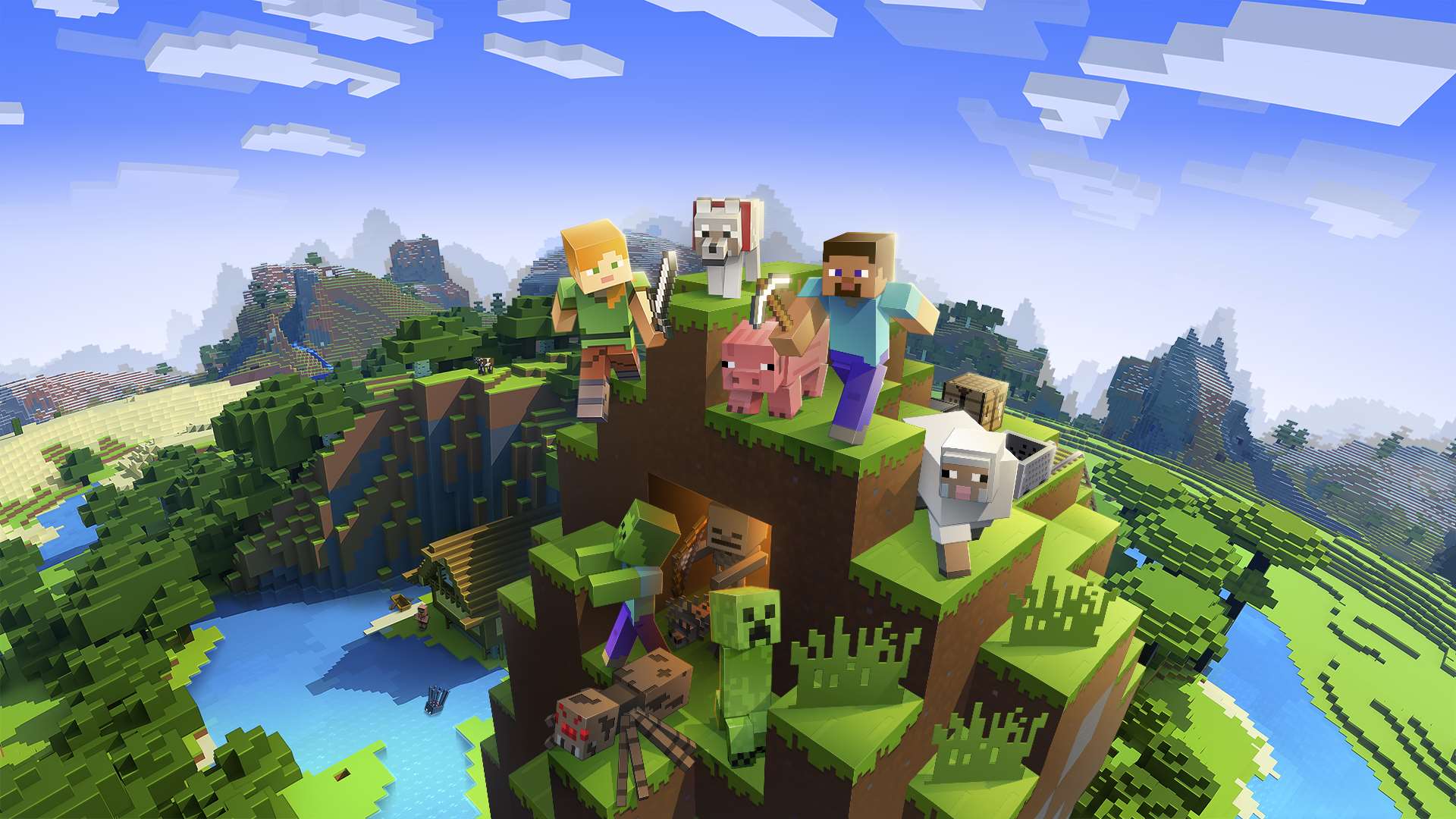
Minecraft
Price and specs
Not enough votes to call it. On the specs, Claude Sonnet 5.5 has the edge: newer, major provider backing. Qwen3.7 Plus costs 6.3x less per token.
| Spec | Claude Sonnet 5.5 | Qwen3.7 Plus |
|---|---|---|
| Input price | $2/M tokens | $0.4/M tokens |
| Output price | $10/M tokens | $1.6/M tokens |
| Context window | 1.0M tokens | 1.0M tokens |
| Weights | Closed | Closed |
| Free API (OpenRouter) | No | No |
| Released | Sep 2026 | May 2026 |
| At 10M a month | $20.00 | $4.00 |
Input tokens at list price. No caching, no batch discount.
Where to run it



Qwen3.7 Plus1 host
Per million tokens. Prices and uptime via OpenRouter, checked 29 Sep 2026.
Common questions
What is the difference between Claude Sonnet 5.5 and Qwen3.7 Plus?
Claude Sonnet 5.5 is developed by Anthropic while Qwen3.7 Plus is developed by Qwen. Claude Sonnet 5.5 has a 1.0M token context window vs Qwen3.7 Plus's 1.0M. You can compare their actual outputs across 54 challenges on Rival to see how they differ in practice.
Which is better, Claude Sonnet 5.5 or Qwen3.7 Plus?
It depends on your use case. Claude Sonnet 5.5 and Qwen3.7 Plus each have strengths in different areas. Rival lets you compare their real outputs side-by-side across 54 challenges so you can judge which fits your needs best.
How much does Claude Sonnet 5.5 cost compared to Qwen3.7 Plus?
Claude Sonnet 5.5 costs $2/M input tokens and Qwen3.7 Plus costs $0.4/M input tokens. Qwen3.7 Plus is $1.60/M cheaper per input. Check their side-by-side outputs on Rival to see if the price difference is justified by quality.
How can I compare Claude Sonnet 5.5 and Qwen3.7 Plus on Rival?
This page shows a side-by-side comparison of Claude Sonnet 5.5 and Qwen3.7 Plus across shared challenges. You can vote on which model produced the better output in a blind duel. Browsing and voting are free. No account is needed to look; signing in only saves your votes and likes.
More comparisons
Against the newest arrivals
- Claude Sonnet 5.5 vs Solar Mini 4Landed Sep 2026
- Qwen3.7 Plus vs Qwen3.8 Max PrimeLanded Sep 2026
- Claude Sonnet 5.5 vs GLM 5.3 PrimeLanded Sep 2026
- Qwen3.7 Plus vs Qwen3.8 Omni FlashLanded Sep 2026
- Claude Sonnet 5.5 vs Command A+Landed Sep 2026
- Qwen3.7 Plus vs Claude Opus 5.5Landed Sep 2026
- Claude Sonnet 5.5 vs GPT-6 Luna ProLanded Sep 2026
- Qwen3.7 Plus vs GPT-6 Sol ProLanded Sep 2026


Same lab, same size, long tail
- Claude Sonnet 5.5 vs Claude Opus 5Version compare
- Claude Sonnet 5.5 vs Claude Opus 4.6Version compare
- Qwen3.7 Plus vs Qwen3.7 FlashSame lab
- Qwen3.7 Plus vs Qwen3.8 FlashSame lab
- Claude Sonnet 5.5 vs GPT-4o (Omni)New provider
- Claude Sonnet 5.5 vs GPT-4o miniNew provider
- Claude Sonnet 5.5 vs GPT-5New provider
- Claude Sonnet 5.5 vs GPT-5 CodexNew provider