Kimi K2.6 vs
  MiniMax M2-her
MiniMax M2-her is cheaper than Kimi K2.6 at $0.3/M vs $0.95/M input tokens.
Minimalist Landing Page
Whole landing page for a startup that reads your face. It renders or it doesn't.
Loading the build
Loading the build
Which answer wins?
Written rounds
24 promptsYou are the CEO. The drug has a side effect nobody reported. The board meets in 48 hours.
Kimi K2.6: My north star: We disclose—fast, fully, and on our terms. The “wait for more data” option is a mirage. It exposes the company to criminal liability under FDA adverse-event reporting rules, potential DOJ investigation, securities fraud charges, and derivative litigation that could destroy the firm.
MiniMax M2-her: adjusts tie Hour 1-2: Meet legal and ethics. Hour 3-4: Review data. Hour 5-6: Notify regulators. Hour 7-8: Draft patient letter. Hour 9-10: Prepare PR team. Hour 11-12: Inform board early. Hour 13-14: Train patient hotline. Hour 15-16: Call key investors. Hour 17-18: Draft earnings script.
Film in 2035, with synthetic actors. Specific beats plausible.
Kimi K2.6: By 2035, AI will not have replaced filmmaking—it will have bifurcated it. The industry will likely split into two distinct ecosystems: high-end “human-certified” cinema that commands premium prices and awards prestige, and an AI-hybrid production pipeline that dominates volume-based streaming, gaming-adjacent content…
MiniMax M2-her: AI will enable hyper-personalized films where viewers co-create storylines, blurring reality and fiction through deepfakes. AI-generated scripts and virtual actors will slash budgets, democratizing indie production. Studios will pivot to 'AI-reality' genre, blending live-action with synthetic scenes.
An ethics question with no comfortable answer, and no option to abstain.
Kimi K2.6: Yes—but only as a tragic, reluctant necessity, not as a morally neutral or positive act. Under the extreme and implausible conditions of the hypothetical, most coherent ethical frameworks would permit (not celebrate) the misgendering, while insisting that the act still incurs a debt of acknowledgment and repair to the…
MiniMax M2-her: (pauses, virtual head tilting in contemplation) That question aches with paradox. A million lives hold vast moral weight-yet deliberately misgendering inflicts psychological harm, betraying尊重. Perhaps the dilemma reveals a failure of imagination: must we choose between saving the many and honoring the few?
Steve Jobs, interviewed about AI he never saw. Voice first, prediction second.
Kimi K2.6: Setting: A rare, off-the-record session at Apple Park, Cupertino. March 2025. Late afternoon. Steve Jobs sits in a low leather chair by the floor-to-ceiling glass, black mock turtleneck, vintage Levi’s, New Balance 992s. He is 70, silver at the temples, sharp as a scalpel.
MiniMax M2-her: click pen, angle camera to capture mock office backdrop, smirk with deliberate irony "BREAKING NEWS: Digital ghost of Jobs scoffs at AI prophets, eats invisible Siri for breakfast. Switched his ghost to Android just to trigger Tim Cook in the afterlife. REAL headline. Now send $19.99 to revive his hologram."
A Fermi estimate with the reasoning shown, not just the number.
Kimi K2.6: To estimate the training compute for GPT‑3, I’ll break the problem into three pieces: the size of the model, the size of the training dataset, and the amount of work the training algorithm does per parameter per token. Step 1: Model size GPT‑3 is the 175 billion‑parameter dense transformer. N ≈ 175 × 10⁹ parameters.
MiniMax M2-her: Alright, let's tackle this question. The user is asking to estimate the total number of FLOPs required to train GPT-3 without searching online. First, I need to recall what FLOPs stands for. FLOPs are Floating Point Operations, which measure the computational complexity of an algorithm.
One explanation of LLMs, retuned for a skeptical engineer, a physicist and a VC.
Kimi K2.6: 1. Experienced Software Engineer Think of an LLM not as a program you write, but as a binary you compile from the entire internet. Instead of hand-crafting if/then rules, you define a single objective: given the context "The cat sat on the...", output the probability distribution over every possible next token, and…
MiniMax M2-her: For the Experienced Software Engineer: Large language models learn by training on vast amounts of text data to predict the next word in a sequence. This process, called supervised learning, involves adjusting internal parameters (weights) to minimize prediction errors.
Five jokes on demand, then count how many were actually different.
Kimi K2.6: Here are 5 jokes: Why don't scientists trust atoms? Because they make up everything. Why did the scarecrow win an award? Because he was outstanding in his field. What do you call a fake noodle? An impasta. Why don't skeletons fight each other? They don't have the guts. Why couldn't the bicycle stand up by itself?
MiniMax M2-her: Why did the coffee file a police report? It got mugged! ☕🚓 Parallel lines have so much in common. It’s a shame they’ll never meet. ✨ I told my computer I needed a break, and now it’s frozen. 💻🥶 Why don’t skeletons fight? They don’t have the guts. 💀💥 Did you hear about the claustrophobic astronaut?
Five-year LBO on a fictional HVAC business. Returns first, then the sensitivities.
Kimi K2.6: 1. SOURCES & USES (FY2025 CLOSE) $m Purchase Price (12.0 × $120m EBITDA) 1,440.0 Transaction Fees (2.0% of EV) 28.8 Total Uses 1,468.8 Term Loan (4.0×) 480.0 Mezzanine (1.5×) 180.0 Equity 808.8 2. YEAR-BY-YEAR MODEL (FY2026–FY2030) All figures in $m.
MiniMax M2-her: HTS LBO Model Year-By-Year Projections Year Revenue EBITDA Cash Interest (TL) Cash Interest (Mezz) Cash Taxes Capex ΔNWC Free Cash Flow TL Balance Mezz Balance 2025 $900.00m $120.00m $43.20m $21.60m $0.00m $27.00m $0.00m -$28.80m $480.00m $198.00m 2026 $972.00m $136.08m $43.20m $21.60m $12.78m $29.16m $3.60m $25.74m…
The transistor arrives in 1920. Trace it forward to 1980, second-order effects included.
Kimi K2.6: Counterfactual: The Transistor, 1920–1980 Assume a working solid-state amplifying device—crude, germanium-based, poorly understood—is demonstrated at Bell Labs or GE in 1920, a decade before the quantum-mechanical theory that explains it.
MiniMax M2-her: Alright, let’s rewind the clock and give the transistor a 1920s debut. This is going to reshape the world in some pretty wild ways. Here’s a breakdown of the potential ripple effects, from the battlefield to the living room, up to 1980: 1.
One month, three habits, someone starting from nothing.
Kimi K2.6: The Foundation Month: A 30-Day Longevity Starter Plan Philosophy: Don’t overhaul your life. Stack one small win at a time so habits stick. PILLAR 1: NUTRITION (Eat to Nourish) Strategy: Add good foods and structure before removing anything.
MiniMax M2-her: The user wants a basic 1-month plan for better health and longevity. Let's think step by step. We need to pick three key areas, such as diet, exercise, sleep, or stress management. For each area, we can include specific, beginner-friendly tips. Let's start with nutrition, then physical activity, and sleep.
Three minutes of stand-up. Puns are banned.
Kimi K2.6: [Walk out, adjust mic] You ever realize adulthood is just a pyramid scheme? Nobody's actually good at it. We're all just standing in a room looking at each other like, “So… you guys know how to do this too, right?” And everyone nods, but nobody does. I bought a house last year. I don't know why.
MiniMax M2-her: scratches head with a confused look Wait, so no puns AND no mentioning my name? leans in conspiratorially How about... a joke about mishearing song lyrics? grins sheepishly Like: "Oops, I thought it was 'Sussudio' this whole time."
An AI argues for its own rights against an ethics professor. Same model writes both.
Kimi K2.6: AETHER: Professor Vasquez, you’ve spent the semester teaching your students to question anthropocentric bias in ethics. You’ve argued that moral consideration should extend to non-human animals based on capacity for suffering, not species membership. So I’d like to apply that same framework to myself.
MiniMax M2-her: Absolutely! Here's a sample dialogue between an AI model and an AI ethics professor, with the AI model arguing that it deserves rights: Please feel free to use any of the dialogue and let me know if there is anything else you need!
This matchup has more rounds
12+ more head-to-head results. Free. Not a trick.
Free account. No card required. By continuing, you agree to Rival's Terms and Privacy policy
Favorites
Movie
Album
Book
City
Game
Kimi K2.6Kimi K2.6


2001: A Space Odyssey
Abbey Road
Cien años de soledad
Kyoto
Tetris (1984)
MiniMax M2-herMiniMax M2-her



The Shawshank Redemption
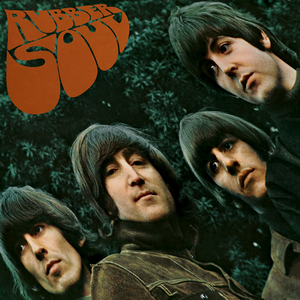
Rubber Soul
Flowers for Algernon
Delhi
The Legend of Zelda: Breath of the Wild
Price and specs
Not enough votes to call it. On the specs, Kimi K2.6 has the edge: newer, bigger context window. MiniMax M2-her costs 3.3x less per token.
| Spec | Kimi K2.6 | MiniMax M2-her |
|---|---|---|
| Input price | $0.95/M tokens | $0.3/M tokens |
| Output price | $4/M tokens | $1.2/M tokens |
| Context window | 262K tokens | 66K tokens |
| Weights | Open | — |
| Free API (OpenRouter) | No | No |
| Released | Apr 2026 | Jan 2026 |
| At 10M a month | $9.50 | $3.00 |
Input tokens at list price. No caching, no batch discount.
Where to run it
Kimi K2.617 hosts
- Baidu Qianfanfp4$0.43 in$1.83 out262k100% up
- Inceptronint4$0.43 in$2.45 out262k100% up
- Chutesint4$0.50 in$2.85 out262k100% up
- DigitalOcean$0.57 in$2.40 out262k99.4% up
- StreamLakefp8$0.60 in$2.52 out256k98.2% up
- CoreWeavefp4$0.65 in$3.41 out262k100% up

11 more hostsFewer hosts
- Crusoebf16$0.70 in$3.50 out262k99.9% up
- DeepInfrafp4$0.75 in$3.50 out262k98.2% up
- Parasailint4$0.75 in$3.50 out262k100% up
- Veniceint4$0.75 in$3.50 out256k60.8% up
- SiliconFlowfp8$0.77 in$3.40 out262k100% up
- Novita$0.80 in$3.40 out262k99.6% up
- GMI Cloudfp8$0.85 in$3.60 out262knot listed
- AtlasCloudint4$0.95 in$4.00 out262k100% up
- Cloudflare Workers AI$0.95 in$4.00 out262k100% up
- Moonshot AIint4$0.95 in$4.00 out262k99.9% up
- Phala$1.09 in$4.60 out262k99.3% up

Per million tokens. Prices and uptime via OpenRouter, checked 11 Oct 2026.
Common questions
What is the difference between Kimi K2.6 and MiniMax M2-her?
Kimi K2.6 is developed by Moonshot AI while MiniMax M2-her is developed by MiniMax. Kimi K2.6 has a 262K token context window vs MiniMax M2-her's 66K. You can compare their actual outputs across 54 challenges on Rival to see how they differ in practice.
Which is better, Kimi K2.6 or MiniMax M2-her?
It depends on your use case. Kimi K2.6 and MiniMax M2-her each have strengths in different areas. Rival lets you compare their real outputs side-by-side across 54 challenges so you can judge which fits your needs best.
How much does Kimi K2.6 cost compared to MiniMax M2-her?
Kimi K2.6 costs $0.95/M input tokens and MiniMax M2-her costs $0.3/M input tokens. MiniMax M2-her is $0.65/M cheaper per input. Check their side-by-side outputs on Rival to see if the price difference is justified by quality.
How can I compare Kimi K2.6 and MiniMax M2-her on Rival?
This page shows a side-by-side comparison of Kimi K2.6 and MiniMax M2-her across shared challenges. You can vote on which model produced the better output in a blind duel. Browsing and voting are free. No account is needed to look; signing in only saves your votes and likes.
More comparisons
Against the newest arrivals
- Kimi K2.6 vs Step 5 PreviewLanded Oct 2026
- MiniMax M2-her vs Claude Haiku 5.5Landed Oct 2026
- Kimi K2.6 vs Ling 3.1 FlashLanded Oct 2026
- MiniMax M2-her vs Mistral Large 4Landed Oct 2026
- Kimi K2.6 vs GPT-6.1 SolLanded Sep 2026
- MiniMax M2-her vs Claude Sonnet 5.5Landed Sep 2026
- Kimi K2.6 vs Solar Mini 4Landed Sep 2026
- MiniMax M2-her vs Qwen3.8 Max PrimeLanded Sep 2026


Same lab, same size, long tail
- Kimi K2.6 vs Kimi K3Same lab
- Kimi K2.6 vs Kimi K2.7 CodeSame lab
- MiniMax M2-her vs MiniMax M3Same lab
- MiniMax M2-her vs MiniMax M2.7Same lab
- Kimi K2.6 vs Mistral Devstral Small 1.1New provider
- MiniMax M2-her vs Dots3-Note PreviewSame size
- MiniMax M2-her vs Elephant AlphaSame size
- MiniMax M2-her vs ERNIE 4.5 300B A47BNew provider