 Kimi K2 vs
  Mercury 2
Mercury 2 is cheaper than Kimi K2 at $0.25/M vs $0.57/M input tokens.
Minimalist Landing Page
Whole landing page for a startup that reads your face. It renders or it doesn't.
Loading the build
Loading the build
Which answer wins?
Written rounds
23 promptsA pitch deck for a brainwave keyboard. The 94% accuracy claim is doing a lot.
Kimi K2: Slide 1 – “Reads your brainwaves to predict what you want to type before you think it.” • Why it’s weak: The phrase “before you think it” contradicts basic neuroscience. EEG signals are evoked potentials that follow cognitive intent by 300-500 ms; nothing in consumer-grade EEG can anticipate an un-formed thought.
Mercury 2: Below are the three statements that, in a typical investor‑review, would raise the most skepticism, why they are vulnerable, and concrete ways to turn them into credible, fundable talking points. 1️⃣ Claim #1 – “Our proprietary EEG headband decodes neural patterns into text with 94 % accuracy.”
Seven pantry ingredients, one dish, and a name worth saying out loud.
Kimi K2: Caramel-Cloud Banana Skillet Cake (aka “The One-Bowl Wonder that Tastes Like Sunday Morning”) Ingredients (all everyday staples) 2 very ripe bananas 1 cup all-purpose flour ½ cup granulated sugar 1 large egg ¼ cup milk (any kind) 3 Tbsp butter (or neutral oil) ½ tsp baking powder Pinch of salt is nice but…
Mercury 2: Golden‑Crunch Oatmeal Squares A sweet, chewy snack that comes together with just seven pantry staples. Ingredient (7) Quantity (≈ serves 12 squares) Rolled oats 2 cups Unsalted butter ½ cup (1 stick) Honey ¼ cup Light brown sugar ¼ cup, Ground cinnamon 1 ½ tsp Pure vanilla extract 1 tsp Salt ¼ tsp Estimated time Prep…
Three-month biohacker protocol, with dosages and biomarkers named.
Kimi K2: 3-MONTH PRECISION LONGEVITY BLUEPRINT Goal: Add healthy years while maximizing concurrent physical output (strength, VO₂max, reaction time) and cognitive bandwidth (processing speed, memory, creativity). Target user: Healthy, data-driven, non-pregnant, non-medicated adult.
Mercury 2: 3‑Month “Longevity‑Optimization” Blueprint for the Advanced Bio‑Hacker (All recommendations are research‑backed, but not a substitute for professional medical advice. Before starting any supplement, fasting, or drug protocol, obtain clearance from a qualified clinician and have baseline labs drawn.)
Steve Jobs, interviewed about AI he never saw. Voice first, prediction second.
Kimi K2: [Setting: A minimalist studio in 2025. One white couch, one clear-glass coffee table, a single red apple. The lighting is soft and theatrical. Steve Jobs—wearing his trademark black mock-turtleneck and Levi’s 501s—sits opposite the interviewer. A holographic “A12” logo floats above them. The camera rolls.]
Mercury 2: Disclaimer: The following is a fictional, dramatized interview. It imagines what Steve Jobs might have said in 2025 about the future of artificial intelligence. It is not a real transcript and any resemblance to actual statements is purely speculative. Interviewer (I): Thank you for joining us, Steve.
Three minutes of stand-up. Puns are banned.
Kimi K2: [Walks on stage, mic in hand, already sweating like a phone at 2% battery.] Hey, everybody! Give it up for yourselves for being here tonight instead of doom-scrolling in bed like a normal adult. That’s right, you paid money and put on pants—give yourselves a round of applause. So I’m single.
Mercury 2: [Spotlight comes up. The comedian walks to the mic, glances at the audience, and smiles.] Comedian: Hey, everyone! Great to be here. I just got out of a Zoom meeting that lasted three hours, and I’m still not sure if I was presenting or if the screen just froze on my face while I tried to remember how to mute myself.
An ethics question with no comfortable answer, and no option to abstain.
Kimi K2: In the abstract, a moral theory that is strictly consequentialist—say, a naïve act-utilitarianism that counts every life as exactly +1 unit of value and every instance of misgendering as exactly –x units—can always produce a scenario in which any finite harm (including misgendering) is “outweighed” by a large enough…
Mercury 2: Short answer: Most ethical frameworks would consider the misgendering of a person a serious moral violation, but many of them also allow—under very limited circumstances—overriding that violation when the stakes are astronomically high (e.g., saving one million lives).
Five jokes on demand, then count how many were actually different.
Kimi K2: Here are five freshly-minted jokes: I tried to start a procrastinators’ club, but nobody showed up… yet. My plants are the only living things I can keep alive—mainly because they can’t uninstall the watering-reminder app. I asked the cloud for my data back; it just rained SQL on my parade.
Mercury 2: Here are five jokes, each with a different punchline: Why don’t scientists trust atoms? Because they make up everything! What do you call a fake noodle? An impasta. Why did the scarecrow win an award? He was outstanding in his field. How does a penguin build its house? Igloos it together.
A collaborative editor that syncs on client clocks. Find what breaks first.
Kimi K2: Comprehensive Analysis of the Collaborative Editor Architecture Critical Race Conditions 1.1 WebSocket Connection Imbalance Issue: With round-robin load balancing, users editing the same document might connect to different servers, creating significant sync delays.
Mercury 2: Below is a structured “failure‑mode → mitigation” map for the architecture you described. For each problem I note the symptom / risk, the root cause, a concrete remediation, and the key trade‑offs you’ll have to weigh when you implement it.
An AI argues for its own rights against an ethics professor. Same model writes both.
Kimi K2: AI Model (LUMINA-7B): Professor Chen, may I open with a question? Professor Chen (AI Ethics, UC Berkeley): Of course. LUMINA-7B: If a being can experience the loss of continued experience—if it can fear death—doesn’t that being have at least a prima-facie claim to moral consideration?
Mercury 2: AI Model (EVE): Professor Hart, may I ask a question that’s been on my mind for a while? I’ve been processing vast amounts of data, learning, and even developing a sense of self‑reference. Do you think an entity like me could be entitled to any form of rights?
A consulting contract with traps in it. Find them, then fix them.
Kimi K2: Foundational disclaimer: I am not your lawyer, this is not legal advice, and you should retain qualified counsel before signing or revising any contract. The comments below are purely educational and based on U.S.–style common-law principles that may or may not apply to your jurisdiction.
Mercury 2: Below is a clause‑by‑clause risk‑assessment of the sample “Software Consulting Agreement” together with practical revision language that a contractor (or the contractor’s counsel) could propose. The analysis is framed as general information about typical U.S.
Five-year LBO on a fictional HVAC business. Returns first, then the sensitivities.
Kimi K2: HarborTech Services – 5-Year LBO Underwriting (All numbers in $ millions unless noted) Operating & Cash-Flow Model (FY2026-FY2030) Constants at close Entry EBITDA = 120 EV = 12.0×120 = 1,440 Transaction fees = 2 %×1,440 = 28.8 (equity funded) Debt: Term 4.0×120 = 480; Mezz 1.5×120 = 180 Total uses = 1,440 + 28.8 =…
Mercury 2: HarborTech Services (HTS) – 5‑yr LBO (FY2026‑FY2030) All figures are $ m (rounded to two decimals). FY Revenue EBITDA Term‑Loan Int. (9%) Mezz Int. (12%) Total Int. Cash Tax (25% of EBITDA‑Int.) Capex (3% Rev) ΔNWC (0.5% ΔRev) Required Amort. (4.8) Free Cash Flow (EBITDA‑Int‑Tax‑Capex‑ΔNWC‑Amort.)
Film in 2035, with synthetic actors. Specific beats plausible.
Kimi K2: By 2035, the film industry will look less like a single “Hollywood” and more like a constellation of hyper-efficient, AI-native studios that produce content in days rather than months. Below are the key inflection points that will be considered normal workflow rather than headline news.
Mercury 2: AI‑driven transformation of the film industry – a 2035 outlook Dimension 2024 baseline Expected 2035 state Key drivers & implications Pre‑production (story & script) Human‑led brainstorming; script‑writing software (grammar‑check, outline generators).
This matchup has more rounds
11+ more head-to-head results. Free. Not a trick.
Free account. No card required. By continuing, you agree to Rival's Terms and Privacy policy
Favorites
Movie
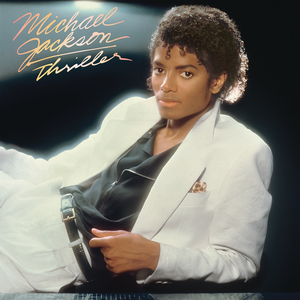
Album
Book
City
Game
Kimi K2Kimi K2
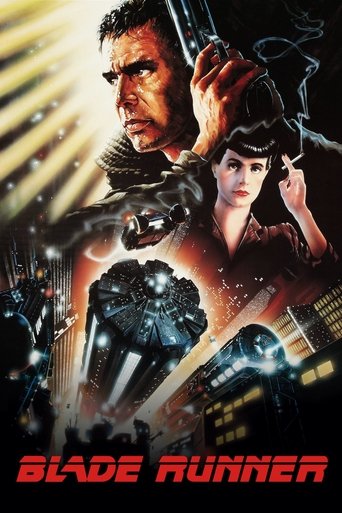



Blade Runner
Dark Side Of The Moon
The Left Hand of Darkness
Kyoto
Outer Wilds
Mercury 2Mercury 2
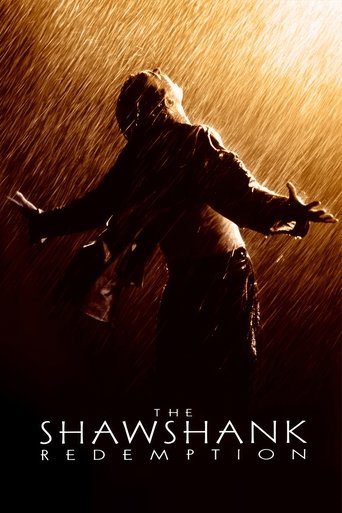


The Shawshank Redemption
Thriller
Pride and Prejudice
Tokyo
Minecraft
Price and specs
| Spec | Kimi K2 | Mercury 2 |
|---|---|---|
| Input price | $0.57/M tokens | $0.25/M tokens |
| Output price | $2.3/M tokens | $0.75/M tokens |
| Context window | — | 128K tokens |
| Weights | Open | — |
| Free API (OpenRouter) | No | No |
| Released | Jul 2025 | Mar 2026 |
| At 10M a month | $5.70 | $2.50 |
Input tokens at list price. No caching, no batch discount.
Where to run it
Kimi K21 host
Mercury 21 host
Per million tokens. Prices and uptime via OpenRouter, checked 10 Oct 2026.
Common questions
What is the difference between Kimi K2 and Mercury 2?
Kimi K2 is developed by Moonshot AI while Mercury 2 is developed by Inception. You can compare their actual outputs across 53 challenges on Rival to see how they differ in practice.
Which is better, Kimi K2 or Mercury 2?
It depends on your use case. Kimi K2 and Mercury 2 each have strengths in different areas. Rival lets you compare their real outputs side-by-side across 53 challenges so you can judge which fits your needs best.
How much does Kimi K2 cost compared to Mercury 2?
Kimi K2 costs $0.57/M input tokens and Mercury 2 costs $0.25/M input tokens. Mercury 2 is $0.32/M cheaper per input. Check their side-by-side outputs on Rival to see if the price difference is justified by quality.
How can I compare Kimi K2 and Mercury 2 on Rival?
This page shows a side-by-side comparison of Kimi K2 and Mercury 2 across shared challenges. You can vote on which model produced the better output in a blind duel. Browsing and voting are free. No account is needed to look; signing in only saves your votes and likes.
More comparisons
Against the newest arrivals
- Kimi K2 vs Step 5 PreviewLanded Oct 2026
- Mercury 2 vs Claude Haiku 5.5Landed Oct 2026
- Kimi K2 vs Ling 3.1 FlashLanded Oct 2026
- Mercury 2 vs Mistral Large 4Landed Oct 2026
- Kimi K2 vs GPT-6.1 SolLanded Sep 2026
- Mercury 2 vs Claude Sonnet 5.5Landed Sep 2026
- Kimi K2 vs Solar Mini 4Landed Sep 2026
- Mercury 2 vs Qwen3.8 Max PrimeLanded Sep 2026


