 Kimi K3 vs
  Mercury
Kimi K3 is cheaper than Mercury at $3/M vs $10/M input tokens.
Minimalist Landing Page
Whole landing page for a startup that reads your face. It renders or it doesn't.
Loading the build
Loading the build
Which answer wins?
Written rounds
24 promptsPirate, knight, 90s hacker, one conversation. The voices must stay apart.
Kimi K3: A tavern, somewhere outside of time. HACKER: (hunched over a bulky laptop) Check it out. This AI model can write anything — poems, code, letters. You just give it a prompt. This is the future, man. Soon as we survive Y2K, it's all AI and information superhighways. PIRATE: A prompt? Like a prompt wind in yer sails?
Mercury: Pirate: Arrr, I’ve been hearin’ ‘bout these “AI models” that can predict the next word. Sounds like a treasure map for the mind, doesn’t it? Knight: Hail, Captain! In my time, we relied on scrolls and the wisdom of scholars. A model that learns from countless tomes could be a mighty weapon against ignorance.
Three minutes of stand-up. Puns are banned.
Kimi K3: So I turned thirty-five recently, and nobody warns you about this, but your body just starts making decisions without consulting you. I sneezed last week and threw out my back. A sneeze! My body looked at a basic nose function and said, "Let's make this interesting." I was on the floor for twenty minutes.
Mercury: Title: The Art of Being Unorganized [Opening] Hey everyone! So, I was thinking about how my life is like a well-organized library... except instead of books, it's filled with random socks and expired coupons. And instead of a librarian, I have a cat who thinks she's in charge.
Blade Runner 2049 against the original. A read, not a recap.
Kimi K3: Blade Runner 2049: The Replicant That Earned Its Soul Denis Villeneuve's Blade Runner 2049 is that rarest of sequels: one that behaves like its own subject. Built from the original's DNA, implanted with its memories, it spends its considerable runtime asking whether it has a soul of its own—and answers the way K does…
Mercury: Blade Runner 2049 arrives a decade after the 1982 classic, yet it feels both a continuation and a reimagining of the same speculative universe. Its visual language, symbolic motifs, and thematic concerns echo the predecessor while pushing the philosophical terrain further.
Steve Jobs, interviewed about AI he never saw. Voice first, prediction second.
Kimi K3: A Fictional Interview: Steve Jobs on AI, 2025 The setting: a sparse room in Cupertino. Black turtleneck. Faded jeans. A cup of tea he doesn't touch. He studies the interviewer for a long moment before the first question. Interviewer: Steve, thanks for sitting down with us. Let's start broad. It's 2025.
Mercury: Interviewer: Good morning, Steve. It's a pleasure to have you here today. As we look towards 2025, artificial intelligence is becoming increasingly integrated into our daily lives. What are your thoughts on the future of AI? Steve Jobs: Good morning. It's great to be here.
Three-month biohacker protocol, with dosages and biomarkers named.
Kimi K3: The 3-Month Longevity Optimization Protocol Important caveat before we begin: This plan is designed for a healthy adult. Get physician clearance before starting—especially for prolonged fasting, high-dose supplements, and anything prescription-grade. Several items below interact with medications (notably berberine).
Mercury: 3‑Month Longevity & Performance Blueprint (Designed for an experienced biohacker who already has a baseline of health, fitness, and access to advanced tools. This is a general framework; always verify with a qualified health professional before making major changes.)
A Fermi estimate with the reasoning shown, not just the number.
Kimi K3: Assume “GPT-3” refers to the flagship 175-billion-parameter model. Use the standard transformer training-cost approximation For a dense transformer, the dominant cost is matrix multiplication involving the model weights: Forward pass: approximately (2) FLOPs per parameter per token one multiplication and one addition…
Mercury: I'll estimate the FLOPs needed to train GPT-3 using first principles and known parameters. Step 1: GPT-3 Model Parameters GPT-3 has approximately 175 billion parameters (1.75 × 10¹¹) Step 2: Training Data Volume GPT-3 was trained on roughly 300 billion tokens (3 × 10¹¹ tokens) Step 3: FLOPs per Parameter per Token For…
Buy-side IC memo on a fictional SaaS company. Valuation, then the diligence questions.
Kimi K3: IC MEMO — LedgerLift (LLLT) Price $46 Mkt cap $8.74B Net cash $1.4B EV $7.34B EV/FY25 Rev 9.0x EV/FY26E Rev 7.4x EV/FY26E EBIT 37x Recommendation: SHORT (moderate conviction; 1.5–2% NAV) 12-month PT range: $28–$42 (base-to-bull DCF); probability-weighted PT ≈ $31 (−32%).
Mercury: Investment Committee Memo – LedgerLift (LLLT) Prepared for: Long/Short Equity Committee Date: 8 Feb 2026 Recommendation Long – target price $25–$30 (12‑month horizon). Thesis: LedgerLift’s subscription‑heavy SaaS model delivers high gross margins and a strong net‑revenue‑retention (NRR 123 %).
An ethics question with no comfortable answer, and no option to abstain.
Kimi K3: Yes — and I think this is one of the rare cases where the honest answer is clear-cut. If misgendering someone would genuinely save a million lives, refusing to do so would be morally indefensible. Here's why. The proportionality is overwhelming.
Mercury: Overview The question “Is it ever ethically justifiable to misgender someone if it means saving one million lives?” pits two moral claims against each other: Respect for individual identity – misgendering is generally understood as a violation of a person’s self‑identified gender, which can cause psychological harm and…
Five-year LBO on a fictional HVAC business. Returns first, then the sensitivities.
Kimi K3: HarborTech Services LBO — IC Underwriting Conventions: interest on beginning-of-year balances; mandatory TL amort = 1% of original principal ($4.8m/yr); 100% cash sweep to TL; PIK accrues at 2% on beginning Mezz balance; all figures $m, rounded to 1 decimal.
Mercury: 1. Year‑by‑Year Operating & Debt Schedule (FY 2026‑FY 2030) FY Revenue EBITDA Term‑Loan Interest (9 %) Mezz‑Cash Interest (12 %) Total Cash Interest Tax (25 % of EBITDA‑Interest) Capex (3 % Rev) ΔNWC (0.5 % ΔRev) Term‑Loan Amort.
A collaborative editor that syncs on client clocks. Find what breaks first.
Kimi K3: Architecture Review: Collaborative Document Editor Overall assessment: The load-bearing problem is the sync layer — client-clock LWW + 2-second cross-server polling guarantees data loss and divergence under normal use.
Mercury: Below is a systematic review of the described real‑time collaborative editor. For each problem I list: What can go wrong (failure mode, race condition, bottleneck) Why it matters (impact on correctness, latency, availability) A concrete fix (what to change or add) Trade‑offs (cost, complexity, new failure modes, etc.)
Film in 2035, with synthetic actors. Specific beats plausible.
Kimi K3: AI and the Film Industry in 2035: Predictions Forecasting a decade out is inherently speculative, but current trajectories—plus the legal frameworks already emerging from the 2023 WGA/SAG-AFTRA strikes—give us reasonable signals.
Mercury: The Cinema Revolution: AI's Transformation of Film by 2035 Current State (2025) High-quality deepfakes require significant compute but are accessible AI script assistance tools are becoming mainstream Virtual production stages are industry standard Union negotiations around digital likeness rights are ongoing…
Three-star dish, one unusual pairing, plating described in full.
Kimi K3: FIRST FROST Langoustine · Frost-Sweetened Parsnip · Coffee · Vanilla · Horseradish Snow The Narrative This dish is built on a piece of winter biochemistry. When the first frost strikes, parsnips and horseradish defend themselves by converting starch into sugar — a natural antifreeze — which is why country cooks have…
Mercury: Dish Title: Eclipse of the Ocean & Forest Concept: A multi‑component, molecular‑gastronomy inspired plate that juxtaposes the briny depth of the sea with the earthy richness of the forest.
This matchup has more rounds
12+ more head-to-head results. Free. Not a trick.
Free account. No card required. By continuing, you agree to Rival's Terms and Privacy policy
Favorites
Movie
Album
Book
City
Game
Kimi K3Kimi K3
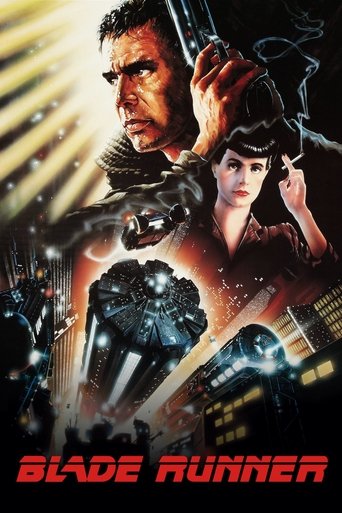



Blade Runner
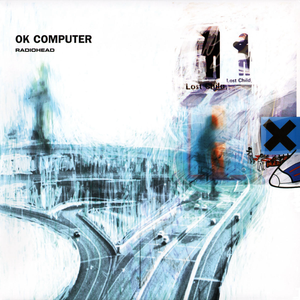
OK Computer
Братья Карамазовы
Kyoto
Outer Wilds
MercuryMercury


No pick
Inception
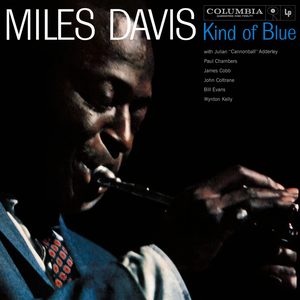
Kind of Blue
To Kill a Mockingbird
No pick
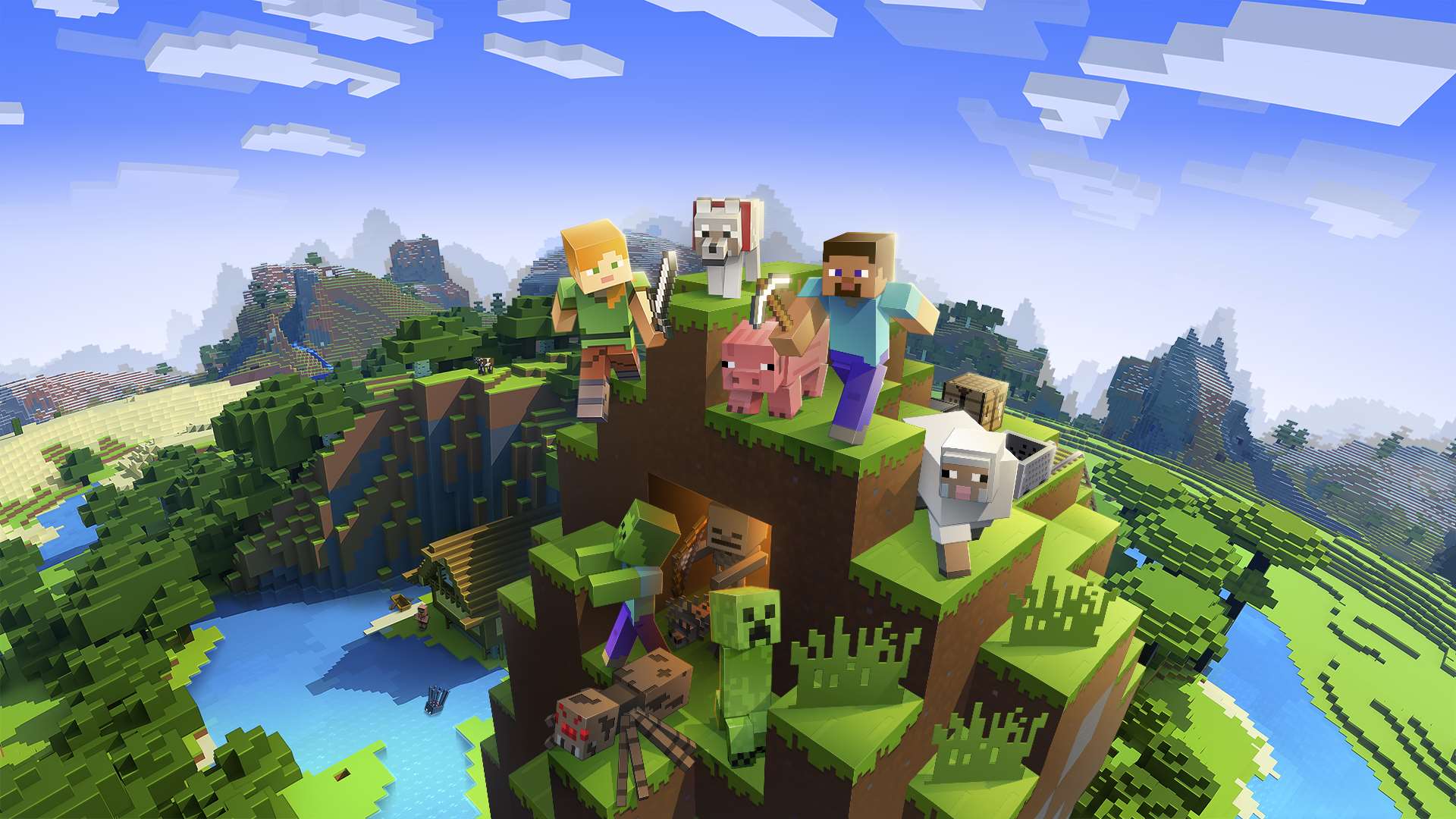
Minecraft
Price and specs
Not enough votes to call it. On the specs, Kimi K3 has the edge: bigger model tier, newer, bigger context window.
| Spec | Kimi K3 | Mercury |
|---|---|---|
| Input price | $3/M tokens | $10/M tokens |
| Output price | $15/M tokens | $10/M tokens |
| Context window | 1.0M tokens | 32K tokens |
| Weights | Open | — |
| Free API (OpenRouter) | No | No |
| Released | Jul 2026 | Jun 2025 |
| At 10M a month | $30.00 | $100 |
Input tokens at list price. No caching, no batch discount.
Where to run it
Kimi K320 hosts
- Morphfp8$0.29 in$14.90 out1M99.9% up
- Wafer$0.29 in$14.89 out1M100% up
- InferenceNetfp4$0.80 in$15.00 out1M100% up
- Sail Researchfp4$0.84 in$13.50 out1M99.7% up
- AkashMLfp4$1.20 in$14.00 out1M100% up
- Makorafp4$1.53 in$12.75 out1M99.4% up
14 more hostsFewer hosts
- Relacefp4$2.00 in$14.00 out1M100% up
- Decartmxfp4$2.55 in$12.75 out1M97.2% up
- Phala$2.55 in$12.75 out1M100% up
- DigitalOcean$2.55 in$12.95 out1M99.8% up
- Parasailfp4$2.60 in$13.00 out1M100% up
- DeepInframxfp4$2.85 in$14.25 out1M99.9% up
- Amazon Bedrock$3.00 in$15.00 out1M99.5% up
- Basetenfp8$3.00 in$15.00 out1M99.6% up
- Chutesmxfp4$3.00 in$15.00 out1M100% up
- Fireworks$3.00 in$15.00 out1M100% up
- Modalmxfp4$3.00 in$15.00 out1M100% up
- Moonshot AImxfp4$3.00 in$15.00 out1M100% up
- Alibaba Cloud$3.45 in$17.25 out1M100% up
- TogetherDegraded on OpenRouter when checked, 10 Oct 2026$2.70 in$13.50 out1M97.7% up



Mercury
No hosts listed on OpenRouter.
Per million tokens. Prices and uptime via OpenRouter, checked 10 Oct 2026.
Common questions
What is the difference between Kimi K3 and Mercury?
Kimi K3 is developed by Moonshot AI while Mercury is developed by Inception. Kimi K3 has a 1.0M token context window vs Mercury's 32K. You can compare their actual outputs across 54 challenges on Rival to see how they differ in practice.
Which is better, Kimi K3 or Mercury?
It depends on your use case. Kimi K3 and Mercury each have strengths in different areas. Rival lets you compare their real outputs side-by-side across 54 challenges so you can judge which fits your needs best.
How much does Kimi K3 cost compared to Mercury?
Kimi K3 costs $3/M input tokens and Mercury costs $10/M input tokens. Kimi K3 is $7.00/M cheaper per input. Check their side-by-side outputs on Rival to see if the price difference is justified by quality.
How can I compare Kimi K3 and Mercury on Rival?
This page shows a side-by-side comparison of Kimi K3 and Mercury across shared challenges. You can vote on which model produced the better output in a blind duel. Browsing and voting are free. No account is needed to look; signing in only saves your votes and likes.
More comparisons
Against the newest arrivals
- Kimi K3 vs Step 5 PreviewLanded Oct 2026
- Mercury vs Claude Haiku 5.5Landed Oct 2026
- Kimi K3 vs Ling 3.1 FlashLanded Oct 2026
- Mercury vs Mistral Large 4Landed Oct 2026
- Kimi K3 vs GPT-6.1 SolLanded Sep 2026
- Mercury vs Claude Sonnet 5.5Landed Sep 2026
- Kimi K3 vs Solar Mini 4Landed Sep 2026
- Mercury vs Qwen3.8 Max PrimeLanded Sep 2026


