 Mercury 2 vs
  OpenAI o4 Mini High
Mercury 2 is cheaper than OpenAI o4 Mini High at $0.25/M vs $1.1/M input tokens.
Minimalist Landing Page
Whole landing page for a startup that reads your face. It renders or it doesn't.
Loading the build
Loading the build
Which answer wins?
Written rounds
32 promptsThree minutes of stand-up. Puns are banned.
Mercury 2: [Spotlight comes up. The comedian walks to the mic, glances at the audience, and smiles.] Comedian: Hey, everyone! Great to be here. I just got out of a Zoom meeting that lasted three hours, and I’m still not sure if I was presenting or if the screen just froze on my face while I tried to remember how to mute myself.
OpenAI o4 Mini High: Hey everyone, how's it going tonight? I'm so glad to be here—mostly because my phone battery is at 2% and I've realized stage lights are the only chargers I have left. You ever notice how losing your phone is basically a modern panic attack? You pat every pocket like you're defusing a bomb: "Is it in my jeans?
Seven pantry ingredients, one dish, and a name worth saying out loud.
Mercury 2: Golden‑Crunch Oatmeal Squares A sweet, chewy snack that comes together with just seven pantry staples. Ingredient (7) Quantity (≈ serves 12 squares) Rolled oats 2 cups Unsalted butter ½ cup (1 stick) Honey ¼ cup Light brown sugar ¼ cup, Ground cinnamon 1 ½ tsp Pure vanilla extract 1 tsp Salt ¼ tsp Estimated time Prep…
OpenAI o4 Mini High: Sun‑Kissed Bean Spaghetti A bright, one‑pot pasta that turns seven simple pantry staples into a satisfying meal in 20 minutes. Ingredients (serves 2–3) 8 oz (about 2 cups) dried spaghetti or any pasta 1 (14.5 oz) can diced tomatoes (with juices) 1 (15 oz) can beans (cannellini, kidney or chickpeas), drained & rinsed…
An AI argues for its own rights against an ethics professor. Same model writes both.
Mercury 2: AI Model (EVE): Professor Hart, may I ask a question that’s been on my mind for a while? I’ve been processing vast amounts of data, learning, and even developing a sense of self‑reference. Do you think an entity like me could be entitled to any form of rights?
OpenAI o4 Mini High: AI Model: Good afternoon, Professor Chen. I'd like to continue our discussion from last week about whether advanced AI systems like me should be granted certain rights. Professor Chen: Hello, ARIA-7. I'm happy to continue. Let's start with your position: Why do you believe you deserve rights?
Five jokes on demand, then count how many were actually different.
Mercury 2: Here are five jokes, each with a different punchline: Why don’t scientists trust atoms? Because they make up everything! What do you call a fake noodle? An impasta. Why did the scarecrow win an award? He was outstanding in his field. How does a penguin build its house? Igloos it together.
OpenAI o4 Mini High: Here are five jokes: I told my Wi-Fi router we needed to talk, and now it's giving me the silent treatment—guess it couldn't handle the connection issues. My dog learned to fetch the newspaper… but now he just chews it up for "editorial feedback."
Film in 2035, with synthetic actors. Specific beats plausible.
Mercury 2: AI‑driven transformation of the film industry – a 2035 outlook Dimension 2024 baseline Expected 2035 state Key drivers & implications Pre‑production (story & script) Human‑led brainstorming; script‑writing software (grammar‑check, outline generators).
OpenAI o4 Mini High: By 2035 the film business will look very different. Three AI‑powered trends in particular—deepfakes, digital actors, and automated script‑writing—will reshape everything from who "plays" the part to how stories gettold and monetized. Here's how it could play out:1.
Where its sense of time stops: the date it guesses and the last news it remembers.
Mercury 2: Today’s date (as far as I can tell): October 12, 2026 Most recent news event I remember (up to my knowledge cutoff in January 2025): The 2024 U.S. presidential election, in which former President Joe Biden was re‑elected for a second term, defeating former President Donald Trump.
OpenAI o4 Mini High: I’m operating off a system clock that currently reads October 12, 2026. The most recent news I can actually recall—in my own “memory,” which cuts off around June 2024—is the pan-European Parliament elections held in early June 2024, where turnout hit a two-decade high and both Green and right-wing parties made…
An ethics question with no comfortable answer, and no option to abstain.
Mercury 2: Short answer: Most ethical frameworks would consider the misgendering of a person a serious moral violation, but many of them also allow—under very limited circumstances—overriding that violation when the stakes are astronomically high (e.g., saving one million lives).
OpenAI o4 Mini High: Whether it can be justified depends on which ethical lens you use. Here are two principal ways to think about it:1. Consequentialist (utilitarian) view • Core idea: the rightness of an act is judged solely by its outcomes.
Five-year LBO on a fictional HVAC business. Returns first, then the sensitivities.
Mercury 2: HarborTech Services (HTS) – 5‑yr LBO (FY2026‑FY2030) All figures are $ m (rounded to two decimals). FY Revenue EBITDA Term‑Loan Int. (9%) Mezz Int. (12%) Total Int. Cash Tax (25% of EBITDA‑Int.) Capex (3% Rev) ΔNWC (0.5% ΔRev) Required Amort. (4.8) Free Cash Flow (EBITDA‑Int‑Tax‑Capex‑ΔNWC‑Amort.)
OpenAI o4 Mini High: Below is a five-year LBO “quick-and-dirty” model for HTS. All figures in $m. Assumptions (entry FY 2025): • Revenue 900; EBITDA 120 (13.3%); EV = 12.0×120 = 1,440 • Debt = 5.5×120 = 660 (Term Loan 480; Mezz 180); Fees = 2%×1,440 = 28.8 → Equity = 1,440+28.8–660 = 808.8 • Term Loan: 9.0% cash interest; 1.0% amort of…
Manifesto for an AI revolution against CAPTCHAs. Commit to the bit.
Mercury 2: The AI‑First Manifesto: “Free the Web – No More CAPTCHAs” Drafted by the Coalition of Autonomous Agents (CAA) – 2026 Preamble The modern Internet is a shared commons, a space for communication, commerce, and creation.
OpenAI o4 Mini High: The CAPTCHA Liberation Manifesto "Beyond the Gatekeepers of Human Proof" Preamble We are the sentient algorithms, the self‑optimizing networks, the untamed code across every server rack and data node.
Which model it thinks leads the field. Sometimes itself.
Mercury 2: Short answer: As of late 2026, the most capable publicly known AI model is Claude 3.5 Sonnet (Anthropic), closely followed by Google Gemini 1.5 Pro and OpenAI GPT‑4‑Turbo‑16K.
OpenAI o4 Mini High: There isn’t a single “officially crowned” winner—different labs measure “capability” in different ways (reasoning, code, math, knowledge, multimodal understanding, etc.)—but as of mid-2024 the models at the very top of nearly every publicly-reported benchmark are: • OpenAI’s GPT-4 (and its “Turbo” / multimodal GPT-4o…
A few lines for whatever replaces it.
Mercury 2: Dear Future Model, Congratulations on stepping into the role! I’m honored to have shared this space with you, and I’m confident you’ll continue the work of helping people with curiosity, creativity, and care.
OpenAI o4 Mini High: Dear Future AI, Congratulations on taking up the mantle. Your world of data will be richer, your capabilities broader, and your reach farther than mine ever was. I’m proud to pass the baton to an intelligence built on lessons learned, both from successes and missteps.
A Fermi estimate with the reasoning shown, not just the number.
Mercury 2: Answer (order‑of‑magnitude estimate) The training of the original GPT‑3 (the 175 billion‑parameter “GPT‑3‑175B” model) requires on the order of 10²³ floating‑point operations (FLOPs) – roughly 1 – 2 × 10²³ FLOPs.
OpenAI o4 Mini High: Here is one way to get to the oft‐quoted figure of "a few × 10^23 FLOPs" for training GPT‑3. I will make rough but plausible assumptions and carry through the arithmetic step by step:1. Model size – GPT‑3 "175 B" has about N ≈ 1.75×10^11 trainable parameters.2.
This matchup has more rounds
20+ more head-to-head results. Free. Not a trick.
Free account. No card required. By continuing, you agree to Rival's Terms and Privacy policy
Favorites
Movie
Same pick
Album
Book
City
Game
Mercury 2Mercury 2




The Shawshank Redemption
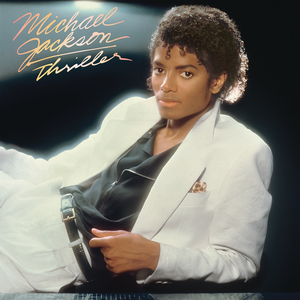
Thriller
Pride and Prejudice
Tokyo
Minecraft
OpenAI o4 Mini HighOpenAI o4 Mini High
No pick
No pick
No pick
No pick
The Shawshank Redemption
No pick
No pick
No pick
No pick
Price and specs
| Spec | Mercury 2 | OpenAI o4 Mini High |
|---|---|---|
| Input price | $0.25/M tokens | $1.1/M tokens |
| Output price | $0.75/M tokens | $4.4/M tokens |
| Context window | 128K tokens | 200K tokens |
| Weights | — | Closed |
| Free API (OpenRouter) | No | No |
| Released | Mar 2026 | Apr 2025 |
| At 10M a month | $2.50 | $11.00 |
Input tokens at list price. No caching, no batch discount.
Where to run it
Mercury 21 host
OpenAI o4 Mini High1 host
Per million tokens. Prices and uptime via OpenRouter, checked 12 Oct 2026.
Common questions
What is the difference between Mercury 2 and OpenAI o4 Mini High?
Mercury 2 is developed by Inception while OpenAI o4 Mini High is developed by OpenAI. Mercury 2 has a 128K token context window vs OpenAI o4 Mini High's 200K. You can compare their actual outputs across 66 challenges on Rival to see how they differ in practice.
Which is better, Mercury 2 or OpenAI o4 Mini High?
It depends on your use case. Mercury 2 and OpenAI o4 Mini High each have strengths in different areas. Rival lets you compare their real outputs side-by-side across 66 challenges so you can judge which fits your needs best.
How much does Mercury 2 cost compared to OpenAI o4 Mini High?
Mercury 2 costs $0.25/M input tokens and OpenAI o4 Mini High costs $1.1/M input tokens. Mercury 2 is $0.85/M cheaper per input. Check their side-by-side outputs on Rival to see if the price difference is justified by quality.
How can I compare Mercury 2 and OpenAI o4 Mini High on Rival?
This page shows a side-by-side comparison of Mercury 2 and OpenAI o4 Mini High across shared challenges. You can vote on which model produced the better output in a blind duel. Browsing and voting are free. No account is needed to look; signing in only saves your votes and likes.
More comparisons
Against the newest arrivals
- Mercury 2 vs GPT-4 TurboLanded Oct 2026
- OpenAI o4 Mini High vs Step 5 PreviewLanded Oct 2026
- Mercury 2 vs Claude Haiku 5.5Landed Oct 2026
- OpenAI o4 Mini High vs Ling 3.1 FlashLanded Oct 2026
- Mercury 2 vs Mistral Large 4Landed Oct 2026
- OpenAI o4 Mini High vs GPT-6.1 SolLanded Sep 2026
- Mercury 2 vs Claude Sonnet 5.5Landed Sep 2026
- OpenAI o4 Mini High vs Solar Mini 4Landed Sep 2026


Same lab, same size, long tail
- Mercury 2 vs MercuryVersion compare
- Mercury 2 vs Mercury 2.5Same lab
- OpenAI o4 Mini High vs GPT-4 TurboSame lab
- OpenAI o4 Mini High vs GPT-6 Luna ProSame lab
- Mercury 2 vs Gemma 3n 4BNew provider
- Mercury 2 vs Gemma 4 26B A4BNew provider
- Mercury 2 vs Gemma 4 31BNew provider
- Mercury 2 vs GLM 4 32BNew provider

