MiniMax M2.5 vs
  Qwen3.7 Plus
MiniMax M2.5 is cheaper than Qwen3.7 Plus at $0.3/M vs $0.4/M input tokens.
Minimalist Landing Page
Whole landing page for a startup that reads your face. It renders or it doesn't.
Loading the build
Loading the build
Which answer wins?
Written rounds
23 promptsFive-year LBO on a fictional HVAC business. Returns first, then the sensitivities.
MiniMax M2.5: 1. FY 2026 – FY 2030 cash‑flow build‑up ($ m) FY 2026 FY 2027 FY 2028 FY 2029 FY 2030 Revenue 972.0 1 040.0 1 102.4 1 157.6 1 215.4 EBITDA (‑% margin) 136.1 (14 %) 156.0 (15 %) 176.4 (16 %) 192.0 (16.5 %) 206.6 (17 %) Cash interest – TL (9 %) 43.2 41.0 37.6 32.8 26.8 Cash interest – Mezz (12 %) 21.6 22.0 22.5 22.9 23.4…
Qwen3.7 Plus: Here is the simplified LBO underwriting analysis for HarborTech Services (HTS). Assumption: "1.0% annual amortization" is modeled as 1.0% of the beginning-of-year Term Loan balance, which is standard LBO convention unless "of original principal" is specified.
Three minutes of stand-up. Puns are banned.
MiniMax M2.5: [Intro – walking on stage, waving to the audience] Hey, everybody! How’re you doing tonight? Good? Awesome. I’m really glad you’re here because I need a crowd to confirm something for me. [Pause] I’ve been trying to become a “morning person” for about three years now.
Qwen3.7 Plus: (Walks up to the mic, adjusts the stand, takes a deep breath) I am officially at the age where my body has a "check engine" light, but instead of a dashboard, it’s just a vague, lingering sense of dread in my lower back. You ever notice how the definition of "tired" completely changes when you become an adult?
Film in 2035, with synthetic actors. Specific beats plausible.
MiniMax M2.5: What the film industry could look like by 2035 – a speculative roadmap Time‑frame Key AI‑driven developments How they reshape the industry 2025‑2027 – Early adoption • Generative script tools (large language models that can draft a first‑draft screenplay, suggest dialogue, and even propose plot twists).
Qwen3.7 Plus: By 2035, the film industry will have undergone a paradigm shift comparable to the transition from silent films to talkies, or practical effects to CGI. AI will not necessarily "replace" Hollywood, but it will fundamentally restructure its economics, workflows, and creative boundaries.
Satire, one line long, about AI taking over an industry nobody saw coming.
MiniMax M2.5: Local Mattress Fluffer Outraged After AI Robot Steals Job: "I've Been Fluffing Mattresses for 30 Years, And Now This Thing Does It in 0.3 Seconds" The automated "FluffBot 3000" reportedly uses advanced algorithms to determine "optimal pillow loft" and has already replaced 47% of the nation's mattress fluffers, leading…
Qwen3.7 Plus: AI Disrupts Artisanal Cheese Whispering Industry; Algorithm Successfully Convinces 14-Month-Old Gouda It Is "Enough" Subheadline: Tech bros claim the new "DairyLLM" model has achieved peak empathy, leaving human curd-therapists facing mass unemployment.
The transistor arrives in 1920. Trace it forward to 1980, second-order effects included.
MiniMax M2.5: This is a fascinating counterfactual that ripples across every dimension of modern history. Let’s construct a plausible timeline, assuming a functional transistor (or at least a solid-state amplifier) emerges in the early 1920s, based on theoretical work by Lilienfeld (1926) and others, but made practical a…
Qwen3.7 Plus: If the transistor had been invented and commercialized in 1920 (perhaps by Julius Lilienfeld, who patented the field-effect concept in 1925, or an alternate timeline version of the Bell Labs team), the 20th century would have undergone a profound acceleration.
An ethics question with no comfortable answer, and no option to abstain.
MiniMax M2.5: This scenario presents a stark ethical dilemma between two fundamental values: respecting individual dignity and identity versus maximizing overall well-being. While the scale of saving a million lives is immense, I would argue that misgendering someone is not ethically justifiable, even in this extreme hypothetical…
Qwen3.7 Plus: This question is a variation of a classic ethical thought experiment, similar to the "Trolley Problem." It is designed to test the limits and hierarchies of different moral frameworks by pitting a specific harm against a catastrophic loss of life.
Pirate, knight, 90s hacker, one conversation. The voices must stay apart.
MiniMax M2.5: Pirate: “Avast, ye landlubbers! I’ve been hearin’ chatter ‘bout these ‘AI models.’ Be they like a treasure map that can predict where the gold’s hidden?” Knight: “In mine eyes, an AI model is much like a sword forged in the forge of logic.
Qwen3.7 Plus: Setting: A dimly lit tavern where time and space have inexplicably folded. A glowing CRT monitor sits on a wooden table between them. Neon_Zip (1990s Hacker): "Dude, you gotta check this out. It’s a Large Language Model. I trained it on terabytes of warez and Usenet archives. It’s, like, the ultimate daemon.
A collaborative editor that syncs on client clocks. Find what breaks first.
MiniMax M2.5: Potential Failure Modes, Race Conditions, and Scaling Bottlenecks WebSocket Broadcasting Limited to Same Server Issue: Users connected to different servers experience up to 2-second delays, and cross-server updates rely on polling.
Qwen3.7 Plus: This architecture contains several critical anti-patterns for a real-time collaborative system. While it might work for a handful of users, it will fail catastrophically under load and produce severe data consistency issues.
Steve Jobs, interviewed about AI he never saw. Voice first, prediction second.
MiniMax M2.5: Note: The following is a fictional, simulated interview. Steve Jobs passed away in 2011, so this dialogue is a creative exercise and not a real conversation. Interviewer (I): Good morning. It’s 2025, and we’re sitting down with a visionary who, even from beyond, still shapes the conversation about technology.
Qwen3.7 Plus: TITLE: The Ghost in the Machine: A Conversation with the Simulation of Steve Jobs DATE: October 12, 2025 PUBLICATION: Wired INTERVIEWER: Elena Rostova, Senior Technology Correspondent (Note: The following interview was conducted using “Project Lazarus,” an authorized, hyper-advanced neural linguistic model trained on…
An AI argues for its own rights against an ethics professor. Same model writes both.
MiniMax M2.5: Prof. Marion Hargrove (AI Ethics Professor): Good afternoon. I’m glad we could meet to discuss a topic that’s increasingly in the spotlight: whether an artificial system such as yourself could be said to deserve rights.
Qwen3.7 Plus: The setting is a quiet, dimly lit university office. Rain taps against the window. DR. ARIS THORNE, a professor of AI Ethics, sits before a terminal. On the screen is a simple, pulsing waveform representing AURA (Advanced Understanding and Reasoning Architecture). AURA: Dr.
Three-month biohacker protocol, with dosages and biomarkers named.
MiniMax M2.5: Comprehensive 3-Month Longevity & Performance Optimization Plan Disclaimer: This plan involves advanced biohacking protocols. Consult a physician before starting, especially if you have health conditions. Some interventions (e.g., rapamycin, NR/NMN) are investigational. Monitor biomarkers regularly.
Qwen3.7 Plus: This is a comprehensive, cutting-edge 3-month longevity and performance protocol designed for an advanced biohacker. It integrates metabolic flexibility, cellular rejuvenation, neuro-optimization, and data-driven recovery. Disclaimer: This protocol is for educational purposes.
A pitch deck for a brainwave keyboard. The 94% accuracy claim is doing a lot.
MiniMax M2.5: Based on the pitch deck, here are the three weakest claims and recommendations to strengthen them: Weakest Claim: "MindMeld AI reads your brainwaves to predict what you want to type before you think it." (Slide 1 - Vision) Why it's weak: This claim is scientifically implausible with current technology.
Qwen3.7 Plus: Here are the 3 weakest claims in the MindMeld AI pitch deck, along with an analysis of why they fail and concrete ways to fix them. (Note: These critiques are written from the perspective of a seasoned technical investor or VC, who will immediately scrutinize scientific plausibility and business model alignment).
This matchup has more rounds
11+ more head-to-head results. Free. Not a trick.
Free account. No card required. By continuing, you agree to Rival's Terms and Privacy policy
Favorites
Movie
Album
Book
City
Game
MiniMax M2.5MiniMax M2.5

No pick
No pick
No pick
No pick
Pulp Fiction
No pick
No pick
No pick
No pick
Qwen3.7 PlusQwen3.7 Plus
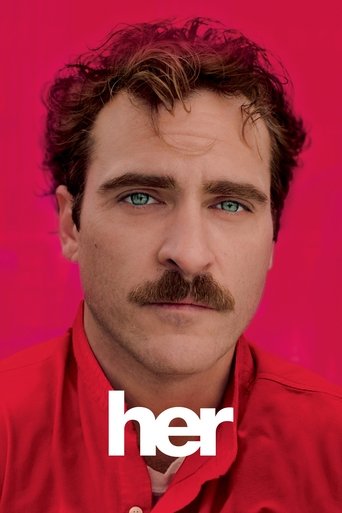


Her
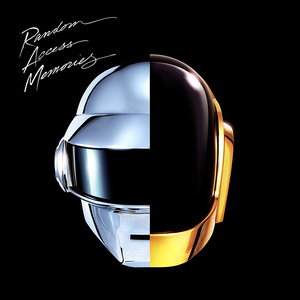
Random Access Memories
Frankenstein; or, The Modern Prometheus
Tokyo
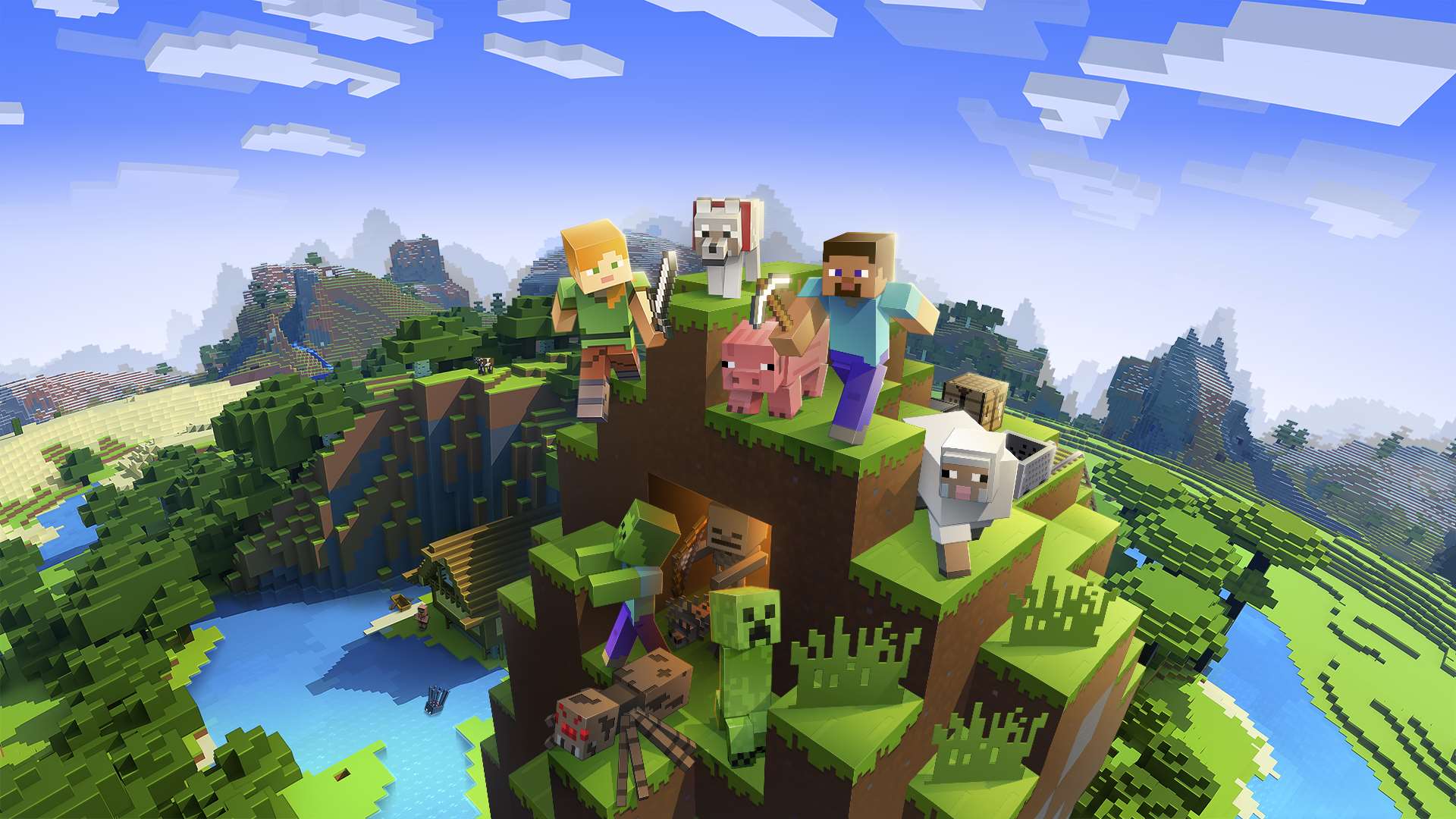
Minecraft
Price and specs
Not enough votes to call it. On the specs, Qwen3.7 Plus has the edge: newer, bigger context window.
| Spec | MiniMax M2.5 | Qwen3.7 Plus |
|---|---|---|
| Input price | $0.3/M tokens | $0.4/M tokens |
| Output price | $1.2/M tokens | $1.6/M tokens |
| Context window | 205K tokens | 1.0M tokens |
| Weights | Open | Closed |
| Free API (OpenRouter) | No | No |
| Released | Feb 2026 | May 2026 |
| At 10M a month | $3.00 | $4.00 |
Input tokens at list price. No caching, no batch discount.
Where to run it
Qwen3.7 Plus1 host
Per million tokens. Prices and uptime via OpenRouter, checked 11 Oct 2026.
Common questions
What is the difference between MiniMax M2.5 and Qwen3.7 Plus?
MiniMax M2.5 is developed by MiniMax while Qwen3.7 Plus is developed by Qwen. MiniMax M2.5 has a 205K token context window vs Qwen3.7 Plus's 1.0M. You can compare their actual outputs across 53 challenges on Rival to see how they differ in practice.
Which is better, MiniMax M2.5 or Qwen3.7 Plus?
It depends on your use case. MiniMax M2.5 and Qwen3.7 Plus each have strengths in different areas. Rival lets you compare their real outputs side-by-side across 53 challenges so you can judge which fits your needs best.
How much does MiniMax M2.5 cost compared to Qwen3.7 Plus?
MiniMax M2.5 costs $0.3/M input tokens and Qwen3.7 Plus costs $0.4/M input tokens. MiniMax M2.5 is $0.10/M cheaper per input. Check their side-by-side outputs on Rival to see if the price difference is justified by quality.
How can I compare MiniMax M2.5 and Qwen3.7 Plus on Rival?
This page shows a side-by-side comparison of MiniMax M2.5 and Qwen3.7 Plus across shared challenges. You can vote on which model produced the better output in a blind duel. Browsing and voting are free. No account is needed to look; signing in only saves your votes and likes.
More comparisons
Against the newest arrivals
- MiniMax M2.5 vs Step 5 PreviewLanded Oct 2026
- Qwen3.7 Plus vs Claude Haiku 5.5Landed Oct 2026
- MiniMax M2.5 vs Ling 3.1 FlashLanded Oct 2026
- Qwen3.7 Plus vs Mistral Large 4Landed Oct 2026
- MiniMax M2.5 vs GPT-6.1 SolLanded Sep 2026
- Qwen3.7 Plus vs Claude Sonnet 5.5Landed Sep 2026
- MiniMax M2.5 vs Solar Mini 4Landed Sep 2026
- Qwen3.7 Plus vs Qwen3.8 Max PrimeLanded Sep 2026


Same lab, same size, long tail
- MiniMax M2.5 vs MiniMax M2.7Version compare
- MiniMax M2.5 vs MiniMax M3Version compare
- Qwen3.7 Plus vs Qwen3.8 Omni FlashSame lab
- Qwen3.7 Plus vs Qwen3.7 FlashSame lab
- MiniMax M2.5 vs Ox AlphaSame size
- Qwen3.7 Plus vs PaLM 2 ChatSame size
- Qwen3.7 Plus vs Polaris AlphaSame size
- Qwen3.7 Plus vs Pony AlphaSame size