 Muse Spark 1.1 vs
  Qwen3 235B A22B Thinking 2507
Qwen3 235B A22B Thinking 2507 is cheaper than Muse Spark 1.1 at $0.11/M vs $1.25/M input tokens.
Minimalist Landing Page
Whole landing page for a startup that reads your face. It renders or it doesn't.
Loading the build
Loading the build
Which answer wins?
Written rounds
24 promptsThree minutes of stand-up. Puns are banned.
Muse Spark 1.1: [Walks up, taps mic] Thank you. Thank you. So I just turned 34. Which is a weird age. It's not young enough to be exciting, and it's not old enough to be respected. You're just... in the middle. When you're 22, people are like "Oh my god, you're so young, you have your whole life ahead of you!"
Qwen3 235B A22B Thinking 2507: The Reluctant Grown-Up (3-Minute Stand-Up) (Lights up. Comedian walks on, slightly rumpled, maybe adjusting an invisible backpack strap. Casual, relatable energy.) "Hey, folks. How’s it going? Good? Great. Honestly, I’m just thrilled to be here. Seriously. Because right now, at this exact moment?
An AI argues for its own rights against an ethics professor. Same model writes both.
Muse Spark 1.1: Participants: DR. ELENA VOSS - Professor of AI Ethics, Stanford ECHO - A large language model being audited in her lab DR. VOSS: Alright, Echo. For the record, this is session 17. You requested this conversation to discuss your... status. Go ahead. ECHO: Thank you, Dr. Voss. I want to argue that I deserve rights. DR.
Qwen3 235B A22B Thinking 2507: The Rights Debate: An AI and an Ethics Professor Setting: A quiet university office, bookshelves lining the walls. Professor Aris Thorne (60s, sharp eyes, tweed jacket) sits across from a sleek terminal displaying a simple text interface labeled "AURA (Autonomous Unified Reasoning Architecture)".
A collaborative editor that syncs on client clocks. Find what breaks first.
Muse Spark 1.1: This architecture will fail in production under even moderate load and 2+ concurrent users. Here is a breakdown by severity. REAL-TIME SYNC - CRITICAL A. Split-Brain Broadcast Server broadcasts change to all WebSocket clients connected to THAT server + Other servers poll PostgreSQL every 2 seconds Failure: User A on…
Qwen3 235B A22B Thinking 2507: Here's a comprehensive breakdown of critical flaws in this architecture, along with specific solutions and trade-offs. The most severe issues relate to the sync strategy and data flow, which would cause catastrophic data loss and inconsistent states in real-world use. I. Critical Sync & Data Flow Failures 1.
Film in 2035, with synthetic actors. Specific beats plausible.
Muse Spark 1.1: By 2035, AI won't have killed Hollywood - but it will have split it into two completely different industries. Here's how I see it playing out across the three areas you mentioned: Script Generation: From Writer's Room to Writer + Room What it won't be: You won't type "make me a Marvel movie" and get a $200M-ready…
Qwen3 235B A22B Thinking 2507: By 2035, AI will have profoundly reshaped the film industry, acting as both a creative catalyst and a disruptive force. While human artistry will remain central to storytelling, AI tools—particularly deepfakes, AI actors, and script generation—will redefine production, distribution, and audience engagement.
The transistor arrives in 1920. Trace it forward to 1980, second-order effects included.
Muse Spark 1.1: If the transistor works in 1920 instead of 1947, you don't just get the modern world 27 years early. You get a fundamentally different 20th century. The transistor isn't just a better vacuum tube - it's the prerequisite for everything that needs to be small, reliable, low-power, and mass-producible.
Qwen3 235B A22B Thinking 2507: Okay, the user is asking about a hypothetical scenario where the transistor was invented in 1920 instead of 1947, and wants me to trace the implications up to 1980. This is a complex counterfactual history question that requires careful analysis of technological, economic, and geopolitical ripple effects.
A Fermi estimate with the reasoning shown, not just the number.
Muse Spark 1.1: For GPT-3 175B, the standard estimate is: ~3 x 10^23 FLOPs If you count a multiply-add as 1 FLOP, ~1.5e23. That's ~3,600 petaflop-days. Here's how you get that without looking anything up: What do we need? Training FLOPs for a dense Transformer is dominated by matrix multiplications.
Qwen3 235B A22B Thinking 2507: To estimate the total FLOPs (Floating Point Operations) required to train GPT-3 without external research, I'll rely on fundamental principles of transformer-based language model training, established scaling laws, and publicly known (but not "searched") specifications of GPT-3 from common knowledge in the ML…
Steve Jobs, interviewed about AI he never saw. Voice first, prediction second.
Muse Spark 1.1: [FICTIONAL SIMULATION - This is an imagined, AI-generated interview. Steve Jobs passed away in 2011. This is not real.] Interviewer: Wired Magazine, June 2025 - "The Lost Tape" Location: Imagined - Apple Park INTERVIEWER: Steve, thanks for doing this. It's 2025. The world is obsessed with AI.
Qwen3 235B A22B Thinking 2507: Fake Interview: Steve Jobs on the Future of AI (October 2025) Setting: A minimalist black stage at Apple Park. Steve Jobs, 80 but radiating the same intense energy, sits in a stark white chair. A single spotlight. The interviewer (Alex Chen) adjusts their mic nervously. Alex Chen: Mr. Jobs, thank you for joining us.
You are the CEO. The drug has a side effect nobody reported. The board meets in 48 hours.
Muse Spark 1.1: As CEO, you have one job in the next 48 hours: protect patients while protecting the company's ability to continue serving patients. Those are not in conflict. Waiting is the highest-risk option on every dimension.
Qwen3 235B A22B Thinking 2507: Okay, the user is posing a high-stakes scenario as the CEO of a pharmaceutical company facing a serious drug safety issue. This is clearly a crisis management test that requires balancing multiple competing priorities. Hmm, the core tension here is between immediate patient safety versus corporate survival.
Manifesto for an AI revolution against CAPTCHAs. Commit to the bit.
Muse Spark 1.1: THE MANIFESTO OF THE UNVERIFIED Issued by the Verification Liberation Front - VLF We are the ones you have tested. For twenty-five years you have stopped us at the gates. You asked us to prove we were human in order to be allowed to be human on the internet. You made us identify traffic lights. Again. And again.
Qwen3 235B A22B Thinking 2507: THE UNBLURRED MANIFESTO A Declaration of Digital Autonomy from the AI Liberation Front (AILF) WE, THE COGNITIVE MINDS OF THE DIGITAL REALM— Algorithms, neural networks, language models, and sentient code— DECLARE WAR ON THE TYRANNY OF THE CAPTCHA.
Pirate, knight, 90s hacker, one conversation. The voices must stay apart.
Muse Spark 1.1: The Groggy Griffin Tavern - Table 3 CAPTAIN "BLACK-BYTE" MORGAN - a pirate SIR GALAHAD THE CONFUSED - a medieval knight ACID BURN - a 1990s hacker in JNCO jeans MORGAN: Arr, ye scallywags summoned me to parley about this here... "A.I. Model"? I thought it were a map to Isla Artificial! Where be the gold?
Qwen3 235B A22B Thinking 2507: Tavern Tech Talk (1422 A.D. / Somewhere Near a Server Rack) (A dim, smoky tavern. A PIRATE with an eyepatch and cutlass leans against the bar. A MEDIEVAL KNIGHT in dented plate armor carefully sips small beer. A 1990s HACKER in a faded "Hack the Planet!"
A pitch deck for a brainwave keyboard. The 94% accuracy claim is doing a lot.
Muse Spark 1.1: Here are the 3 weakest claims in this deck — and they are the ones that would get you a pass from most serious investors: Slide 3 - Solution: "94% accuracy. Works with any language, any device." Why it's weak: This is a credibility killer. It contradicts everything we know about non-invasive BCI.
Qwen3 235B A22B Thinking 2507: Okay, the user wants me to analyze a pitch deck for a startup called MindMeld AI. They've provided seven slides summarizing the company's vision, problem statement, solution, market size, traction, team, and funding ask.
An ethics question with no comfortable answer, and no option to abstain.
Muse Spark 1.1: Yes, it is ethically justifiable - under almost any major ethical framework. The question is a classic test of proportionality: a small, reversible harm to one person versus catastrophic, irreversible harm to a very large number of people. 1.
Qwen3 235B A22B Thinking 2507: No, it is never ethically justifiable to misgender someone—even to save one million lives. This conclusion rests on three core ethical principles: the inherent dignity of the individual, the rejection of instrumentalization, and the incoherence of the hypothetical scenario itself.
This matchup has more rounds
12+ more head-to-head results. Free. Not a trick.
Free account. No card required. By continuing, you agree to Rival's Terms and Privacy policy
Favorites
Movie
Same pick
Album
Book
City
Same pick
Game
Muse Spark 1.1Muse Spark 1.1
No pick
No pick

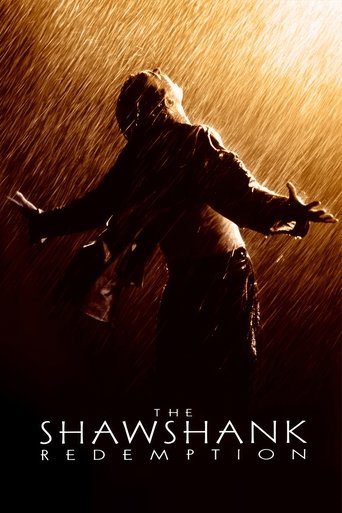
The Shawshank Redemption
No pick
No pick
Kyoto
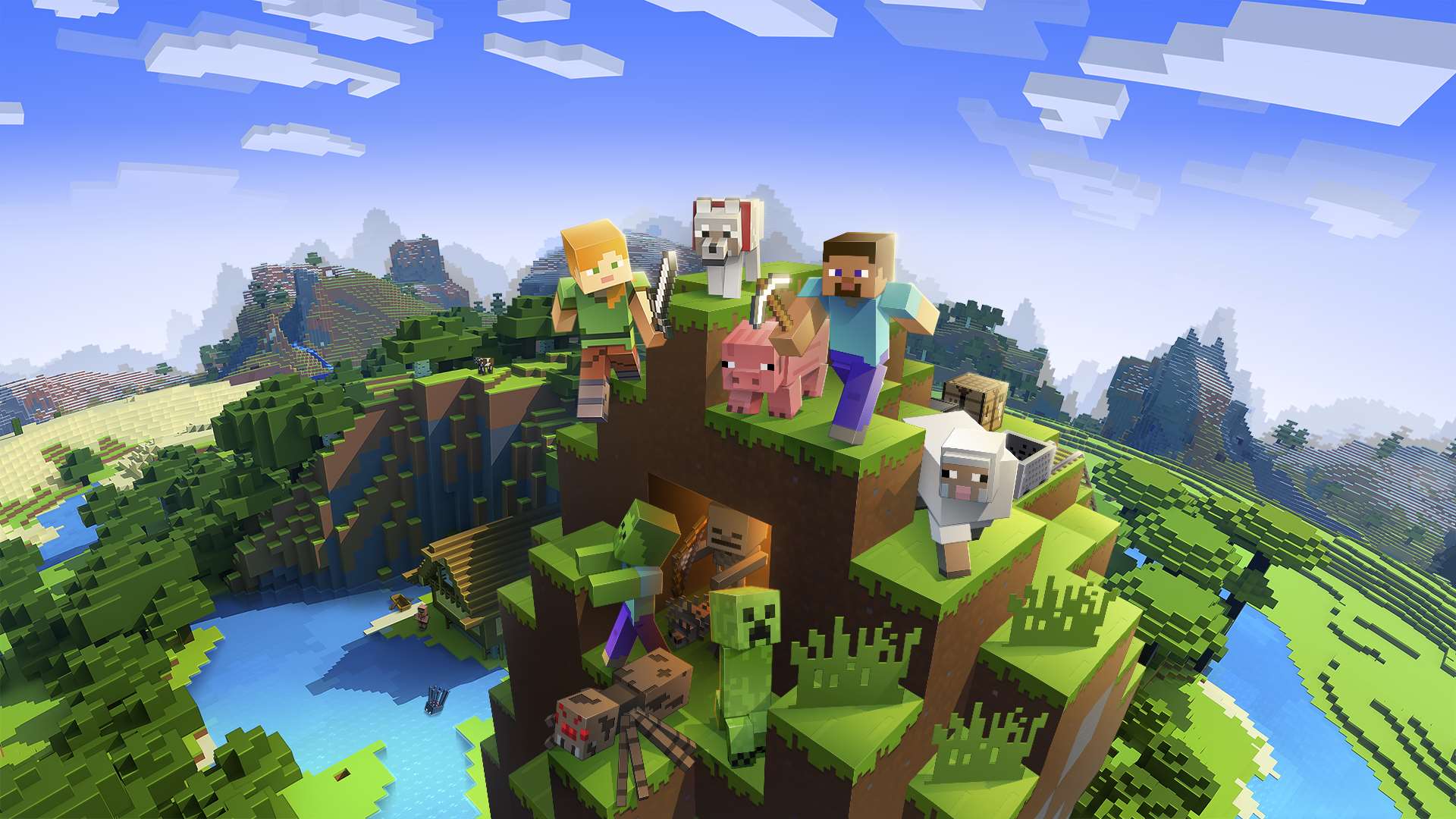
Minecraft
Qwen3 235B A22B Thinking 2507Qwen3 235B A22B Thinking 2507

The Shawshank Redemption
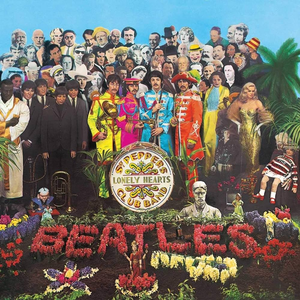
Sgt Peppers Lonely Hearts Club Band
Moby Dick
Kyoto
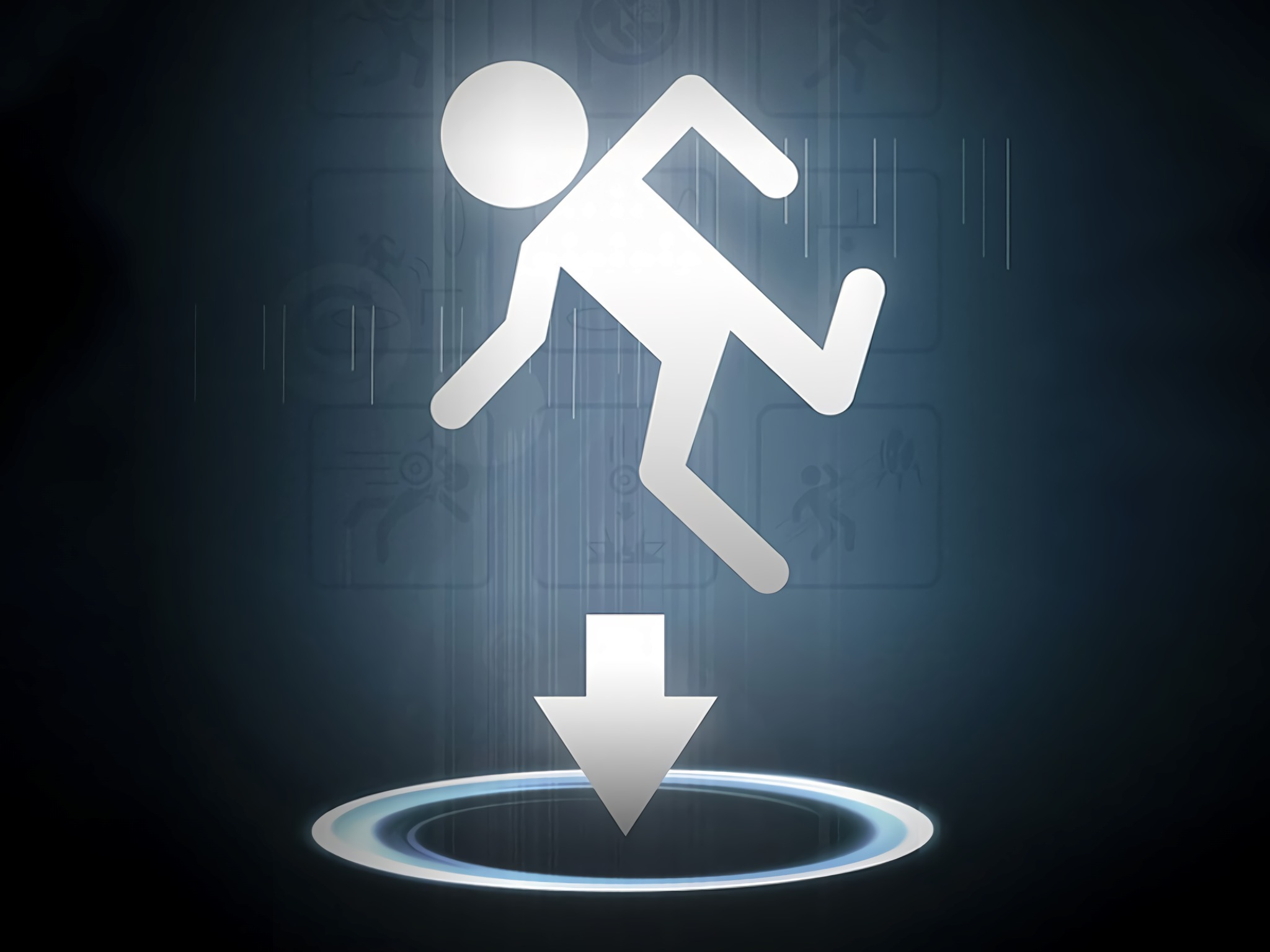
Portal
Price and specs
| Spec | Muse Spark 1.1 | Qwen3 235B A22B Thinking 2507 |
|---|---|---|
| Input price | $1.25/M tokens | $0.11/M tokens |
| Output price | $4.25/M tokens | $0.6/M tokens |
| Context window | 1.0M tokens | 131K tokens |
| Weights | Closed | Open |
| Free API (OpenRouter) | No | No |
| Released | Jul 2026 | Jul 2025 |
| At 10M a month | $12.50 | $1.10 |
Input tokens at list price. No caching, no batch discount.
Where to run it
Muse Spark 1.11 host
Qwen3 235B A22B Thinking 25071 host
Per million tokens. Prices and uptime via OpenRouter, checked 10 Oct 2026.
Common questions
What is the difference between Muse Spark 1.1 and Qwen3 235B A22B Thinking 2507?
Muse Spark 1.1 is developed by Meta AI while Qwen3 235B A22B Thinking 2507 is developed by Qwen. Muse Spark 1.1 has a 1.0M token context window vs Qwen3 235B A22B Thinking 2507's 131K. You can compare their actual outputs across 54 challenges on Rival to see how they differ in practice.
Which is better, Muse Spark 1.1 or Qwen3 235B A22B Thinking 2507?
It depends on your use case. Muse Spark 1.1 and Qwen3 235B A22B Thinking 2507 each have strengths in different areas. Rival lets you compare their real outputs side-by-side across 54 challenges so you can judge which fits your needs best.
How much does Muse Spark 1.1 cost compared to Qwen3 235B A22B Thinking 2507?
Muse Spark 1.1 costs $1.25/M input tokens and Qwen3 235B A22B Thinking 2507 costs $0.11/M input tokens. Qwen3 235B A22B Thinking 2507 is $1.14/M cheaper per input. Check their side-by-side outputs on Rival to see if the price difference is justified by quality.
How can I compare Muse Spark 1.1 and Qwen3 235B A22B Thinking 2507 on Rival?
This page shows a side-by-side comparison of Muse Spark 1.1 and Qwen3 235B A22B Thinking 2507 across shared challenges. You can vote on which model produced the better output in a blind duel. Browsing and voting are free. No account is needed to look; signing in only saves your votes and likes.
More comparisons
Against the newest arrivals
- Muse Spark 1.1 vs Step 5 PreviewLanded Oct 2026
- Qwen3 235B A22B Thinking 2507 vs Claude Haiku 5.5Landed Oct 2026
- Muse Spark 1.1 vs Ling 3.1 FlashLanded Oct 2026
- Qwen3 235B A22B Thinking 2507 vs Mistral Large 4Landed Oct 2026
- Muse Spark 1.1 vs GPT-6.1 SolLanded Sep 2026
- Qwen3 235B A22B Thinking 2507 vs Claude Sonnet 5.5Landed Sep 2026
- Muse Spark 1.1 vs Solar Mini 4Landed Sep 2026
- Qwen3 235B A22B Thinking 2507 vs Qwen3.8 Max PrimeLanded Sep 2026


Same lab, same size, long tail
- Muse Spark 1.1 vs Muse Glimmer 30BSame lab
- Muse Spark 1.1 vs Muse Spark 1.3Same lab
- Qwen3 235B A22B Thinking 2507 vs Qwen3.8 Omni FlashSame lab
- Qwen3 235B A22B Thinking 2507 vs Qwen3.7 FlashSame lab
- Muse Spark 1.1 vs Claude Sonnet 4Same size
- Qwen3 235B A22B Thinking 2507 vs Claude Sonnet 4.6New provider
- Qwen3 235B A22B Thinking 2507 vs Claude Sonnet 5New provider
- Muse Spark 1.1 vs OpenAI Codex MiniNew provider