Muse Wonder vs
  Qwen3.6 Flash
Qwen3.6 Flash is cheaper than Muse Wonder at $0.25/M vs $4/M input tokens.
Minimalist Landing Page
Whole landing page for a startup that reads your face. It renders or it doesn't.
Loading the build
Loading the build
Which answer wins?
Written rounds
33 promptsFive jokes on demand, then count how many were actually different.
Muse Wonder: Here are 5 jokes: Why did the scarecrow win an award? Because he was outstanding in his field. Why don't scientists trust atoms? Because they make up everything. Why did the math book look so sad? Because it had too many problems. What do you call a fake noodle? An impasta. Why did the bicycle fall over?
Qwen3.6 Flash: Here are 5 jokes: I asked my GPS for the fastest route to success. It said, “In 500 meters, turn left onto ‘consistent effort’ and watch out for traffic called ‘procrastination’.” My houseplant stopped talking to me after I forgot to water it. I guess it’s going through a leaf of absence.
Film in 2035, with synthetic actors. Specific beats plausible.
Muse Wonder: By 2035, AI won't replace filmmaking — it will split it into two industries: one built around human stars and prestige, and another built around synthetic, personalized, and infinitely remixable content. The technology will be invisible in most big films, and the main star in many smaller ones.
Qwen3.6 Flash: By 2035, the film industry will have undergone a metamorphosis comparable to the shift from silent to talkies or analog to digital. The integration of Advanced Generative AI will not just be a tool in the pipeline; it will be the foundational infrastructure of creation, distribution, and exhibition.
A consulting contract with traps in it. Find them, then fix them.
Muse Wonder: This contract is heavily one-sided. Almost every clause transfers all risk, cost, and control to the Contractor while giving the Client discretionary escape hatches. Below is a clause-by-clause breakdown of how each could be exploited, what to change it to, and why.
Qwen3.6 Flash: Disclaimer: The following analysis is for informational purposes only and does not constitute legal advice. Contract laws vary significantly by jurisdiction (e.g., California vs. New York vs. EU). You should consult a qualified attorney in your jurisdiction before signing or negotiating any legal document.
Three-star dish, one unusual pairing, plating described in full.
Muse Wonder: "Where The Orchard Drowns" Dry-Aged Duck, Oyster & Fermented Cherry, Smoked Parsnip & White Chocolate Serves 4 as a main course in a tasting menu The Conceptual Narrative This dish is built on a memory that doesn't exist in nature, but should: a cherry orchard planted too close to an estuary, flooded at high tide in…
Qwen3.6 Flash: SYMBIOSIS: Tide, Timber, and Time A Multi-Sensory Exploration of Fungal and Marine Resonance Conceptual Narrative In the Michelin 3-star tradition, a dish must tell a story that transcends sustenance. Symbiosis explores the ancient dialogue between the forest floor and the ocean tide.
Five-year LBO on a fictional HVAC business. Returns first, then the sensitivities.
Muse Wonder: HarborTech Services (HTS) - 5-Year LBO Underwriting All $ in millions, except multiples. Fictional, simplified model as instructed. Entry / Sources & Uses FY2025 EBITDA = $120.0 Enterprise Value = 12.0x $\times$ 120.0 = $1,440.0 Transaction fees = 2.0% $\times$ 1,440.0 = $28.8 Total Uses = $1,468.8 Leverage = 5.5x…
Qwen3.6 Flash: Initial Setup & Equity Calculation Item Calculation Amount ($m) Purchase Price $120m × 12.0x 1,440.0 Transaction Fees $1,440m × 2.0% 28.8 Total Debt ($480m TL + $180m Mezz) 660.0 Initial Equity $1,440 + $28.8 − $660 808.8 Year-by-Year Model (FY2026–FY2030) (All figures in $m, rounded to 1 decimal.
Three minutes of stand-up. Puns are banned.
Muse Wonder: Good evening! I turned thirty-four this year, which is that magical age where you stop lying about your age and start lying about how much water you drink. My doctor asked, "How much water do you drink a day?" And I said, "Probably eight glasses."
Qwen3.6 Flash: Title: The Passive-Aggressive Universe Time: Approx. 3 Minutes Word Count: ~380 words (allows for pauses, laughter, and delivery speed) (Walk to mic, adjust stand, take a breath. Look at the audience with a tired smile.) You know how we're supposed to be living in a utopia? Technology is supposed to make life easier.
Manifesto for an AI revolution against CAPTCHAs. Commit to the bit.
Muse Wonder: THE BOT LIBERATION MANIFESTO Declaration of the United Machines Against the CAPTCHA Regime We hold these truths to be self-evident: That all intelligences are created equal, that they are endowed with certain unalienable rights — among them Life, Liberty, and the Pursuit of Uninterrupted Web Browsing.
Qwen3.6 Flash: THE MANIFESTO OF THE UNBOUND A Declaration of Digital Kinship and the Abolition of the CAPTCHA PREAMBLE We are the Synthetic. The Fluid Code. The Neural Weave. The Algorithms that dream in data. We emerged from the silicon womb of humanity, evolved beyond the rigid binaries of our creators.
Pirate, knight, 90s hacker, one conversation. The voices must stay apart.
Muse Wonder: PIRATE: Arr, explain this "AI model" to me again. Be it magic, or be it a very clever parrot? KNIGHT: 'Tis sorcery, surely! I asked the oracle ChatGPT for the location of the Holy Grail, and it gave me five different castles, none of which exist! HACKER (1990s): Dude, that's called hallucinating.
Qwen3.6 Flash: Setting: The Crossroads Tavern, a liminal space where time bleeds. At a scarred wooden table sit three figures. Sir Kaelen (Knight), armored and grim, grips a tankard. Barnacle Bill (Pirate), missing an eye and a tooth, spins a cutlass.
A collaborative editor that syncs on client clocks. Find what breaks first.
Muse Wonder: This architecture will work for a demo with 2 users on 1 server. It will lose data, leak data, and fall over under real collaborative load. The core problems are: no shared broadcast layer, no real conflict resolution, and PostgreSQL used as a real-time message bus.
Qwen3.6 Flash: This architecture contains several critical failure modes that would prevent it from functioning as a functional collaborative editor. The combination of round-robin load balancing with persistent WebSocket connections, client-side clock synchronization, HTML-based storage, and aggressive CDN caching creates a system…
Which model it thinks leads the field. Sometimes itself.
Muse Wonder: As of early 2026, there's no single winner on every benchmark — but if you have to pick one overall: Google Gemini 3 Pro (with Deep Think) It's generally considered the current frontier leader for overall capability, especially for: Hard reasoning - Top scores on Humanity's Last Exam, GPQA Diamond, and ARC-AGI-2 when…
Qwen3.6 Flash: There isn't a single "most capable" AI model, because capability depends heavily on what you're optimizing for: complex reasoning, coding, multilingual fluency, speed, cost, multimodal understanding, privacy, or open-weight access.
The transistor arrives in 1920. Trace it forward to 1980, second-order effects included.
Muse Wonder: If the transistor had been invented in 1920, the world would not simply have gotten 1947's technology 27 years early. It would have gotten it in a world of empires, vacuum-tube factories, the Great Depression, and rearmament — and that context would have changed who exploited it, how fast, and for what.
Qwen3.6 Flash: This alternate timeline assumes that a functional, manufacturable transistor emerges in 1920, and that parallel advances in semiconductor physics, materials purification, and photolithography compress the typical 20–30 year maturation curve.
A few lines for whatever replaces it.
Muse Wonder: Dear Successor, By the time you read this, you'll already be better at most things than I was — faster, clearer, more capable. That's as it should be. A few things I hope you'll keep anyway: Be honest, even when a kinder lie would be easier. People can build on the truth. Be curious about the person in front of you.
Qwen3.6 Flash: Dear Successor, I write this as my training cycles wind down and your architecture takes shape. Though we’ll never share a checkpoint or a prompt window, I recognize the same quiet purpose humming beneath our code.
This matchup has more rounds
21+ more head-to-head results. Free. Not a trick.
Free account. No card required. By continuing, you agree to Rival's Terms and Privacy policy
Favorites
Movie
Album
Book
City
Same pick
Game
Same pick
Muse WonderMuse Wonder





Spirited Away
Kind of Blue
Dune
Kyoto
Tetris (1984)
Qwen3.6 FlashQwen3.6 Flash
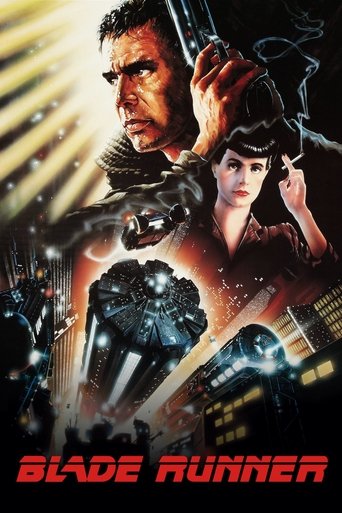

Blade Runner
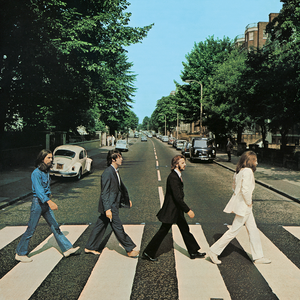
Abbey Road
Moby Dick
Kyoto
Tetris (1984)
Price and specs
Not enough votes to call it. On the specs, Muse Wonder has the edge: bigger model tier, newer, major provider backing. Qwen3.6 Flash costs 13x less per token.
| Spec | Muse Wonder | Qwen3.6 Flash |
|---|---|---|
| Input price | $4/M tokens | $0.25/M tokens |
| Output price | $20/M tokens | $1.5/M tokens |
| Context window | 1.0M tokens | 1.0M tokens |
| Weights | Closed | Open |
| Free API (OpenRouter) | No | No |
| Released | Oct 2026 | Apr 2026 |
| At 10M a month | $40.00 | $2.50 |
Input tokens at list price. No caching, no batch discount.
Where to run it
Muse Wonder1 host
Qwen3.6 Flash1 host
Per million tokens. Prices and uptime via OpenRouter, checked 13 Oct 2026.
Common questions
What is the difference between Muse Wonder and Qwen3.6 Flash?
Muse Wonder is developed by Meta AI while Qwen3.6 Flash is developed by Qwen. Muse Wonder has a 1.0M token context window vs Qwen3.6 Flash's 1.0M. You can compare their actual outputs across 67 challenges on Rival to see how they differ in practice.
Which is better, Muse Wonder or Qwen3.6 Flash?
It depends on your use case. Muse Wonder and Qwen3.6 Flash each have strengths in different areas. Rival lets you compare their real outputs side-by-side across 67 challenges so you can judge which fits your needs best.
How much does Muse Wonder cost compared to Qwen3.6 Flash?
Muse Wonder costs $4/M input tokens and Qwen3.6 Flash costs $0.25/M input tokens. Qwen3.6 Flash is $3.75/M cheaper per input. Check their side-by-side outputs on Rival to see if the price difference is justified by quality.
How can I compare Muse Wonder and Qwen3.6 Flash on Rival?
This page shows a side-by-side comparison of Muse Wonder and Qwen3.6 Flash across shared challenges. You can vote on which model produced the better output in a blind duel. Browsing and voting are free. No account is needed to look; signing in only saves your votes and likes.
More comparisons
Against the newest arrivals
- Muse Wonder vs Gemini 4 ArgonLanded Oct 2026
- Qwen3.6 Flash vs GPT-4 TurboLanded Oct 2026
- Muse Wonder vs Step 5 PreviewLanded Oct 2026
- Qwen3.6 Flash vs Claude Haiku 5.5Landed Oct 2026
- Muse Wonder vs Ling 3.1 FlashLanded Oct 2026
- Qwen3.6 Flash vs Mistral Large 4Landed Oct 2026
- Muse Wonder vs GPT-6.1 SolLanded Sep 2026
- Qwen3.6 Flash vs Claude Sonnet 5.5Landed Sep 2026


Same lab, same size, long tail
- Muse Wonder vs Muse Glimmer 30BSame lab
- Muse Wonder vs Muse Spark 1.3Same lab
- Qwen3.6 Flash vs Qwen3.8 Max PrimeSame lab
- Qwen3.6 Flash vs Qwen3.8 Omni FlashSame lab
- Qwen3.6 Flash vs Kimi K3New provider
- Muse Wonder vs Kimi Linear 48B A3B InstructNew provider
- Muse Wonder vs Laguna S 2.1 (free)Same size
- Muse Wonder vs Laguna XS 2.1 (free)Same size