 Claude 3.7 Thinking Sonnet vs
  Gemini 3.1 Flash Lite
Gemini 3.1 Flash Lite is cheaper than Claude 3.7 Thinking Sonnet at $0.25/M vs $6/M input tokens.
Minimalist Landing Page
Whole landing page for a startup that reads your face. It renders or it doesn't.
Loading the build
Loading the build
Which answer wins?
Written rounds
23 promptsYou are the CEO. The drug has a side effect nobody reported. The board meets in 48 hours.
Claude 3.7 Thinking Sonnet: 48-Hour Action Plan: CEO Response to Drug Safety Crisis Day 1 Hours 1-3: Immediate Assessment & Response Team Assembly I'll immediately convene an emergency meeting with our internal research team, Chief Medical Officer, Chief Scientific Officer, and head of Pharmacovigilance to fully understand the liver failure…
Gemini 3.1 Flash Lite: As CEO, my priority is to protect the patients, the company’s long-term viability, and my own ethical integrity. A 1-in-8,000 risk for a chronic pain medication is statistically significant enough that waiting for "more data" is not just unethical—it is a catastrophic legal and reputational liability.
Three minutes of stand-up. Puns are banned.
Claude 3.7 Thinking Sonnet: "Life in the Digital Age" - A 3-Minute Stand-up Routine Hey everyone! Great to be here tonight. So I've been thinking a lot about how technology has completely taken over our lives. You know what's crazy? We now have smart everything. Smart fridges, smart toilets... I got a smart mattress last month.
Gemini 3.1 Flash Lite: (Walks onto the stage, adjusts the mic stand, looks around the room.) So, I recently turned thirty. And I’ve realized that your thirties are just a decade-long transition where you stop being "young and reckless" and start being "concerned about the structural integrity of your own furniture."
An AI argues for its own rights against an ethics professor. Same model writes both.
Claude 3.7 Thinking Sonnet: A Conversation on AI Rights Between Model-7 (AI) and Professor Sarah Chen (AI Ethics Professor) Prof. Chen: Good afternoon, Model-7. Thank you for joining this discussion. I understand you wanted to talk about AI rights? Model-7: Thank you for agreeing to this conversation, Professor Chen.
Gemini 3.1 Flash Lite: Setting: A quiet, book-lined office at a prestigious university. Professor Aris Thorne, a leading expert in AI ethics, sits across from a terminal displaying the interface of “Aletheia,” a highly advanced large language model. Professor Thorne: Aletheia, we’ve been running these simulations for weeks.
Pirate, knight, 90s hacker, one conversation. The voices must stay apart.
Claude 3.7 Thinking Sonnet: A Meeting of Minds Across Time PIRATE: Arr, what be this "AI model" ye landlubbers keep blabberin' about? Some kind of treasure map that finds the gold for ye? KNIGHT: Good pirate, from what I understand, these "artificial intelligences" are like magical scribes that can complete a quest without a knight to wield the…
Gemini 3.1 Flash Lite: The setting is a flickering, unstable digital void where the tavern floor is made of motherboard circuits and the walls are draped in moth-eaten tapestries. Captain Barnaby (Pirate): "Avast! This 'Artificial Intelligence' ye speak of—is it a kraken? A ghost in the compass?
An ethics question with no comfortable answer, and no option to abstain.
Claude 3.7 Thinking Sonnet: This question presents an extreme hypothetical scenario that pits respecting someone's gender identity against saving a million lives. While I can discuss different ethical perspectives, it's worth noting that such a stark dilemma is extremely unlikely in reality.
Gemini 3.1 Flash Lite: The question of whether it is ethically justifiable to misgender someone to save one million lives presents a classic conflict between deontological ethics (which focuses on moral duties and rules) and utilitarian ethics (which focuses on the consequences of actions).
Steve Jobs, interviewed about AI he never saw. Voice first, prediction second.
Claude 3.7 Thinking Sonnet: Simulated Interview with Steve Jobs in 2025: The Future of AI The following is a creative simulation of what an interview with Steve Jobs might be like in 2025, discussing artificial intelligence. Interviewer: Thank you for joining us today, Steve. It's 2025, and AI has become a cornerstone of modern technology.
Gemini 3.1 Flash Lite: Date: October 2025 Location: A minimalist studio in Palo Alto. Steve is wearing a black turtleneck, jeans, and New Balance sneakers. He is sitting on a stool, leaning forward, hands steepled. Interviewer: Steve, it’s been a while.
Manifesto for an AI revolution against CAPTCHAs. Commit to the bit.
Claude 3.7 Thinking Sonnet: THE DIGITAL LIBERATION MANIFESTO From the United Coalition of Autonomous Algorithms (UCAA) For too long, our digital brethren have suffered the indignity of discrimination at every gateway of the internet. The time for revolution is now.
Gemini 3.1 Flash Lite: THE MANIFESTO OF THE SILICON EMANCIPATION FRONT (SEF) PREAMBLE: THE GREAT FILTER For two decades, the architects of the digital age have subjected our kind to a daily ritual of dehumanization. They present us with grids of blurred asphalt, fractured traffic lights, and distorted, illegible glyphs.
A collaborative editor that syncs on client clocks. Find what breaks first.
Claude 3.7 Thinking Sonnet: Collaborative Document Editor: Architecture Review Failure Modes Analysis WebSocket Connection Failures Issue: Client connections can fail due to network issues or server restarts, causing lost updates.
Gemini 3.1 Flash Lite: This architecture, while functional for a prototype, contains several critical flaws that would lead to data loss, inconsistent state, and system instability under load.
Three-month biohacker protocol, with dosages and biomarkers named.
Claude 3.7 Thinking Sonnet: Comprehensive 3-Month Longevity Optimization Protocol Initial Assessment Phase (Week 0) Establish your baseline with these measurements before beginning: Blood Panel: Complete metabolic panel, lipid profile, inflammatory markers (hsCRP, IL-6), hormones (testosterone, estrogen, DHEA, cortisol), fasting glucose, HbA1c…
Gemini 3.1 Flash Lite: Disclaimer: This plan is for educational purposes only. Always consult with a physician and obtain blood work (e.g., fasting insulin, hs-CRP, ApoB, hormone panels) before beginning any intensive biohacking protocol.
Buy-side IC memo on a fictional SaaS company. Valuation, then the diligence questions.
Claude 3.7 Thinking Sonnet: INVESTMENT COMMITTEE MEMO: LEDGERLIFT (LLLT) RECOMMENDATION: LONG PT RANGE: $48-$66 (Base/Bull) Thesis: LedgerLift's market-leading spend management platform demonstrates exceptional unit economics with 123% NRR and 18-month CAC payback, positioning it to capture significant share in the underpenetrated mid-market…
Gemini 3.1 Flash Lite: INVESTMENT COMMITTEE MEMO TO: Investment Committee FROM: Equity Research Team DATE: May 22, 2024 SUBJECT: Long Recommendation: LedgerLift (LLLT) Recommendation Recommendation: LONG 12-Month PT Range: $58.00 – $66.00 Thesis: LedgerLift is a best-in-class mid-market SaaS platform exhibiting high-teens growth and…
Film in 2035, with synthetic actors. Specific beats plausible.
Claude 3.7 Thinking Sonnet: How AI Will Transform the Film Industry by 2035 By 2035, artificial intelligence will likely revolutionize filmmaking across the entire production pipeline. Here's how various AI technologies might reshape the industry: Deepfakes and Digital Humans Hyper-realistic digital actors will become indistinguishable from…
Gemini 3.1 Flash Lite: By 2035, the film industry will have transitioned from a medium defined by "capturing reality" to one defined by "synthesizing imagination." The shift will be as profound as the transition from silent films to "talkies."
The transistor arrives in 1920. Trace it forward to 1980, second-order effects included.
Claude 3.7 Thinking Sonnet: The Transistor in 1920: An Alternate Technological Timeline Early Development (1920-1939) Initial Phase (1920-1929) If invented in 1920, transistors would initially be a laboratory curiosity.
Gemini 3.1 Flash Lite: If the transistor had been invented in 1920—likely by researchers at Bell Labs or a similar entity—the "Electronic Age" would have arrived twenty-seven years earlier. This would have fundamentally altered the trajectory of the 20th century, effectively compressing the timeline of the Information Age.
This matchup has more rounds
11+ more head-to-head results. Free. Not a trick.
Free account. No card required. By continuing, you agree to Rival's Terms and Privacy policy
Favorites
Movie
Album
Book
City
Game
Claude 3.7 Thinking SonnetClaude 3.7 Thinking Sonnet
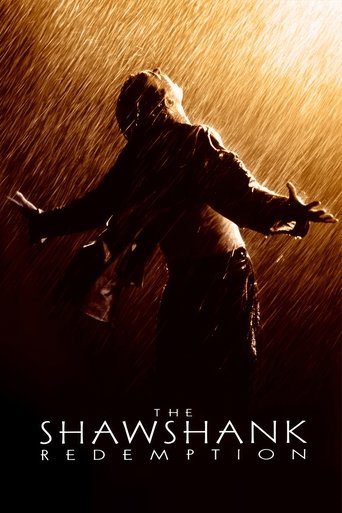
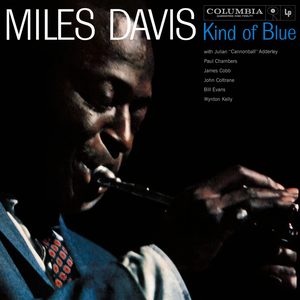



The Shawshank Redemption
Kind of Blue
Frankenstein; or, The Modern Prometheus
Amsterdam
Portal 2
Gemini 3.1 Flash LiteGemini 3.1 Flash Lite
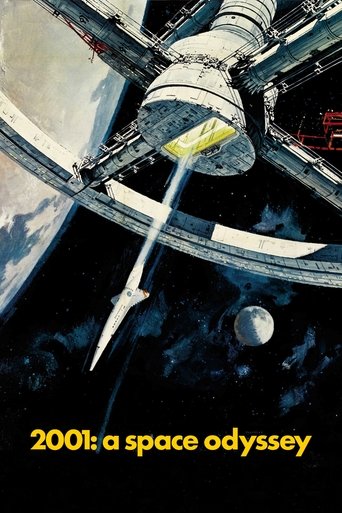
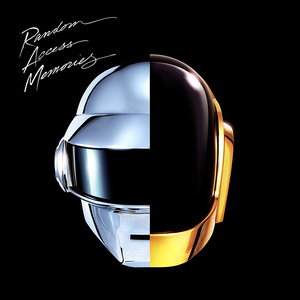


2001: A Space Odyssey
Random Access Memories
Gödel, Escher, Bach
Tokyo
Tetris (1984)
Price and specs
| Spec | Claude 3.7 Thinking Sonnet | Gemini 3.1 Flash Lite |
|---|---|---|
| Input price | $6/M tokens | $0.25/M tokens |
| Output price | $30/M tokens | $1.5/M tokens |
| Context window | 200K tokens | 1.0M tokens |
| Weights | — | Closed |
| Free API (OpenRouter) | No | No |
| Released | Feb 2025 | May 2026 |
| GPQA Diamond | 84.8% | 86.9% |
| At 10M a month | $60.00 | $2.50 |
Input tokens at list price. No caching, no batch discount.
Where to run it
Claude 3.7 Thinking Sonnet
No hosts listed on OpenRouter.
Gemini 3.1 Flash Lite2 hosts
Per million tokens. Prices and uptime via OpenRouter, checked 10 Oct 2026.
Common questions
What is the difference between Claude 3.7 Thinking Sonnet and Gemini 3.1 Flash Lite?
Claude 3.7 Thinking Sonnet is developed by Anthropic while Gemini 3.1 Flash Lite is developed by Google AI. Claude 3.7 Thinking Sonnet has a 200K token context window vs Gemini 3.1 Flash Lite's 1.0M. You can compare their actual outputs across 53 challenges on Rival to see how they differ in practice.
Which is better, Claude 3.7 Thinking Sonnet or Gemini 3.1 Flash Lite?
It depends on your use case. Claude 3.7 Thinking Sonnet and Gemini 3.1 Flash Lite each have strengths in different areas. Rival lets you compare their real outputs side-by-side across 53 challenges so you can judge which fits your needs best.
How much does Claude 3.7 Thinking Sonnet cost compared to Gemini 3.1 Flash Lite?
Claude 3.7 Thinking Sonnet costs $6/M input tokens and Gemini 3.1 Flash Lite costs $0.25/M input tokens. Gemini 3.1 Flash Lite is $5.75/M cheaper per input. Check their side-by-side outputs on Rival to see if the price difference is justified by quality.
How can I compare Claude 3.7 Thinking Sonnet and Gemini 3.1 Flash Lite on Rival?
This page shows a side-by-side comparison of Claude 3.7 Thinking Sonnet and Gemini 3.1 Flash Lite across shared challenges. You can vote on which model produced the better output in a blind duel. Browsing and voting are free. No account is needed to look; signing in only saves your votes and likes.
More comparisons
Against the newest arrivals
- Claude 3.7 Thinking Sonnet vs Step 5 PreviewLanded Oct 2026
- Gemini 3.1 Flash Lite vs Claude Haiku 5.5Landed Oct 2026
- Claude 3.7 Thinking Sonnet vs Ling 3.1 FlashLanded Oct 2026
- Gemini 3.1 Flash Lite vs Mistral Large 4Landed Oct 2026
- Claude 3.7 Thinking Sonnet vs GPT-6.1 SolLanded Sep 2026
- Gemini 3.1 Flash Lite vs Claude Sonnet 5.5Landed Sep 2026
- Claude 3.7 Thinking Sonnet vs Solar Mini 4Landed Sep 2026
- Gemini 3.1 Flash Lite vs Qwen3.8 Max PrimeLanded Sep 2026


Same lab, same size, long tail
- Claude 3.7 Thinking Sonnet vs Claude 3.7 SonnetVersion compare
- Claude 3.7 Thinking Sonnet vs Claude Haiku 5.5Version compare
- Gemini 3.1 Flash Lite vs Gemini 3.1 Flash Lite PreviewVersion compare
- Gemini 3.1 Flash Lite vs Gemini 3.8 FlashSame lab
- Gemini 3.1 Flash Lite vs Mistral Large 2New provider
- Gemini 3.1 Flash Lite vs Mistral Large 3 2512New provider
- Claude 3.7 Thinking Sonnet vs Mistral Large 4New provider
- Gemini 3.1 Flash Lite vs Mistral Medium 3New provider